
by Paul Orlando
Two days after the 2016 presidential election I turned one day of my normal university classes into a history of recent presidential campaigns. I looked at a few of the more famous moments from campaigns of the previous 50 years, none of which the students knew.
If you’re reading 3QD you probably know these moments. But you might also want to remind yourself that not everyone does, especially if they have not lived through them. If it’s a help, here is a short list that you might send others who are interested.
The 1960 Kennedy – Nixon debate
Before this debate even begins, the first thing you might notice is the way JFK sits. He crosses his legs. He’s also in a dark suit against a light background. He is also the better looking of the two candidates. Nixon, on the other hand, sits with both feet awkwardly on the floor and can’t find a place for his hands.
As a televised debate — and the first ever — these things unfortunately matter.
The next thing you might notice is that the moderator announces that there will be opening statements of eight minutes. Eight minutes! (And JFK only used about seven). And while it was not stated, there were to be no interruptions. This, after all, was formal debating. If you watch the debate, the striking thing is how different that style now seems.
Presidential candidates didn’t debate on television again until the 1976 campaign. Read more »
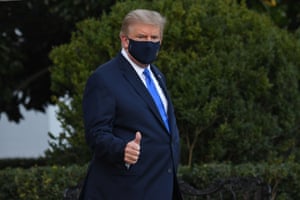
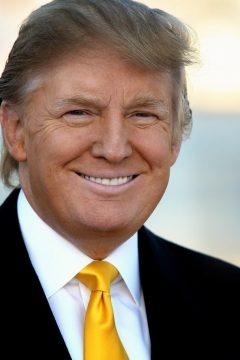 Donald Trump’s presidency has generated a greater than normal interest in American politics, but not necessarily for the right reasons. How, people wondered, could such a poorly qualified candidate, and, as we have seen over the years, of equally poor calibre possibly become the President of the United States and leader of the ‘free’ world?

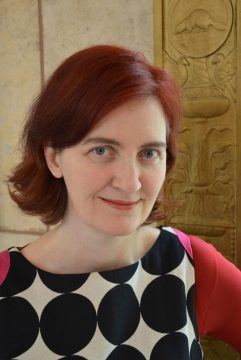 Irish-Canadian author
 In my earlier column, “
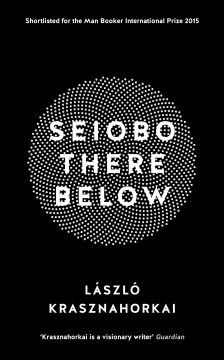 The stories in Seiobo There Below, if they can be called stories, begin with a bird, a snow-white heron that stands motionless in the shallow waters of the Kamo River in Kyoto with the world whirling noisily around it. Like the center of a vortex, the eye in a storm of unceasing, clamorous activity, it holds its curved neck still, impervious to the cars and buses and bicycles rushing past on the surrounding banks, an embodiment of grace and fortitude of concentration as it spies the water below and waits for its prey. We’ve only just begun reading this collection, and already László Krasznahorkai’s haunting prose has submerged us in the great panta rhei of life—Heraclitus’s aphorism that everything flows in a state of continuous change.
 by Callum Watts