by Eric Miller
 1.
1.
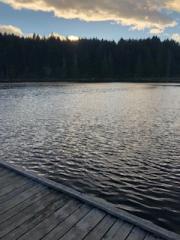
Would you like to go to Salt Spring Island? Of course you would. You’ve never been. We have to pack with care. Don’t forget the coffee. Don’t forget the wine. Check the skybox! It keeps getting loose. How do the bolts unfasten so fast? Everyday stress, I guess. Tell me about it! October moulders flaming, yellow leaves, red leaves, a mock-conflagration so sopping it ravishes without imparting heat. The neighbour’s hortensias, can you believe? They try every colour. You would hardly think they all could grow on the same bush. Sea anemones, amethystine geodes imitated in silk, a purple that deepens, dyed flagrant by the tarrying of attention—foreplay of a kind, a courtship long antecessory to our eros. We peer stunned as pollinators in spring, what fructifications of gripping rot! Stop staring. Let the uncouth mushrooms, rotten when they ripen, tumesce to hail those clusters and pledge them fleshy service amid the twinkling of wet ambulating spiders, the spittled glissade of gradual slugs. True it’s tough to ignore this prodigy, just in order to praise that one. Don’t you feel obliged? Kaleidoscopes can detain us even after we have stopped cranking patterns. Decomposition is composition too.
Step over here with your crate and it is as warm as August, step over there with your bag it is as gelid as January. A confused crocus is bobbing up, too simple for this world. Poor untimely vegetable marmot! Even above town a band of Canada geese bashes chorally overhead. What long necks, what blunt daft bodies, what overlap of air churned by wings, of air alembicated into black-beaked shouts! No frost yet has stiffened the grass to a moussed quiff, or stippled the tarpaper shingles. Therefore, we still resolve to swim when we get to the lake. Who cares how cold it is? I do, a little. Swimsuits, swimsuits. We remember the panoply of paraphernalia belonging to the dog, her shining dishes, her musty pad; we forget the dog herself. Is she in the kennel in the back of the car? No, she is cowering under the kitchen table. What a face, her nose as dark and eloquent as her eyes! There, now she’s with us. Read more »
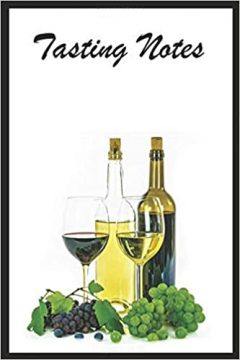 Look on the back label of most wine bottles and you will find a tasting note that reads like a fruit basket—a list of various fruit aromas along with a few herb and oak-derived aromas that consumers are likely to find with some more or less dedicated sniffing. You will find a more extensive list of aromas if you visit the winery’s website and find the winemaker’s notes or read wine reviews published in wine magazines or online.
 In a recent article in
 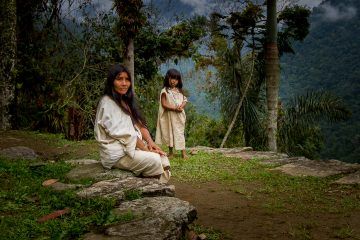 High in the Sierra Nevada de Santa Marta of northern Colombia, the Kogi people peaceably live and farm. Having isolated themselves in nearly inaccessible mountain hamlets for five hundred years, the Kogi retain the dubious distinction of being the only intact, pre-Columbian civilization in South America. As such, they are also rare representatives of a sustainable farming way of life that persists until the modern era. Yet, more than four decades ago, even they noticed that their highland climate was changing. The trees and grasses that grew around their mountain redoubt, the numbers and kinds of animals they saw, the sizes of lakes and glaciers, the flows of rivers—everything was changing. The Kogi, who refer to themselves as Elder Brother and understand themselves to be custodians of our planet, felt they must warn the world. So in the late 1980s, they sent an emissary to contact the documentary filmmaker, Alan Ereira of the BBC—one of the few people they’d previously met from the outside world. In the resulting film,
 People are basically good.
 Here’s an interesting game. You receive 20 dollars, and you and three others can anonymously contribute any portion of this amount to a public pool. The amount of money in this pool is then multiplied by 1.5 and divided equally among all players. Repeat 10 times, then go home with your money. What will happen? How much would you contribute in round one, if you knew nothing about your fellow players?

 Now that a deranged president’s toxic presence will finally—finally!—begin to occupy increasingly smaller tracts of our inner lives, these new days might offer an ideal occasion to celebrate songs that sing of the singular mental spaces hidden inside us all—songs that can help re-acquaint us with ourselves.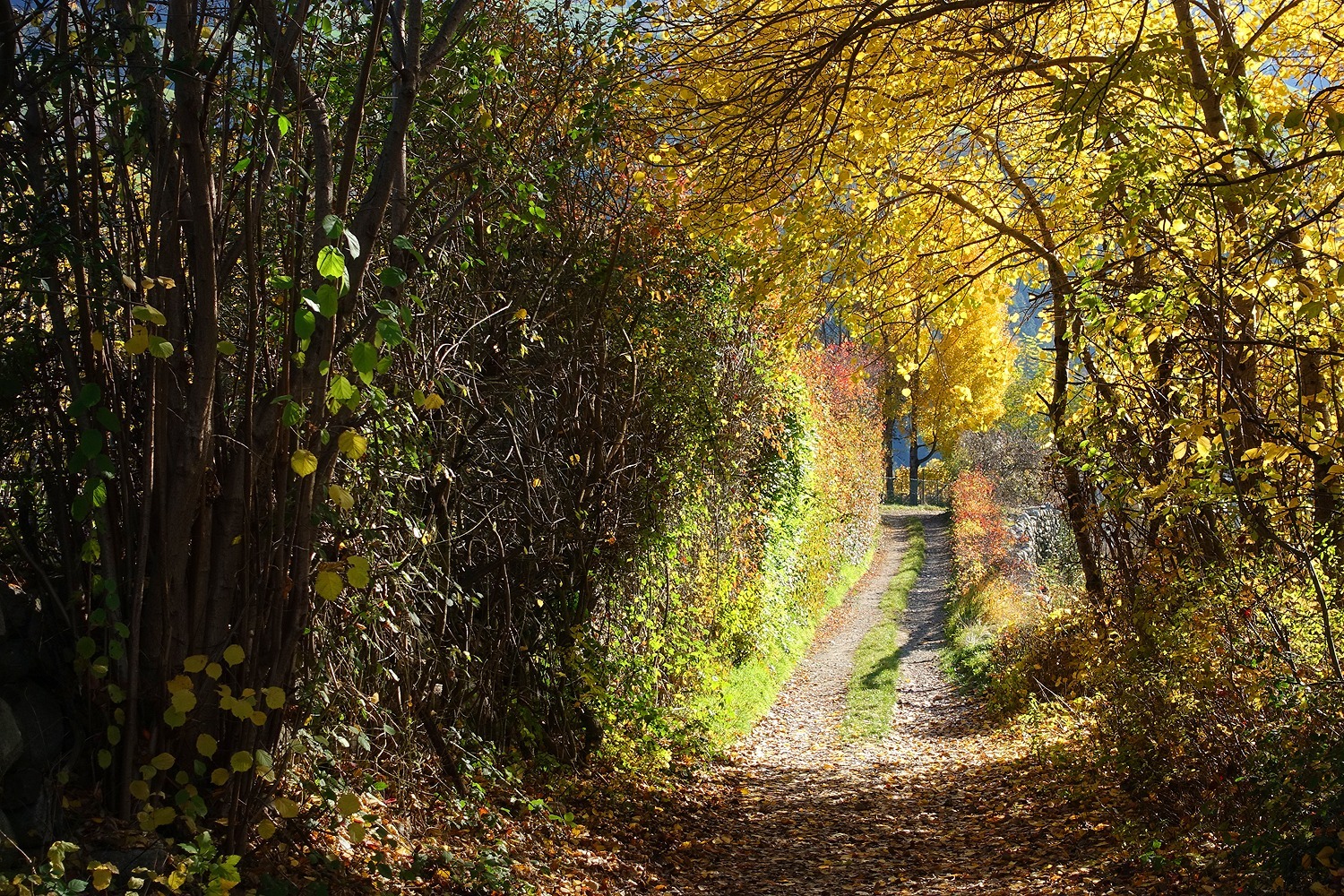
 Put a small child in a room with a single marshmallow. Tell him that, if he can wait for five minutes, he gets a second one. Leave the room, and see what he does. Can he sit there, staring at that scrumptious-if-a-tad-rubbery mound of goo and powdered sugar and just fight off the urge to grab it, tear it to bits, and, like the Cheshire Cat, leave nothing but a smile?
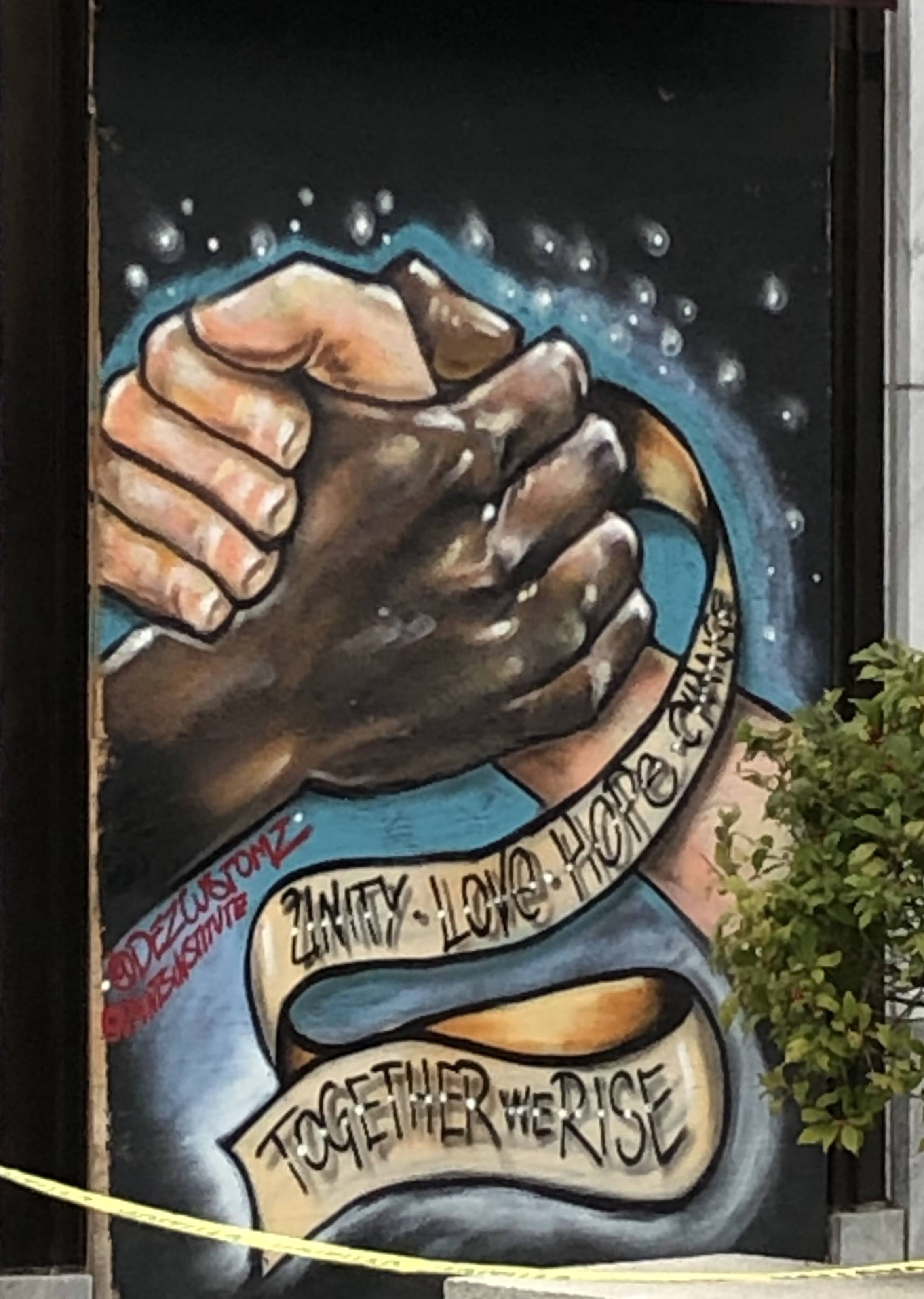 When we are done rhyming words of hope and history to audacity we will need to wake up. When the much needed elation and good cheer wears off, of getting job one done, defeating Trump then the reality will set in.
 think about that. Though others may have one, I lack an analytic framework. The best I can do is to offer some things I’ve been thinking about.