Editor’s Note: This essay once mentions a well-known racial slur. Indeed, much of the essay is about the usefulness of maintaining a distinction between using a word and merely mentioning it, and argues that mentions of even taboo words should be allowed, so it would be self-defeating to resort to euphemism in this case.
by Gerald Dworkin
 For the past year or so there have been a considerable number of cases of teachers or authors or journalists who have been threatened with sanctions, had sanctions imposed, or lost their positions, because of articles they wrote or statements they made as part of their occupations. Many of these cases involved the appearance of the N-word in their speech or written work. Here are some of them.
1. In a course at the Rutgers Law School last Fall, a student was curious about why a defendant in a case was charged with conspiracy to murder, when he had not been directly involved in the shooting. So he looked up the case and found that the defendant had shouted that he was going to return to the scene where the shots were fired, but first, “I’m going back to Trenton to get my niggers.” This clarified for the student why the defendant might be charged with conspiracy to murder.
The professor of the course has asserted that she did not hear the word spoken during a videoconference session, which three students had attended after the criminal law class.
As the NY Times reported: “In early April, in response to the incident, a group of Black first-year students at Rutgers Law began circulating a petition calling for the creation of a policy on racial slurs and formal, public apologies from the student and the professor.”
At the height of a ‘racial reckoning,’ a responsible adult should know not to use a racial slur regardless of its use in a 1993 opinion,” states the petition, which was signed by law school students and campus organizations across the country.
“We vehemently condemn the use of the N-word by the student and the acquiescence to its usage,” the petition says.
To date the Professor has not apologized for her conduct and has not been sanctioned. Read more »
 Please, See My Innocence
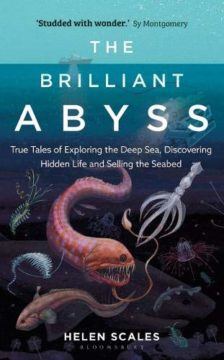 Marine biologist Helen Scales’ book, The Brilliant Abyss: True Tales of Exploring the Deep Sea, Discovering Hidden Life and Selling the Seabed is a triumph. The four major sections in the book, ‘Explore’, ‘Depend’, ‘Exploit’ and ‘Preserve’ are indicators of the breadth of issues addressed in the book: the variety of life forms in the different levels of the oceans; the significance of the oceans to life on the planet; the various ways in which human activity exploits the oceans resources, and concludes with her ideas about how to prevent the ocean from becoming just another area of resources of the planet for exploitation by human beings.
 Sughra Raza. River Magic. May, 2021.
 Small poetry presses are the gold dust of the publishing world, glittering yet easy to miss. And of enduring cumulative value.
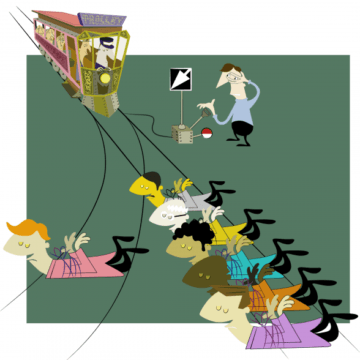 The first part of the original trolley problem goes like this. A runaway trolley is careening towards five people tied to the tracks. There’s a lever in front of you that could divert it onto a second set of tracks. Unfortunately, there is also a person tied to those tracks. You can either do nothing and let five people die or throw the switch and kill one person – but save the five. What do you do?


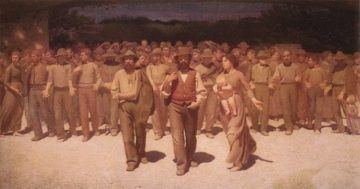 How should people on the ‘progressive’ side of politics view patriotism? That question continues to vex those who would connect with what they suppose are the feelings of the bulk of the population. The answer will vary a good deal according to which country we are considering – the French left, for instance, has a very different relationship to la patrie to that of the US or the UK. In the case of the former, the side cast as traitors has historically been seen as the right. In the USA, at least in the second half of the 20th century it has been very different: those who protested against the Vietnam war were cast as the anti patriots. And today, we still hear that the left ‘hates our country’. The accusation is a damaging one, and has been wielded with glee by conservatives whenever they have the chance. So there is a tricky task for the left, it seems: to be seen as with and not against the mass of people in their identification with the nation and its history, without abandoning an internationalist perspective that rises above the narrow nationalism of the conservative.
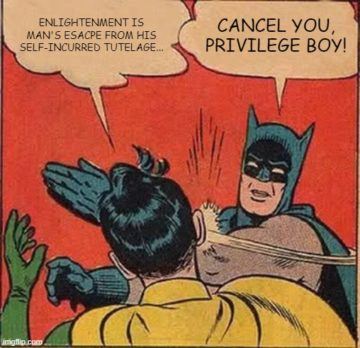 Talking about “The Enlightenment”, when understood as something like “an intellectual and philosophical movement that dominated the world of ideas in Europe during the 17th and 18th centuries” (thanks,
 Sughra Raza. Untitled, April 2021.