by Sarah Firisen
 My eldest daughter has a new boyfriend. I met him the other day, and he seems to be a very nice young man. When I told her I liked him, she replied, “He makes me so happy. Happier than I’ve ever been.” The first blush of love is wonderful. Young love perhaps even more so because it’s so unencumbered by the cares of adult life.
The phrase, “Happier than I’ve ever been,” has been stuck in my head. Perhaps that’s because the last year and a half or so seem to have been, somewhat perversely, a time when at least some people have been happier than they’ve ever been. Or at least happier than they’ve been for a long time. Yes, Covid is scary. Having people around us get very sick, get hospitalized, die has been awful. And lockdown brought a loss of so many of the things that we enjoyed: eating out, listening to live music, travel, gathering with friends. But for many people, it was also a time for forced quiet. And in that quiet, there was the opportunity for reflection.
Arthur C. Brooks, who writes extensively on the topic of happiness, wrote this piece in The Atlantic, A Once-in-a-Lifetime Chance to Start Over. It’s time to prepare for a new and better normal than your pre-pandemic life. In it, he tells the story of a young woman who suffered from amnesia due to a traumatic head injury. Even once she recovered, she was never the same again, “Her parents always attributed these major character changes to her “bump on the head.” But she told me no—the injury had nothing to do with it. Rather, it was the recovery time, away from ordinary routines, that created a punctuation mark in the long sentence of her life. She had a unique opportunity to assess her priorities. She vowed to take nothing in her former life as given. She tore her beliefs and values down to the studs, and rebuilt them. And in so doing, she said, she became happy for the first time in her life.” Brooks likens lockdown, for many people, to this young woman’s experience. Read more »
 The gully cricket I played in my neighborhood also had a tournament, where different neighborhoods of north Kolkata competed. I once played in such a tournament which was being held in the far north of the city, some distance from my own neighborhood. I don’t now remember the game, but I met there a savvy boy, somewhat older than me, who opened my eyes about Kolkata politics. When he asked me which locality I was from, he stopped me when I started answering with a geographic description. He was really interested in knowing which particular mafia leader my neighborhood fell under. Finding me rather ignorant, he went on to an elaborate explanation of how the whole city is divided up in different mafia fiefdoms, and their hierarchical network and different specialization in different income-earning sources, and their nexus with the hierarchy of political leaders as patrons at different levels. After he figured out the coordinates of my locality he told me which particular mafia don my neighborhood hoodlums (the local term is mastan) paid allegiance to. I recognized the name, this man’s family had a meat shop in the area.
 On May 31st, 2021, I sent an email to John Pawelek, Senior Research Scientist at Yale University, requesting a zoom meeting. When a week went by without a response, I decided to call. Searching for his number, I came across his Obituary instead. John Pawelek died on May 31st, 2021. Alas, I missed my chance to speak to a knowledgeable and accomplished scientist.
 This year marks the 200th anniversary of Napoleon Bonaparte’s death in exile on the island of St Helena. And it was 206 years ago last June that his career came to a bloody end at Waterloo, with defeat at the hands of an allied army led by Britain’s Wellington and Prussia’s Blucher. But while the Emperor himself is dead and gone, the Napoleon Myth marches on, and is celebrated in some unlikely quarters.
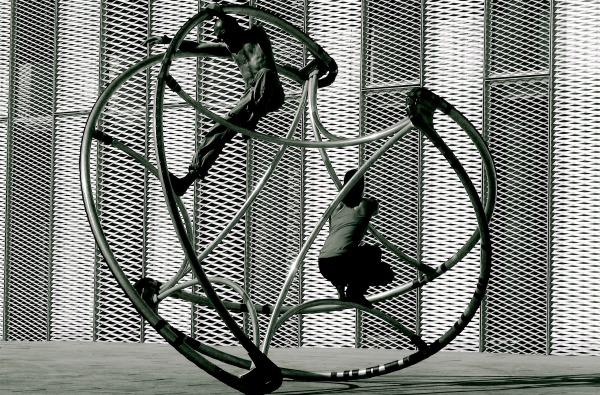
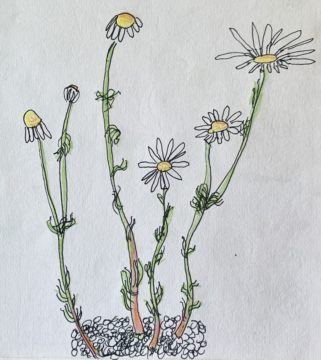
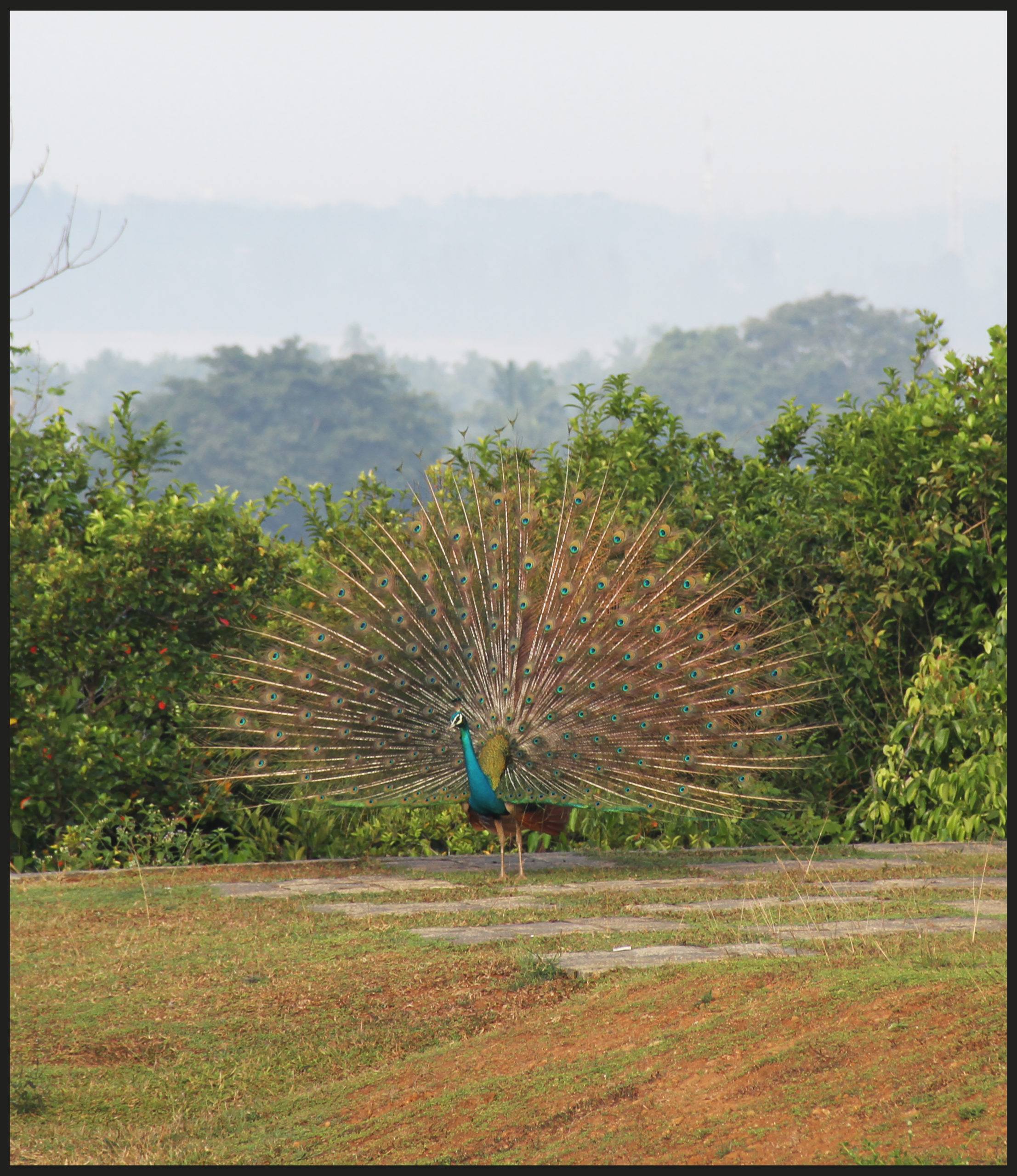 Sughra Raza. HAPPY BIRTHDAY JIM CULLENY!
 A few years back,
 There are momentary flashes in the aesthetic life of an individual which can’t be explained away by the exigencies of personal taste or the broader parameters of gender-biased inclinations. These random epiphanies may or may not have their roots in a psychologically identifiable pantheon of ‘likes’, but when they occur, they yank us from our routine expectations of a work and catapult us into a recessive-compulsive emotional terrain resembling infatuation—with a breathlessness induced by the sudden recognition of something strikingly familiar and yet completely unrelated to us.
 Not long ago, watching an emotional scene between two male Korean detectives in Beyond Evil, I was suddenly transported to Jean Renoir’s anti-war masterpiece


 Luxuriating in human ignorance was once a classy fad. Overeducated literary types would read Schopenhauer and Kierkegaard and Dostoevsky and Nietzsche, and soak themselves in the quite intelligent conclusion that ultimate reality cannot be known by Terran primates, no matter how many words they use. They would dwell on the suspicion that anything these primates conceive will be skewed by social, sexual, economic, and religious preconceptions and biases; that the very idea that there is an ultimate reality, with a definable character, may very well be a superstition forced upon us by so humble a force as grammar; that in an absurd life bounded on all sides by illusion, the very best a Terran primate might do is to at least be honest with itself, and compassionate toward its colleagues, so that we might all get through this thing together.
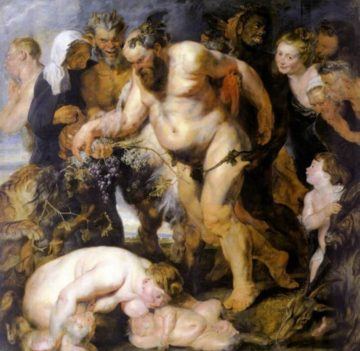 When King Midas asked Silenus what the best thing for man is, Silenus replied, “It is better not to have been born at all. The next best thing for man would be to die quickly.”