
by John Allen Paulos
 The well-known counterintuitive Monty Hall problem continues to baffle people if the emails I receive are any indication. A meta-problem is to understand why so many people are unconvinced by the various solutions. Sometimes people even cite the large number of the unconvinced as proof that the solution is a matter of real controversy, just as in politics an inconvenient fact, such as the ubiquity of Covid-19, is obscured by fake controversies.
This analogy is a bit deeper than it may seem. So, first the original problem, which arose because of a television show, “Let’s Make a Deal,” that was popular in the ’60s and ’70s and has been resurrected in one form or another since then. In the show a contestant is presented with three doors, behind one of which, he or she is told, is a new car. The other two doors have nothing behind them.
“The Let’s Make a Deal” host, the eponymous Monty Hall, asks the contestant to pick one of the three doors. Once the contestant has done so, Monty opens one of the two remaining unpicked doors to reveal what, if anything, is behind it, but is careful never to open the door hiding the promised new car. After Monty has opened one of the two unpicked doors, he offers the contestant the chance to switch his or her choice. The question is: Should the contestant stay with the original choice of door and hope the car is behind it or switch to the remaining unopened door? Read more »

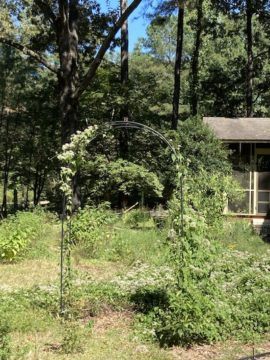 It had been a long time since I thought about lawns. I don’t mean in a grand philosophical sense, or the stoned contemplation of a single blade of grass. I mean thought about them at all. Before moving to Mississippi we had lived in Vancouver for 13 years, where we felt lucky to have a place to store our toothbrushes and maybe an extra pair of slacks; we really hit the jackpot when we acquired a postage-stamp-sized balcony on which we could murder tomato plants. Actual yards were out of the question for anyone who hadn’t bought a house on the west end of town 30 years ago; by the time we moved to Vancouver in 2006 as a tenure-track assistant professor and a trailing-spouse adjunct, it was already clear that we would never own a lawn.
 Robert Dash. Flower Bud of the Arbequina Olive Tree (black olives).
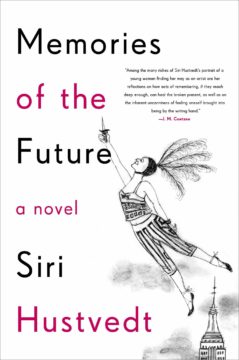 What is it to be twenty? Forty? Sixty? Eighty? These points that mark the four quarters of a life — fifths if you’re lucky, larger portions if you’re not.
  1. The public library is holding a book or DVD for me.
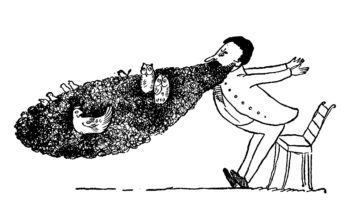


 At age twenty-three, after a brief stint of teaching at Calcutta University, I, accompanied by Kalpana, proceeded to Britain on a Commonwealth Scholarship. The Scholars from different parts of India were asked to assemble in Delhi, from where we were to take the international flight. The only experience I had of an air flight before was when I flew from Kolkata to Guwahati, representing Calcutta University in an inter-University debating competition. That flight experience had not been good, as our propeller-driven Dakota plane had hit a supposed ‘air pocket’. So I had some unnecessary trepidation for the long Delhi-London flight.
 The gender wage gap is a well-documented phenomenon. Many are familiar with the claim that women earn 80 cents on the dollar. A more precise statement would be something like, “In the U.S., according to
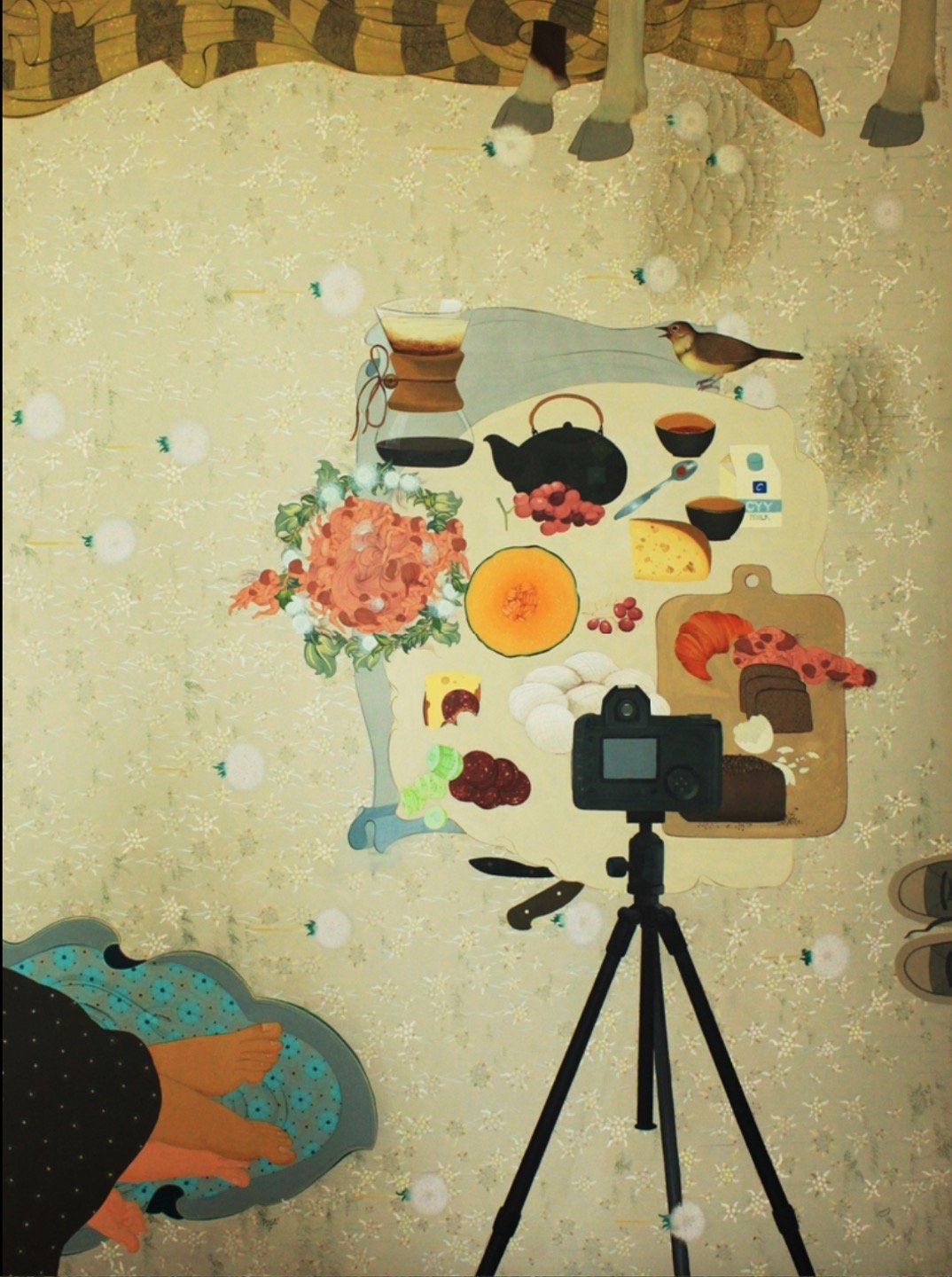 Uuriintuya Dagvasambuu. Aabam Beebem, 2019.