
by Jochen Szangolies
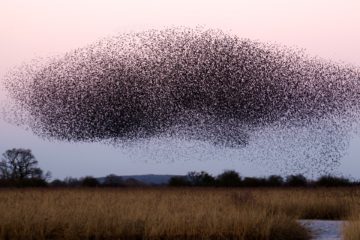
In last month’s column, I argued for the notion that life does not neatly decompose into individual life-forms—fish, fungi, firs, and humans. Instead, we are all just part of the same life expressed in many bodies, the way the one life of the butterfly is expressed in the two bodies of the larva (the caterpillar) and the imago (the winged form we typically think of when talking about butterflies). The argument wasn’t intended to foster some kind of hand-holding-moment of ‘we’re all in this together’ (not just, at least), but instead, was meant to chip away at what I believe to be two of the greatest obstacles towards meaningful collective action in the face of global existential crisis: locality of concern and despair of scale.
By locality of concern, I don’t merely mean being of the opinion that everything revolves around one’s own particular affairs—although that may be an expression of it. Rather, I mean the notion that one’s reasons for action are mostly or wholly centered on one’s own experience within the world—and may thus be in opposition to that of others. The idea that we’re all part of the same life contravenes this, by for instance making harm to ‘other’ life a form of self-harm—something that’s not just morally wrong, as most might agree it is, but simply irrational, like cutting off a perfectly functional thumb—like the caterpillar trying to get back at the butterfly because it envies its ability to fly.
But I believe that the other factor, despair of scale, may be yet more damaging, and it is this that I’ll be concerned with here. Read more »
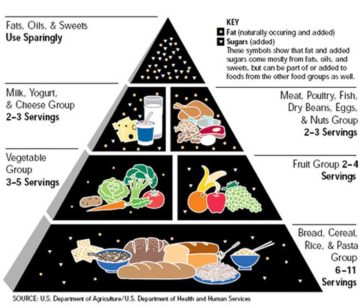 We have many choices when deciding what to eat. For most of human history, however, there has likely been little to no choice at all: people ate what was available to them or what their culture led them to eat. Now things are not so simple. As I mentioned in


 I enjoyed my days in Delhi School of Economics, but some aspects of the university’s policy in recruitment and promotion of teachers used to trouble me. Let me just give two examples. One is from DSE itself, but illustrative of a much more general problem in university life. We had a middle-aged colleague who had long wanted to be promoted to Readership (Associate Professorship), but failed in the usual process, because he had not done any serious research to speak of in many years. He was full of leftist clichés, and was popular with some sections of leftist students. He first started complaining that he was being passed over in promotion because his ‘right-wing’ colleagues (the term used in Economics those days was ‘neo-classical’—in the same pejorative way the term ‘neo-liberal’ is used nowadays) were biased in undervaluing his work. This after a time did not work, as even some leftist scholars in the Department shared views similar to those of the ‘right-wing’ colleagues on this matter. Then he tried a different tack.
 It’s my oldest memory. I am three, standing harnessed between my parents, in a brand-new two-seater 1959 Jaguar convertible roadster. We are on an empty gravel road someplace in Virginia and my Dad decides to let his new baby fly. I can see In front of me the windshield and, below, a gray leather dashboard that has two things of great interest…a speedometer and a tachometer. The motor hmmmmmms as he takes the car through the forward gears, the tachometer first rising and then falling, the speed increasing. The big whitewall tires are crunching the rough road; cinders are flying; we hit 60 MPH, then 70, then 80; and I’m clapping my hands and piping out “Faster, Daddy! Faster!” My mom goes from worried to furious “Slow down, Ernie, slow down!” As he passes 90, I look down for a moment and she’s slapping her yellow shorts. I peek at the rearview mirror and see a huge cloud of dust. 95, 100, and finally 105. Then without warning, and without using the brakes, he starts to slow, gradually downshifting; the speedometer and tachometer fall; and that’s where my memory ends.
 The peopling of Polynesia was an epic chapter in world exploration. Stirred by adventure and hungry for land, intrepid pioneers sailed for days or weeks beyond their known horizons to discover landscapes and living things never before seen by human eyes. Survival was never easy or assured, yet they managed to find and colonize nearly every spot of land across the entire southern Pacific Ocean. On each island, they forged new societies based on familiar Polynesian models of ranked patrilineages, family bonds and obligations, social care and cohesion, cooperation and duty. Each culture that arose was unique and changeable, as islanders continually adjusted to altered conditions, new information, and shifting political tides. Through trial and hardship, most of these civilizations—even on some of the tiniest islands, like
 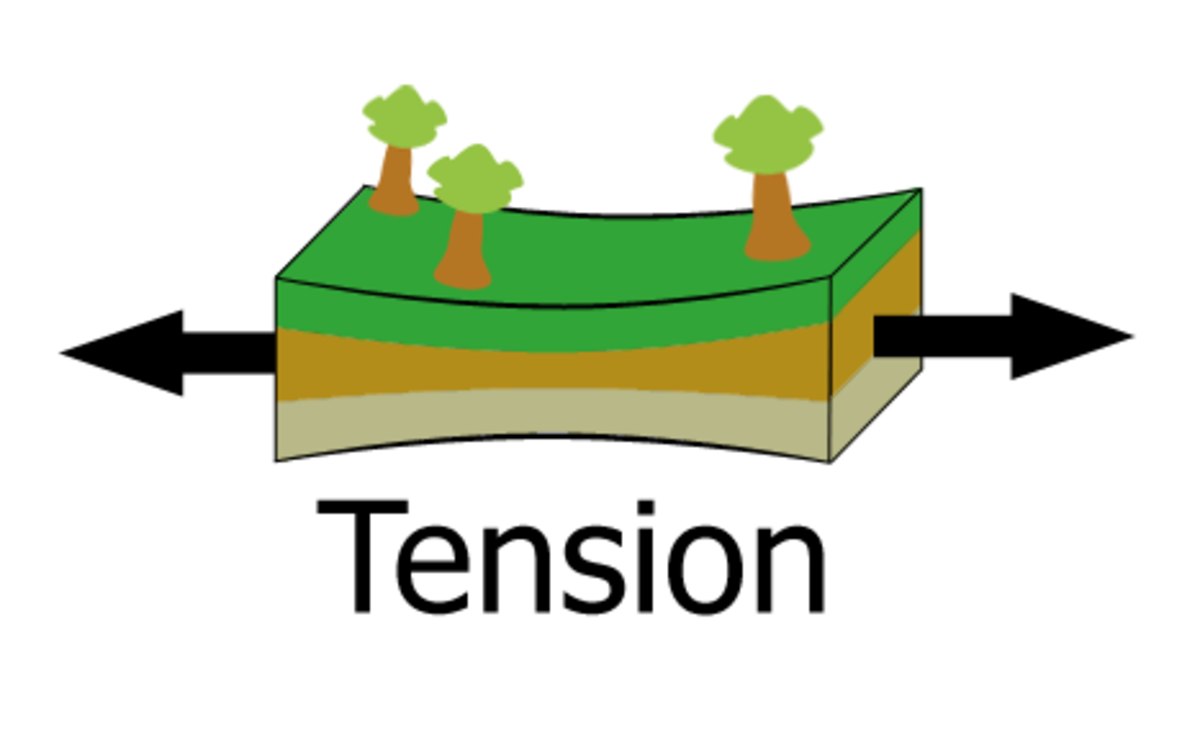 The United States has always faced a fundamental tension. On one side are those who champion, enforce, and/or profit from hierarchies of power: white supremacist racism, sexist patriarchy, Christian fundamentalism, and capital concentrations chief among them. Arrayed against these hierarchies of power are people who promote and work for racial equality, gender and sexual equality, cultural tolerance, the amelioration of poverty, and genuine freedom both for and from religious beliefs and practices.

 By a happy chance, the section I was invited to read from, alongside Andreas Flückiger and William Brockman, two associates of the Foundation, at the


 that this Group
  that these signatories include 17 members of Imperial’s own Faculty, Faculty at 11 other universities and research institutes, 19 Fellows of the Royal Society as well as several members of comparable overseas bodies, 4 Sirs, a Nobel Prize winner (