by Varun Gauri
When modern Buddhists and mindfulness practitioners say the ultimate cause of stress and suffering is the craving for permanence, especially the misguided craving for a permanent “self,” which “self” are they talking about?
In his interesting and provocative book Why I Am Not a Buddhist, Evan Thompson explores the possibilities: (1) The pre-reflective self, elemental to consciousness, is related to the fact that we cannot perceive an object without being aware that we are perceiving it. For example, I cannot notice a sunset without the knowledge that I am aware of the sunset. (2) I experience an imagined center of agency and locus of being. This is the sense, and the legal fiction, that someone is in charge in there, a CEO or author of our actions and thoughts. (3) Many of us believe in a non-material essence or soul. (4) I have an awareness of being embodied, the understanding that what happens to my arm also happens to me. (5) There is a social self that exists in relationships to others. I am continually monitoring where I stand in relation to parents, friends, families, colleagues, nations, and others. Am I loved, known, cared for? (6) Cognitive psychologist discuss the generalized ability to reflect on our own experience — the faculty for meta-awareness that is the source of introspection and planning. (7) Following from that capacity for meta-cognition, I am aware of “an extended self,” which emerges from an historical past and is thrown into time (there was something before me and there will be something after). This self has a kind of gnawing awareness of an unknown future, or rather, a future uncertain but for my certain death. This is the self that has to go places, that has an autobiography and that spins a narrative identity. It is the self that existentialists discuss, the one that establishes a stance — courageous, fearful, indifferent — toward our impending demise. Read more »

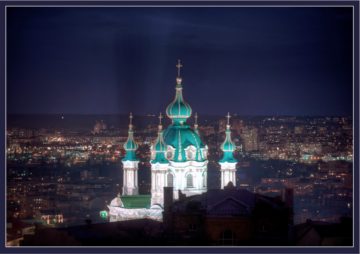 Anticipating war in Europe, 2022.
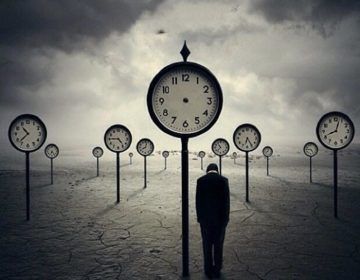
 Over the last few weeks, I’ve been spending more time in the office than I have since the start of COVID. I work for a technology start-up, and our New York office used to look and feel just as shows like Silicon Valley portrayed such offices: cool furniture, fancy coffee machines, lots of free snacks, gaming systems and board games piled up in a dedicated room, and lots of young people who gave the office a fun, high energy, even if noisy, vibe. But this visit, while the snacks and coffee machines are still there, the office has a rather ghost town-like feel. There’s been no mandate to return to the office, so for the most part, people haven’t. Every day I saw my colleague Andy who lives in a Manhattan apartment that’s too crowded with family and a dog. He escapes to the office for some peace of quiet. Then there was the receptionist and the facilities manager, who had no choice but to be there. But that was it for regulars. The odd person would float in for a bit, have a meeting, then leave. Is this the future of office life?
 We arrived in Berkeley and found it to be a pleasant place to live. I always have a partiality for small university towns that are culturally and politically alive. And yet Berkeley is not far from a thriving major city (San Francisco—“the unfettered city/resounds with hedonistic glee”, as Vikram Seth describes it in his verse-novel The Golden Gate) on the one hand, and from wide-open spaces on the other. Nature in Berkeley itself is quite beautiful, nestled as it is on a leafy hillside and facing an ocean and its bay, with gorgeous sunsets over the Golden Gate Bridge (on days when it is not shrouded by the mysterious fog—which appears almost as a character in San Francisco noir, like in the crime novels of Dashiell Hammett). Once driving in the dense fog in a winding street in the Berkeley hills I missed a turn and lost my way; I fondly remembered that famous scene in Fellini’s semi-autobiographical film Amarcord, where one winter-day in Rimini, his childhood town, the fog shrouds everything, the piazza disappears, and the grandpa loses his way home.
.jpg)
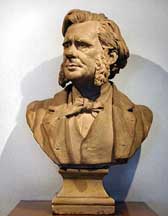 The President and the Provost have both been urging a whitewashing (if I can use this term) of the College’s history by such measures as removing Huxley’s name and bust from one of Imperial’s most prominent buildings. As I explained earlier, they attempted to accomplish this using a deeply flawed process. A History Group lacking in any higher level expertise in Huxley’s own areas of biology and palaeontology was set up, with the College archivist restricted to a consultative role, as was the Imperial faculty member best qualified to comment on historical matters. Two outside historians were consulted, but their areas of expertise did not really include Huxley.1 Adrian Desmond, Huxley’s biographer, was consulted but as I documented in my earlier article, his unambiguous vindication of Huxley was completely ignored. In October (revised version November), the
 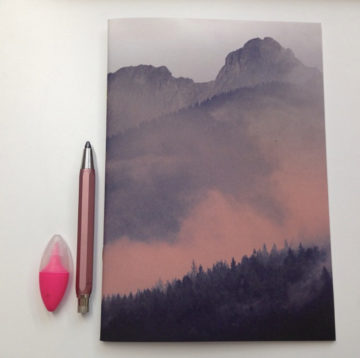 I am a modern-day scrapbooker. Which is to say that, like scrapbookers and notebook keepers across the ages, I am incessantly recording: things I have read, things I want to read, ideas I have come across or had, ways I want to be or to look, memorabilia from places I have been or want to go, inspiring or thought-provoking words, song lyrics, images, film clips, you name it. Like those who went before me, I record things in physical notebooks, but – and this is the new thing – my canvas is far larger than this original form. Digital photo albums, the iPhone ‘notes’ pad, emails to self,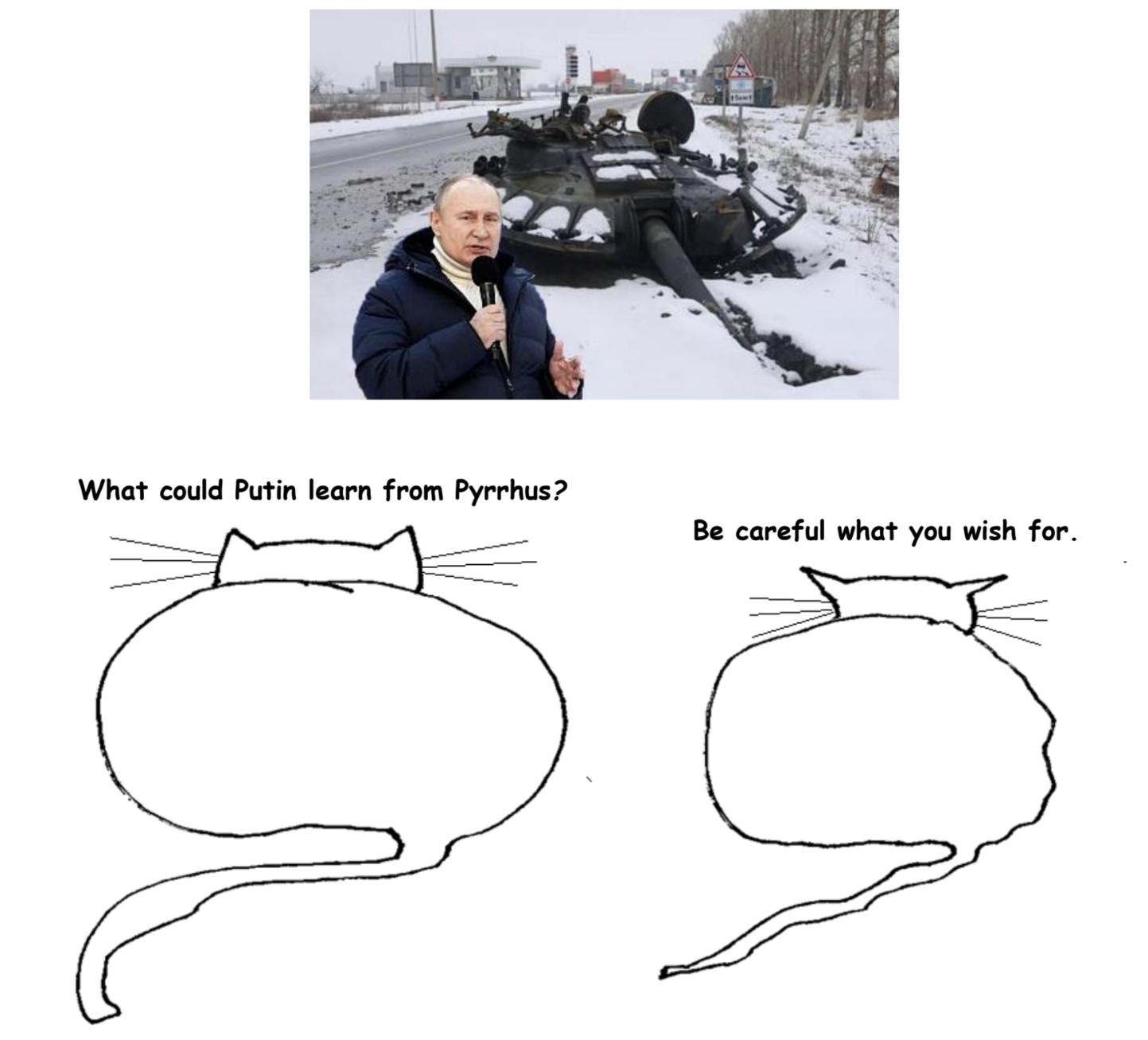
 I used to sit in class with songs in my head, loud enough to feel their beat in my fingertips. I used to blare Adele instead of listening to my teacher. I would sing voicelessly with Hozier while my classmates read a paragraph out loud. Passenger, P!nk, The Lumineers, Steven Sondheim. Billie Eilish, too, though not openly as it’s not cool to like anything that’s cool.
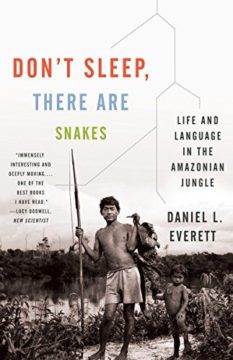 Daniel Everett’s 2008 book Don’t Sleep: There are Snakes tells two stories of loss. First, it tells how the young missionary linguist, who had been trained to analyse languages at the Summer Institute (now
 Lots of things don’t exist. Bigfoot, a planet between Uranus and Neptune, yummy gravel, plays written by Immanuel Kant, the pile of hiking shoes stacked on your head — so many things, all of them not existing. Maybe there are more things that don’t exist than we have names for. After all, there are more real objects than we have names for. No one has named every individual squid, nor every rock on Mars, nor every dream you’ve ever had. The list of existing things consists mostly of nameless objects, it seems.