by Dwight Furrow
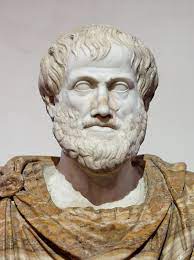 For many of the ancient philosophers that we still read today, philosophy was not only an intellectual pursuit but a way of life, a rigorous pursuit of wisdom that can guide us through the difficult decisions and battle for self-control that characterize a human life. That view of philosophy as a practical guide faded throughout much of modern history as the idea of a “way of life” was deemed a matter of personal preference and philosophical ethics became a study of how we justify right action. But with the recognition that philosophy might speak to broader concerns than those that get a hearing in academia, this idea of philosophy as a way of life has been revived in recent years.
However, if philosophy is to be successfully conceptualized as a way of life, it will have to overcome that legacy of modern moral philosophy which has little to say about life as lived. You can sift through the works of Hume, Kant, Mill, and their heirs without discovering much that is practically useful. Of all the mainstream views in ethics, one has to return to the ancient philosophers, most notably Aristotle, and their modern interpreters to find discussions of the nature of human flourishing, practical wisdom, and the qualities of character required to achieve it. But alas, it seems to me, even that return to Aristotle is not sufficient to make the argument for philosophy as a way of life. Despite Aristotle’s laudable sensitivity to practical concerns, his work is afflicted with idealizations that limit its value for everyday moral reflection. Read more »




 Andreu Mas-Collel, a mathematical economist from Catalonia, came to Berkeley before I did. He was a student activist in Barcelona, was expelled from his University for activism (those were the days of Franco’s Spain), and later finished his undergraduate degree in a different university, in north-west Spain. When I met him in Berkeley he was already a high-powered theorist using differential topology in general-equilibrium analysis, in ways that were far beyond my limited technical range in economic theory. But when we met, it was our shared interest in history, politics, and culture that immediately made us good friends, and his warm cheerful personality was an added attraction for me. (His wife, Esther, a mathematician from Chile, was as decent a person as she was politically alert).


 Nikita Kadan. Hold The Thought, Where The Story Was Interrupted, 2014.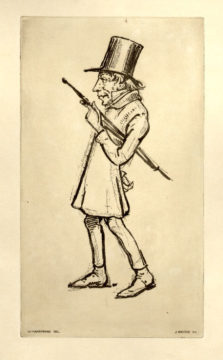


 Beliefs about the essential goodness or badness of human beings have been at the heart of much political theory.