
by Charlie Huenemann
“Out of love for mankind, and out of despair at my embarrassing situation, seeing that I had accomplished nothing and was unable to make anything easier than it had already been made, and moved by a genuine interest in those who make everything easy, I conceived it as my task to create difficulties everywhere.” (Johannes Climacus / Søren Kierkegaard, Concluding Unscientific Postscript)
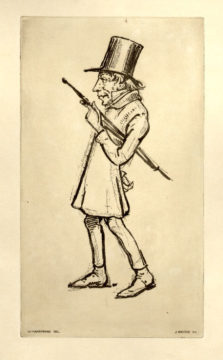
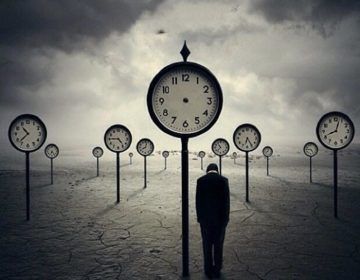
It is entirely possible that we cannot handle the ever rising tide of knowledge. Yes, I am going to presume that it is knowledge — that we are not barking up the wrong axis mundi, that we are not ten days away from the next Einstein who overturns everything, that this time next year we will not look back on today as back when we were mere children. You might ask how I can possibly make this presumption, and you are right to ask. Nevertheless…
We know a helluva lot. It’s really extraordinary if you stop to think about it. Why should the descendants of some savannah primates be able to figure out all this stuff about quarks, penicillin, double-entry bookkeeping, stock derivatives, the rise and fall of psychoanalysis, Bluetooth (well, right, work in progress), and microchip readers? Any ancient alien bookies would have placed the odds heavily against us. But here we are, trying to drink from a veritable firehouse of veritas, swelling our heads most impressively.
As I said, maybe we can’t handle it. What am I saying? Of course we cannot handle it. Look at the guy over there, the one who holds in his palm a device that can tell him that there may be archeological evidence of the Hanging Gardens of Babylon beneath the Euphrates, the one who is watching a video of a dog pooping on a boat. Check your own recently closed tabs. Would you make him or you the lord of the whole of human knowledge? Read more »
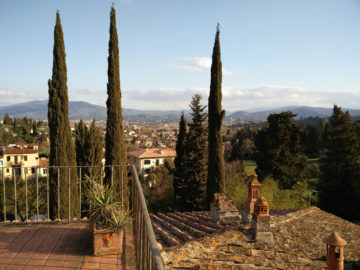

 In the Berkeley hills there is a campus bus but the nearest bus stop is about a one-mile walk from my home, if you take a short cut through a meadow, but it gets quite muddy in the rainy season. Still, after some years I opted for taking the campus bus rather than my car on weekdays. One regular passenger I used to meet in the bus was a distinguished nonagenarian, Charles Townes, who had won the 1964 Physics Nobel Prize for inventing the laser (later he was also involved in the team that discovered the black hole at the center of the Milky Way galaxy). In a campus lecture that I once gave on Globalization I was thrilled to see him at the front in the audience. He was active in the campus even in his 100th year, shortly before his death.
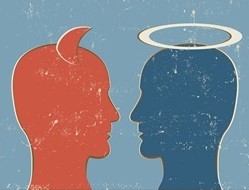 Beliefs about the essential goodness or badness of human beings have been at the heart of much political theory.
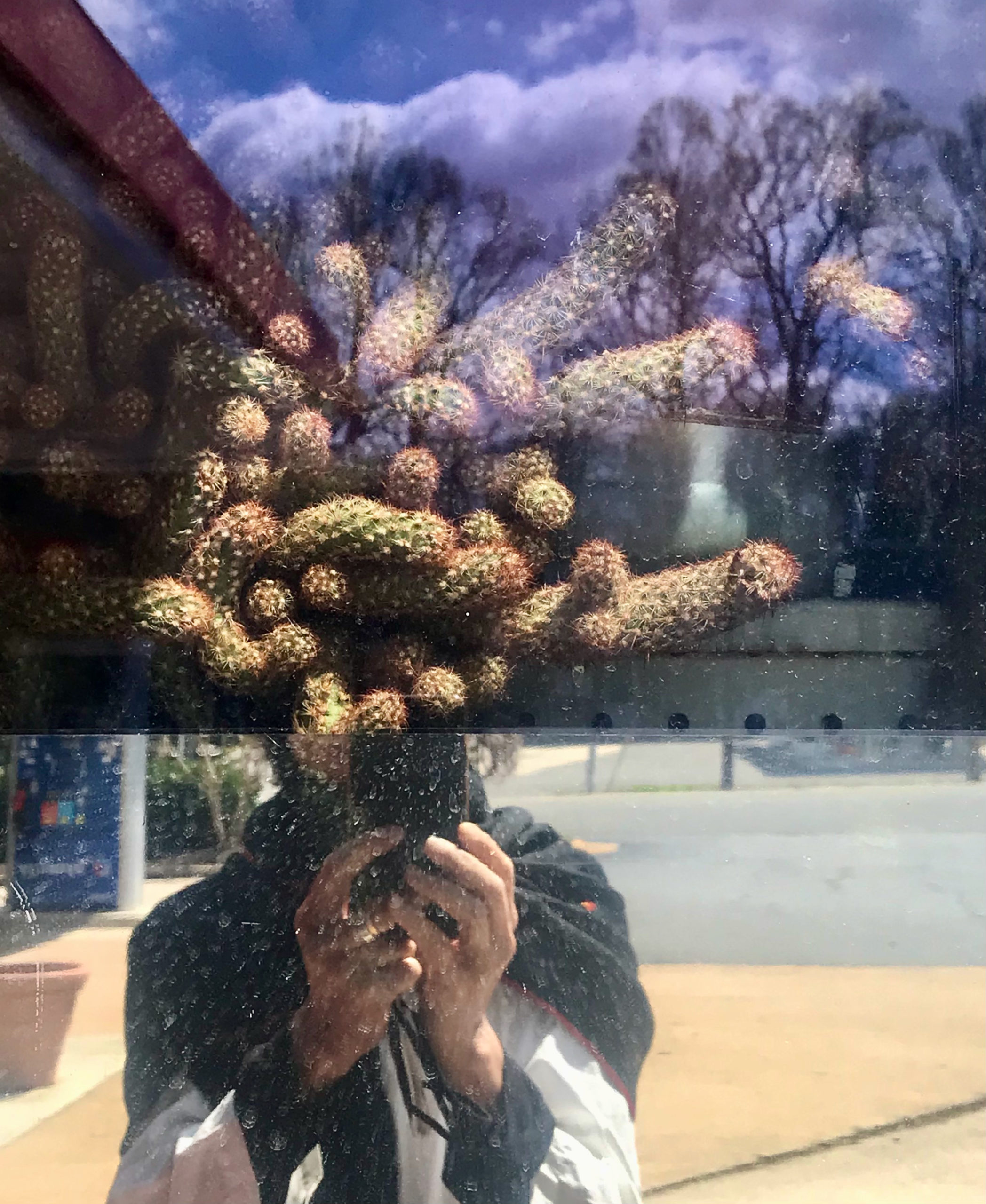 Sughra Raza. Self Portrait at Gas Station, April 3, 2022.
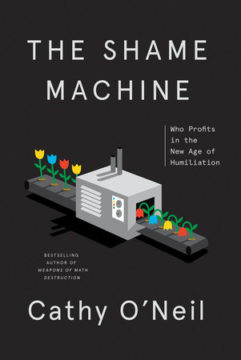
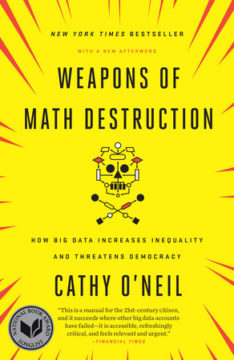 And then I started trying to warn people about the dangers of algorithms when we trust them blindly. I wrote a book called Weapons of Math Destruction, and in doing so I interviewed a series of teachers and principals who were being tested by this new-fangled algorithm called the value-added model for teachers. And it was high stakes. They were being denied tenure or even fired based on low scores, but nobody could explain their scores. Or shall I say, when I asked them, “Did you ask for an explanation of the score you got?” They often said, “Well, I asked, but they told me it was math and I wouldn’t understand it.”
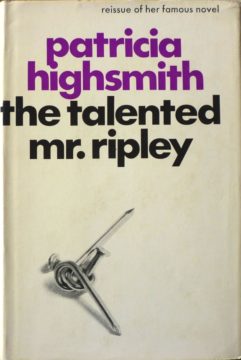 The character of the American abroad is an archetype in American fiction. By placing the American outside of his native country (usually in Europe), writers such as Henry James and James Baldwin were able to explore what constitutes American identity. More often than not, this identity is revealed in their novels not through what the identity contains, but in what it lacks.
 It is a strange enough thing to collect knives. It is a step stranger still to collect sharpening stones; a further abstraction from reality, an auxiliary activity supporting a hobby which is itself a pantomime of preparedness and practicality. No matter. Once one is lodged firmly enough down a rabbit hole, the only options available are to hope for rescue, or to keep crawling deeper. I have clearly chosen the latter.
 I am leaving, and I am taking nothing.

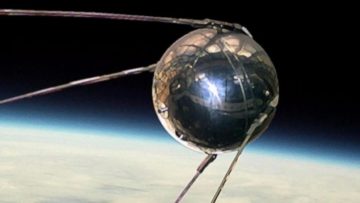 In Barcelona the daily scramble to deliver children to school results in terrible congestion in the upper part of the city, where the more economically privileged send their children. Watching this phenomenon brings back my own school days, when the most embarrassing thing any of us could imagine was being dropped off by parents. If such a thing were necessary for some unavoidable reason, the kids urged their parents to drop them a short distance away from the school so their peers wouldn’t see them getting out of the car. To be seen being coddled in this way was unimaginably embarrassing, almost as bad as having your mother show up to deliver a forgotten lunch box. Everything about parents tended to be embarrassing and much of the time we pretended not to have any. But there was a single exception to the drop-off rule. If the parents happened to own a 1956 Chevrolet, with its futuristic swept-wing design, then it was obligatory to be dropped off at school on some occasion, even if the ride was for only for a couple of blocks, so the other kids could look with sheer envy on this most prestigious possession.