by Carol A Westbrook

“Describe your family” was the assignment in my high school sociology class. A straightforward exercise, it was meant to show us how families are the basis on which all the other social institutions are modeled.
It was 1966. I lived in a tidy little bungalow with Mom and Dad, my sister and my two brothers. All four grandparents, deceased at the time, were Polish Catholic immigrants, which explains why my father had 11 siblings, while my mother had 4! Most of these uncles and aunts were married with large families of their own, so I had about 50 first cousins. All of these relatives lived nearby, in the Chicago area. I knew every one of them. This was my family.
At the time of the assignment, most families were “traditional.” Mother, father, siblings, uncles, aunts. There were no gay marriages then, with two mothers or two fathers, and there were few “blended” families of divorce. Furthermore, most adopted children didn’t know their birth parents, and thus did not include them in their families. Today things have changed, but families still remain as the basic social unit. Read more »

 Flor Garduno. Basket of Light, Sumpango, Guatemala. 1989.
 In 1965, John McPhee wrote an article for The New Yorker titled “
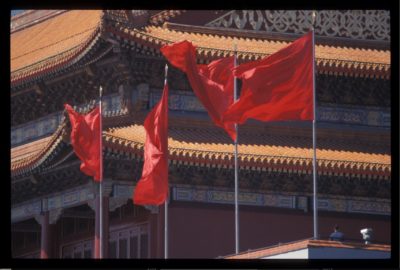
 Watching the Oathkeepers cry during the federal court trials under the charge of sedition, I considered the fate of seditious Loyalists during the Revolutionary War whom they most closely resemble in the topsy-turvy world of contemporary politics. The Revolutionary War was a civil war, combatants were united with a common language and heritage that made each side virtually indistinguishable. Even before hostilities were underway, spies were everywhere, and treason inevitable. Defining treason is the first step in delineating one country from another, and indeed, the five-member “Committee on Spies’ ‘ was organized before the Declaration of Independence was written.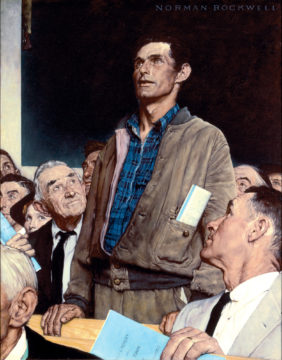
 In 2022, I worked harder than before to keep my students’ tables free of smartphones. That this is a matter for negotiation at all, is because on the surface, the devices do so many things, and students often make a reasonable, possibly-good-faith case for using it for a specific purpose. I forgot my calculator; can I use my phone? No, thank you for asking, but you won’t be needing a calculator; just start with this exercise here, and don’t forget to simplify your fractions. Can I listen to music while I work? Yeah, uhm, no, I happen to be a big believer in collaborative work, I guess. Can I check my solutions online please? Ah, very good; but instead, use this printout that I bring to every one of your classes these days. I’m done, can I quickly look up my French homework? That’s a tough one, but no; it’s seven minutes to the bell anyway and I prepared a small Kahoot quiz on today’s topic. (So everyone please get your phones out.)
 Lita Albuquerque. Southern Cross, 2014, from Stellar Axis: Antarctica, Ross Ice Shelf, Antarctica, 2006.