by Eric Bies
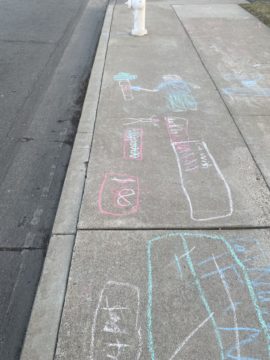 I liked to play with chalk when I was little. Little kids did then. As far as I can tell they still do now. I walk and jog and drive around town for every other reason. Inevitably, I end up spotting many (maybe not as many, but a good many) of them doing as I did: crouching between buildings, hunkering down on driveways and sidewalks to draw mommies and daddies and monsters; moons and suns; circles and squares. One minute they’re sketching their darling doggy; the next, they’re dreaming up cross sections of skyscrapers to hop across their faces. A very little one down the block, crab-walking with a piece of pink clasped in his left hand, practices divination with squiggles like the entrails of a bird. Recently, the rain has washed it all away, but only for the moment.
The Englishman G. K. Chesterton, one of those writers who wrote a lot of everything—novels about men with names like Thursday and Innocent Smith, biographies of Francis and Aquinas, a long poem about the Battle of Lepanto, detective stories Borges loved—also liked to play with chalk.
In “A Piece of Chalk,” one of many memorable articles written for the Daily News in the first years of the last century, Chesterton recounts a morning outing while on vacation. Read more »


 In The Art of Revision: The Last Word, Peter Ho Davies notes that writers often have multiple ways to approach the revision of a story. “The main thing,” he writes, “is not to get hung up on the choice; try one and find out. … Sometimes the only way to choose the right option is to choose the wrong one first.” I’m easily hung up on choices of all kinds, and I read those words with a sense of relief.
 A friend just sent me a copy of materials that the Cornwall Alliance is sending to its supporters. Here is an extract [fair use claimed]: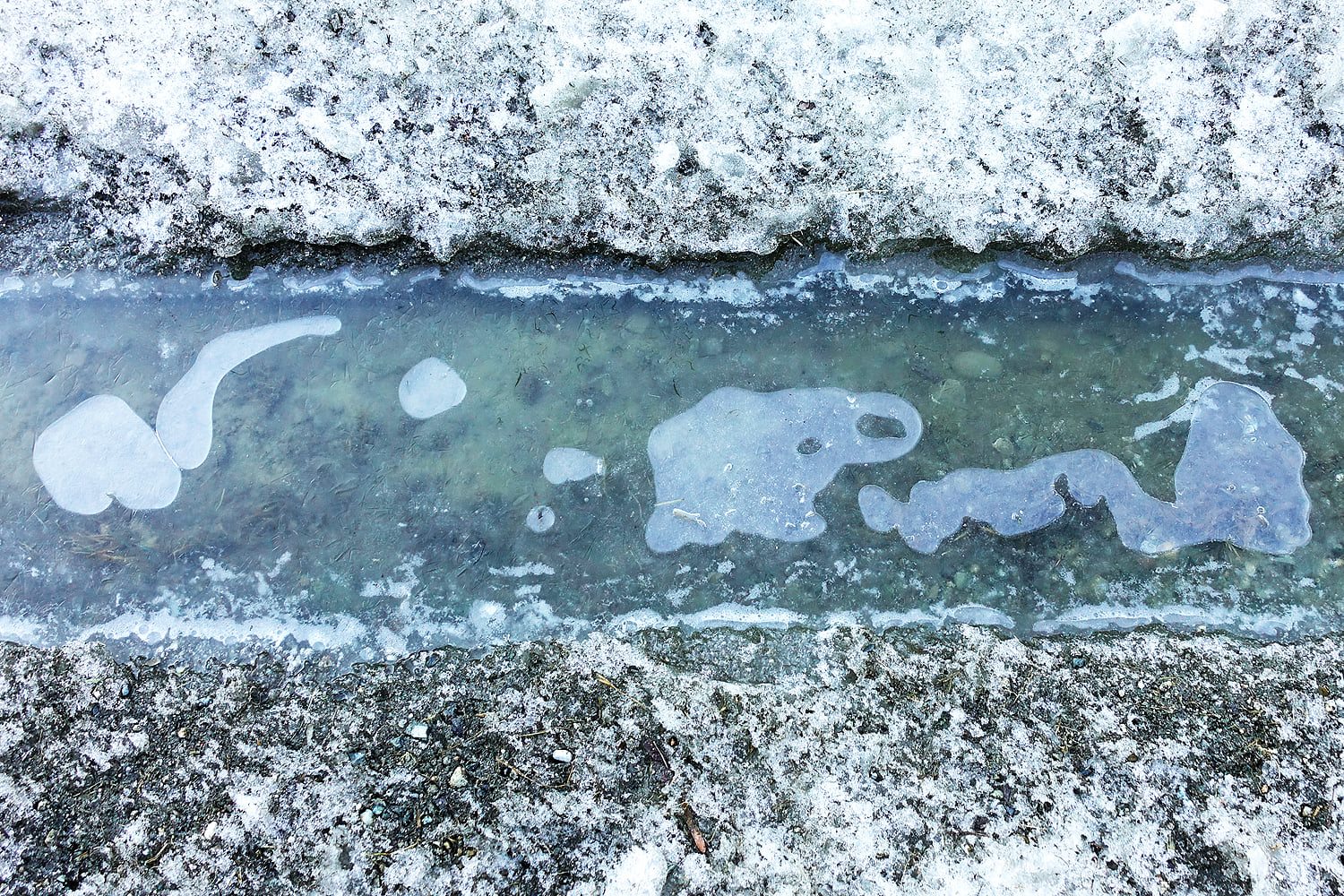


 Recently, I asked the students in my class whether they had used


 Sughra Raza. Untitled. Rwanda, January 2023.