
Category: Recommended Reading
Curation Conservation
Andrea Appleton at The New England Review:
 Many of us desperately want to preserve the thing we call nature or wilderness. But because we’ve destroyed so much, it is a slippery business to save what remains. If we don’t erect predator-proof fences, the world will lose the rabbit-eared bandicoot, a marsupial rodent with giant ears and a long pink nose. And we’ll lose the Newell’s shearwater, a seabird that brays like a donkey and dives down 150feet to catch squid. If we dobuild the fences, we lose the luxuriant creative abandon that produced these creatures. We create a demonstration plot of what once was.
A demonstration plot is not enough. I believe it’s the uncontained riot of the natural world that speaks to us. We seek a glimpse at the machinery of life. We seek a sobering corrective, a rough estimation of what the world might look like without us. We seek an escape hatch from our incessant selves, an impartial space. The coyote eats the baby rabbit, or the rabbit gets away. Both of those things happen at one time or another, and one is not better than the other. A fence, by contrast, takes sides. It declares who can eat whom.
more here.
Liberalism and Bad Infinity
Re-reading The Novels of John le Carré
Mick Herron at the TLS:
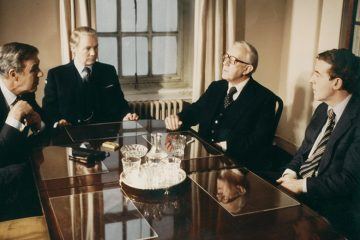 Re-reading is often deemed comfort reading, and of course it can be. But books that are embedded in your history are rich in association, and picking them up often retriggers the emotions they provoked the first time, emotions allied to the feeling of being young. Comfort reading can be the most uncomfortable kind of all. I remember buying The Honourable Schoolboy at a bookshop in Newcastle that no longer exists; I remember taking it on a marathon coach journey, the length of the country; and I remember reading much of it in my first ever hammock in blistering sunshine – my first foreign holiday, not far from Nîmes. Similarly, it matters to me that my copy of Smiley’s People – a first edition given to me as a birthday gift – is identical to the one I borrowed from my local library in 1979 or 80. When I pick it up, I feel my younger self tugging at my sleeve, asking for his book back.
The Honourable Schoolboy’s plot bestrides the “Far East” but begins in London’s dusty corners, with gossip. Le Carré’s world is rife with bitchiness and rumour, with espionage carried out among the filing cabinets: we’re in the world after the fall now, hearing “the last beat of the secret English heart”.
more here.
Thursday Poem
Blessed Nicholas Steno
Though noting with incredulity
their employment in the
harnessing of winds,
Pliny the Elder
in his treatise on Natural History
could state with more certainty
on the subject of Glossopetrae
that those forked stones
littering mountaintops
drop out of heaven
during lunar eclipses.
So when Ferdinando the Grand Duke of Tuscany,
a millennium later, charged his best anatomist
with the autopsy of a shark (of such magnitude
her removed liver was measured at 100 kg)
caught by two men of Livorno,
who strung her from a tree and clubbed her to death,
the following miracle did Blessed Nicholas Steno 1
unveil to Florentine crowds
via the divine, scrupulous
hand, a mouthful
of tongue‐stones
set row upon
row in
perfected
lines.
by Sean Denmark
from Ecotheo Review
Feb. 2017
The Death of the Apology
Megan Garber in The Atlantic:
 In november 2017, Louis C.K. wrote an apology. Its four paragraphs, published in The New York Times, were a matter of expediency: The paper had just confirmed long-standing rumors that the comedian had, on several occasions, masturbated in front of unwilling female colleagues. But the apology was notable because—compared with those offered by other celebrities who’d been caught in the #MeToo movement’s accountabilities—it was a relatively good one. It clearly admitted wrongdoing. It acknowledged the women C.K. had harassed. It suggested that he would find ways to atone. “The hardest regret to live with is what you’ve done to hurt someone else,” C.K. wrote. “And I can hardly wrap my head around the scope of hurt I brought on them.” A year later, however, a very different Louis C.K. emerged. In a December 2018 stand-up set that leaked to YouTube, the formerly apologetic comedian was now apoplectic: He raged at political correctness; at the student survivor-activists of Parkland, Florida; at the way his career had met the business end of #MeToo. Whatever C.K. might have done, the more salient fact, apparently, was what had been done to him. “My life is over; I don’t give a shit,” he fumed. “You can—you can be offended; it’s okay. You can get mad at me. Anyway …”
Louis C.K.’s devolution was at once baffling and predictable. There was a time in American public life when atonement was seen as a form of strength—a way not only to own up to one’s missteps, but also to do that classic work of crisis management: control the narrative. (“I’m the responsible officer of the government,” John F. Kennedy said of the Bay of Pigs. “This happened on my watch,” Ronald Reagan said of Iran-Contra. “I take full responsibility for the federal government’s response,” George W. Bush said of Hurricane Katrina.) Bucks stopped. Power came with responsibility. Apologetic Louis C.K. operated within that old paradigm. Apoplectic Louis C.K., however, occupies a newer one—in which the true sign of power is not responsibility but impunity.
More here.
CRISPR-Edited T Cells Used in Cancer Patients for the First Time in the US
Emily Makowski in The Scientist:
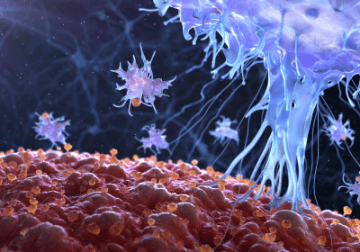 Preliminary research suggests that using CRISPR to treat cancer is safe in humans and could become a feasible therapeutic method in the future, although its efficacy is still unknown. Results from an ongoing clinical trial, led by hematologist Edward Stadtmauer of the University of Pennsylvania Perelman School of Medicine, will be presented at the American Society of Hematology meeting in December. The presentation abstract was published online yesterday (November 5).
Stadtmauer’s team procured T cells from three cancer patients—two with multiple myeloma and one with sarcoma—through a blood draw, and genetically modified the cells’ DNA using CRISPR. They inserted a gene from a virus into the immune cells that causes the cells to target the protein NY-ESO-1, found on cancer cells, and deactivated three genes within the cells that could interfere with their cancer-fighting ability. Two of the gene edits inactivate TCRα and TCRβ, causing T cell receptors to be removed. Without the receptors, the the cells can more easily bind to cancer cells. The third edit disables PDCD1, a gene that can kill T cells. The researchers then infused the cells back into the patients, who have since had no significant adverse effects after six months, according to NPR. Research is still underway to determine whether the altered T cells are having any effect on the cancers, according to the The New York Times.
More here.
Wednesday, November 6, 2019
Italy and Beyond
Belén Fernández in the Washington Spectator:
 Once upon a time in Italy, a prominent citizen declared: “It is unacceptable that sometimes in certain parts of Milan there is such a presence of non-Italians that instead of thinking you are in an Italian or European city, you think you are in an African city.”
In case the message was not crystal clear, he then spelled it out: “Some people want a multicolored and multiethnic society. We do not share this opinion.”
The citizen in question was none other than Silvio Berlusconi: billionaire three-time Italian prime minister, intermittent convict, and head of a superpowerful media empire, who, as the New York Times put it in January 2018, has now “cleverly nurtured a constituency of aging animal lovers—and potential voters—by frequently appearing on a show on one of his networks in which he pets his fluffy white dogs and bottle-feeds lambs.”
Panic over the devolving color-scape of the patria is, of course, of a piece with the greater right-wing narrative of Fortress Europe, which shuns the possibility that centuries of European plunder and devastation of the African continent might have any bearing on current migration patterns. But while history lessons may not be as entertaining as lamb-nursing sessions or bunga bunga parties, it’s worth noting that, in the not-so-distant past, Italians voluntarily found themselves in many African cities—and for purposes far less dignified than trying to survive.
More here.
Review of “Blueprint: How DNA Makes Us Who We Are” by Robert Plomin
John Mullen in Metapsychology:
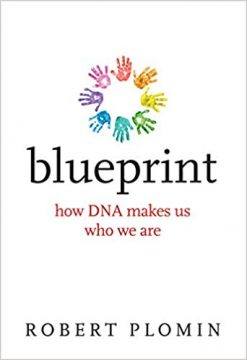 The author of blueprint, Robert Plomin is an American psychologist, geneticist and neuroscientist and perhaps the most important voice, over many years, in the field of behavioral genetics. It is difficult today to imaging how scientifically taboo it was to study the genetics of human behavior after the racist horrors, bogus research and eugenics projects carried out by the Germans in the Nazi period. The field of behavioral genetics got off to a politically rocky beginning in the 1960s, but has gradually gained respectability, although some of its applications, particularly in the area of race, have been controversial (I would argue, misguided). The great achievement of the field is to show without any doubt that understanding human behavior must include the factor of genetic predispositions. Robert Plomin is to be admired for his contributions and his courage. What he writes deserves attention.
Two general points about the book. First, it is not written for specialists. For example, there is a chapter that clearly, and at a very basic level, summarizes the basics of DNA. And a major point of the book is a societal question of how to reconcile the idea of genetic influences upon behavior with beliefs in meritocracy, free will and others. Second, ideas of innate or genetic differences among people, including human groupings, have a real potential to do harm if not discussed clearly and applied accurately. This is particularly true today as we witness a dangerous rise in racist and nationalist politics. These two points put a difficult burden upon Robert Plomin to write very clearly so that the reader does not misunderstand his conclusions and put them to wrong-headed use.
More here. And here is another older review by Matt Ridley.
Is Politics a War of Ideas or of Us Against Them?
Thomas B. Edsall in the New York Times:
 Is the deepening animosity between Democrats and Republicans based on genuine differences over policy and ideology or is it a form of tribal warfare rooted in an atavistic us-versus-them mentality?
Is American political conflict relatively content-free — emotionally motivated electoral competition — or is it primarily a war of ideas, a matter of feuding visions both of what America is and what it should become?
Jonathan Rauch, a senior fellow at Brookings, recently put the issue this way in an essay at the National Affairs website: “Here we reach an interesting, if somewhat surreal, question. What if, to some significant extent, the increase in partisanship is not really about anything?”
More here.
Watch J.S. Bach’s “Air on the G String” Played on the Actual Instruments from His Time
More here.
What If Keats Had Lived?
Ardene Hegele at Public Books:
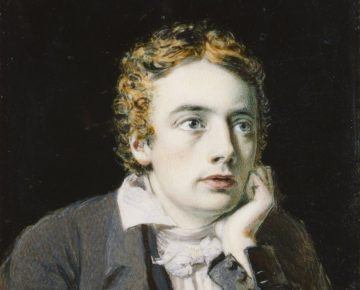 Kerschen’s depiction of the on-the-ground historical conditions that produced the Romantics’ most radical poetry—Shelley’s “Epipsychidion” and “The Masque of Anarchy,” Byron’s Don Juan—is a major achievement. But the book also offers an appealingly intimate view into Keats’s more mundane realities. The convalescent poet is forced to reckon with his debts, both financial and emotional: his life in Italy is dependent on his friends’ charity, and he is pressured to honor his engagement to Fanny Brawne, back in London. The author’s research is impeccable: the fictional Keats’s traits are all supported by what manuscript evidence tells us about the poet’s character. Even so, his choices often come as a pleasant surprise.
The Warm South’s thought experiment—offering an alternative future for Keats and his circle—picks up some of the most pressing questions in Romanticist scholarship. It does so knowingly: the novel implicitly engages with squarely academic books such as Stanley Plumly’s Posthumous Keats, which treats the questions of Keats’s poetic afterlife and the shaping of his legacy.
more here.
The Death of Doctor Dieu
Patrick Mcguinness at Literary Review:
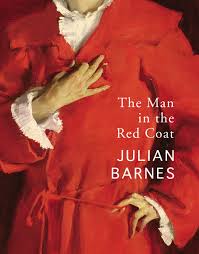 Julian Barnes’s new book immerses us in Belle Epoque Paris through the life of Samuel Pozzi, the sitter in John Singer Sargent’s famous portrait Dr Pozzi at Home. ‘Is it unfair to begin with the coat, rather than the man inside it?’ asks Barnes. ‘But the coat, or rather its depiction, is how we remember him today, if we remember him at all.’ Pozzi is an excellent choice of subject, because he is both straightforward and enigmatic, and because, though he knew everyone and turns up in numerous memoirs, letters and newspaper articles of the period, enough of his character remains just out of reach for Barnes to relish the challenge of imagining him.
This may be why the book’s cover stops just short of showing us Pozzi’s face. What we have instead is the shimmering red coat, tied at the waist, and the sitter’s delicate, long-fingered hands.
more here.
Ken Loach’s ‘Sorry We Missed You’
Ryan Gilbey at The New Statesman:
 Halfway through Sorry We Missed You, Ken Loach’s latest excursion into breadline Britain and a companion piece to his career-rejuvenating I, Daniel Blake, Abby (Debbie Honeywood) is recounting a nightmare in which she and her husband Ricky (Kris Hitchen) are stuck in quicksand. Their children, 11-year-old Lisa Jane (Katie Proctor) and 15-year-old Seb (Rhys Stone), try to pull them out but the more the adults struggle, the deeper they sink. There’s not much point in Abby mulling over the meaning of this, and no need to run it past a therapist. She and Ricky are workers in the gig economy, the instability of employment eating away at their wellbeing. “It’ll be different in six months,” is their plaintive mantra as they pile more hours on to their working week.
Ricky has been hired as a delivery driver on a zero-hours contract, for a courier firm called Parcels Delivered Fast. Or, in the company’s own parlance, he has been “on boarded” to “perform services”.
more here.
Wednesday Poem
First Snow, Kerhonkson
This, then, is the gift the world has given me
(you have given me)
softly the snow
cupped in hollows
lying on the surface of the pond
matching my long white candles
which stand at the window
which will burn at dusk while the snow
fills up our valley
this hollow
no friend will wander down
no one arriving brown from Mexico
from the sunfields of California, bearing pot
they are scattered now, dead or silent
or blasted to madness
by the howling brightness of our once common vision
and this gift of yours—
white silence filling the contours of my life.
by Diane di Prima
from Pieces of a Song
City Lights Books, 1990
Discworld dishes Moby-Dick: BBC unveils 100 ‘novels that shaped our world’
Alison Flood in The Guardian:
 There’s no Wuthering Heights, no Moby-Dick, no Ulysses, but there is Half of a Yellow Sun, Bridget Jones’s Diary and Discworld: so announced the panel of experts assembled by the BBC to draw up a list of 100 novels that shaped their world.
The choices were made by Stig Abell, editor of the Times Literary Supplement, Syima Aslam, founder of the Bradford literature festival, authors Juno Dawson, Kit de Waal and Alexander McCall Smith and journalist Mariella Frostrup. The list is intended to mark the 200th anniversary of Daniel Defoe’s Robinson Crusoe, widely seen as the progenitor of the English-language novel. The books chosen by the panel are those that have made a personal impact on them, and are divided into 10 categories. These include “love, sex and romance”, which features titles ranging from Jilly Cooper’s Rivals to Judy Blume’s Forever; “identity”, which moves from Toni Morrison’s Beloved to Zadie Smith’s White Teeth; and “adventure”, which includes Philip Pullman’s His Dark Materials, Walter Scott’s Ivanhoe and Raymond Chandler’s The Big Sleep. “So many amazing novels are not on the list,” said Dawson. “As this panel of judges, we’re not qualified to say this is the definitive list, but we are qualified to say these are our favourites. We knew right from the beginning that the role of these lists, almost, is for people to disagree with them … and we could only pick 100 books.”
So while there’s no Wuthering Heights, the Brontë sisters do feature on the list with Anne Brontë’s The Tenant of Wildfell Hall. And while Moby-Dick doesn’t appear, Herman Melville does – with Bartleby, the Scrivener.
More here.
Detection of a strange particle
Taku Yamanaka in Nature:
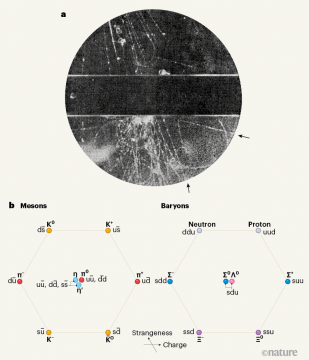 In the late 1940s, the physicists George Rochester and Clifford Butler1 observed something unusual in their charged-particle detector. They were studying the interactions between high-energy cosmic rays and a lead plate in the detector when they spotted V-shaped particle tracks (Fig. 1a). The small gap between the lead plate and the vertex of the tracks indicated that an invisible neutral particle had been produced in the plate, had travelled for a short distance and had then decayed into two visible charged particles. The mass of the neutral particle was about 1,000 times that of an electron, implying that it must be a previously unreported type of particle. This discovery paved the way for many puzzles and surprises in particle physics in the decades that followed.
At the time of Rochester and Butler’s work, protons, neutrons, electrons and particles called pions (short for π mesons) had been identified, and were known to be sufficient to form atoms. Pions were proposed2 in 1935 to explain how protons and neutrons are held together in small atomic nuclei by the strong nuclear force, and were found experimentally3,4 in 1947. While searching for a pion in cosmic rays, scientists discovered a different particle5, which is now called a muon. A heavy charged particle was then found6 in 1944, followed by Rochester and Butler’s unstable neutral particle. But the discovery of unexpected particles did not stop there. Then came the τ meson, which decays into three pions; the θ meson, decaying into two pions; the κ meson, decaying into a muon and an invisible particle; the Λ0 particle, decaying into a proton and a pion; and the list goes on.
More here.
Tuesday, November 5, 2019
In the 17th Century, Leibniz Dreamed of a Machine That Could Calculate Ideas
Oscar Schwartz in IEEE Spectrum:
 In 1666, the German polymath Gottfried Wilhelm Leibniz published an enigmatic dissertation entitled On the Combinatorial Art. Only 20 years old but already an ambitious thinker, Leibniz outlined a theory for automating knowledge production via the rule-based combination of symbols.
Leibniz’s central argument was that all human thoughts, no matter how complex, are combinations of basic and fundamental concepts, in much the same way that sentences are combinations of words, and words combinations of letters. He believed that if he could find a way to symbolically represent these fundamental concepts and develop a method by which to combine them logically, then he would be able to generate new thoughts on demand.
The idea came to Leibniz through his study of Ramon Llull, a 13th century Majorcan mystic who devoted himself to devising a system of theological reasoning that would prove the “universal truth” of Christianity to non-believers.
More here.
Sean Carroll’s Mindscape Podcast: Philip Goff on Consciousness Everywhere
Sean Carroll in Preposterous Universe:
 The human brain contains roughly 85 billion neurons, wired together in an extraordinarily complex network of interconnected parts. It’s hardly surprising that we don’t understand the mind and how it works. But do we know enough about our experience of consciousness to suggest that consciousness cannot arise from nothing more than the physical interactions of bits of matter? Panpsychism is the idea that consciousness, or at least some mental aspect, is pervasive in the world, in atoms and rocks as well as in living creatures. Philosopher Philip Goff is one of the foremost modern advocates of this idea. We have a friendly and productive conversation, notwithstanding my own view that the laws of physics don’t need any augmenting to ultimately account for consciousness. If you’re not sympathetic toward panpsychism, this episode will at least help you understand why someone might be.
More here.
New Atheism: The Godlessness That Failed
Scott Alexander in Slate Star Codex:
Thucydides predicted that future generations would underestimate the power of Sparta. It built no great temples, left no magnificent ruins. Absent any tangible signs of the sway it once held, memories of its past importance would sound like ridiculous exaggerations.
This is how I feel about New Atheism.
If I were to describe the power of New Atheism over online discourse to a teenager, they would never believe me. Why should they? Other intellectual movements have left indelible marks in the culture; the heyday of hippiedom may be long gone, but time travelers visiting 1969 would not be surprised by the extent of Woodstock. But I imagine the same travelers visiting 2005, logging on to the Internet, and holy @#$! that’s a lot of atheism-related discourse what is going on here?
My first forays onto the Internet were online bulletin boards about computer games. They would have a lot of little forums about various aspects of the games, plus two off-topic forums. One for discussion of atheism vs. religion. And the other for everything else. This was a common structure for websites in those days. You had to do it, or the atheism vs. religion discussions would take over everything. At the time, this seemed perfectly normal.
More here.
James Duesterberg at The Point:
Holloway invokes the story of Frankenstein’s monster, which is often taken as an allegory for capitalism. Frankenstein, a mad scientist who creates an artificial man, spends most of his story chasing after his invention or being chased by him; like a regulatory agency, the best he can do is damage control.
more here.