
Andrea K. Scott at The New Yorker:
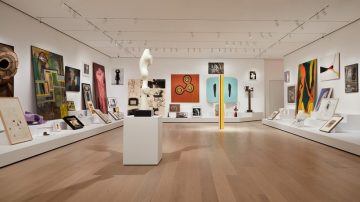 Prunella Clough, a superbly weird British modernist who died in 1999, at the age of eighty, was fond of a quote by Édouard Manet: “Painting is like throwing oneself into the sea to learn to swim.” Looking at art can be like that, too—both a crash course and a full-body experience. Visitors to the newly renovated moma are invited to take that kind of plunge in the show “The Shape of Shape,” installed in a small gallery on the fifth floor, filled with an exhilarating abundance of seventy-one paintings, sculptures, photographs, drawings, and prints in the museum’s collection. They were selected by the voraciously smart Amy Sillman, a superbly weird painter herself (she contributes a blood-crimson wall work, equal parts shadow and viscera), who chose the catchall concept of “shape” because it’s off the grid, rarely discussed, as opposed to related principles like color or systems. Sillman muses in her introductory wall text that shape may be “too personal, too subjective, to be considered rigorously modern.” In keeping with the rehang throughout the new building, hidebound hierarchies of modernism are reconsidered. While the show doesn’t stint on acknowledged Masters (no Manet, but there is a Matisse), the emphasis is on oddballs like Clough, whose orphic 1985 painting “Stone” is included.
more here.
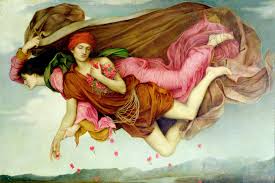 ‘Pre-Raphaelite Sisters’ takes the Pre-Raphaelite Brotherhood, fades out the central figures and asks those previously known for their supporting or peripheral roles to step forward. It pays attention to models such as Fanny Cornforth and Annie Miller, investigates the activities of the wives of some of its leading figures, including Jane Morris, Georgiana Burne-Jones and Effie Gray Millais, and celebrates the art of such sculptors and painters as Maria Zambaco and Marie Spartali Stillman. It is, in effect, a cultural history of the Pre-Raphaelite Brotherhood in its focus on how clients were tended, studios managed, costumes stitched, parallel careers pursued, opportunities for work seized and respectability either sought or rejected. It unfolds a fascinating series of interconnected life stories.
 One of the central questions I’m asking myself is how to fit the human being into our current understanding of both natural scientific fact and the social and general mental and interpretative facts unearthed by the humanities and social sciences. Where do we locate the human being and what we know about ourselves from humanistic, historically oriented research vis-à-vis contemporary technology, the digital sphere, cutting-edge research in physics, neuroscience, etc.?
 The authors’ argument goes like this. The emergence of agriculture 12,000 years ago favored societies that could work together on big projects, like growing crops. This kind of collaboration required people to be members of tightly bound social networks, strengthened by individuals who showed solidarity with one another. Families in farming societies fostered intense connection among people, because their survival depended on it: extended relatives lived under one roof, polygamy was often allowed, and people married within their own communities and families. Practices like ancestor worship and shared ownership further strengthened these bonds, both in Europe and in many farming societies around the agricultural world.
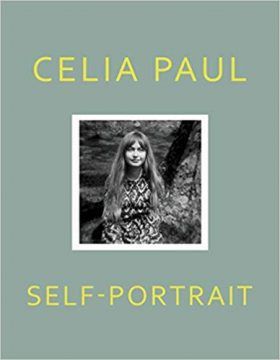 Accounts of the muse–artist relation were anchored in the idea of male cultural production as a special category, one with particular needs—usually sexual—that the muse had been there to fulfill, perhaps even to the point of exploitation, but without whom we would have missed the opportunity to enjoy this or that beloved cultural artifact. The art wants what the art wants. Revisionary biographies of overlooked women—which began to appear with some regularity in the Eighties—were off-putting in a different way (at least to me). Unhinged in tone, by turns furious, defensive, melancholy, and tragic, their very intensity kept the muse in her place, orbiting the great man.
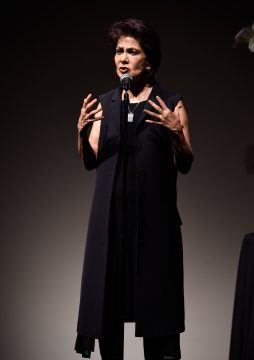 Azra Raza, an oncologist at Columbia, has watched too many people die from cancer. They include her patients and her husband, also a cancer specialist. She has poured her frustration into a new book, The First Cell: And the Human Costs of Pursuing Cancer to the Last.
 Good
Good  In 1988, Valerie Solanas, the author of the 1967 female-supremacist pamphlet SCUM Manifesto, died from pneumonia at the age of fifty-two, in a single-occupancy hotel room in San Francisco. The decomposing body of the visionary writer, who famously set forth her plans “to overthrow the government, eliminate the money system, institute complete automation and destroy the male sex,” was discovered kneeling, as though in prayer, slumped over the side of the bed. The image lends itself to hagiographic depictions of Solanas—as a fallen soldier, a suffering genius, a latter-day entrant into the modernist pantheon of great artists exiled by society. Or perhaps that’s just how she appears to me. I’d rather imagine her within a tragic male tradition than an abject female one—though you’ll soon see why I’ve begun to wonder if there’s any difference.
 New, early data from Grail showed its liquid biopsy test not only was able to detect the presence of 12 different kinds of early-stage cancer but could also identify the disease’s location within the body before it spreads using signatures found in the bloodstream. The test also demonstrated a very low rate of false positives, at 1% or less. The former
  The rule of thumb for temperate rainforests is one third live trees, one third snags, one third nurse logs. I saw almost no dead trees in Amazonia, standing or otherwise. Things rot too fast. A dead tree can’t defend itself or maintain a symbiotic relationship with someone who will (ants). Apparently a forest can be unimaginably ancient without having a single organism make it past a few dozen years.
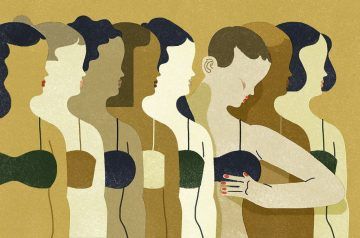 Efforts to reduce deaths from breast cancer in women have long focused on early detection and post-surgical treatment with drugs, radiation or both to help keep the disease at bay. And both of these approaches, used alone or together, have resulted in a dramatic reduction in breast cancer mortality in recent decades. The average five-year survival rate is now 90 percent, and even higher — 99 percent — if the cancer is confined to the breast, or 85 percent if it has spread to regional lymph nodes. Yet, even though a steadily growing percentage of women now survive breast cancer, the disease still frightens many women and their loved ones. It affects one woman in eight and remains their second leading cancer killer, facts that suggest at least equal time should be given to what could be an even more effective strategy: prevention. Long-term studies involving tens of thousands of women have highlighted many protective measures that, if widely adopted, could significantly reduce women’s chances of ever getting breast cancer. Even the techniques now used to screen for possible breast cancer can help identify those women who might be singled out for special protective measures.
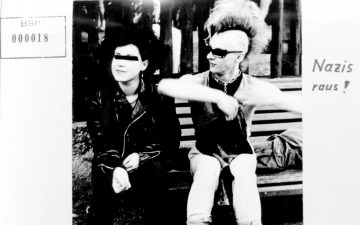 When walls are built through a city, strengthened with reinforced concrete and steel, separated by a strip of land where you can be shot and left to die, you don’t expect things to break through. But radio broadcasts don’t stop at borders. Political regimes can’t stop soundwaves. They just travel.
 I have always demanded, wisely or not, my autonomous creative space away from my professional commitments. It may be that I do not in fact have a right to such a space. After all, when you become a diplomat, say, or a priest or a supreme court judge, it is generally understood that your are foregoing your freedom to be, at least publicly, more than a diplomat or a priest or a judge. But the professorial career doesn’t rise, I don’t think, to that level of vocational self-erasure, where one is no longer free to be more than what one is.
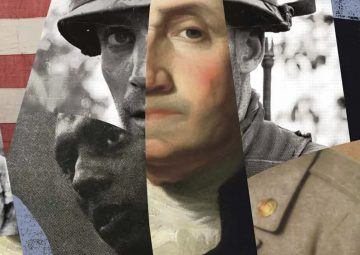 In 1931, historian James Truslow Adams published The Epic of America, a one-volume history of the country. At more than 400 pages, it was a formidable volume, but Adams’s lyrical prose and insistence on putting everyday people at the center of his narrative drew readers in. They took inspiration from his idea of an “American dream,” a phrase he coined for the book and intended as its original title. As Adams saw it, the American dream—the notion that all who lived in the United States would be able to pursue their ambitions “regardless of the fortuitous circumstances of birth or position”—wasn’t empty talk. It had shaped the country’s past, and it might well shape its future.
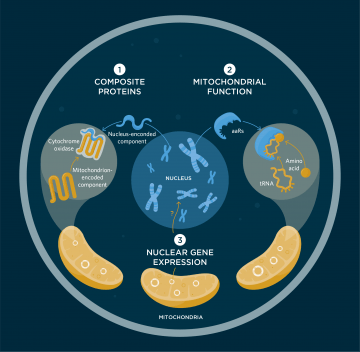 From Alaska down to the Baja Peninsula, the rocky tide pools of North America’s West Coast are separated by hundreds of kilometers of sandy beaches. Inside those tide pools live Tigriopus californicus copepods, small shrimp-like animals that evolutionary biologist
  According to the