
Category: Recommended Reading
The Woman in Black
Eric Jager at Lapham’s Quarterly:
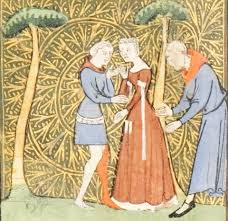 In a freezing December day in 1386, at an old priory in Paris that today is a museum of science and technology—a temple of human reason—an eager crowd of thousands gathered to watch two knights fight a duel to the death with lance and sword and dagger. A beautiful young noblewoman, dressed all in black and exposed to the crowd’s stares, anxiously awaited the outcome. The trial by combat would decide whether she had told the truth—and thus whether she would live or die. Like today, sexual assault and rape often went unpunished and even unreported in the Middle Ages. But a public accusation of rape, at the time a capital offense and often a cause for scandalous rumors endangering the honor of those involved, could have grave consequences for both accuser and accused, especially among the nobility.
more here.
On Joseph Conrad
Fredric Jameson at the LRB:
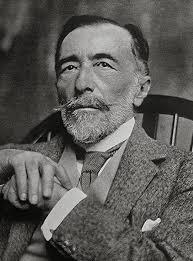 It is historically unsurprising that, in the context of an emerging mass culture, nostalgia for older forms should express itself in their revival and imitation as high-art products. The adventure story was promoted into literature. A taste for this ‘canon’, from Stevenson to Kipling, from gaucho stories to Westerns, was formative for Borges, whose admiration for Conrad was well known. It is a mistake to consider Borges a modernist; rather, when he was awarded the Prix Formentor in 1961, marking his belated arrival on the world literary stage (along with Beckett, who shared the prize that year), it was a harbinger of the postmodern return to plot, to intricacy and intrigue, and away from the densities of poetic language. Conrad’s ‘postmodern’ reversion to plot was, however, combined with a different kind of modernist supplement, namely the work of style. Conrad dealt with his traditional raw material according to a stylistic strategy very different from Borges’s superposition of alternating plots and narrative paradoxes; yet the affinity betrays a deeper contradiction in the literary production process common to their respective historical moments.
more here.
The world after Covid-19: We have a chance to transform society
Matthew Taylor in iai:
 Covid 19 is a challenge to which we are all seeking to respond. Some major social upheavals lead to fundamental and progressive shifts, think for example of the way the AIDS crisis accelerated the fight for LGBT rights; while others, most obviously the global financial meltdown of 2008, fail to precipitate major reform despite causing immense hardship. Indeed, the widespread assumption on the left that the financial crisis would lead to a reaction against inequality and global finance was not only disappointed but confounded as the political momentum was, in many countries, seized by nationalist populism.
Of the conditions that turn an immediate crisis into long term change, three stand out, all of which need to be in place:
- Latent potential, an underlying desire and logic for things to be different;
- Precipitating factors, events that create momentum for change;
- and Workable mechanisms, concrete ways of embedding change in social structures
Where might be the spaces in society and policy areas where these conditions could apply?
Let’s start with inequality and insecurity. Overall, there has for some time been a strong public feeling that inequality is excessive. Even politicians on the right have accepted the problem of real and perceived unfairness. The pandemic doubly amplifies the inequality story. On the one hand, it reminds us of our common humanity and vulnerability, on the other, it brings into sharper relief how much more vulnerable are some citizens whether it’s casual workers, children in poorer families, isolated older people or even prisoners.
More here.
Three Ways to Make Coronavirus Drugs In a Hurry
Michael Waldholz in Scientific American:
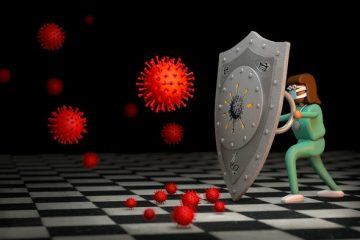 Mark Denison began hunting for a drug to treat COVID-19 almost a decade before the contagion, driven by a novel coronavirus, devastated the world this year. Denison is not a prophet, but he is a virologist and an expert on the often deadly coronavirus family, members of which also caused the SARS outbreak in 2002 and the MERS eruption in 2012. It is a big viral group, and “we were pretty certain another one would soon emerge,” says Denison, who directs the division of pediatric infectious diseases at Vanderbilt University Medical Center.
A virus is an unusual beast. Essentially it is a cluster of genetic material that integrates itself into a cell and takes over some of the cell’s molecular machinery, using it to assemble an army of viral copies. Those clones burst out of the cell, destroying it, and go on to infect nearby cells. Viruses are hard to kill off completely because of their cellular integration—they hide within their hosts. And they have explosive reproductive rates. Because total eradication is so hard, antiviral drugs instead aim to limit replication to low levels that cannot hurt the body.
In 2013 Denison and Ralph Baric, a coronavirus researcher at the University of North Carolina at Chapel Hill, identified a vulnerable site on a protein common to all coronaviruses they had examined, a spot that is key to the microbe’s ability to make copies of itself. If that ability is hindered, a coronavirus cannot cause widespread infection. Four years later researchers in the two laboratories spotted a compound that acted on this protein site. It was sitting, unused, in a large library of antiviral compounds created by the biotech giant Gilead Biosciences. The scientists got a sample and, in test tube and animal experiments, showed that the drug, called remdesivir, shut down the replicating machinery of several coronavirus variants.
More here.
Thursday Poem
The Birds
The world begins again!
Not wholly insufflated
the blackbirds in the rain
upon the dead topbranches
of the living tree,
stuck fast to the low clouds,
notate the dawn.
Their shrill cries sound
announcing appetite
and drop among the bending roses
and the dripping grass.
by William Carlos Williams
from Narrative Magazine
Wednesday, April 22, 2020
Jeffrey Sachs on the Catastrophic American Response to the Coronavirus
Isaac Chotiner in The New Yorker:
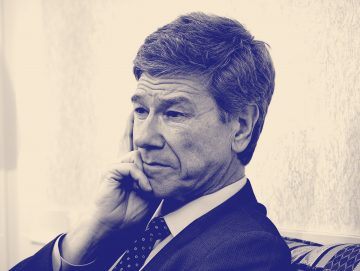 In the early nineties, the economist Jeffrey Sachs was known as a “shock therapist,” for advising the Soviet Union on its controversial transition to a free-market economy. Since then, Sachs has shifted his focus to poverty alleviation and international development, becoming one of the most visible academics in the world. His book “The End of Poverty,” from 2005, imagined a globe free of the worst forms of destitution; Sachs also attributed misgovernment in much of Africa to poverty, rather than the other way around. (This thesis was much debated by other economists and development experts who were more skeptical about the impact of foreign aid.) From 2002 to 2016, Sachs was the director of Columbia University’s Earth Institute; he is currently a professor at the university and an adviser to the United Nations. He endorsed Bernie Sanders for President in January and has occasionally advised the senator.
I recently spoke by phone with Sachs about the coronavirus and the challenges that the crisis poses to international coöperation and the world economy. In our conversation, which has been edited for length and clarity, we also discussed the root causes of American decline, why some poorer countries have so far avoided large outbreaks, and how Donald Trump has failed to meet even the low expectations that internationalists have for the United States.
More here.
How to Think Like Shakespeare
Scott Jaschik in Inside Higher Ed:
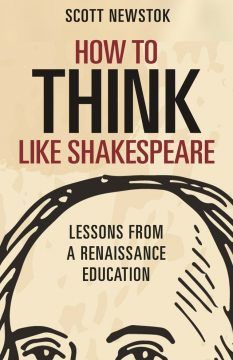 Scott Newstok’s new book, How to Think Like Shakespeare: Lessons From a Renaissance Education (Princeton University Press), is about more than the Bard. It’s a challenge to the ideas that education is strictly about what you can assess or data that will lead to jobs. Newstok clearly believes, though, that an education on Shakespeare will help many people — and not just English majors — with their careers.
Newstok, a professor of English at Rhodes College, responded via email to questions about his book.
Q: What was your goal in writing this book?
A: As both a teacher and a parent of school-age children, I’d become dismayed by the way we think of thinking. Many of our educational assumptions are just plain false. Yet I hope that recalling enduring practices can help us — maybe our institutions, but at least those individuals still interested in thinking. My book explores the educational assumptions that shaped a mind like Shakespeare’s: play emerges through work, creativity through imitation, autonomy through tradition, innovation through constraints, freedom through discipline.
More here.
Mehdi Hasan and Noam Chomsky on Biden vs. Trump
We Are Witnessing the Revolt of the Elites
Arjun Appadurai in The Wire:
 José Ortega y Gasset is a largely forgotten 20th century thinker, an unconventional Spanish philosopher whose most important social science work, The Revolt of the Masses, reflected his fears about a world in which liberal individuals were disappearing and the “mass man” was emerging.
Ortega’s idea of the mass man was not a picture of the poor, the destitute or the proletarian multitude but of a mass of average men, who were rendered similar by their tastes, dispositions and values, rather than by their dispossession. In this way, Ortega was closer to the later American critics of the men “in the grey flannel suit” than to the Frankfurt School critics of mass society. Still, Ortega was an early voice in seeing the masses, of whatever kind, as revolting against the liberal ideals of the 19th century.
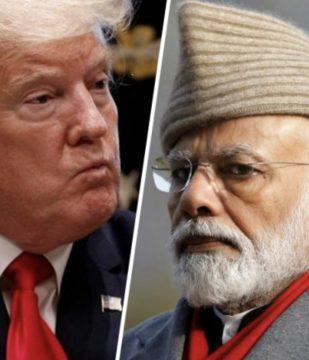
I return to Ortega now because I think the 20th century has exhausted the major forms of mass revolt and that we have entered a new epoch which is characterised by the “revolt of the elites”. These revolting elites are those who support, surround, promote and flatter the new autocracies of Narendra Modi, Donald Trump, Recep Tayyip Erdogan, Jair Bolsonaro, Boris Johnson, Viktor Orban and many others who have created what could be called ‘populism from above’ – where the people are electoral tools for a mass exit from democracy.
Why call this behaviour of the new autocratic elites a “revolt” rather than simply predatory capitalism, cronyism, neoliberalism in its latest guise, disaster capitalism, all of which are available terms? Who are these new elites and what are they revolting against?
More here.
Andy Goldsworthy Makes Some Art
On Style and Violence
Mark Dorrian at Cabinet:
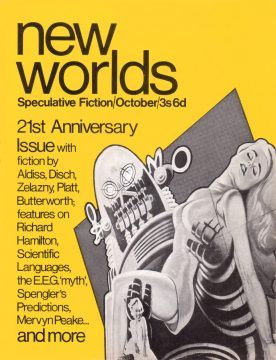 No doubt Ballard and Pevsner make strange bedfellows, but if we accept—and I think we can—that Pevsner’s charge of “outrageous stimulation” was a localized condemnation of broader tendencies, then there is a connection. For the diagnosis of “outrageous stimulation” was one that Ballard, in a strong sense, shared, although the consequences he drew were radically different. As he wrote in a later reflection: “A unique collision of private and public fantasy took place in the 1960s. … The public dream of Hollywood for the first time merged with the private imagination of the hyper-stimulated 60s TV viewer.” However for Ballard, the outcome of this was not some sort of constant escalation of experience—on the contrary “its finish line,” he wrote, “was that death of affect, the lack of feeling, which seemed inseparable from the communications landscape.” Whereas Pevsner’s demand on the cusp of the 1960s was to rein in the new license and reassert prior controls, Ballard’s suggestion was instead to embrace existing conditions and pursue their possibilities. “Given the unlimited opportunities which the media landscape now offers to the wayward imagination,” he wrote, “I feel we should immerse ourselves in the most destructive element, ourselves, and swim.” The best we can hope for of the twentieth century, he continued, is “the attainment of a moral and just psychopathology.”
more here.
Whitman: Out of the Cradle Endlessly Revising
Mark Doty at The Paris Review:
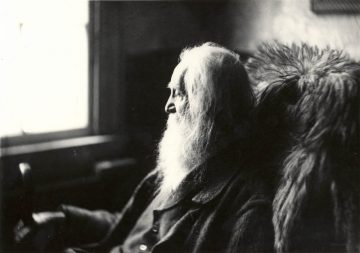 There are poets who find their strength in brevity, who use as few words as possible, arranged in the minimum number of lines, to evoke sense perception, emotion, and idea. Walt Whitman, it goes without saying, is not one of those. He is most comfortable on a broader scale. His great poems—“Song of Myself,” “The Sleepers,” “Crossing Brooklyn Ferry,” “Out of the Cradle Endlessly Rocking,” and “When Lilacs Last in the Dooryard Bloomed”—straddle hundreds of lines, providing the poet with room to catalogue particulars (The glories strung like beads on my smallest sights and hearings, he calls them), to stack up parallel statements, to address his reader, to depart from and return to his argument, and to construct a kind of poetic architecture designed to be mimetic of the process of thinking, and thus draw us more intimately near. This is why his shorter poems often feel like parts of a larger, more encompassing one; even satisfyingly complete shorter pieces such as “To You” and “This Compost” might be seen as outtakes, or gestures in the direction of some overarching intention.
more here.
The Pandemic Isn’t a Black Swan but a Portent of a More Fragile Global System
Bernard Avishai in The New Yorker:
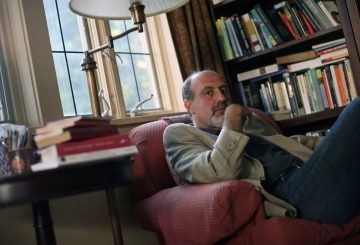 Nassim Nicholas Taleb is “irritated,” he told Bloomberg Television on March 31st, whenever the coronavirus pandemic is referred to as a “black swan,” the term he coined for an unpredictable, rare, catastrophic event, in his best-selling 2007 book of that title. “The Black Swan” was meant to explain why, in a networked world, we need to change business practices and social norms—not, as he recently told me, to provide “a cliché for any bad thing that surprises us.” Besides, the pandemic was wholly predictable—he, like Bill Gates, Laurie Garrett, and others, had predicted it—a white swan if ever there was one. “We issued our warning that, effectively, you should kill it in the egg,” Taleb told Bloomberg. Governments “did not want to spend pennies in January; now they are going to spend trillions.”
The warning that he referred to appeared in a January 26th paper that he co-authored with Joseph Norman and Yaneer Bar-Yam, when the virus was still mainly confined to China. The paper cautions that, owing to “increased connectivity,” the spread will be “nonlinear”—two key contributors to Taleb’s anxiety. For statisticians, “nonlinearity” describes events very much like a pandemic: an output disproportionate to known inputs (the structure and growth of pathogens, say), owing to both unknown and unknowable inputs (their incubation periods in humans, or random mutations), or eccentric interaction among various inputs (wet markets and airplane travel), or exponential growth (from networked human contact), or all three. “These are ruin problems,” the paper states, exposure to which “leads to a certain eventual extinction.” The authors call for “drastically pruning contact networks,” and other measures that we now associate with sheltering in place and social distancing. “Decision-makers must act swiftly,” the authors conclude, “and avoid the fallacy that to have an appropriate respect for uncertainty in the face of possible irreversible catastrophe amounts to ‘paranoia.’ ” (“Had we used masks then”—in late January—“we could have saved ourselves the stimulus,” Taleb told me.)
More here.
How AI is improving cancer diagnostics
Neil Savage in Nature:
 When a young girl came to New York University (NYU) Langone Health for a routine follow-up, tests seemed to show that the medulloblastoma for which she had been treated a few years earlier had returned. The girl’s recurrent cancer was found in the same part of brain as before, and the biopsy seemed to confirm medulloblastoma. With this diagnosis, the girl would begin a specific course of radiotherapy and chemotherapy. But just as neuropathologist Matija Snuderl was about to sign off on the diagnosis and set her on that treatment path, he hesitated. The biopsy was slightly unusual, he thought, and he remembered a previous case in which what was thought to be medulloblastoma turned out to be something else. So, to help him make up his mind, Snuderl turned to a computer.
He arranged for the girl to have a full-genome methylation analysis, which checks for small hydrocarbon molecules attached to DNA. The addition of such methyl groups is one of the mechanisms behind epigenetics — when the activity of genes is altered without any mutation to the underlying genetic code — and different types of cancer show different patterns of methylation. Snuderl fed the results to an artificial-intelligence (AI) system developed by a consortium including researchers at the German Cancer Research Center in Heidelberg, and let the computer classify the tumour. “The tumour came back as a glioblastoma, which is a completely different type,” Snuderl says. The new tumour seemed to be the result of radiation used to destroy the first cancer, and called for a different drug and radiation treatment plan. Treatment for the wrong cancer could have ill effects without actually destroying the cancer. “If I had finalized the case just on pathology, I would have been terribly wrong,” Snuderl says.
The system Snuderl used is an early example of AI as a tool to diagnose cancer. NYU Langone’s Perlmutter Cancer Center received state approval to use its AI classifier as a diagnostic test in October 2019, and researchers around the world are developing similar systems to help pathologists diagnose cancer more accurately. The goal is to use AI’s ability to recognize patterns that are too subtle for the human eye to detect to guide physicians towards better-targeted therapies and to improve outcomes for patients. Some scientists are even applying AI to screening tests in the hope of identifying people with an increased cancer risk or catching the disease sooner.
More here.
Wednesday Poem
Immigrant Confession
The Cherokee are not originally from Oklahoma. Settlers forced
them to disappear west, into air and sky, beyond buildings,
beyond concrete, beyond the rabid land hunger. There was
a trail. There was despair. Reservations carved out of prairie
grass, lost space and sadness in the middle of flat dirt. We landed
in March 1980. We knew nothing about the Cherokee.
Settlers from the South, driven by opportunities and education,
looking for the gold and gifts of immigration, we hid our Spanish,
the shame of accents and poverty, immersed ourselves in cowboy
ways. In school we learned English, read about open, endless
land, a territory there by divine right for those willing, chosen
to till and build, for those exiled, broken out of other lands.
Every spring the second grade celebrated the land rush. Half of us
immigrants flung across the globe, we wanted to be part of the story.
We gathered in costume behind the chalk line in a field across from
Westbury elementary. Girls in calico skirts, bonnets, ruffled blouses.
Boys in straw hats, borrowed cowboy boots, chaps strapped with toy guns.
Parents and picnic lunches waited on the sidelines. The cap gun popped.
The second grade scattered wild, stakes in hand running, ready to claim
our piece of promised land. My parents celebrated the land rush twice,
two of us old enough to live into the strange alchemy of assimilation.
I learned later our stakes professed death, bloodied limbs, hacked up
hearts, bodies crushed, taken from the arid land with the wave of a flag,
the pulsing stampede of wagons, the firing of the starting gun,
disappeared with every second-grade spring picnic.
Two million acres of territory taken in the first land rush.
My immigrant confession: I have ached for my Oklahoma childhood,
my territory story, when the land gave again, held a promise of country
after exile. I have mourned the second-grade land rush, the look on
my parents’ faces as we galloped into yellow grass, screaming breathless
in joy and wildness, when they imagined an America big enough,
wide enough, whole enough to let us in, whole enough not to break us.
by M. Soledad Caballero
from Split This Rock
Tuesday, April 21, 2020
The coronavirus didn’t break America, It revealed what was already broken
George Packer in The Atlantic:
 When the virus came here, it found a country with serious underlying conditions, and it exploited them ruthlessly. Chronic ills—a corrupt political class, a sclerotic bureaucracy, a heartless economy, a divided and distracted public—had gone untreated for years. We had learned to live, uncomfortably, with the symptoms. It took the scale and intimacy of a pandemic to expose their severity—to shock Americans with the recognition that we are in the high-risk category.
The crisis demanded a response that was swift, rational, and collective. The United States reacted instead like Pakistan or Belarus—like a country with shoddy infrastructure and a dysfunctional government whose leaders were too corrupt or stupid to head off mass suffering. The administration squandered two irretrievable months to prepare. From the president came willful blindness, scapegoating, boasts, and lies. From his mouthpieces, conspiracy theories and miracle cures. A few senators and corporate executives acted quickly—not to prevent the coming disaster, but to profit from it. When a government doctor tried to warn the public of the danger, the White House took the mic and politicized the message.
More here.
Sean Carroll’s Mindscape Podcast: Rae Wynn-Grant on Bears, Humans, and Other Predators
Sean Carroll in Preposterous Universe:
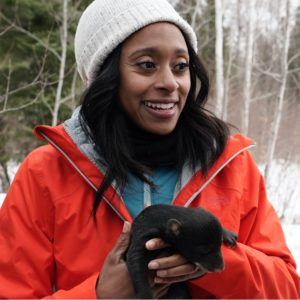 Human beings have a strange fascination with dangerous, predatory animals — bears, lions, wolves, sharks, and more. The top of the food chain is an interesting and precarious place to live; while you might be the boss of your local environment, you also depend on the functioning of an entire ecology. Rae Wynn-Grant is a carnivore ecologist who studies how large predators migrate, feed, reproduce — and especially how they interact with humans. We talk about the diverse social structures of different species of carnivores, how they find mates, and how they diversify their diet. And of course we discuss how humans and other locally-dominant species can live together peacefully.
More here.
David Harvey: Anti-Capitalist Politics in an Age of Covid-19
David Harvey in Tribune:
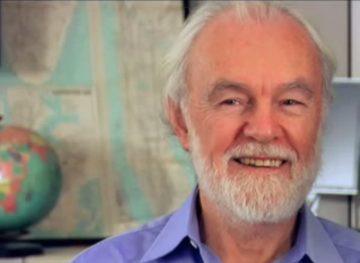 When trying to interpret, understand and analyse the daily flow of news, I tend to locate what is happening against the background of two distinctive but intersecting models of how capitalism works. The first level is a mapping of the internal contradictions of the circulation and accumulation of capital as money value flows in search of profit through the different “moments” (as Marx calls them) of production, realisation (consumption), distribution, and reinvestment. This is a model of the capitalist economy as a spiral of endless expansion and growth. It gets pretty complicated as it gets elaborated through, for example, the lenses of geopolitical rivalries, uneven geographical developments, financial institutions, state policies, technological reconfigurations and the ever-changing web of divisions of labour and of social relations. I envision this model as embedded, however, in a broader context of social reproduction (in households and communities), in an on-going and ever-evolving metabolic relation to nature (including the “second nature” of urbanisation and the built environment) and all manner of cultural, scientific (knowledge-based), religious and contingent social formations that human populations typically create across space and time. These latter “moments” incorporate the active expression of human wants, needs and desires, the lust for knowledge and meaning and the evolving quest for fulfilment against a background of changing institutional arrangements, political contestations, ideological confrontations, losses, defeats, frustrations and alienations, all worked out in a world of marked geographical, cultural, social and political diversity. This second model constitutes, as it were, my working understanding of global capitalism as a distinctive social formation, whereas the first is about the contradictions within the economic engine that powers this social formation along certain pathways of its historical and geographical evolution.
More here.
Five Misconceptions about Alchemy