Siddhartha Mukherjee in The New Yorker:
 At 4:18 a.m. on February 1, 1997, a fire broke out in the Aisin Seiki company’s Factory No. 1, in Kariya, a hundred and sixty miles southwest of Tokyo. Soon, flames had engulfed the plant and incinerated the production line that made a part called a P-valve—a device used in vehicles to modulate brake pressure and prevent skidding. The valve was small and cheap—about the size of a fist, and roughly ten dollars apiece—but indispensable. The Aisin factory normally produced almost thirty-three thousand valves a day, and was, at the time, the exclusive supplier of the part for the Toyota Motor Corporation. Within hours, the magnitude of the loss was evident to Toyota. The company had adopted “just in time” (J.I.T.) production: parts, such as P-valves, were produced according to immediate needs—to precisely match the number of vehicles ready for assembly—rather than sitting around in stockpiles. But the fire had now put the whole enterprise at risk: with no inventory in the warehouse, there were only enough valves to last a single day. The production of all Toyota vehicles was about to grind to a halt. “Such is the fragility of JIT: a surprise event can paralyze entire networks and even industries,” the management scholars Toshihiro Nishiguchi and Alexandre Beaudet observed the following year, in a case study of the episode.
Toyota’s response was extraordinary: by six-thirty that morning, while the factory was still smoldering, executives huddled to organize the production of P-valves at other factories. It was a “war room,” one official recalled. The next day, a Sunday, small and large factories, some with no direct connection to Toyota, or even to the automotive industry, received detailed instructions for manufacturing the P-valves. By February 4th, three days after the fire, many of these factories had repurposed their machines to make the valves. Brother Industries, a Japanese company best known for its sewing machines and typewriters, adapted a computerized milling device that made typewriter parts to start making P-valves. The ad-hoc work-around was inefficient—it took fifteen minutes to complete each valve, its general manager admitted—but the country’s largest company was in trouble, and so the crisis had become a test of national solidarity. All in all, Toyota lost some seventy thousand vehicles—an astonishingly small number, given the millions of orders it fulfilled that year. By the end of the week, it had increased shifts and lengthened hours. Within the month, the company had rebounded.
Every enterprise learns its strengths and weaknesses from an Aisin-fire moment—from a disaster that spirals out of control. What those of us in the medical profession have learned from the covid-19 crisis has been dismaying, and on several fronts. Medicine isn’t a doctor with a black bag, after all; it’s a complex web of systems and processes. It is a health-care delivery system—providing antibiotics to a child with strep throat or a new kidney to a patient with renal failure. It is a research program, guiding discoveries from the lab bench to the bedside. It is a set of protocols for quality control—from clinical-practice guidelines to drug and device approvals. And it is a forum for exchanging information, allowing for continuous improvement in patient care. In each arena, the pandemic has revealed some strengths—including frank heroism and ingenuity—but it has also exposed hidden fractures, silent aneurysms, points of fragility. Systems that we thought were homeostatic—self-regulating, self-correcting, like a human body in good health—turned out to be exquisitely sensitive to turbulence, like the body during critical illness. Everyone now asks: When will things get back to normal? But, as a physician and researcher, I fear that the resumption of normality would signal a failure to learn. We need to think not about resumption but about revision.
More here.

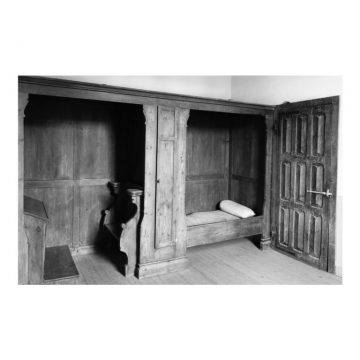 The room is perhaps the fundamental element of any architecture. As a primitive hut, a simple shelter, a cave or a retreat, the room commands a unique and unrepeatable definition of a place. Making room means to clear a space for oneself: to identify a limit between inside and outside (room, from the proto-Indoeuropean root reue-“to open, space”). Like organs in a body, specific arrangements of rooms correspond to species of buildings with distinctive characteristics. Despite its concatenations, a room always preserves the possibility of autonomy, as a stand-alone entity. In the Western classical tradition—from Vitruvius to Alberti and Palladio—rooms are usually categorized according to forms accurately proportioned to their fulfilled functions.
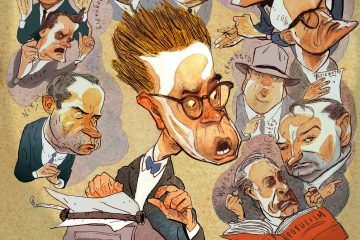
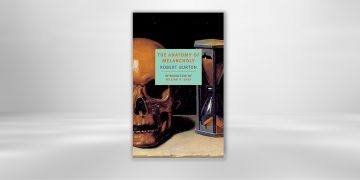 William Gass has written of the book’s “terminological greed,” a phrase that goes some way in preparing the reader for The Anatomy’s extraordinary surfeit. Burton the anatomist reaches us as a thoroughly modern figure, a gathering of vibrant and contradictory energies. He is a model of inconsistency, equally at home in sense and nonsense, science and superstition, asceticism and sensuality. He apologizes for the length of his digressions only to plunge into yet more. The resultant overgrowth of text is a sort of radiant miscellany; an accumulation of conjecture, proof, rumor, and heresy; endless lists of proper names, foods, herbs, symptoms, profligate et ceteras, disputations, and lengthy essays within essays. Though not itself a novel, Burton’s fabulous act of literary excess prefigures the encyclopedic postwar fictions of the twentieth century—Gravity’s Rainbow, J R, Underworld—in which poetics and technics came together to approximate the informational density of culture.
 Many countries are enduring the Hammer today: a heavy set of social distancing measures that have stopped the economy. Millions have lost their jobs, their income, their savings, their businesses, their freedom. The economic cost is brutal. Countries are desperate to know what they need to do to open up the economy again.
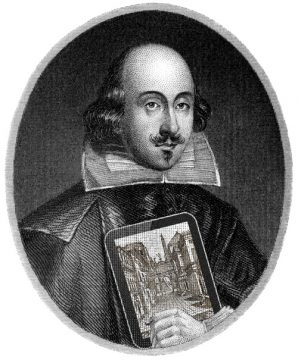 The Club: no literary club has ever equaled the one founded in London in 1764 by Samuel Johnson, Sir Joshua Reynolds, Edmund Burke, Oliver Goldsmith, and a handful of others, and which came to include the very brightest intellectual, artistic and political stars of the late eighteenth and early nineteenth centuries. Leo Damrosch provided a close study of the Club, its members, and its doings during the first couple of decades of its long life (it still exists today), in a book I reviewed in The Hudson Review’s
 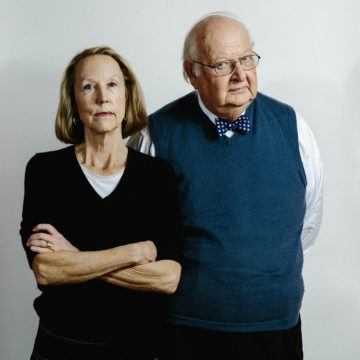 Before 2015, few people would have thought of not finishing college as a public-health issue. That changed because of research done by Anne Case and Angus Deaton, economists at Princeton who are also married. For the past six years, they have been collaboratively researching an alarming long-term increase in what they call “deaths of despair” — suicides, drug overdoses, and alcoholism-related illnesses — among white non-Hispanic Americans without a bachelor’s degree in middle age.
 By the last week of January, Rob DeLeo knew it was going to get bad.
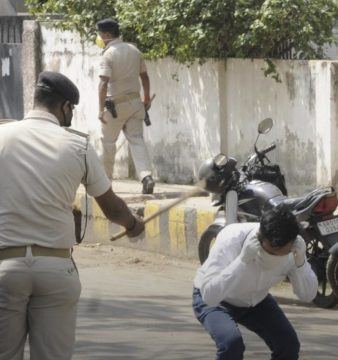 The Covid-19 lockdown on the largest population on earth with the shortest possible notice has completed five weeks. Overnight, a medical pandemic was made into an economic and humanitarian disaster of immense proportions. It is time we took stock.
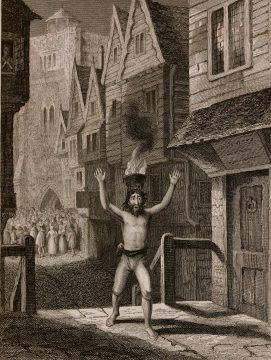 ISTANBUL — For the past four years I have been writing a historical novel set in 1901 during what is known as the third plague pandemic, an outbreak of bubonic plague that killed millions of people in Asia but not very many in Europe. Over the last two months, friends and family, editors and journalists who know the subject of that novel, “Nights of Plague,” have been asking me a barrage of questions about pandemics. They are most curious about similarities between the current coronavirus pandemic and the historical outbreaks of plague and cholera. There is an overabundance of similarities. Throughout human and literary history what makes pandemics alike is not mere commonality of germs and viruses but that our initial responses were always the same. The initial response to the outbreak of a pandemic has always been denial. National and local governments have always been late to respond and have distorted facts and manipulated figures to deny the existence of the outbreak. In the early pages of “A Journal of the Plague Year,” the single most illuminating work of literature ever written on contagion and human behavior, Daniel Defoe reports that in 1664, local authorities in some neighborhoods of London tried to make the number of plague deaths appear lower than it was by registering other, invented diseases as the recorded cause of death.
 Over at Columbia University’s Weatherhead East Asian Institute:
 Chris Lehman in TNR:
 Dirk Philipsen in Aeon: