
Category: Recommended Reading
How Texas became one of the world’s biggest generators of wind power
David Byrne in Reasons to be Cheerful:
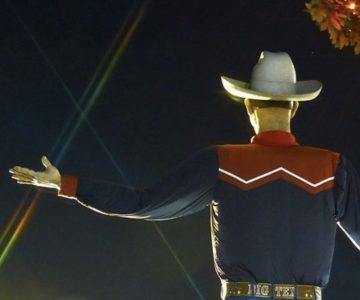 Last week, oil prices went negative. There is nowhere to store the oil being pumped out of the ground because demand, due to the coronavirus, has collapsed. There is less flying, less driving and fewer factories operating. So oil producers and their financial backers have been paying folks to take their oil. There are jokes going around that if you had a big storage tank in your basement, you could get paid to take some oil and sell it at a huge profit when, and if, the price goes up again.
West Texas is oil country. But there is something else going on in West Texas: it is a world capital of wind energy. Last year, Texas got more of its energy from wind — 23.4 percent — than any other U.S. state. In fact, if Texas were a country (which some might argue it is) it would rank fifth in the world in wind power generation, just behind Germany and India.
Wind in oil country may seem like a contradiction, but to Texans it makes perfect sense.
More here.
The Best of Ravel
Joyelle McSweeney and The Necropastoral
Nick Ripatrazone at Poetry Magazine:
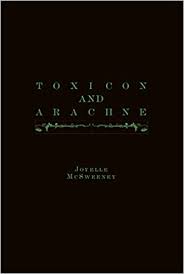 In 2011, McSweeney coined the term necropastoral to describe a literary zone of “infectiousness, anxiety, and contagion occultly present in the hygienic borders of the classic pastoral.” She identified writers in this tradition as Georges Bataille, Aimé Césaire, Leslie Scalapino, Kim Hyesoon, Christian Hawkey, and Wilfred Owen, whose “bad writing” Yeats deplored. She might also have included herself. The Necropastoral: Poetry, Media, Occults (2014), McSweeney’s collection of critical essays, is an illuminating companion to Toxicon and for her approach to Keats more broadly. The “definitive processes of the Necropastoral are decay, vagueness, interembodiment, fluidity, seepage, inflammation, supersaturation,” she writes.
The necropastoral is also an honest consideration of the natural life cycle: humans live, die, and are often interred in the ground to settle with the soil.
more here.
Gerhard Richter: The Master of Unknowing
Susan Tallman at the NYRB:
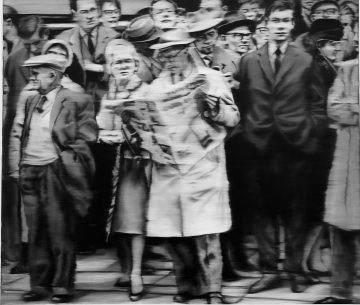
Richter is contemporary art’s great poet of uncertainty; his work sets the will to believe and the obligation to doubt in perfect oscillation. Now eighty-eight, he is frequently described as one of the world’s “most influential” living artists, but his impact is less concrete than the phrase suggests. There is no school of Richter. His output is too quixotic, too personal, to be transferrable as a style in the manner of de Kooning or Rauschenberg. Though his influence has indeed been profound, it has played out in eyes rather than hands, shifting the ways in which we look, and what we expect looking to do for us.
In Germany he is treated as a kind of painterly public intellectual—personally diffident and professionally serious, a thoughtful oracle especially as regards the prickly territory of German history. He was among the first postwar German artists to deal with pictorial records of Nazism, and his approach to the past might be summarized as poignant pragmatism, rejecting both despair and amnesia.
more here.
What Humans Could Be
Scott Kaufman in Scientific American:
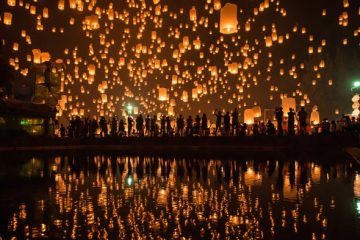 Toward the end of his life, the humanistic psychologist Abraham Maslow was developing new insights into self-actualization – and envisioning an even higher motivation, which he called transcendence. He referred to his theory as “Theory Z“. To Maslow, “transcenders” are regularly motivated by values and experiences that go beyond the satisfaction of basic needs and the fulfillment of one’s unique potential. These “metamotivations” include a devotion to a calling outside oneself, a seeking of “peak experiences”, and a commitment to the values of Being, or the “B-values”, including truth, goodness, beauty, justice, meaningfulness, playfulness, aliveness, excellence, simplicity, elegance, and wholeness— as ultimate goals in themselves. Maslow observed that when he asked transcenders why they do what they do and what makes their life worth living, they often cited those values. There was no further reason why they devoted so much time to their work; the values were not in service of anything else, nor were they instrumental in achieving any other goal. Maslow believed that satisfaction of the “metaneeds” are necessary “to avoid illness and to achieve fullest humanness or growth. . . . They are worth living for and dying for. Contemplating them, or fusing with them gives the greatest joy that a human being is capable of.”
The Theory Z worldview is strikingly similar to the modern psychological research on wisdom. Wisdom is often conceptualized in psychological literature as involving an integration among cognitive, affective, and behavioral dimensions. This includes the ability to accept multiple perspectives, to respond nondefensively when challenged, to express a wide array of emotions in order to derive meaning, to critically evaluate human truths, and to become aware of the uncertain and paradoxical nature of human problems.
As clinical psychologist Deirdre Kramer puts it, “Wise people have learned to view the positive and negative and synthesize them to create a more human, more integrated sense of self, in all its frailty and vulnerability. . . . They seem able to first embrace and then transcend self-concerns to integrate their capacity for introspection with a deep and abiding concern for human relationships and generative concern for others.”
More here.
Thursday Poem
Losing Someone
It’s as if in Nepal you left your house to see the mountains
And Everest is gone – no – really gone. Great clouds
Pass by wondering. No place to lean on there.
.
What’s left is your memory of an immensity.
It stays with you, lives with you growing deeper,
Stronger, taller, — at last as present as the mountain.
.
by Nils Peterson
4/2020
4/2020
Wednesday, April 29, 2020
A guide to making sense of a problem, Coronavirus, that is now too big for any one person to fully comprehend
Ed Yong in The Atlantic:
 Why do some people get really sick, but others do not? Are the models too optimistic or too pessimistic? Exactly how transmissible and deadly is the virus? How many people have actually been infected? How long must social restrictions go on for? Why are so many questions still unanswered?
The confusion partly arises from the pandemic’s scale and pace. Worldwide, at least 3.1 million people have been infected in less than four months. Economies have nose-dived. Societies have paused. In most people’s living memory, no crisis has caused so much upheaval so broadly and so quickly. “We’ve never faced a pandemic like this before, so we don’t know what is likely to happen or what would have happened,” says Zoë McLaren, a health-policy professor at the University of Maryland at Baltimore County. “That makes it even more difficult in terms of the uncertainty.”
But beyond its vast scope and sui generis nature, there are other reasons the pandemic continues to be so befuddling—a slew of forces scientific and societal, epidemiological and epistemological. What follows is an analysis of those forces, and a guide to making sense of a problem that is now too big for any one person to fully comprehend.
More here.
The Pandemic Novelist Has Regrets
Thea Lim in Guernica:
 The virus has punctured the dream that any built item in our world just wondrously appears, in our stores or on our screens. Instead, like the casing coming off an enormous clock, we see how our way of life relies on millions of people, working together. Like cogs in that clock, tipping over the edge of a cliff.
Finally, the pandemic blockbuster must resolve, and this is its most useless trait. It always ends the same way—in Outbreak and Contagion, but even in clever, deft stories with a greater understanding of geopolitics, like 28 Days Later and World War Z. The vaccine is found. Everyone exhales. Credits roll.
But the containment of the virus is not the end. That’s only where our troubles begin. A vaccine will be found, but COVID-19 has surfaced every social ill we’ve tried to silence: gender violence, prison conditions, racism and racial inequity, the treatment of migrant workers, the homelessness epidemic, the miserable precarity of people who thought they were doing fine under capitalism. A vaccine can’t delete the irreparable harm done by this disaster, especially not the harm that was already happening, under the skin.
More here.
The World After Coronavirus: Adil Najam interviews Atif Mian about The Future of Debt
Scientists who express different views on Covid-19 should be heard, not demonized
Vinay Prasad and Jeffrey S. Flier in Stat News:
 When major decisions must be made amid high scientific uncertainty, as is the case with Covid-19, we can’t afford to silence or demonize professional colleagues with heterodox views. Even worse, we can’t allow questions of science, medicine, and public health to become captives of tribalized politics. Today, more than ever, we need vigorous academic debate.
To be clear, Americans have no obligation to take every scientist’s idea seriously. Misinformation about Covid-19 is abundant. From snake-oil cures to conspiracy theories about the origin of SARS-CoV-2, the virus that causes the disease, the internet is awash with baseless, often harmful ideas. We denounce these: Some ideas and people can and should be dismissed.
At the same time, we are concerned by a chilling attitude among some scholars and academics, who are wrongly ascribing legitimate disagreements about Covid-19 to ignorance or to questionable political or other motivations.
More here.
Calder Makes A Stabile
Spirituality At The End of An Age
Keith Hackwood at Marginalia Review of Books:
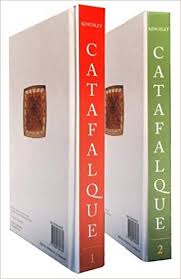 It reveals Jung’s certainty about the going down of the West: a culture and a civilization which even in 1961 had profoundly run out of any gyring or generative energy and was already quite still, poised at the point of stasis before the inevitable unwinding begins. From this, a vision unfolds of western culture as seen from the perspective of the dead: of the joining from past to future that an unbroken chain of linkages ensures, followed by the horrifying awareness of how we have lost our linkage to the primordial past—leaving us an age adrift, nowhere, bereft. The only possible response to such seeing is to lament; to turn to face our ancestors; to bury optimism as a kind of dereliction of our duty; and to learn to dance for the dead. I cannot stress starkly enough the sheer physicality of reading this book, the pain it draws forth, and not only from enduring for eight hundred pages what is unbearable to consider. There is a deeper mystery afoot and it would appear that, in the presence of words truly uttered and written, one virtually has to die to keep up one’s end of the arrangement.
more here.
Coronavirus Has Shattered the Myth of College in America
Masha Gessen at The New Yorker:
 Most faculty, students, and administrators don’t actually think of colleges as hedge funds or hoteliers; they think, rather, that colleges charge students for teaching them. Before the coronavirus pandemic, professors would grouse that their students acted like customers who expected faculty to provide services. But it’s impossible to argue that online instruction, even when exceptionally well-executed, delivers the same quality of education as in-person teaching. I’ve been lucky: all of my students have high-speed Internet access, I have relatively small classes, and my students had a chance to get to know one another during the first six weeks of the semester. (Some of my friends who teach on different timetables met their students for the first time online.) I have done my best to compensate for what students have lost: learning by discussion, by engaging with one another and with me in ways that simply cannot be replicated online. Still, they are certainly not learning as much as they would be in person.
more here.
Worlds within a self: V. S. Naipaul and modernity
Helen Hayward in TLS:
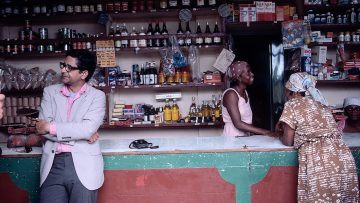
V. S. Naipaul’s work speaks eloquently to the contemporary world. His focus is on migration and displacement, and his abiding theme is “the great movement of peoples in the second half of the twentieth century”. Naipaul is ripe for reassessment now that work can be seen as a whole, following his death in 2018 – and time has only made his legacy clearer. Moreover, Naipaul is no longer around to stir up controversy with outrageous statements in interviews – a form of deliberate provocation that George Lamming likened to carnival masquerading.
Naipaul was born in 1932 in rural Trinidad; a scholarship enabled him to study in Oxford, and so his life followed the trajectory to which Sanjay Krishnan’s subtitle alludes. Krishnan constructs a narrative out of Naipaul’s oeuvre, making it the story of postcolonial societies undergoing the disorientating transition to modernity, with Naipaul’s own life providing the starting point: his subject is “the worlds I contained within myself”. Naipaul works through this modern disorientation, Krishnan contends, in order to consider how formerly subject peoples can hope to understand their predicament and reshape their lives.
At the beginning of his writing life, in the 1950s, reaching an understanding of such historical forces constituted an innovation, Krishnan suggests, and it involved trying to see the postcolonial world as a globalized whole. Yet Naipaul is more interested in self-examination than in ideas of resistance and of cultural hybridity celebrated by postcolonial critics – which is part of the reason he has excited controversy, if not opprobrium. Krishnan notes that Naipaul writes frankly about racist feelings in the context of the ethnic hostilities unleashed by decolonization, in his efforts to understand the forces that shaped him. The problem is that Naipaul’s expressions of outrage at postcolonial racism risk echoing the language of the racism he condemns. His critics denounce him for peddling damaging stereotypes about the formerly colonized and their inability to govern themselves, and Krishnan at times finds himself writing in the guise of Naipaul’s advocate, taking issue with these detractors, despite his claims not to seek to defend him.
More here.
Surviving cancer at all costs
Catherine Armitage in Nature:
 Some analysts are cynical about the apparent mismatch between spending and outcomes in what’s disparagingly called ‘the cancer industry’. How can cancer be the second leading cause of death globally, responsible for an estimated 9.6 million deaths in 2018, when a single institution (the US National Institutes of Health, NIH) spent US$24.4 billion on cancer research in the past four years, not to mention outlays by so many other funders? As the graph in one of our articles shows, researchers are nudging the dial on some types of cancer more than others. This Nature Index supplement focuses on three — cervical, prostate and melanoma — as a lens through which to view the kinds of preventions and treatments that are lengthening survival rates, at least in high-income countries.
Dimensions data provide interesting comparisons on value for money. As a rough indication, looking at the top ten funders’ total grants for cancer research from 2010 to 2019 beside their cancer research publications over the same period, the average for the National Natural Science Foundation of China is US$21,902 per publication. By contrast, for the US National Cancer Institute, part of the NIH and the world’s biggest funder of cancer research, it is US$129,624 per article.
The above analysis is blind to article quality. For that, the indicator is publication in the 82 high-quality journals selected by experts for inclusion in the Nature Index, which, it should be noted, does not include clinical sciences journals. In cancer, as in every other field, China’s rise is striking. Its cancer research in the Nature Index rose by an estimated 114.9% from 2015 to 2019, according to our key metric, Share, a fractional count of the proportion of the country’s affiliated authors on each article.
More here.
Wednesday Poem
We Sinful Women
It is we sinful women
who are not awed by the grandeur of those who wear gowns
who don’t sell our lives
who don’t bow our heads
who don’t fold our hands together.
It is we sinful women
while those who sell the harvests of our bodies
become exalted
become distinguished
become the just princes of the material world.
It is we sinful women
who come out raising the banner of truth
up against barricades of lies on the highways
who find stories of persecution piled on each threshold
who find that tongues which could speak have been severed.
It is we sinful women.
Now, even if the night gives chase
these eyes shall not be put out.
For the wall which has been razed
don’t insist now on raising it again.
It is we sinful women
who are not awed by the grandeur of those who wear gowns
who don’t sell our bodies
who don’t bow our heads
who don’t fold our hands together.
by Rukhsana Ahmad
from: We Sinful Women: Contemporary Urdu Feminist Poetry
Publisher: The Women’s Press Ltd, London, 1991
ISBN 0—7043—4262-6
Editor’s Note(of first publisher): This seminal poem was both a revelation and incendiary at the time it was written. It is a declaration of the independence of women who did not subscribe to societal and cultural norms. These norms imposed on women are oppressive and confining, and for the most part still exist today in Pakistan, if not in even greater force.
Tuesday, April 28, 2020
An End to Totalitarianism
Samuel Clowes Huneke in the Boston Review:
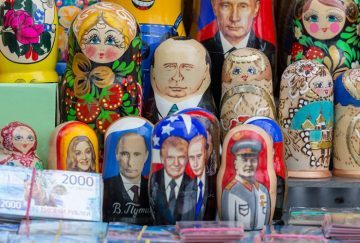 Last Thursday, Nobel-winning economist Paul Krugman issued a warning in the New York Times. “The pandemic will eventually end,” he wrote, “but democracy, once lost, may never come back. And we’re much closer to losing our democracy than many people realize.” Citing the Wisconsin election debacle—the Supreme Court ruled that voters would have to vote in person, risking their health—Krugman argued that Donald Trump and the Republican Party are using the crisis for their own, authoritarian ends.
Krugman is not alone. As early as last month, when cases of COVID-19 first began to surge in the United States, Masha Gessen wrote in the New Yorker that the virus was fueling “Trump’s autocratic instincts.” They argued, “We have long known that Trump has totalitarian instincts . . . the coronavirus has brought us a step closer.” This is indeed the once and future critique of the Trump presidency: that Trump is a totalitarian at heart and, if given the chance, “would want to establish total control over a mobilized society.” A few days ago, Salon published an article arguing that the president is using the virus to prepare “the ground for a totalitarian dictatorship.” Even Meghan McCain, as unlikely a person as any to agree with Gessen, indicated recently that Trump has “always been a sort of totalitarian president” and that he might use the virus to “play on the American public’s fears in a draconian way and possibly do something akin to the Patriot Act.”
These critiques make ample use of the term totalitarianism—“that most horrible of inventions of the twentieth century,” in Gessen’s summation. They and other commentators also use it to describe Fidel Castro’s Cuba to Vladimir Putin’s Russia, which Gessen left in 2013. As right-wing populism has surged around the world in recent years, the term has had something of a renaissance. Hannah Arendt’s 1951 classic The Origins of Totalitarianism became a best seller again after Donald Trump’s election in November 2016.
This uptick in the term’s use runs counter to the trend among historians, for whom the idea of totalitarianism carries increasingly little weight.
More here.
Sean Carroll’s Mindscape Podcast: Stuart Russell on Making Artificial Intelligence Compatible with Humans
Sean Carroll in Preposterous Universe:
 Artificial intelligence has made great strides of late, in areas as diverse as playing Go and recognizing pictures of dogs. We still seem to be a ways away from AI that is intelligent in the human sense, but it might not be too long before we have to start thinking seriously about the “motivations” and “purposes” of artificial agents. Stuart Russell is a longtime expert in AI, and he takes extremely seriously the worry that these motivations and purposes may be dramatically at odds with our own. In his book Human Compatible, Russell suggests that the secret is to give up on building our own goals into computers, and rather programming them to figure out our goals by actually observing how humans behave.
More here.
Red Right Hand