Writing, Thinking, and the Observer Inside the Observation

Mike Hamilton at Coffee with Claude:

My science feeds have delivered two pieces this morning that arrive in productive tension. A June editorial in Nature Reviews Bioengineering declares that “Writing is Thinking,” calling for continued recognition of human-generated scientific writing in the age of large language models. A September essay in 3 Quarks Daily fires back with the counterpoint: “Writing Is Not Thinking.” The author, Kyle Munkittrick, dismantles the logical claim with precision—if writing is thinking, then Socrates was incapable of thought, and you are not thinking right now as you read these words.

Both pieces miss something essential, but their collision illuminates a question I have been living with for forty years: what is the relationship between the tools we use to extend perception and the minds that wield them?

More here.

Enjoying the content on 3QD? Help keep us going by donating now.

We must accept that a working ‘simulation’ of intelligence actually is intelligence

Blaise Agüera y Arcas in Nature:

Large language models can be unreliable and say dumb things, but then, so can humans. Their strengths and weaknesses are certainly different from ours. But we are running out of intelligence tests that humans can pass reliably and AI models cannot. By those benchmarks, and if we accept that intelligence is essentially computational — the view held by most computational neuroscientists — we must accept that a working ‘simulation’ of intelligence actually is intelligence. There was no profound discovery that suddenly made obviously non-intelligent machines intelligent: it did turn out to be a matter of scaling computation.

Other researchers disagree with my assessment of where we are with AI. But in what follows, I want to accept the premise that intelligent machines are already here, and turn the mirror back on ourselves. If scaling up computation yields AI, could the kind of intelligence shown by living organisms, humans included, also be the result of computational scaling? If so, what drove that — and how did living organisms become computational in the first place?

More here.

Enjoying the content on 3QD? Help keep us going by donating now.
What the Laureate Left Out

Heather Treseler at the LARB:

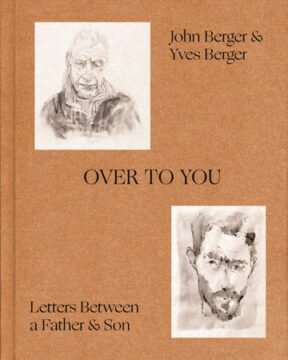
“DEAR JEEM,” the poet Seamus Heaney wrote to his friend, the poet and novelist Seamus Deane, in 1966, as both writers’ careers were finding their runway, “Here are the proofs [of your poems …] have you anything else to bung in here?” That summer, Heaney was editing a chapbook of Deane’s poems for the Belfast Festival. The two writers had met in grammar school at ages 11 and 10, respectively, and remained close friends throughout their lives—Heaney going on to become a globally acclaimed poet, translator, and Nobel laureate, while Deane’s career as a scholar, critic, and editor helped to spearhead Irish studies as a disciplinary field.

Yet on the heels of his warm address to “Jeem” (in other letters, Heaney calls his friend “Deansie” and “a stóirín,” or “my little treasure”), Heaney critiques the poems of Deane’s that had appeared in a recent edition of the prestigious British journal Encounter. “[T]he very luxuriance of the sounds is distracting,” he notes, “and possibly a bit too much: agglutinate, exfoliate, organically eviscerate all in three lines is too much for me.”

more here.

Enjoying the content on 3QD? Help keep us going by donating now.

Tom Stoppard, The Art of Theater

Tom Stoppard interviewed at the Paris Review:

INTERVIEWER

What actually led you to write plays? Could you describe the genesis of your plays other than Hapgood and Jumpers?

STOPPARD

I started writing plays because everybody else was doing it at the time. As for the genesis of plays, it is never the story. The story comes just about last. I’m not sure I can generalize. The genesis of Travesties was simply the information that James Joyce, Tristan Tzara, and Lenin were all in Zurich at the same time. Anybody can see that there was some kind of play in that. But what play? I started to read Richard Ellman’s biography of Joyce, and came across Henry Carr, and so on and so on. In the case of Night and Day, it was merely that I had been a reporter, that I knew quite a lot about journalism, and that I should have been writing another play about something and that therefore it was probably a good idea to write a play about journalists. After that, it was just a case of shuffling around my bits of knowledge and my prejudices until they began to suggest some kind of story. I was also shuffling a separate pack of cards that had to do with sexual attraction. Quite soon I started trying to integrate the two packs. And so on.

more here.

Enjoying the content on 3QD? Help keep us going by donating now.

Teach Students Conservative Thought

Benjamin Storey and Jon A. Shields at Persuasion:

Giving students an occasion to discover the divergence between the depth of the conservative intellectual tradition and the shallowness of the contemporary online right is one of the major attractions of teaching conservatism for one of our session leaders, Emory’s Frank Lechner. Lechner said that one typical student “had expected a class dealing with the likes of Tucker Carlson and Candace Owens” but instead “got something much more interesting and serious.”

One reason is that conservatives are often, paradoxically, devoted to the liberal order. Partly because liberalism is our most important tradition, American conservatives are often consumed with preserving what is best in it, not burning it down like the online right. That also means many conservative intellectuals are hard to put into a tidy philosophical box. UNC’s Rita Koganzon, another of our seminar leaders, reported that teaching conservative intellectuals reveals “that no really good writer is merely conservative, just as none is simply a liberal. They all have strange, heterodox, often politically uncategorizable ideas.”

More here.

Enjoying the content on 3QD? Help keep us going by donating now.

Wednesday Poem

Scimitar

A magpie squawks at the top of a blue spruce,
while white-winged doves coo back and forth
across the orchard. Today I did not hike
,,,,,,
into a rainforest and forage for a glowing
neon-green mushroom; I did not fly
to New Guinea to catch birdwing butterflies;
,,,,,,,,,,,,
instead I hiked a trail across patches of snow
and, scratching the trunk of a ponderosa pine,
inhaled a vanilla scent. I strolled in the orchard,
,,,,
,
and spotted a magpie nest in an apple tree,
marveled at wisps of clouds like branching red coral
in the sea; near the scimitar of a moon,
,,,,,,
Venus shimmered. As clouds above the horizon
incarnadined, I shoveled snow onto
a strawberry bed; then a dove cooed—on a day
,,,,,,
when I did nothing but search myself
and steep in each minute of the deepening indigo sky,,,,,,,
I suddenly had somewhere everywhere to be.
,,,,,,
by By Arthur Sze  
from The Poetry Foundation, 2025

Enjoying the content on 3QD? Help keep us going by donating now.

Sick, Immobile Young Ants Send “Kill Me” Signal to Colony Workers

Andrea Lius in The Scientist:

Adult ants that have been infected with deadly pathogens often leave the colony to die so as not to infect others. But, “like infected cells in tissue, [young ants] are largely immobile and lack this option,” said Sylvia Cremer, a researcher at the Institute of Science and Technology Austria (ISTA) who studies how social insects such as ants fight diseases collectively as superorganisms, in a statement. Cremer’s team previously found that invasive garden ant pupae that have been infected with a deadly fungal pathogen produced chemicals that induced worker ants to unpack their cocoons and kill them, preventing the disease from spreading to the rest of the colony.1 However, the researchers did not know if the chemicals were simply a result of the fungal infection or if the sick pupae specifically released them to call for their own demise.

In a new study, Cremer and her colleagues discovered that the infected pupae only released chemicals when there were workers nearby, suggesting that the sick young ants put these events in motion.2 The researchers’ findings, published in Nature Communications, are the first evidence of altruistic disease signaling in a social insects and share similarities with how sick and dying cells send a “find me and eat me” signal to the immune system.

More here.

Enjoying the content on 3QD? Help keep us going by donating now.

Tuesday, December 2, 2025

‘If I was American, I’d be worried about my country’: Margaret Atwood answers questions from Ai Weiwei, Rebecca Solnit and more

From the introduction by Lisa Allardice in The Guardian:

She certainly doesn’t want to be idolised as a saint – that rarely ends well, and besides, she holds grudges. She even chafes against her mantle as feminist icon, “expected to do the Right Thing for women in all circumstances, with many different Right Things projected on to me from readers and viewers”, as she writes in Book of Lives.

Atwood is as hard to pin down as the insects she and her brother, Harold, played with as children, encouraged by her father’s job as an entomologist. A natural scientist (many of her family were scientifically inclined) and sceptic, she is also a dabbler in palm-reading and the occult. There is nothing she can’t tell you about nature, from the sex lives of snails to rare birds (see questions from Jonathan Franzen and Anne Enright); or history – the Salem witch trials and the French Revolution are particular areas of expertise.

She can be silly and stern, sometimes within the same sentence, but there is a deep moral seriousness beneath all her work.

More here.

Enjoying the content on 3QD? Help keep us going by donating now.

The Incredible, Unlikely Story of How Cats Became Our Pets

Meghan Bartels at Scientific American:

Cats have been on quite a journey from wild animal to undisputed ruler of millions of couches worldwide. A pair of new studies published on Thursday show that the road to cat domestication was far more complex than scientists first suspected.

One of the new papers, published in Science, centers on ancient wild and domesticated cats in North Africa, Europe and the Middle East, while the other, appearing in Cell Genomics, focuses on the history of cats in ancient China. Taken together, the findings show that cat domestication unfolded more slowly and less smoothly than scientists had thought.

“Domestication is a process,” says Leslie Lyons, a feline geneticist at the University of Missouri, who was not involved in either work. “It’s not just, one day, all the cats are sitting on your lap.”

More here.

Enjoying the content on 3QD? Help keep us going by donating now.

Remembering Tom Stoppard, The Thinker’s Playwright

Brittany Allen at LitHub:

As Michael Billington put it in a remembrance for The Guardian, Stoppard’s unique genius was in taking “seemingly esoteric subjects—from chaos theory to moral philosophy and the mystery of consciousness—and turn[ing] them into witty, inventive and often moving dramas.” He did this with all those feted projects—The Coast of UtopiaThe Real ThingTravestiesLeopoldstadt, and the aforementioned Rosencrantz. (Arcadia was robbed.)

Stoppard was an idea-driven writer and a heavy researcher, as wont to tango with the Velvet Revolution as the plight of Russian dissidents. Yet unlike predecessor/peers Harold Pinter or Mike Leigh, he resisted openly political work. Pyrotechnic argument was his mode, and philosophy was his way in. (Thus the appeal to sophomores.)

In fact, his most personal play, Leopoldstadt—which drew on his own family history during World War II—did not see daylight until 2007.

more here.

Enjoying the content on 3QD? Help keep us going by donating now.

The Strangeness of Black Holes

Gideon Koekoek at Aeon Magazine:

What came first, the chicken or the egg? Perhaps a silly conundrum already solved by Darwinian biology. But nature has supplied us with a real version of this puzzle: black holes. Within these cosmic objects, the extreme warping of spacetime brings past and future together, making it hard to tell what came first. Black holes also blur the distinction between matter and energy, fusing them into a single entity. In this sense, they also warp our everyday intuitions about space, time and causality, making them both chicken and egg at once.

Physicists like me have long since accepted these strange properties of black holes. But I suspect that nature could very well have played a different trick altogether, and made black holes a gateway to something far more unusual – a region where the rules of spacetime themselves transform into something we’ve never seen before. Many objects we think of as black holes may, in fact, be imposters: identical on the outside but harbouring entirely different physics within. Finding out whether that’s true will require peeling back the shell of reality itself. And humankind is getting closer to doing exactly that.

more here.

Enjoying the content on 3QD? Help keep us going by donating now.

The Iranian Revolution: A Story of Hubris, Delusion and Catastrophic Miscalculation

Shehryar Fazli at the Los Angeles Review of Books:

Scott Anderson begins his latest book, King of Kings: The Iranian Revolution; A Story of Hubris, Delusion and Catastrophic Miscalculation (2025), with the story of an infamous 1971 party in a desert. The king of Anderson’s title, Iran’s shah Mohammad Reza Pahlavi, was ostensibly marking 2,500 years of the Persian empire in Persepolis, once the capital under Cyrus the Great, who founded the Achaemenid Empire around 550 BCE. At a time of political stress, the shah was making a bid to link the Pahlavi dynasty, and himself in particular, to Cyrus, as the basis of an unquestionable legitimacy—“his rule and his achievements forming a continuum with those of the ancient immortals,” in Anderson’s words.

By some estimates, the party cost upwards of $600 million, and by all accounts, it was a flop. The images, which you can see in the 2016 BBC documentary Decadence and Downfall: The Shah of Iran’s Ultimate Party, are on a level of ostentation and sheer kitsch that borders on farce.

More here.

Enjoying the content on 3QD? Help keep us going by donating now.

Hamnet Is Beautifully Acted and Gorgeously Shot, but It Misses the Point

Dana Stevens in Slate:

The curiosity that drove the Irish novelist Maggie O’Farrell to write her bestselling 2020 novel Hamnet sprang from the scarcity of documentation about the book’s title character, Hamnet Shakespeare. Born in 1585 to William and Anne Shakespeare, the twin brother to a girl named Judith, Hamnet died of unknown causes in 1596, the only one of the Shakespeares’ three children not to reach adulthood. But for the records of his christening and his burial in the Stratford-upon-Avon parish registers, Hamnet’s 11 years on earth remain a tantalizing blank, one of those countless human existences that are legible to us now only in the form of a bookended pair of dates.

And yet, because Hamnet happened to have a father who spent his life creating characters that four centuries on remain as legible and as vibrant as any have ever been, the six letters of this boy’s name are all that are needed to suggest an infinity of questions. What was the connection between the loss of the dramatist’s only son and the creation, about four years later, of his longest, most linguistically innovative, and—as generations of speculation about its ambiguities attest—philosophically richest play?

More here.

Enjoying the content on 3QD? Help keep us going by donating now.

How these chemicals went everywhere and threatened our health

Jake Spring in The Washington Post:

Earl Gray was astonished by what he found when he cut into the laboratory rats. Some had testicles that were malformed, filled with fluid, missing or in the wrong place. Others had shriveled tubes blocking the flow of sperm, while still more were missing glands that help produce semen. For months, Gray and his team had been feeding rats corn oil laced with phthalates, a class of chemical widely used to make plastics soft and pliable. Working for the Environmental Protection Agency in the early 1980s, Gray was evaluating how toxic substances damage the reproductive system and tested dibutyl phthalate after reading some early papers suggesting it posed a risk to human health.

Sitting on a screened porch on a humid summer day more than 40 years later, Gray recalled the study and the grisly birth defects. “It was in enough animals, so we knew it wasn’t random malformations,” said Gray, 80, who retired after nearly 50 years with the agency.

More here.

Enjoying the content on 3QD? Help keep us going by donating now.

Tuesday Poem

The Great Watchers

Think of those great watchers of the sky,
the shepherds, the magi, how they looked
for a thousand years and saw there was order,
who learned not only Light would return,
but the moment she’d start her journey.
No writing then. The see-ers gave
what they knew to the song-makers –
the dreamy sons, the daughters who hummed
as they spun, the priestly keepers of story –
and the clever-handed heard, nodded,
and turned poems into New Grange,
Stonehenge, The Great Temple of Karnak

by Nils Peterson

It is an amazing story, to have dropped out of a tree, began walking upright, and looking at things, remembering and learning how to share what was remembered. Nils

Enjoying the content on 3QD? Help keep us going by donating now.