
Anna Gustafsson at JSTOR Daily:
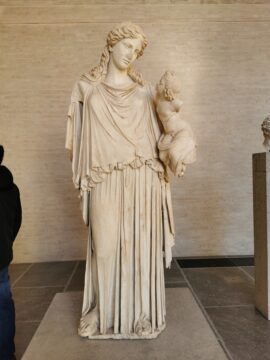 The Peloponnesian War ended in 404 BCE with Athens’s devastating loss. Its once heralded naval fleet was largely destroyed. Plague and defeat on the battlefield had killed more than a quarter of its people. Conflicts and epidemics had left the Athenian economy in shambles. Restoring prosperity required lasting peace, but asking the proud Athenians to lay down swords after humiliation was a political gamble. They needed a more straightforward approach to ending aggression.
After decades of war, the Athenians decided peace would no longer be an abstraction. Instead, it would be personified as a deity, the goddess Eirene, and worshipped as such. To be clear, religion in ancient Greece was not “faith” in the way we understand it today. It did not necessarily guide individual’s private thoughts or provide a moral compass. Instead, it was deeply embedded in public life. Practicing religion was a social and civic duty, aimed at maintaining harmony between mortals and the divine. Religious acts such as prayers, libations, and dedication of votive offerings were typically performed at public shrines and altars. These were visible, communal gestures, often tied to festivals, civic events, or transitions in life, such as marriage, war, or death.
more here.
Enjoying the content on 3QD? Help keep us going by donating now.