
Enjoying the content on 3QD? Help keep us going by donating now.
Category: Recommended Reading
Etzel Cardeña – Theories of Consciousness
Enjoying the content on 3QD? Help keep us going by donating now.
The Middle Powers Step Up
Nathan Gardels at Noema:
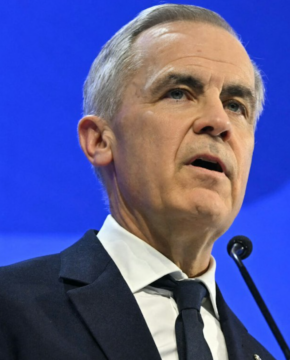 When the United States summarily defected from the world order it had built since the end of World War II, effectively joining the revisionist powers of China and Russia, it was clear we were headed back to the kind of Great Power spheres of influence that characterized the 19th century. What was less clear was how all those left out of this equation would fare going forward.
In the most powerful speech delivered at the World Economic Forum in Davos, Switzerland, this week, Canadian Prime Minister Mark Carney laid out a forward-looking vision for those who must operate in the breach.
To begin with, he acknowledged that, for all its faults and hypocrisies, the liberal rules-based order did benefit the security and prosperity of smaller powers enough to foster their allegiance. But that is all over. We should not fool ourselves that we are in a moment of “transition” that may someday revert to an approximation of the old normality, he chided. Rather, we are facing a total “rupture” with the past that compels the less powerful to construct an alternative collective approach.
“Middle powers must act together because if we’re not at the table, we’re on the menu,” he bluntly told the government and business elites assembled in the Alps.
More here.
Enjoying the content on 3QD? Help keep us going by donating now.
What Are 2D Particles?
Elay Shech at Aeon Magazine:
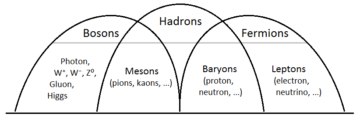 Everything around you – from tables and trees to distant stars and the great diversity of animal and plant life – is built from a small set of elementary particles. According to established scientific theories, these particles fall into two basic and deeply distinct categories: bosons and fermions.
Bosons are sociable. They happily pile into the same quantum state, that is, the same combination of quantum properties such as energy level, like photons do when they form a laser. Fermions, by contrast, are the introverts of the particle world. They flat out refuse to share a quantum state with one another. This reclusive behaviour is what forces electrons to arrange themselves in layered atomic shells, ultimately giving rise to the structure of the periodic table and the rich chemistry it enables.
At least, that’s what we assumed. In recent years, evidence has been accumulating for a third class of particles called ‘anyons’. Their name, coined by the Nobel laureate Frank Wilczek, gestures playfully at their refusal to fit into the standard binary of bosons and fermions – for anyons, anything goes.
more here.
Enjoying the content on 3QD? Help keep us going by donating now.
The Purest Definition of Love
Maria Popova at The Marginalian:
 Few things in life cause us more suffering than the confusions of love, all the wrong destinations at which we arrive by following a broken compass, having mistaken myriad things for love: admiration, desire, intellectual affinity, common ground.
This is why knowing whether you actually love somebody can be so difficult, why it requires the rigor of a theorem, the definitional precision of a dictionary, and the courage to weather the depredations of time.
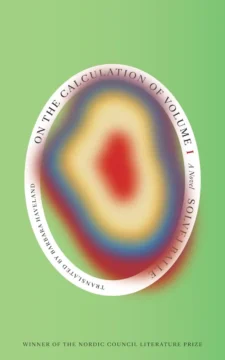
In On the Calculation of Volume (public library) — her startlingly original reckoning with the bewilderments of time and love, partway between Einstein’s Dreams and Ulysses — Danish author Solvej Balle offers the best definition of love I’ve encountered since Iris Murdoch’s half a century ago:
The sudden feeling of sharing something inexplicable, a sense of wonder at the existence of the other — the one person who makes everything simple — a feeling of being calmed down and thrown into turmoil at one and the same time.
more here.
Enjoying the content on 3QD? Help keep us going by donating now.
Trump Awards
Enjoying the content on 3QD? Help keep us going by donating now.
Why Experts Can’t Agree on Whether AI Has a Mind
Tharin Pillay in Time Magazine:
 “I’m not used to getting nasty emails from a holy man,” says Professor Michael Levin, a developmental biologist at Tufts University.
Levin was presenting his research to a group of engineers interested in spiritual matters in India, arguing that properties like “mind” and “intelligence” can be observed even in cellular systems, and that they exist on a spectrum. His audience loved it. But when he pushed further—arguing that the same properties emerge everywhere, including in computers—the reception shifted. “Dumb machines” and “dead matter” could not have these properties, members of his audience insisted. “A lot of people who are otherwise spiritual and compassionate find that idea very disturbing,” he says. Hence, the angry emails.
More here.
Enjoying the content on 3QD? Help keep us going by donating now.
Sunday, January 25, 2026
Writing the History of Neoliberalism
Quinn Slobodian, Priya Lal, Gary Gerstle and Tehila Sasson in Transactions of the Royal Historical Society:
[Quinn Slobodian] Until very recently, to talk about the category of neoliberalism in the discipline of history was to describe an absence. While the term experienced rapid adoption in the adjacent fields of geography, anthropology and sociology in the early millennium, it remained a piece of jargon too far for most historians, who are temperamentally leery of what they perceive as trendy terminology and prefer their research to be implicitly rather than explicitly informed by theoretical work. Yet the last decade has seen the category of neoliberalism tiptoeing into the work of historians too. The term ‘neoliberal’ appeared in the title of an article in American Historical Review and Past & Present for the first time in 2019 and 2021, respectively. Angus Burgin’s intellectual history of neoliberalism, The Great Persuasion, won the Merle Curti Award for best book in intellectual history; Duke historian Nancy MacLean’s Democracy in Chains was a finalist for the National Book Award; my own book – with neoliberalism in its title – received a prize from the American Historical Association; and the book of another contributor to this forum, The Rise and Fall of the Neoliberal Order, was shortlisted for the Financial Times Business Book of the Year.
How can we explain the creeping mainstreaming of neoliberalism for historians? One reason is external to the university. Broader public debates in the wake of the Global Financial Crisis, the Eurozone crisis and the responding political formations of Occupy and the ‘movements of the squares’ injected an activist strain inside the academy among graduate students who, in some cases, are now junior professors or postdoctoral scholars with their first books published. More senior scholars have also responded to the zeitgeist. To offer one prominent example, the economic historian Adam Tooze, who largely eschewed the category of neoliberalism in his earlier work, made it central in his more recent publications. Despite its periodic denunciations as a category by some senior historians and the preference of others to handle it only with the tongs of scare quotes, neoliberalism has shown its traction as a concept deployed by people to make sense of a present where people’s life chances seem constrained by a capitalist framework beyond the power of any individual or single state.
More here.
Enjoying the content on 3QD? Help keep us going by donating now.
Carnival Strikes Back
Pedro Abramovay in The Ideas Letter:
In 2025, the Rio de Janeiro Carnival parade was, for the first time, interrupted by an announcement: I Am Still Here, a film that portrays the brutality of Brazil’s military dictatorship, had won the Oscar for Best International Feature Film. It was the first time Brazil had won. The atmosphere in the Sambódromo, a special stadium built by architect Oscar Niemeyer for the annual Carnival parade, was as euphoric as a World Cup victory.
The film is not an easy one. Directed by Walter Salles Jr, it depicts the tragic story of the forced disappearance of former congressman Rubens Paiva and the search—led by his wife, Eunice—for the truth about what happened to her husband, a former Congressman who was imprisoned, tortured, and killed by the military forces at the behest of Brazil’s dictatorship. In a country as polarized as Brazil, it was far from obvious that the Oscar victory of such a political film would be celebrated almost unanimously.
Brazil remains deeply divided in its interpretation of the dictatorship. Half the country voted to reelect former president Jair Bolsonaro in 2022, who not only continues to defend the military regime as the best period in Brazil’s history, but attempted to actually replicate the coup d’état that inaugurated the dictatorship in 1964 when his opponent, Luiz Inácio Lula da Silva, won. He is currently imprisoned.
Bolsonaro’s hatred for I Am Still Here runs deep. He has always despised Rubens Paiva: In 2014, when the country erected a statue honoring Paiva, Bolsonaro spat on it. So the fact that the film provoked an explosion of joy in the Sambódromo, interrupting the Carnival parade, is no small matter.
More here.
Enjoying the content on 3QD? Help keep us going by donating now.
Iran in Revolt
Kayhan Valadbaygi in Phenomenal World:
The recent unrest in Iran marks the fourth major uprising since 2017.1 Sparked by merchants in Tehran who closed their stores in protest at a sharp drop in the currency, the ferment soon spread across the nation, drawing in a wide cross-section of people—from students to business owners to the urban poor—who clashed with the increasingly repressive state authorities. Over the next three weeks, the turmoil only seemed to escalate: an internet blackout, a mounting death toll, apparent penetration of the protests by Mossad, threats of bombing and regime change from Washington.
And then, in a matter of days, the momentum ebbed away. The government appeared to regain control, using what one analyst described as a “systematic strategy to encircle and fatigue the protest movement.” For now, it seems the clerical establishment will remain in place, since the domestic opposition is not strong enough to dislodge it and the US is unwilling to risk a major intervention.
Yet the crackdown has done nothing to address the origins of the upheaval, which lie in the country’s political economy and social structure. These have been reshaped, in recent decades, by two primary forces: the neoliberalization of the post-revolutionary state since the early 1990s, and the dramatic expansion of international sanctions since 2012. This has reconfigured Iran’s patterns of accumulation, allowing a narrow set of actors—primarily the Islamic Revolutionary Guard Corps (IRGC) and the religious-revolutionary foundations—to consolidate power.
For everyone else, conditions have deteriorated. Inequality and poverty are on the rise. Casualization and wage repression are ubiquitous. Welfare has been eroded, the middle class has been hollowed out, and a growing stratum of educated youth are unemployed or underemployed. The result is a simmering crisis of legitimacy, which now routinely erupts into the open. In what follows, I will show how deep political-economic transformations created the context for the events of this month, and interrogate their meaning for the future of the Iranian regime. Roiled from within and menaced from without, what are its chances of survival?
More here.
Enjoying the content on 3QD? Help keep us going by donating now.
Louis Brus (1943 – 2026) Chemist and Nobel Laureate
Enjoying the content on 3QD? Help keep us going by donating now.
The death of the dance floor — and the movements to replace it
Maria Diaz will be the first to tell you that she’s a hype person. If she’s out on the town with her friends, she will happily dance with a stranger. If no one else is moving, she’ll try to get the club going. “We don’t care if people are not,” said 29-year-old Los Angeleno. “That’s what we came out there to do.”
More here.
Enjoying the content on 3QD? Help keep us going by donating now.
A light from the periphery
Richard Fisher in aeon:
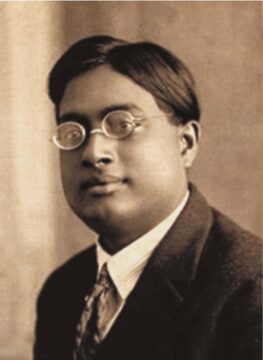 On a summer day in 1924, a young Indian physicist named Satyendra Nath Bose sent a paper and a letter to Albert Einstein. It would shape the nascent field of quantum mechanics and secure Bose a place in the annals of scientific history.
At the time, Bose was teaching in colonial India, thousands of miles from the centres of European science. In his letter, the 30-year-old Bose explained that he had found a more elegant way to derive one of the pivotal laws of physics (Planck’s law of radiation) and asked for Einstein’s help in publishing it. To Bose’s astonishment, Einstein replied enthusiastically. He translated Bose’s manuscript into German and arranged for it to be published in Zeitschrift für Physik, a leading physics journal of the time. Thus was born Bose-Einstein statistics, a cornerstone of quantum physics. What made it so significant? In plain terms, Bose devised a new way to count and describe the behaviour of identical quantum particles, most famously, particles of light called photons.
More here.
Enjoying the content on 3QD? Help keep us going by donating now.
Valentino Garavani (1932 – 2026) Fashion Designer
Enjoying the content on 3QD? Help keep us going by donating now.
Ralph Towner (1940 – 2026) Musician
Enjoying the content on 3QD? Help keep us going by donating now.
Sunday Poem
”The words do not take me to the reason I made the entry, but back to the
felt experience, whatever it was. This is important. I can, then,
think forward again to the idea–that is, the significance of the event
rather than back upon it. It is the instant I try to catch in the notebooks,
not the comment, not the thought.” —Mary Oliver on the notes in her notebooks –
Home from a Trip
by Nils Peterson
Home from a trip, trying to remember
at least the bedrooms where we stayed,
the things in them, the basins, the tables
with electric kettles, instant coffee and tea,
the cabinets, where once in awhile I’d hang
my coat. Wallpaper? I remember it in just
one room – St. Ives, a 1930ish vertical line
of roses between thin blue stripes.
Often now when I reach for a word, it takes
a day for it to arrive through the clutter, but
images swarm about me wanting to be seen,
wanting to be remembered – the angle of my
childhood bed-room roof in the chauffeur’s flat
above the garage, the noise, clatter, and shining
of the great machines on the night shift my father
worked during the war, that somehow I visited
once – the smell of hot oil against the grind
of metal – now the train station in Kentucky where
I see myself sixteen and suitcased arriving
at school. How can I see myself?
Enjoying the content on 3QD? Help keep us going by donating now.
Friday, January 23, 2026
Beatle with a Camera: Paul McCartney’s Photographs at the Frist Museum
Leann Davis Alspaugh at Acroteria:
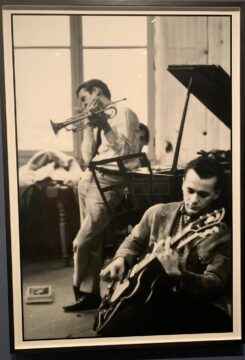 Eyes of the Storm: Paul McCartney Photographs, 1963–64 showcases a selection of nearly 1,000 recently discovered photographs taken by Paul McCartney with his Pentax during the period in which the Beatles went from being aspiring musicians in Liverpool to white-hot international celebrities. Before Beatlemania took the world by storm, McCartney recorded candid portraits of bandmates George Harrison, Ringo Starr, and John Lennon as they began performing with other acts before moving on to Paris. It wasn’t the first trip to Paris: In 1961, McCartney and Lennon arrived as hitchhikers, dazzled by monuments and boulevards and taking in a concert by Johnny Hallyday, France’s answer to Elvis Presley.
But by the time they returned to Paris as the Beatles in January 1964, things had improved, so much so that they stayed at the luxurious Hotel George V and played three sets a day at the Olympia Theatre, juggling photo shoots and recording sessions. One standout image from this period is a shot of two musicians at the Pathé Marconi Studios where the Beatles recorded German language versions of “I Want to Hold Your Hand” and “She Loves You” for release in West Germany.
More here.
Enjoying the content on 3QD? Help keep us going by donating now.
In the Circle of Ancient Trees
Leon Vlieger at Inquisitive Biologist:
 Six years ago, Belgian dendrochronologist Valerie Trouet blew me away with Tree Story, making it onto my year-end list with her account of research on tree rings. To be honest, I was not sure how she could top that book, and maybe she was not either. For her latest book, released autumn last year, she has thus taken on the role of editor to let her colleagues tell you first-hand of their research. In a nicely balanced collection of essays that features long-lived trees from around the globe, ten senior dendrochronologists provide ten different and sometimes personal answers to the question: “And what else can you learn from tree rings?”
Trouet limits her visible contribution to the introduction, where she lays down some of the basic concepts so the others do not have to. What are tree rings? How do you study them without cutting down a tree? And how do you combine tree-ring records from different trees to create chronologies that can stretch back millennia, allowing you to date trees and the wooden objects we construct from them? After this, she steps back to let her colleagues speak.
More here.
Enjoying the content on 3QD? Help keep us going by donating now.
Meet The Gods Of Egypt
Enjoying the content on 3QD? Help keep us going by donating now.
Demis Hassabis, Dario Amodei Debate the World After AGI
Enjoying the content on 3QD? Help keep us going by donating now.