
Category: Recommended Reading
Kim Tschang-Yeul (1929 – 2021)
How I Learned to Live in a Tangle of Joy and Pain
Rebekah Taussig in Time Magazine:
 It was a night in mid-April that I fell asleep to the phrase this is too hard pinging through my brain, and they were the first words to cross my mind when I opened my eyes the next morning. I texted my sisters: “Remember the easy days when it was JUST a baby and cancer???” I pulled myself out of bed, plopped heavily into my wheelchair and stared in the mirror with my fingers splayed across my growing belly. That day we had to decide if my partner Micah would start a second round of chemotherapy treatments that would weaken his ability to fight against this new virus if he caught it, or forgo the treatment and change his odds against cancer. Our baby would arrive in a few weeks.
That spring, as my feet and belly swelled, my classes of high school students pivoted to virtual learning. I scrapped the original plans and assigned personal essays. “Let’s bear witness to the here and now,” I said. “One day, we might even read these essays to our grandchildren.” I wrote alongside them as we journaled every day, paying attention to the details—snippets of dialogue caught at the dinner tables we were now sitting around, the exact flavor of the cinnamon rolls we finally had time to bake, our bodies’ reactions to sitting in front of screens for eight-plus hours a day. Tiny flashes of human experience in the midst of a global pandemic.
As soon as we started drafting our notes into essays, though, the plump, specific moments we’d documented flattened under the task of shaping them, and I noticed many of us pulling in one of two directions. There were the essays that skimmed the surface of loss—I’m bored; I miss soccer practice; when will this be over? And there were the essays of relentless positivity—I’m finally getting to spend more time with my family; I’m learning to be grateful for what I have; I’ve had time to make so many cool crafts. The angsty drafts didn’t reach complete catharsis, the uplifting versions didn’t quite offer hope, and all of us struggled to stay present with our words.
I was no exception. As soon as I tried to weave meaning from the tidbits I’d been gathering, I watched my words splinter on the page.
More here.
Leader: The Big Tech reckoning
From New Statesman:
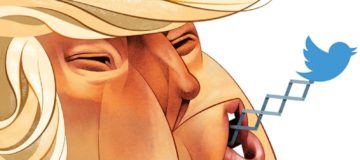 After Donald Trump lost the US presidency last year, he retained the consolation prize of his Twitter account. Commentators debated how Mr Trump would seek to profit from the 88 million followers he had accumulated: a new TV career or another presidential bid? Yet on 8 January, he lost his cherished platform after he was permanently suspended by Twitter because of “the risk of further incitement of violence”. Two days earlier a rabble of Trump fanatics, conspiracy theorists and white supremacists had stormed the US Capitol, resulting in five deaths. In a video posted on Twitter, Mr Trump told the mob, “We love you” and later tweeted: “These are the things and events that happen when a sacred landslide victory is so viciously & unceremoniously stripped away from great patriots who have been badly & unfairly treated for so long.”
Twitter’s intervention was praised by some commentators but the timing was convenient: Mr Trump had only 11 days left in office when he was suspended. The social media site, which profited for years from the president’s incendiary tweets, thus minimised the risk of retaliatory action.
Mr Trump’s suspension raises more profound questions. By barring the president, Twitter acted as a publisher, making an editorial judgement about the content hosted on its platform. Yet it is precisely this status that the social media firms have long eschewed. Under Section 230 of the US Communications Decency Act, they are unaccountable for the content that is published on their platforms. Though they have a duty to remove any posts that violate federal criminal laws, they cannot be sued for libel and are not regulated in the manner of publishers. That is surely wrong.
More here.
Saturday, January 16, 2021
Kabbalah and Magic in the Renaissance
Art Requires, A Long Look
Gig Ryan at The Sydney Review of Books:
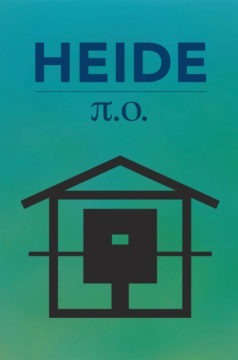 So much has been written on the Heide group of artists, Nolan, Tucker, Hester, and their patrons John and Sunday Reed that it is hard to imagine anything more could be added. π.ο.’s Heide however, though holding this group of communalism, camaraderie, and free love as its centre, radiates backwards to the history that precedes the Reeds’ utopian endeavour, and continues into its aftermath. One epigraph from Oscar Wilde signals Heide’s intent: ‘The only duty we have to history is to rewrite it.’ Artists tumble out in artistic lineage from Buvelot to the Heidelberg School to Heide, along with numerous glancing biographies of influential patrons and politicians, William Barak, Ned Kelly, Albert Namatjira, Patrick White, Billy Hyde, Eliza Fraser, and many others. Through these intersecting histories, Heide also depicts the struggle between the conservation of the past and revolt against it, as epitomised in the Ern Malley hoax, with Angry Penguins magazine briefly funded by the Reeds, and the recurring compromises that swing between capital and art; ‘Only an Artist, can break out of / a straight-jacket.’. But it is his poetic technique that most energetically enacts these struggles, forging a dense amalgam in which past and present continually invade each other. Where π.ο.’s earlier Fitzroy: The Biography catalogued portraits of famous, notorious, and lesser known characters, Heide commences with ‘Terra Australis’ that cryptically lampoons its title, then to Cook’s voyage, and gradually progresses to the establishment of the State Library and the National Gallery of Victoria in 1850s colonial Melbourne, and eventually to the artists hammering to enter or exit those institutions. Escapee William Buckley and explorers Leichhardt and Burke and Wills are also among these seekers of the new: ‘On the horizon: / 23 horses, 19 men, and 26 camels on / a slow walk across / a blank slate.’ This imaginary ‘blank slate’ is equivalent to the unpolished metropolis without its establishments of arts and learning, and these doomed or heralded figures parallel the relentless pursuit of art.
more here.
The Essential Octavia Butler
Stephen Kearse at the New York Times:
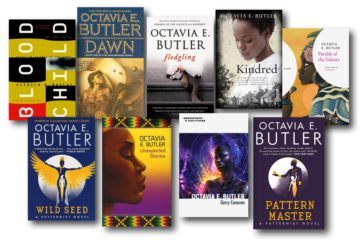 The plaques and firsts are the least interesting part of her story, though. Above all, Butler was an observer and ponderer. The probing mind that animates her novels, short stories and essays is obsessed with the viability of the human enterprise. Will we survive our worst habits? Will we change? Do we want to?
These questions led Butler to explore settings banal and fantastical, brutal and tender. Her peculiar, unsettling worlds, rendered in prose trimmed of sentiment and ornament, overflow with desperation and tragedy. She deeply distrusted utopias, saviors, power brokers and escapism. Accordingly, her works are heavy and bleak, full of warnings and catastrophic failures to heed them.
more here.
The Deflationary Bloc
 Yakov Feygin in Phenomenal World:
“An effective way to write the history of the last thirty years of the twentieth century,” economist Albert Hirschman wrote in 1985, “may well be to focus on the distinctive reactions of various countries to the identical issue of worldwide inflation.” Writing just as the global “great inflation” of the 1970s was abating, Hirschman couldn’t have foreseen how right he was. As Claudia Sahm recently wrote in the New York Times, fear of the great inflation of the 1970s still dominates the thinking of the Federal Reserve, even as its recent messages indicate changing winds. (In recent comments, Larry Summers’s warning that two-thousand-dollar checks would cause the economy to run too “hot” and generate inflation betrayed an almost generational blindness on the topic.)
Economists lack a good understanding of what causes inflation. In introductory macroeconomics curricula, the mantra of Milton Friedman remains central: “inflation is always a monetary phenomenon.” By this, Friedman meant that excessive price growth happens when a state loosens the supply of money, thus over-expanding the monetary base. But recent research has brought this popular doctrine into question. While expanding the money supply seems to be a necessary condition for uncontrolled inflation to occur, it is not sufficient: increases of the monetary base have occurred without any inflationary episodes, and inflationary episodes have happened with only very small increases in monetary base.
Contra Friedman, Hirschman suggested that uncontrolled inflation is primarily a political phenomenon that occurs when groups compete over resources. The rapid increase of the price level is a signal that the state can no longer control this competition. What exactly happened in the waning decades of the twentieth century, and why do the ghosts of inflation still haunt our economic and political reality?
Hyman Minsky’s writings on the collapse of the so-called golden age of capitalism offer some insight by forcing us to engage with how distributive struggles have driven the inflationary and deflationary cycles of the past fifty years.
More here.
Liberal egalitarianism: what’s worth salvaging?
 Florence Sutcliffe-Braithwaite interviews Katrina Forrester over at Renewal:
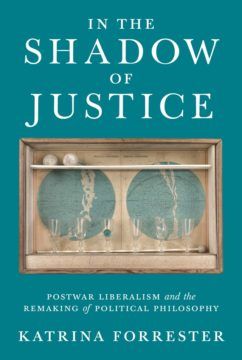
Florence Sutcliffe-Braithwaite (FSB): The first part of your book, In the Shadow of Justice (Princeton 2019), goes back to the 1950s, when the basic parameters of Rawls’s theory of justice were, you argue, set. As a historian of Britain, I was fascinated by how much the British Labour Party’s revisionists shaped Rawls in the 1950s – you suggest, in fact, that his theory brought ‘philosophical order to the ideas of the Labour revisionists’ (p25). But because it was so fundamentally formed in this period, Rawlsianism was premised on continuing high levels of growth and public buy-in for welfare programmes, two things that Labour revisionists took for granted but which would become much less secure in the years after the publication of A Theory of Justice in 1971. In the following decades, as you show, a cohort of Rawlsian political philosophers, defending his work from attacks on left and right, firmed up and elaborated Rawls’s already immensely ambitious theory into a kind of juggernaut: huge, with a vast, rigid structure, very slow to turn around, but immensely powerful. Rawlsianism didn’t just come to dominate liberal political philosophy, it essentially defined liberal egalitarianism. Other philosophers had to work in its shadow. You want, in your book, to ‘denaturalize and defamiliarize’ the canons of liberal egalitarianism (p275). What’s the practical payoff from doing this?
Katrina Forrester (KF): It can be hard to see the assumptions that underpin a particular way of thinking, and to see the different choices that go into making up the conceptual frameworks that we take for granted and that are coded as ‘intuitive’. Among political philosophers, liberal egalitarianism has been a dominant way of thinking about politics, society and ethics, for decades. Though its origins in the political philosophy of John Rawls are constantly revisited, sometimes in a quasi-scriptural way, its political origins are less often interrogated. I wanted to ask what we see if we take liberal egalitarianism as a historical phenomenon to be explained. If it is recast as one of the twentieth century’s languages of liberalism, a framework that is one among many, then we might be better placed to ask if it’s a language and a framework we want to use.
More here.
Digital Immortality
 Houman Barekat in LA Review of Books:
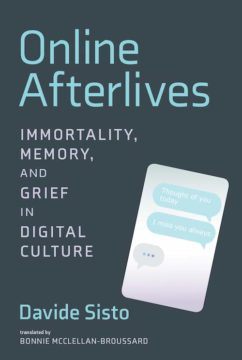
A FEW MONTHS AGO, I got a terrible fright. I was on my smartphone, rereading my old WhatsApp exchanges with a friend who had died in a car accident a year earlier, when suddenly the screen flickered and the friend came “online.” Presumably a relative had possession of the phone and was going through it; maybe they were looking to retrieve some specific piece of information, or perhaps they simply wanted to revisit their loved one’s online life — just as one might peruse a photo album or a trove of letters. There was a simple explanation, but I was nonetheless spooked: it was unnerving to see the account spring to life, because we tend to think of social media profiles as being inextricably entwined with their owner’s personhood — an extension, almost, of their physical selves.
What is the moral and legal status of a person’s digital avatar and its accumulated data? Is it merely property like any other, or does it occupy its own special category? In 2018, Germany’s Federal Court of Justice ruled that the parents of a 15-year-old girl who died after falling under a train had the right, under inheritance law, to access her Facebook account. The parents, who believed their daughter may have intended to kill herself, wanted to read her online correspondence to establish whether she was being bullied at the time of her death. This brought them into conflict with Facebook’s strict privacy policy, which permits only the most limited access for relatives of deceased users: they can either “memorialize” the profiles or delete them outright. Overturning the decision of an appeals court that had found in Facebook’s favor, the country’s highest court held that such digital data should be treated no differently than a person’s private diaries, passing to their legal heirs after death.
Intuitively this feels right, especially in the circumstances of that particular case. But merely having access to an account is one thing; using it to post new content in the name of the deceased person is another.
More here.
Time Is the Universal Measure of Freedom
 Mike Konczal in Boston Review:
The workplace has been a central battleground in the debate over freedom. On the clock, bosses tell us how to act and what to do, even around basic bodily functions: workers can be told when they can use the bathroom. Bosses also exert a significant amount of control over our personal lives, dictating limits on speech and our political actions. Governments can imprison us for breaking their rules; bosses can fire us, depriving us of the basic resources we need to live. Unlike our democratic form of public government, the workplace subjects us to, in the words of philosopher Elizabeth Anderson, a kind of private government, with no presumption of fairness, accountability, or even regularity—a despotic state in miniature. Leaving our job is no check on this despotic tendency. People know this, which is why for centuries American workers have demanded more than the power to quit. As much as fair wages and safe working conditions, workers have also demanded safeguards over their time.
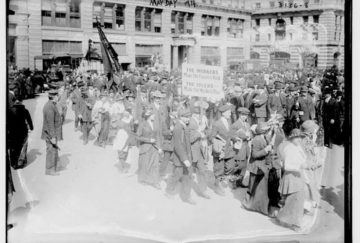
There have always been workers who demanded limits on working hours to accommodate everything else that they needed time for. They understood that if they didn’t have free time, they couldn’t have the kinds of relationships and commitments they needed to lead free and full lives. This is a story almost as old as the United States itself. In May 1835 a group of carpenters, masons, and stonecutters in Boston wrote and released the “Ten-Hour Circular,” a short document demanding a ten-hour workday. “The God of the Universe has given us time, health, and strength. We utterly deny the right of any man to dictate to us how much of it we shall sell.” The circular’s description of the system as “odious, cruel, unjust, and tyrannical” and of bosses forcing a worker “to exhaust his physical and mental powers by excessive toil, until he has no desire but to eat and sleep, and in many cases he has no power to do either” resonated with workers, especially those new to waged labor. Citizens left in a worn-out state of exhaustion could not be “friends to the country or the Rights of Man,” nor could they meet their “duties to perform as American Citizens and members of society.”
More here.
Saturday Poem
“From the depths of ignorance ill winds blow.”
…………………………………….. —Amerigo Lowe
Idiot Wind —excerpts
Someone’s got it in for me
They’re planting stories in the press
Whoever it is I wish they’d cut it out quick
But when they will I can only guess
People see me all the time
And they just can’t remember how to act
Their minds are filled with big ideas
Images and distorted facts
Idiot wind, blowing every time you move your mouth
Blowing down the back roads headin’ south
Idiot wind, blowing every time you move your teeth
You’re an idiot, It’s a wonder that
you still know how to breathe
You hurt the ones that I love best
And cover up the truth with lies
One day you’ll be in the ditch
Flies buzzin’ around your eyes
Blood on your saddle
Idiot wind, blowing through the flowers on your tomb
Blowing through the curtains in your room
Idiot wind, blowing every time you move your teeth
You’re an idiot babe
It’s a wonder that you still know how to breathe
Nine Attention-Grabbing Inventions Unveiled at This Year’s CES
Emily Matchar in Smithsonian:
 Like school, work conferences and visiting your grandparents, this year’s Consumer Electronics Show (CES) has been virtual-only. So instead of gathering in hangar-sized Las Vegas expo halls, those wishing to check out the year’s crop of tech and gadget debuts can simply tune in online. Some of these technologies will never catch on. Others may one day be as ubiquitous as the Xbox, satellite radio and 3D printers, all of which made their grand entrances at CES. While it’s hard to predict which items will stick around, we’ve picked nine of the most useful-seeming, most surprising and most fun inventions for a possible peek into our future.
Bluetooth Masks
What would have looked utterly alien just a year ago now seems completely practical. Binatone’s MaskFone is a N95 mask wired for sound. Wearers can use its Bluetooth function to make calls, request a song from their own music library, or issue commands to voice assistants like Alexa. Simply take the electronics out to wash the fabric mask. Tech and social media commentator Lance Ulanoff tweeted “How did someone not come up with this sooner?”
More here.
A Heart Is Not a Nation
Jeff Sharlet in Bookforum:
 Even if, especially if, Trump leaves—and some portion of us are lulled into mistaking his ascendency for an aberration—we’ll have to choose to look at hate, even as the press swells with self-congratulatory stories of a nation rejecting “division.” Because the hate of which Trump is the coalescence, the coagulation, was not an aberration, it was an inevitability.
I STARTED WRITING THIS ESSAY on the hate under which we all now live the night of Trump’s first debate with Joe Biden. I was trying to think through two new books, Seyward Darby’s Sisters in Hate and Jean Guerrero’s Hatemonger, both smartly reported and urgent. But I stalled. I could read the books, but I didn’t know if I had it in me to write about them. I’d learned, like so many of us, to look away.
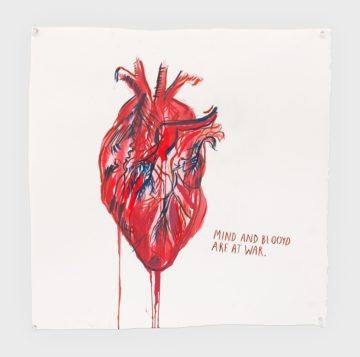
I hadn’t given up the hate beat entirely since my heart attack. I’d grown careful.
Last fall, when I started reporting on Trump rallies again, instead of drinking my fear into submission afterward, I’d go for long walks. I read these books while walking the dirt roads where I live now, roads so quiet I could walk and read. But often I’d pause, neither reading nor walking. I considered the question of how to write about hate, what these books—Darby’s, on the internal lives of female leaders of what remains (for now) fringe white nationalism, and Guerrero’s, about Trump senior adviser and speechwriter Stephen Miller, who is mainstreaming those beliefs—might say about the taxonomy of hate, the methodology of its study. As if looking at hate was a matter of professional curiosity.
I had thoughts! But I couldn’t keep what I’d read in my mind, my gut, my—maybe you’ll forgive the cliché—my heart. I’d reached saturation. Or maybe I was finally getting it, the “joke,” which is that you don’t need to go looking for hate. It’s always right there, mundane. I remembered a 2017 New York Times profile of a suburban neo-Nazi, how many accused it of “normalizing” its subject. I hadn’t thought much of it—no need to play neutral with fascism—but I hadn’t agreed when people said it didn’t matter if the Nazi liked Seinfeld and Guillermo del Toro’s Pacific Rim. I thought there was no “normalizing” him, because he was all too normal. It seemed critical to understand the ways in which the antifascist del Toro’s art could be repurposed as hate. If it could happen to del Toro it could happen to anybody. We are, none of us, especially given the whiteness—the anti-Blackness—coded within us all by white supremacy, as far from the Nazi as we want to be. My problem with the Nazi next door wasn’t that we knew too much about him. We didn’t know enough.
More here.
Friday, January 15, 2021
How one of publishing’s most hyped books became its biggest horror story — and still ended up a best seller
Lila Shapiro in Vulture:
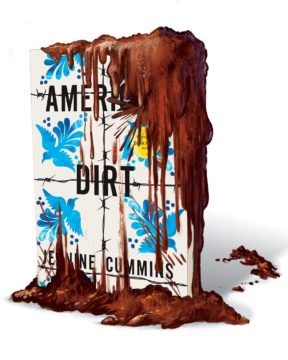 On a mild Monday this past February, a tense meeting unfolded in a skyscraper in downtown Manhattan. Four Latinx writers and activists sat on one side of a long conference table. Facing them was a collection of white editors and executives from Macmillan, the publishing house that had recently put out American Dirt, the most controversial book of the year, or maybe the century. A representative of Oprah Winfrey’s listened in on the phone, and a platter of sandwiches sat on the table. “I wouldn’t eat the sandwiches,” recalled Myriam Gurba, one of the activists. “Those are the enemies’ sandwiches.”
In the months leading up to American Dirt’s publication, Macmillan had positioned the page-turner — about a mother and son escaping cartel violence in Mexico — as a definitive chronicle of the migrant experience. Prominent readers had praised it in terms worthy of a Nobel Prize. The novelist Don Winslow called it “a Grapes of Wrath for our times.”
More here.
What the Blood Supply Shows About Covid-19’s Spread
Nathaniel Scharping in Undark:

In March, as the Covid-19 pandemic began to shut down major cities in the U.S., researchers were thinking about blood. In particular, they were worried about the U.S. blood supply — the millions of donations every year that help keep hospital patients alive when they need a transfusion.
The researchers were able to put to rest their initial concerns about the virus spreading via the blood supply. But they quickly realized that all those blood donations might offer a vital source of data on the pandemic.
When Covid-19 infects someone, the immune system’s response to the virus leaves behind detectable proteins in their blood. In March, with funding from the National Institutes of Health, a group of scientists working with blood banks around the country quickly launched a program to surveil the blood supply in certain regions for those traces of Covid-19 infection. With funding from the Centers for Disease Control and Prevention, that initial program expanded to a nationwide effort known as the Multistate Assessment of SARS-CoV-2 Seroprevalence (MASS) study, which has analyzed roughly 800,000 donations so far.
More here.
James Baldwin’s America and Its Urgent Lessons for Today
Ashish Ghadiali in The Guardian:
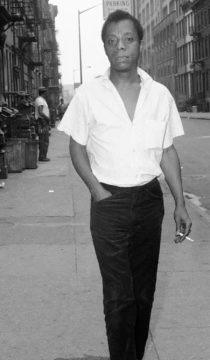 Michael Ondaatje once wrote that if Van Gogh was “our 19th-century artist-saint” then James Baldwin was “our 20th-century one”. For many, Baldwin’s writing has long been a touchstone of anti-racist humanism, but the sense of that particular epithet has never landed more emphatically for me than while reading Eddie S Glaude Jr’s Begin Again, his potent meditation on the enduring legacy of Baldwin’s life and thought, a New York Times bestseller and one of a number of titles that have spoken to the soul of public outrage at George Floyd’s killing in Minneapolis last May.
Glaude, who is distinguished professor and chair of the African American studies department at Princeton University (where he has been teaching a seminar on Baldwin for several years), is also a native of Jackson County, Mississippi, the US state that suffered the highest number of lynchings – 581 between 1882 and 1968. The trauma of that inheritance – “our bodies carry the traumas forward,” Glaude writes – is never far from the page. Nor is the trauma felt across black America in his parents’ generation when in 1968 Martin Luther King Jr was assassinated, crushing hopes for “fundamental change” that had been gathering around the US civil rights movement for the best part of a decade.
It was out of despair, Glaude writes, that in 2018, two years after what he calls “the disastrous election of Donald Trump”, he started to write this book, “saying to myself, they have done it again. Millions of white Americans had chosen Trump, and we would have to deal with the consequences of that choice.”
More here.
Try This “Green Needle—Brainstorm” Mind Challenge
Explanation here.
Friday Poem
Sonnet XVII
I do not love you as if you were salt-rose, or topaz,
or the arrow of carnations the fire shoots off.
I love you as certain dark things are to be loved,
in secret, between the shadow and the soul.
I love you as the plant that never blooms
but carries in itself the light of hidden flowers;
thanks to your love a certain solid fragrance,
risen from the earth, lives darkly in my body.
I love you without knowing how, or when, or from where.
I love you straightforwardly, without complexities or pride;
so I love you because I know no other way
than this: where I does not exist, nor you,
so close that your hand on my chest is my hand,
so close that your eyes close as I fall asleep.
Pablo Neruda
The Act of Living: what the analysts can teach us
Lisa Appignanesi in The Guardian:
 An old man with a shaggy white beard and matching hair stands in front of an audience of seekers and flower children. They are looking for ways of amplifying their human potential, of becoming more aware of their sense perceptions. It’s the tail end of the 1960s and the Esalen Institute in Big Sur, California, is where it’s happening. Throughout the decade, the fame of Fritz Perls – founder of Gestalt therapy in the 50s along with his rarely mentioned wife, Laura, and the once-lauded social critic Paul Goodman – soared. Perls’s so-called Gestalt Prayer was doing the rounds: “I do my thing and you do your thing, / I am not in this world to live up to your expectations, / and you are not in this world to live up to mine. / You are you, and I am I, / and if by chance we find each other, it’s beautiful. / If not, it can’t be helped.” (Even by this time Gestalt had lost its intellectual oomph, having moved away from its earlier therapeutic intent into the world of yogis and platitudes.)
When he was a student in Vienna in the late 20s, Perls had attended Wilhelm Reich’s “technical seminars”. Reich, who wrote The Function of the Orgasm in 1927, was to serve as his supervising analyst in Berlin in 1930. The book was dedicated and personally presented to Freud, who liked the talented Reich: he had done much good work in the outpatient Ambulatorium, providing therapy for the poor, and then with his mobile clinic bringing advice and contraception to working-class areas. But, as Freud wrote to a friend with his customary dryness, Reich had somewhat oversimplified the human psyche by finding the antidote for all neurosis in one genital function.
Perls would later tell an anecdote about his one meeting with the founder of psychoanalysis and the talking therapy that predated his own. It’s 1936 and Perls pays an impromptu visit to the ageing Freud at his apartment, announcing he’s come all the way from South Africa. Freud, unimpressed by the presumptuous interruption, asks: “And when are you going back?”
More here.