
 Mike Konczal in Boston Review:
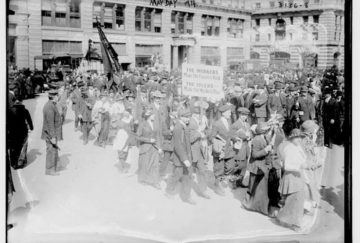
The workplace has been a central battleground in the debate over freedom. On the clock, bosses tell us how to act and what to do, even around basic bodily functions: workers can be told when they can use the bathroom. Bosses also exert a significant amount of control over our personal lives, dictating limits on speech and our political actions. Governments can imprison us for breaking their rules; bosses can fire us, depriving us of the basic resources we need to live. Unlike our democratic form of public government, the workplace subjects us to, in the words of philosopher Elizabeth Anderson, a kind of private government, with no presumption of fairness, accountability, or even regularity—a despotic state in miniature. Leaving our job is no check on this despotic tendency. People know this, which is why for centuries American workers have demanded more than the power to quit. As much as fair wages and safe working conditions, workers have also demanded safeguards over their time.
There have always been workers who demanded limits on working hours to accommodate everything else that they needed time for. They understood that if they didn’t have free time, they couldn’t have the kinds of relationships and commitments they needed to lead free and full lives. This is a story almost as old as the United States itself. In May 1835 a group of carpenters, masons, and stonecutters in Boston wrote and released the “Ten-Hour Circular,” a short document demanding a ten-hour workday. “The God of the Universe has given us time, health, and strength. We utterly deny the right of any man to dictate to us how much of it we shall sell.” The circular’s description of the system as “odious, cruel, unjust, and tyrannical” and of bosses forcing a worker “to exhaust his physical and mental powers by excessive toil, until he has no desire but to eat and sleep, and in many cases he has no power to do either” resonated with workers, especially those new to waged labor. Citizens left in a worn-out state of exhaustion could not be “friends to the country or the Rights of Man,” nor could they meet their “duties to perform as American Citizens and members of society.”
More here.
 Like school, work conferences and visiting your grandparents, this year’s
 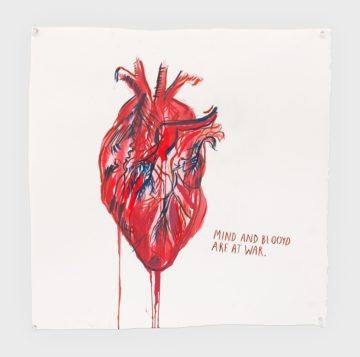 Even if, especially if, Trump leaves—and some portion of us are lulled into mistaking his ascendency for an aberration—we’ll have to choose to look at hate, even as the press swells with self-congratulatory stories of a nation rejecting “division.” Because the hate of which Trump is the coalescence, the coagulation, was not an aberration, it was an inevitability.
 On a mild Monday this past February, a tense meeting unfolded in a skyscraper in downtown Manhattan. Four Latinx writers and activists sat on one side of a long conference table. Facing them was a collection of white editors and executives from Macmillan, the publishing house that had recently put out
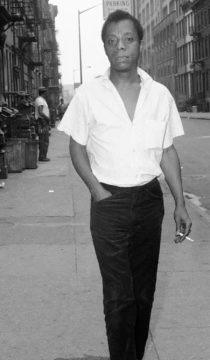 Michael Ondaatje once wrote that if Van Gogh was “our 19th-century artist-saint” then James Baldwin was “our 20th-century one”. For many, Baldwin’s writing has long been a touchstone of anti-racist humanism, but the sense of that particular epithet has never landed more emphatically for me than while reading Eddie S Glaude Jr’s Begin Again, his potent meditation on the enduring legacy of Baldwin’s life and thought, a New York Times bestseller and one of a number of titles that have spoken to the soul of public outrage at
  An old man with a shaggy white beard and matching hair stands in front of an audience of seekers and flower children. They are looking for ways of amplifying their human potential, of becoming more aware of their sense perceptions. It’s the tail end of the 1960s and the Esalen Institute in Big Sur, California, is where it’s happening.
  On Jan. 1, 2021, five long years after the vote for what’s become known as
  Archaeologists believe they have discovered the world’s oldest-known representational artwork: three wild pigs painted deep in a limestone cave on the Indonesian island of Sulawesi at least 45,500 years ago.
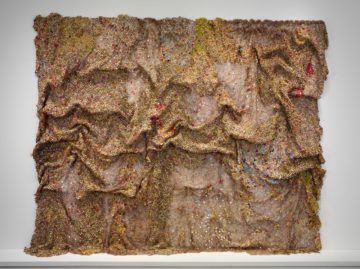 Anatsui, a seventy-six-year-old Ghanaian sculptor based in Nigeria, has transfigured many grand spaces with his cascading metal mosaics. Museums don them like regalia, as though to signal their graduation into an enlightened cosmopolitan modernity; they have graced, among other landmarks, the façades of London’s Royal Academy, Venice’s Museo Fortuny, and Marrakech’s El Badi Palace. The sheets sell for millions, attracting collectors as disparate as moma, the Vatican, and Bloomberg L.P. In the past ten years, public fascination with their medium’s trash-to-treasure novelty has matured into a broader appreciation of Anatsui’s significance. The man who dazzled with a formal trick may also be the exemplary sculptor of our precariously networked world.
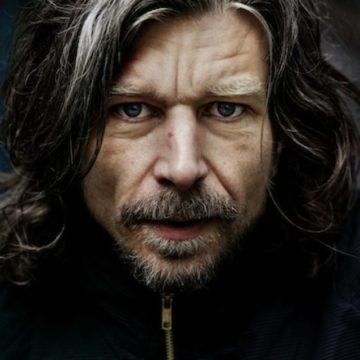 I just published a novel in Norway two months ago. I’m now writing another novel which somehow is related, and I’ve started it, I’ve written a hundred pages or so, so I’m in the middle of the beginning of that, which is the hardest part. But that’s what I’m doing.
 In 1972,
 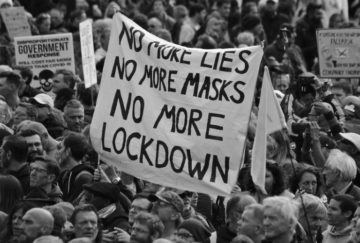 Over the past year, mobilizations around the world have sprung up against governmental efforts to contain the coronavirus through lockdowns, social distancing guidelines, mask mandates, and vaccines. Led in many cases by angry freelancers and the self-employed, amplified by entrepreneurs of speculative and totalizing prophecies, these movements are less what José Ortega y Gasset called “the revolt of the masses” and more “the revolt of the Mittelstand”—small- and medium-sized businesses. In comparison to the populism that dominated discussion in 2017, they are less tethered to mediagenic leaders and parties, slipperier on the traditional political spectrum, and less fixated on the assumption of state power. The spectacular and deadly storming of the U.S. Capitol on January 6 has understandably eclipsed all other mobilizations for the moment. Yet, by drawing back the lens, we can see where aspects of a narrowly defined Trumpism overlap with a broader global phenomenon—and where they do not.
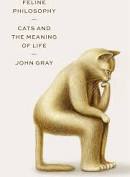 But let’s say it again: to call Gray a misanthrope or a reactionary or a nationalist (or to apply to him any other term from the vocabulary of contemporary political morality) is to miss the point. His books are not attacks on humanity as such. Nor is he tubthumping for a particular politics or even a particular morality (I’ll come in a moment to the question of whether or not a specific politics can or should be extracted from Gray’s work). Instead, his books are in the first instance the record of an honourable attempt to discover what can be said about human beings if we dispense, as thoroughly as we can, with the things that human beings have said about themselves. To step out of Gray’s Total Perspective Vortex and ask, “But what’s left?” is to misunderstand the purpose of the Vortex. What’s left, when Gray is finished, is everything: life, death, nature, the universe. All there is, in other words. The point is the seeing. In the final sentence of Straw Dogs, he asks, “Can we not think of the aim of life as being simply to see?”