
David Wellbery at Nonsite:
 The brief examination of the work of Heinrich von Kleist (1777-1811) conducted here is intended as an essay in criticism in the spirit of Sartre: “Une technique romanesque renvoie toujours à la métaphysique du romancier. La tâche du critique est de dégager celle-ci avant d’apprécier celle-là.” The concept of metaphysics Sartre employs refers, on my reading, to the hardly controversial thought that literary works generally (not only novels) render worlds imaginatively present, and that these worlds exhibit principles of intelligibility. To free up the metaphysics of an artistic world, then, is to solicit the deep criteria (or categories) that organize that world. Such criticism brings the form of an aesthetically achieved world to light and demonstrates how that form is made salient linguistically, rhetorically, narratively, dramatically, and so forth. Call this the non-formalistic criticism of form. Needless to say, the account of Kleist’s work I develop here does not aspire to exhaustiveness. The aim, rather, is to limn the contours of Kleist’s artistic achievement such that acknowledgement of its originality and importance is felt to constitute an intellectual obligation. Acknowledgement, a variant of Hegelian “recognition,” deserves to replace the now faded and, in Sartre’s use, merely technical notion of appreciation.
more here.
 Visualize, if you will, a group of bacteria cells. They are kind of silly looking, when you get right down to it: shaped like a sphere or a pill, sometimes covered in tiny hairs or spikes. While technically alive, it is hard to imagine them as being particularly intelligent, much less capable of storing information like artificially intelligent machines such as computers. Curiously, that’s exactly what a group of researchers just did: edited DNA inside individual bacteria cells in order to store digital data.
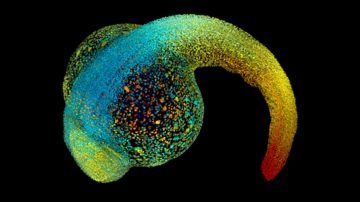 At first, an embryo has no front or back, head or tail. It’s a simple sphere of cells. But soon enough, the smooth clump begins to change. Fluid pools in the middle of the sphere. Cells flow like honey to take up their positions in the future body. Sheets of cells fold origami-style, building a heart, a gut, a brain. None of this could happen without forces that squeeze, bend and tug the growing animal into shape. Even when it reaches adulthood, its cells will continue to respond to pushing and pulling — by each other and from the environment. Yet the manner in which bodies and tissues take form remains “one of the most important, and still poorly understood, questions of our time”, says developmental biologist Amy Shyer, who studies morphogenesis at the Rockefeller University in New York City. For decades, biologists have focused on the ways in which genes and other biomolecules shape bodies, mainly because the tools to analyse these signals are readily available and always improving. Mechanical forces have received much less attention.
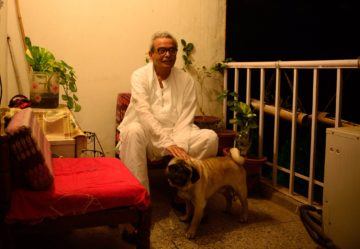 Mr. Faruqi has been credited among scholars with the revival of Urdu literature, especially from the 18th and 19th centuries. His output as a scholar, editor, publisher, critic, literary historian, translator and acclaimed writer of both poetry and novels was varied and prolific.
 Let’s start with the good news.
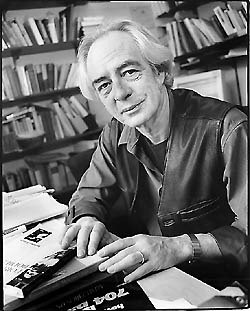 THE BELIEVER: Your books combine elements of memoir, epistemological analysis, ontological meditation, anthropological observation, and plenty of other genres. They are usually written in the first person (singular or plural), and sometimes in the second person. How did you decide to adopt this freedom of style, and what do you hope to accomplish with it?
 She was a poet who could carve both stillness and speed from the gap and one who, for me, lit the match. She was the poet who first taught me to obsess over the responsibility of the line break and in her house, she held her shoulders like a woman no longer afraid to let it be known she liked to be amused. Whatever she and her line breaks had been through, she’d long ago found the courage to say.
 The violent insurrection at the U.S. Capitol Building last week, incited by President Donald Trump, serves as the grimmest moment in one of the darkest chapters in the nation’s history. Yet the rioters’ actions—and Trump’s own role in, and response to, them—come as little surprise to many, particularly those who have been studying the president’s mental fitness and the psychology of his most ardent followers since he took office. One such person is Bandy X. Lee, a forensic psychiatrist and president of the World Mental Health Coalition.
 The spectacular violence in the Capitol on January 6th was the outcome of
  Often it seems a shame that those in opposing camps do not take time to stop and appreciate what they have in common: their certainty.
 The first full week of 2021 has been action-packed for those of us in the United States of America, for reasons you’re probably aware of, including a riotous mob storming the US Capitol. The situation has spurred me to take the unusual step of doing a solo podcast in response to current events. But never fear, I’m not actually trying to analyze current events for their own sakes. Rather, I’m using them as a jumping-off point for a more general discussion of how democracy is supposed to work and how we can make it better. We’ve talked about related topics recently with
  American foreign policy tends to oscillate between inward and outward orientations. President George W. Bush was an interventionist; his successor, Barack Obama, less so. And Donald Trump was mostly non-interventionist. What should we expect from Joe Biden?
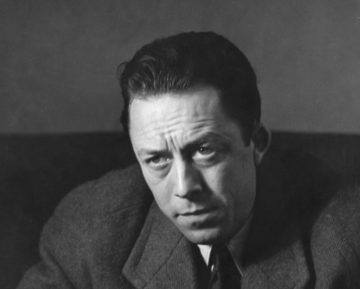 In what would tragically turn out to be the last years of his life, Camus returned imaginatively to the landscape of his youth—a landscape that, because of the Algerian War, was not accessible to him in the way it once had been. In 1958, he agreed to a French edition of The Wrong Side and the Right Side, republished by Gallimard. The timing was significant. “I still live with the idea that my work has not even begun,” Camus wrote in his preface to the new edition. It was an odd claim for a writer who had just been given the Nobel Prize for Literature, but Camus was more troubled by the award than he was honored by it. Pained by the war in his native Algeria, shunned by Parisian intellectuals for his critique of the revolutionary Left, he feared he was finished as a writer—a fear that the Nobel Prize, which usually honors work done over a long career, only served to heighten. Refusing an interview with the newspaper L’Express, Camus explained that he wanted the noise and publicity surrounding the award to die away quickly. “I want to disappear for a while,” he said. To his friend Roger Quinox, he seemed “like someone buried alive.”