
The Forgotten Dialect of the Heart
How astonishing it is that language can almost mean,
and frightening that it does not quite. Love, we say,
God, we say, Rome and Michiko, we write, and the words
Get it wrong. We say bread and it means according
to which nation. French has no word for home,
and we have no word for strict pleasure. A people
in northern India is dying out because their ancient
tongue has no words for endearment. I dream of lost
vocabularies that might express some of what
we no longer can. Maybe the Etruscan texts would
finally explain why the couples on their tombs
are smiling. And maybe not. When the thousands
of mysterious Sumerian tablets were translated,
they seemed to be business records. But what if they
are poems or psalms? My joy is the same as twelve
Ethiopian goats standing silent in the morning light.
O Lord, thou art slabs of salt and ingots of copper,
as grand as ripe barley lithe under the wind’s labor.
Her breasts are six white oxen loaded with bolts
of long-fibered Egyptian cotton. My love is a hundred
pitchers of honey. Shiploads of thuya are what
my body wants to say to your body. Giraffes are this
desire in the dark. Perhaps the spiral Minoan script
is not a language but a map. What we feel most has
no name but amber, archers, cinnamon, horses and birds
by Jack Gilbert
from The Great Fire: Poems, 1982-1992
Alfred A. Knopf, Publisher, 1994
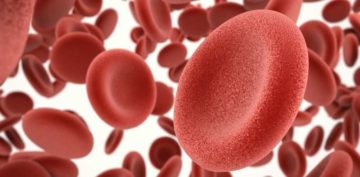 Infectious diseases such as malaria remain a leading cause of death in many regions. This is partly because people there don’t have access to medical diagnostic tools that can detect these diseases (along with a range of non-infectious diseases) at an early stage, when there is more scope for treatment. It’s a challenge scientists have risen to, with a goal to democratize
 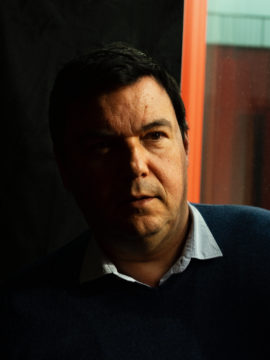 In 2013, the French economist Thomas Piketty, in his best seller “Capital in the Twenty-First Century,” a book eagerly received in the wake of the 2008 economic collapse, put forth the notion that returns on capital historically outstrip economic growth (his famous r>g formula). The upshot? The rich get richer, while the rest of us stay stuck in the mud. Now, nearly a decade later, Piketty is set to publish “A Brief History of Equality,” in which he argues that we’re on a trajectory of greater, not less, equality and lays out his prescriptions for remedying our current corrosive wealth disparities. (In short: Tax the rich.) If the line from one book to the other looks slightly askew given the state of the world, then, Piketty suggests, you’re looking from the wrong vantage point. “I am relatively optimistic,” says Piketty, who is 50, “about the fact that there is a long-run movement toward more equality, which goes beyond the little details of what happens within a specific decade.”
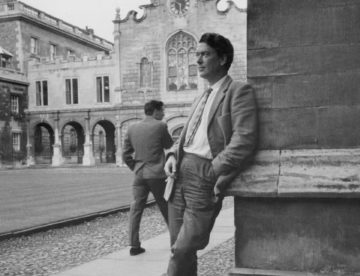 If Sir Kingsley Amis was still alive today, on the occasion of his centenary — an event that would owe a quite remarkable amount to medical science, and might, given the context of this particular weekend, even be seen as a second Resurrection narrative — he might be amused by the way that he has been treated by posterity. I’ve written about the decline in Kingers’ fortunes, justified or not, for the May issue of The Critic, but one area that I was only able to touch on in the most passing of fashions was one that many Amis aficionados prefer not to dwell on. Yes — oh dear yes — Kingsley Amis wrote poetry. Many may have wished that it were not so.
 Well Rick B. from the United States, it seems that you did not like the Norwegian director Joachim Trier’s newest film The Worst Person in The World very much. Your Amazon review is quite short, and pretty rough. You gave it one star. The title of your review is “tedious, annoying people talking too much.” And then you followed that up with two words and an exclamation mark: “It sucks!”
 When the mathematicians
  Artificial Intelligence (AI) is the next technological revolution, a breakthrough that poses both great risks and great rewards for human rights. Our ability to mitigate AI’s risks will depend not on its technical features, but on how and why those features are used. A hammer can build a house or break a skull — the impact of any tool depends on who wields it, their intentions behind its use, and what constraints, if any, have been built around the tool’s use.
 Creativity is an essential element of the human condition. Yet unlike other elements of our humanity, there’s a perception that creativity seems to leave us as we age. Children, wrapped up in their imaginary play worlds and projects, are notoriously unhindered in their creativity. But adults are far less adept at conjuring the fantastical and bizarre imagination that their childhood selves had easy access to. Many adults long for those playful youthful days, when conjuring up a grand scene, on paper or on the playground, was as natural as breathing.
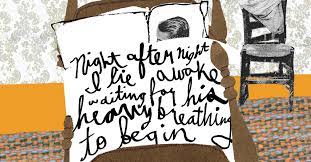 Edna St. Vincent Millay (1892-1950) was once the most famous poet in America. Her collections sold tens of thousands of copies, and her readings filled theaters from New York to Texas. She was the female voice of the Jazz Age, the New Woman incarnate whose passionate and iconoclastic verse earned her a devoted following. Her 1920 poem “First Fig” became an anthem for a generation tired of Victorian mores:
 Mona Ali in Phenomenal World:
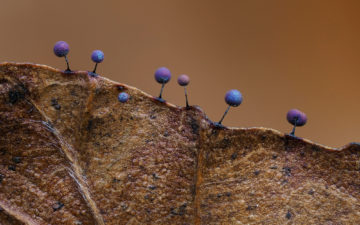 Gunnar O Babcock in Aeon:
 Gary Younge in The Nation:
 Adam Tooze over at his substack Chartbook:
 A
A 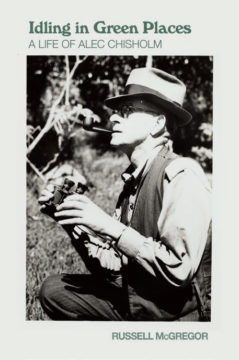 Natural history is deeply rooted in, and benefits from, connections between the personal and the scientific. There is a blog called ‘