
Adrienne Raphel at The Paris Review:
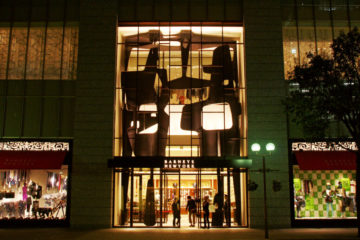
Department-store windows are a spectacle. When you look in the window, you don’t see into the storefront itself: you see a fashion-fantasia aquarium depicting a scene, like a diorama in a natural-history museum. Barneys’s longtime creative director, Simon Doonan, who joined the company as a window dresser in 1986, made the store’s windows iconically rebellious, a punk bizarrerie. Doonan put industrial tape on a nude statue of Madonna, spammed a rigorously minimalist Bottega Veneta mannequin display with dozens of Mr. Potato Head dolls, and dreamed up Dominatrix Margaret Thatcher.
Doonan’s flair marked him as the heir apparent to one of the pioneering show-window dressers of the early 1900s: L. Frank Baum. Emerald City, the glittering jewel of Baum’s Oz, is nothing if not a grand department store, one with shopwindows that are simply too dazzling for Dorothy’s unjaded sight to bear.
more here.
 Science is all about expanding the realm of human perception. Sometimes that means making the invisible visible, like when Galileo turned a telescope toward Jupiter, discovered moons around another planet and
  My gym in the heart of the 19th arrondissement is inhabited by a goodly mix of young Tunisian beefcakes admiring themselves and one another in the full-wall mirrors; older barrel-shaped strongmen, often with moustaches and faded anchor tattoos on their forearms, as if straight off the carnival circuit circa 1910, where you might see them wearing skimpy leopard-spotted togas and lifting those ball-shaped barbells from the cartoons; and a scattering of scrawny ageing bourgeois who are quite plainly there on the stern recommendation of their doctors.
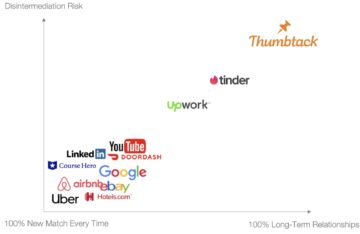 The New York Times is obsessed with Substack. A few months ago, it published
 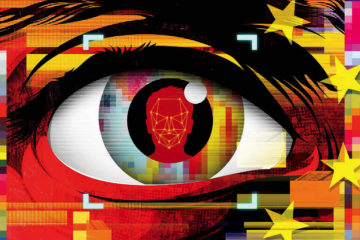 FOR THE PAST DECADE,
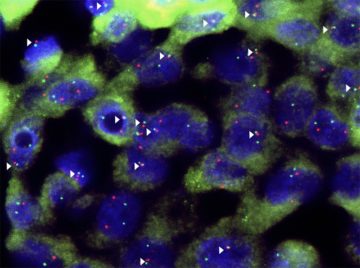 When someone’s liver is infected with hepatitis B, damage increases over time, as long as the virus is active. The liver tissue thickens and forms scars (fibrosis), advancing to severe scarring called cirrhosis. In approximately one-third of people with hepatitis B infection, this then progresses to hepatocellular carcinoma, as the viral DNA inserts itself into liver cells, changing their function and allowing tumours to grow.
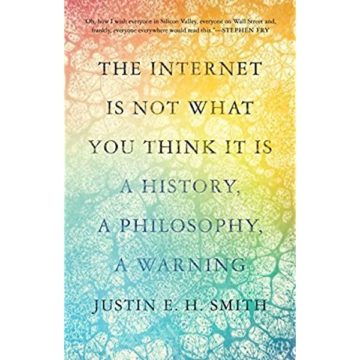 Yet this book could not be summarized as a jeremiad against cyberspace, because it, like most of Smith’s essays and scholarship, rarifies its subject through its author’s talent for synthesizing seemingly disparate ideas and endeavors. In building an alternative model of the internet, Smith transports his reader between discussions of Proust and 1940s hunting gadgetry; the signaling of sperm whales and the metaphysics of methyl jasmonate; Melanesian ritual masks and the Kuiper Belt; Norbert Wiener’s cybernetics and Grand Theft Auto; the nascent industry of “teledildonics” and the rueful poetics of railways; Kant’s epistemology and the pablum of Mark Zuckerberg. In a book that meditates upon networks, webs, and connections, Smith’s astounding range becomes something of a method for revealing the interconnectedness of everything between stars and modems.
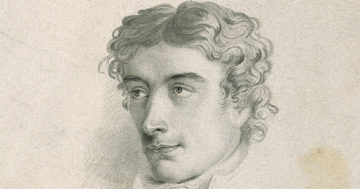 There is something irresistible about John Keats’s poignantly brief life and his outsize greatness as an artist. That such a wealth of material about him exists—his own astonishing letters as well as reminiscences and diaries of his friends—means that there has never been a shortage of biographies. Vignettes began appearing soon after Keats’s death in 1821, with the first full biography, by Richard Monckton Milnes (a Victorian politician, failed suitor of Florence Nightingale, and avid collector of erotica), appearing in 1848. More recent lives of the poet include works by Amy Lowell (1924), Robert Gittings (1968), Andrew Motion (1997), and Nicholas Roe (2012), to name a few. Now the English literary journalist and biographer Lucasta Miller has added to the pile. She wrote her book, pegged to the 200th anniversary of Keats’s death, under pandemic lockdown in Hampstead, an area of London where the poet himself lived, a place still haunted by Keatsian associations.
 Before I begin, I would like to say a few words about the war in Ukraine. I unequivocally condemn Russia’s invasion of Ukraine and applaud the Ukrainian peoples’ courageous resistance. I applaud the courage shown by Russian dissenters at enormous cost to themselves.
 I am an
  “Ken’s fearless passion for justice, his courage and compassion towards the victims of human rights violations and atrocity crimes was not just professional responsibility but a personal conviction to him,” said Fatou Bensouda, former chief prosecutor of the International Criminal Court. “He has indeed been a great inspiration to me and my colleagues.”
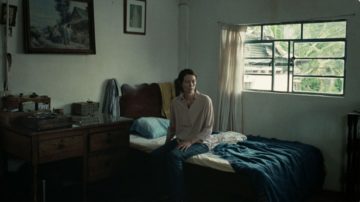 We see a pile of cloth in a barely lit room. We look, and we look some more, and might make out an ever-so-slight movement under the cloth, as if the object were breathing. Then wham: a walloping sound bursts the silence, the covers fall back, and Tilda Swinton rises into frame.
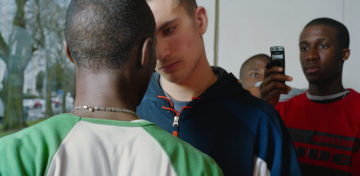 Upon returning to Paris in the aftermath of the riots, Bourouissa began spending time in the banlieues with friends, who introduced him to more people who lived there. He eventually conscripted these figures, mostly men from immigrant backgrounds, as subjects for a series of staged photographs composed in the tradition of tableaux vivants, or living pictures—an uncanny arrangement that places ordinary people in relief against their normal environments, to an intimate yet estranging effect. The first of these staged pictures, “La fenêtre” (“The Window”), depicts two Black men captured mid-conversation, a shocking lime-green wall their background. The taut musculature of their torsos—one clothed, the other bare, a large tattoo sprawling across the curve of his back—is accentuated by the light streaming in through the titular window at top left, heightening the dramatic tension that pervades the scene. Here, the two figures stand in for the strained relations between the state and its frustrated poor, and between civil society and the immigrant class circumscribed to its périphérique—the name Bourouissa would later give to the series of photographs, after the circular highway separating Paris from its outer suburbs.