
Michael Marshall in The Guardian:
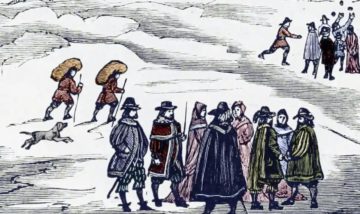 In early February 1814, an elephant walked across the surface of the Thames near Blackfriars Bridge in London. The stunt was performed during the frost fair, when temperatures were so cold that for four days the top layers of the river froze solid. Londoners promptly held a festival, complete with what we might now call pop-up shops and a lot of unlicensed alcohol.
Nobody could have known it at the time, but this was the last of the Thames frost fairs. They had taken place every few decades, at wildly irregular intervals, for several centuries. One of the most celebrated fairs took place during the Great Frost of 1683-84 and saw the birth of Chipperfield’s Circus. But the river in central London has not frozen over since 1814.
The frost fairs are perhaps the most emblematic consequences of the “little ice age”, a period of chilly weather that lasted for several centuries. But while Londoners partied on the ice, other communities faced crop failures and other threats. The story of the little ice age is one of societies forced to adapt to changing conditions or perish.
It’s also a long-standing mystery. Why did the climate cool and why did it stay that way for centuries?
More here.
 Sri Lanka is at a political deadlock. Protesters want the President and parliamentarians to go home. Parliament wants the President to go home. And the President wants the protesters to go home. But no one is going home. Meanwhile, we cannot change the President without changing the prime minister. We cannot change the prime minister because no party leader wants to be saddled with the economic crisis. And we cannot manage the economic crisis because there is no new prime minister. How do we get out of this triple deadlock?
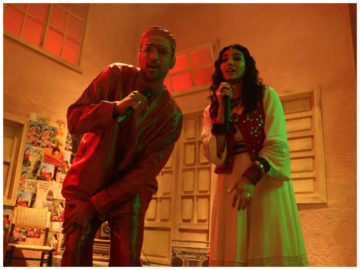 A few years ago, the musician Ali Sethi was driving through Punjab, behind a jingle truck—the long-haul trucks known in his native Pakistan for their filigreed paint designs—when he spotted a phrase in florid Punjabi calligraphy on its back. “Agg lavaan teriya majbooriya nu,” it said—a call to “set fire to your compulsions.” It’s not uncommon to glimpse bits of verse, or dire warnings—against straying eyes or losing yourself in the big world out there—among the fluorescent parrots and tropical fruit schemes of jingle trucks. But Sethi couldn’t stop thinking about that phrase.
 In 1974, at the age of eighty-four, Jean Rhys was asked in a television interview whether she would prefer to write or be happy were she to live her life over again. ‘Oh, happiness!’ she replied without missing a beat.
 ROBERT
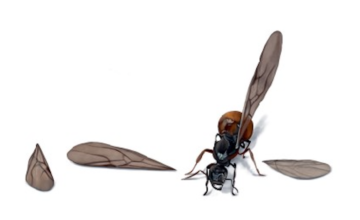 The fact that wings are not always a good thing is demonstrated by those animals whose ancestors used to have wings but who have given them up.
 Jonathan Haidt: The piece is the culmination of my eight-year struggle to understand what the hell happened. I’ve been a professor since 1995. I love being a professor, I love universities. I just felt like this is the greatest job on Earth. I got a glimpse, as a philosophy major, of Plato’s Academy—sitting under the olive trees talking about ideas. And then all of a sudden, from out of nowhere in 2014, things got weird. They got aggressive and they got frightening. This game has been going on for thousands of years, in which one person serves something, the other person hits it back—around 2014, intimidation came in. There was a new element, which was that if you say something, people won’t argue why you’re wrong, they’ll slam you as a bad person. On the left, they’ll call you a racist; on the right, they’ll call you a traitor. But something changed on campus.
 Europe is geographically much closer to Africa than America. Northern Africa has been part of the Eurasian culture since Alexander the Great conquered Egypt, over two millennia ago.
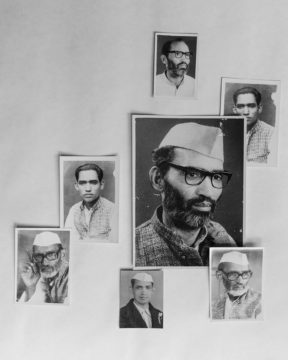 There is a particular collage in Indian photographer Devashish Gaur’s project This Is The Closest We Will Get that stands out in its cut-and-paste simplicity. Entitled Me and Dad, it’s a portrait, black and white, cropped at the shoulders, but most importantly, it depicts two men instead of one. The sitter of the original photograph—an archival one that’s been collaged over—wears a checkered suit and his hair is neatly swept to the side. It feels formal, perhaps a little dated even. Meanwhile, slices of a second face, arranged over this sitter, belong to his son—the photographer, Gaur himself. And their features, the contours and outlines of their faces, do seem to blend quite remarkably. Father and boy, artist and sitter, portrait and self-portrait, entwined.
 As a mother of six and a Mormon, I have a good understanding of arguments surrounding abortion, religious and otherwise. When I hear men discussing women’s reproductive rights, I’m often left with the thought that they have zero interest in stopping abortion. If you want to prevent abortion, you need to prevent unwanted pregnancies. Men seem unable (or unwilling) to admit that they cause 100% of them. I realize that’s a bold statement. You’re likely thinking, “Wait. It takes two to tango!” While I fully agree with you in the case of intentional pregnancies, I argue that all unwanted pregnancies are caused by the irresponsible ejaculations of men. All of them.
 S
S