
Bobby Allyn on NPR:
Elon Musk will soon hold the keys to Twitter.
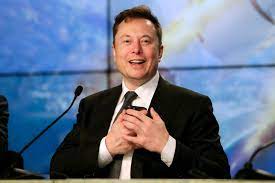 The company announced on Monday that it has accepted the Tesla CEO’s $44 billion offer to take the company private. That means the world’s richest person who has a penchant for theatrics and erratic behavior is about to have the power to reshape discourse on a social network used by more than 200 million people every day. How might Musk wield that power? Here are some proposals for Twitter that he’s floated.
Loosen up content rules in the name of free speech
The Tesla and SpaceX CEO describes himself as a “free speech absolutist” and has criticized what he sees as excessive moderation on online platforms. He nodded to these beliefs in his statement announcing the purchase by saying that “free speech is the bedrock of a functioning democracy, and Twitter is the digital town square where matters vital to the future of humanity are debated.” Musk has argued that social networks should not remove comments that, while offensive, are still legal. During a recent interview at a TED conference he said, “If it’s a gray area, let the tweet exist.”
More here.
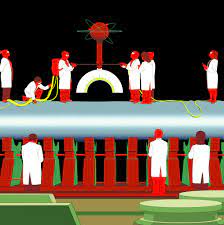 Modern civilization, it is said, would be impossible without measurement. And measurement would be pointless if we weren’t all using the same units. So, for nearly 150 years, the world’s metrologists have agreed on strict definitions for units of measurement through the International Bureau of Weights and Measures, known by its French acronym, B.I.P.M., and based outside Paris. Nowadays the bureau regulates the seven base units that govern time, length, mass, electrical current, temperature, the intensity of light and the amount of a substance. Together, these units are the language of science, technology and commerce.
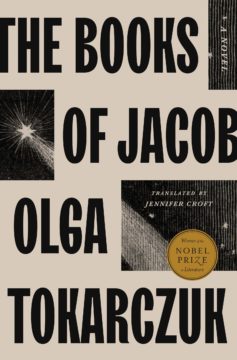 The Seattle Times chatted with Nobel Prize winner Olga Tokarczuk about her immersive, visionary 1,000-page novel that follows the extraordinary life of Jacob Frank, a Polish Jew who believed himself to be the Messiah and commanded a large religious movement in the 18th century.
 On April 4,
 I think we’re laboring under a moment in which many believe that the sole function of art is to provide moral guidance.
 Wet earth. Loam. Bitter ash, brine on the wind. The unfurling of cedar, a smell that takes me out of this place and back to bathtubs in Japan; a portal of a scent, sacred and red. These are the smells of the Pacific Northwest wood from where I write this. In the daytime, as light pours around the unfamiliar landscape, I think of it as a new smell, something to gulp. But last night, clambering up the half-hill toward the cottage where I am staying, I took another breath and was suddenly tearful. The damp soil transformed into the smell of my Jiji, wood-smoke mimicking cigarette-smoke lingering in the folds of his shirt.
 “We often begin to understand things only after they break down. This is why, in addition to being a worldwide catastrophe, the pandemic has been a large-scale philosophical experiment,” Jonathan Malesic, author of The End of Burnout: Why Work Drains Us and How to Build Better Lives,
 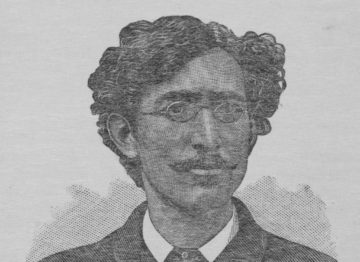 Robin D. G. Kelley in Boston Review:
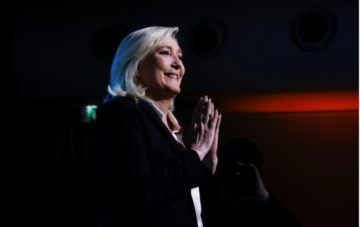 James McAuley in The New Yorker (Photograph by Rit Heize / Xinhua / Getty):
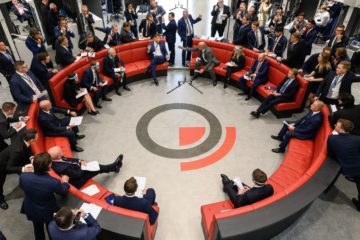 Alex Yablon , Nicholas Mulder, Javier Blas in Phenomenal World:
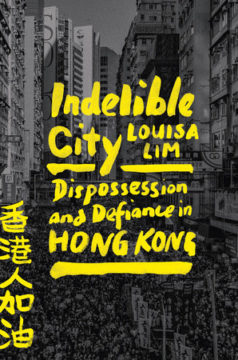 In “Indelible City,” Louisa Lim charts how her own identity as a Hong Konger had never been so clear until China’s brutal attempts to crush pro-democracy protests in 2019. She had been feeling increasingly alienated from a densely populated place where extreme inequality, soaring costs and shrinking real estate made “the very act of living” — even for “still very privileged” people like her — completely exhausting. Lim’s experience as a reporter amid a swell of protesters changed that. She could feel her face flush and her throat well up — not from the tear gas, of which there was plenty, but from a surge of emotions: “I’d fallen in love with Hong Kong all over again.”
 JS: What do you see as the differences between academic writing and other forms of writing?