
Dwight Garner in The New York Times:
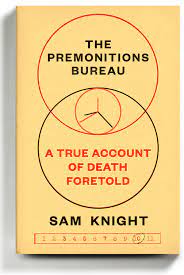 Gabriel García Márquez would not sleep in a house if someone had died in it. Colette was passionate about dowsing. James Merrill had his Ouija board. Ted Hughes taught Sylvia Plath to read horoscopes. Robert Graves believed in ghosts. If Edmund Wilson had a dream about you, he’d call you to mull it over.
Most of us sense, at times, that there are parts of the electromagnetic spectrum not accessible with the tools at hand. Moments manifest as auguries, as kismet, as a sense that God has glanced at us or, conversely, that we have been silently brushed by demons.
Coincidence can provide shivers of this sort. G.K. Chesterton called coincidences “spiritual puns.” Don DeLillo, in “Libra,” wrote, “A shrewd person would one day start a religion based on coincidence, if he hasn’t already, and make a million.”
Intuitions collect intensely around disasters. Inevitably there is the man who slept late and missed the crashed jet, the woman who saw the tsunami coming in a dream or the teen who had an urge to hit the floor before the first rounds left the semiautomatic rifle. Jeff Tweedy, of Wilco, spooked a generation by writing, shortly before Sept. 11, a song that included the lyrics “Tall buildings shake / Voices escape singing sad, sad songs.”
More here.
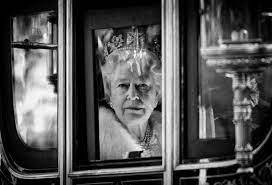 The Queen is the only royal who actually matters or does anything. That’s not fair, of course, but the monarchy is unfairness personified and glorified, long to reign over us. Naturally, the rest of the Royal Family—the heirs; the spares; Princess Michael of Kent, whose father was in the S.S. and whom Diana nicknamed the Führer; Princess Anne, Charles’s younger sister, who’s known to feed the chickens in a ballgown and Wellington boots after a night at the palace—are all busy. They have numberless engagements and causes, which fill their identical, repeating years, but they exist only as heralds for the magical authority of the Crown, which resides in the Queen and nobody else. “They are high-born scaffolding,” as Tina Brown, a former editor of The New Yorker, writes in “
 Let’s start with something everyone agrees on: the world’s fertility rate has declined. Whether you’re in a low-, middle-, or high-income country, with few exceptions the “total fertility rate”—the number of children per woman—
 Researchers have worked with hunters for decades as part of regular wildlife surveillance to manage deer populations and track the spread of infectious diseases, such as chronic wasting disease and bovine tuberculosis. But these days, the scientists are also looking for the virus that causes COVID-19 in humans.
 I have no special love for the SAT. Aside from the fact that my test came back with a big, red, “NO HARVARD FOR YOU, DUMMY” stamped on it, it always seemed a bit arbitrary. After all: Why should my eligibility for college depend on knowing words like “nefarious” and “egregious”? That seems…there must be a better word for this…crappy. We know that SAT scores correlate with household income, and evidence suggests that studying
  Like German author Judith Schalansky, I like paying attention to maps. They are time-stamps, relics and quantifiable measure, and, generally, works of art. Unlike Schalansky though, who wrote an entire
  In 1816 an American lawyer named J.F. Dumoulin wrote
  Lockdown was, among other things, a sudden collective experiment in volume control. Sound waves from the regular rush-hour thrum of cities usually penetrate more than a kilometre below the Earth’s surface. When Covid-19 forced humans inside,
  Vaccines to prevent certain types of cancer already exist. They target viruses: hepatitis B virus, which can trigger liver cancer, and human papillomavirus, which causes cervical and some other cancers. But most cancers are not caused by viruses. The Lynch vaccine trial will be one of the first clinical tests of a vaccine to prevent nonviral cancers.
 On the night of April 22, the Composer doesn’t sleep …
 Though theorized in the 1930s and
  The term “neoliberalism” is often used to condemn an array of economic policies associated with such ideas as deregulation, trickle-down economics, austerity, free markets, free trade, and free enterprise. As a political movement, neoliberalism is seen as experiencing its breakthrough 40 years ago with the election into office of Ronald Reagan and Margaret Thatcher. And since the 2007–08 financial crisis, an explosion of academic work and political activism has been devoted to explaining how neoliberalism is fundamentally to blame for the massive growth in inequality.
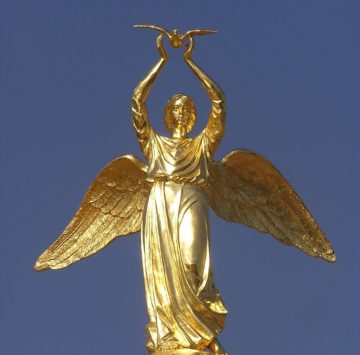 With Russian shells raining down on Ukrainian cities, an uneasy ceasefire in Yemen, the attack on Palestinians at prayer in Jerusalem and many other conflicts around the world, it might seem to some to be inappropriate to talk about peace.
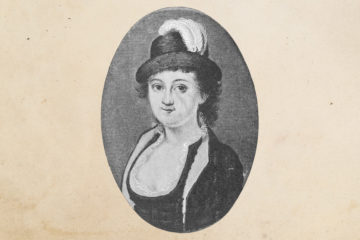 Eva Frank was born in 1756, in modern-day Ukraine, to Jacob and Hannah Frank, along with their existing children. Jacob had been raised in a family staunchly committed to the radical teachings of Shabtai Tzvi, the Jewish messianic claimant who died in 1676 after ultimately converting to Islam, and whose widely embraced prophecies and antinomian preaching—which specifically called for overturning Jewish law—nearly upended European Jewry. Around 1751, five years before Eva’s birth, Jacob proclaimed that he was Shabtai Tzvi’s successor on Earth. Building on Jewish mystical teachings and Shabtai Tzvi’s legacy, he fashioned himself as the Messiah on earth who had come to teach a new way of religious life that would bring the Messianic era. He quickly attracted thousands of followers, known as “Frankists”, and reportedly took the antinomian embrace of holy subversion even further than Shabtai Tzvi, hosting intricate rituals that overthrew the taboos of incest, menstruation, and adultery, often with the aid of sacred objects, including Torah scrolls. Though there is ongoing debate about the extent of such rituals in practice, as opposed to simply wild rumors, scholars Cristina Ciucu and Regan Kramer argue in their article published in Clio. Women, Gender, History that