
Heidi Ledford in Nature:
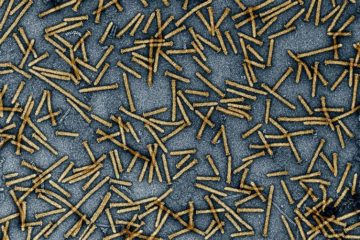 Researchers have hijacked a molecular ‘syringe’ that some viruses and bacteria use to infect their hosts, and put it to work delivering potentially therapeutic proteins into human cells grown in the laboratory. “It’s astonishing,” says Feng Jiang, a microbiologist at the Chinese Academy of Medical Sciences Institute of Pathogen Biology in Beijing. “It is a huge breakthrough.” The technique, published in Nature on 29 March1, could offer a new way to administer protein-based drugs, but will need more testing before it can be used in people. With further optimization, the approach might also be useful for delivering the components needed for CRISPR–Cas9 genome editing.
…While Zhang and his collaborators searched for ways of transporting proteins into human cells, microbiologists were learning more about an unusual group of bacteria that use molecular spikes to pierce a hole in the membranes of host cells. The bacteria then transport proteins through the perforation and into the cell, exploiting the host’s physiology in their favour.
More here.
 My bathroom is ugly. My bathroom is so ugly that when I tell people my bathroom is ugly and they say it can’t be that ugly I always like to show it to them. Then they come into my bathroom and they are like, Holy shit. This bathroom is so ugly. And I say, I know, I told you.
 To my eye, the clock looked like a ruin. Frostbitten shards of its face lay about in the weeds. In places, northerly winds had worn the gilt ornamentation around the dial’s circumference to a sandy, amorphous mass. Everywhere, paint flaked. Mold grew on a slender lip above the lower numerals. At around fourteen feet high, the clock was only just accommodated on the side of the old barn. Brickwork was visible beneath the whitewash at the center of its face. The clock’s movement had stopped months before my arrival, but the downward-dragging force of ruination continued to act on the clock’s hands, pulling them from five-after to half-past three. There, the hands had finally seized. All else moved on: vines crept over the top of the barn and down the north face of the pitched terracotta; weeds grew seven or eight feet tall; cracks ran in the walls of the barn.
 In the early fifth century BC, the Olympic boxer Kleomedes was disqualified from a match after killing his opponent with a foul move. Outraged at being deprived of the victory and its attendant prize, he became “mad with grief” and tore down a school in his hometown, killing many of the children who were studying there. Kleomedes managed to escape the angry mob that soon pursued him, and disappeared without trace. When the community sought answers from the oracle at Delphi, they were told that Kleomedes was now a hero, and should be honored accordingly with sacrifices. This the people did, and continued to do for centuries to come.
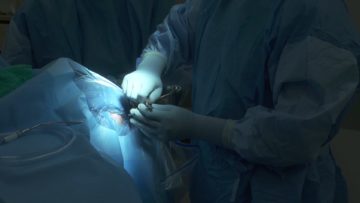 A unique form of brain stimulation appears to boost people’s ability to remember new information—by mimicking the way our brains create memories.
 In 1961, the Jaguar E-type sports car (called the XKE in the United States), designed by Malcolm Sayer, premiered at a major auto show in Geneva Switzerland. Enzo Ferrari declared it to be the most beautiful car ever made. Ferrari himself is, of course, a legendary figure in the history of car design. Ferrari’s judgment was thus stunning in a certain respect. It is very common for cars to be put into stereotypical national, cultural, or ethnic categories. So, for example, there are sleek Italian sports cars, elegant but staid British sedans, and powerful American “muscle” cars. Ferrari’s assessment unsettled these standard categories. This was an Italian expert heaping praise on the beauty of a British car.
 A
A The incessant hype over AI tools like ChatGPT is inspiring lots of bad opinions from people who have no idea what they’re talking about. From a New York Times columnist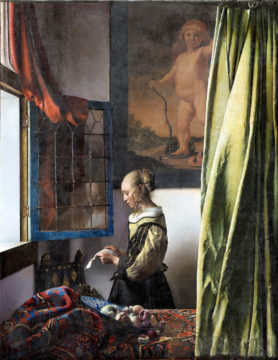
 For more than a decade, scholars, journalists, and tech leaders have focused on two ways that data-driven technologies are altering jobs: by automating tasks and therefore displacing certain workers, and by discriminating on the basis of race, sex, national origin, or disability. Those are critical issues, but surveillance technologies are having another effect on work as well. Companies across today’s vast service economy are using such technologies as tools of class domination, deploying them to limit wage growth, prevent workers from organizing, and enhance labor exploitation. Workers’ increasing resistance to surveillance is therefore also a process of class formation—and reforms that support such resistance could encourage a more democratic politics of workplace technology.

 INTERVIEWER
 In the summer of 2021, I experienced a cluster of coincidences, some of which had a distinctly supernatural feel. Here’s how it started. I keep a journal and record dreams if they are especially vivid or strange. It doesn’t happen often, but I logged one in which my mother’s oldest friend, a woman called Rose, made an appearance to tell me that she (Rose) had just died. She’d had another stroke, she said, and that was it. Come the morning, it occurred to me that I didn’t know whether Rose was still alive. I guessed not. She’d had a major stroke about
 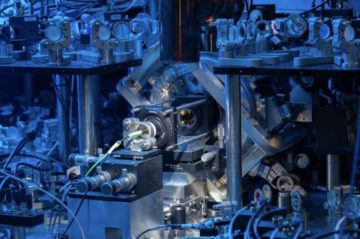 Researchers at University of Oxford have recently created a quantum memory within a trapped-ion quantum network node. Their unique memory design, introduced in a paper in Physical Review Letters, has been found to be extremely robust, meaning that it could store information for long periods of time despite ongoing network activity. “We are building a network of quantum computers, which use trapped ions to store and process quantum information,” Peter Drmota, one of the researchers who carried out the study, told Phys.org. “To connect quantum processing devices, we use