
Singularity
Do you sometimes want to wake up to the singularity
we once were?
so compact nobody
needed a bed, or food or money—
nobody hiding in the school bathroom
or home alone
pulling open the drawer
where the pills are kept.
For every atom belonging to me as good
Belongs to you. Remember?
There was no Nature. No
them. No tests
to determine if the elephant
grieves her calf or if
the coral reef feels pain. Trashed
oceans don’t speak English or Farsi or French;
would that we could wake up to what we were
—when we were ocean and before that
to when sky was earth, and animal was energy, and rock was
liquid and stars were space and space was not
at all—nothing
before we came to believe humans were so important
before this awful loneliness.
Can molecules recall it?
what once was? before anything happened?
No I, no We, no one. No was
No verb no noun
only a tiny tiny dot brimming with
is is is is is
All everything home
Marie Howe
from Poets.org
 A 13-sided shape known as “the hat” has mathematicians tipping their caps.
 The specter of parental neglect no longer orders U.S. politics as it did in the late twentieth century. But as indispensable recent books by sociologists Lynne Haney and Dorothy Roberts demonstrate, the knotty legal infrastructures and punitive policies inspired by this rhetoric have endured, with devastating consequences for poor families. These books focus on different areas of U.S. family policy—Haney writes about child support enforcement, Roberts about child protective services—but together they expose the state’s massive and creeping apparatus for surveilling and disciplining parents.
 David Baddiel was six years old when his mother told him death was like a long sleep from which you never wake up. “I think from that point,” he says, “I never really wanted to go to sleep again.” That night, he lay on the top bunk of his bed, fervently praying – “probably” the first and last time he has prayed with any sincerity – that “my life as it was in Dollis Hill in 1971 would still somehow continue after death”.
 From
From 
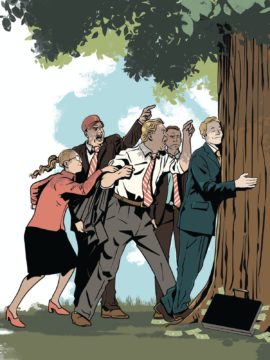 Kate Aronoff in The New Republic:
 James K. Galbraith in The Nation:
 Max Gallien and Giovanni Occhiali in Sidecar:
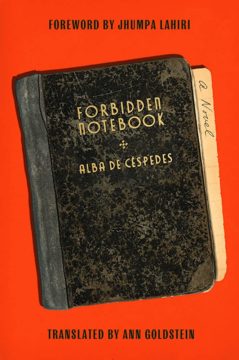 P
P On Sept. 29 and 30, 1941, in a ravine just outside Kyiv called Babyn Yar (“Babi Yar” in Russian), Nazis executed nearly 34,000 Jews over the course of 36 hours. It was the deadliest mass execution in what came to be known as the “Holocaust by Bullets.” We were never supposed to know it happened. In 1943, as the Nazis fled Kyiv, they ordered the bodies in Babyn Yar to be dug up and burned, to erase all memory of what they’d done.
 W
W