
Alexandra Witze in Nature:
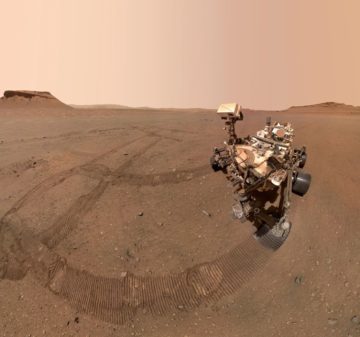 For decades, scientists who study Mars have watched in envy as spacecraft brought pieces of the Moon, chunks of asteroids and even samples of the solar wind to Earth to be studied. Now some of those researchers might finally be on track to receive rocks from the red planet — but only if NASA and the European Space Agency (ESA) can pull off a complex and daring mission.
For several years, the two agencies have been planning to send spacecraft to Mars, starting no earlier than 2027, to pick up rock samples that are being collected by NASA’s Perseverance rover. But technological and financial hurdles could derail the multi-billion-dollar scheme. Last month, NASA said it wants to allocate nearly US$1 billion to Mars sample return in the upcoming fiscal year — a huge sum that could force the agency to dip into other parts of its science budget. This would affect other projects, potentially delaying a planned heliophysics mission, for example. And much is at stake for the Mars sample return: Perseverance has gathered a scientifically stunning set of rocks. In December and January, the rover deposited ten cigar-sized tubes filled with rock, soil and air from the Martian atmosphere on a flat area of the planet’s surface for a future mission to pick up (see ‘Sample depot’).
More here.
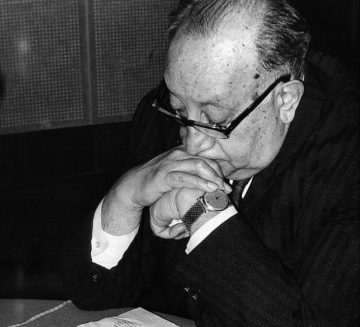 “Our Latin American literature has always been a committed, a responsible literature,” explained Guatemalan novelist Miguel Ángel Asturias in 1973.
 Drug overdose deaths have
  As an insider observing this food fight, it is surreal to watch reporters and commentators promote the narrative that the government’s Likud-Jewish Power-Religious Zionism coalition and the Supreme Court exist on extreme opposing ends of the political spectrum. Their differences, when it comes to how they rule over the lives of Palestinians, are purely cosmetic. In essence, one camp wants to eat with their hands while the other wants to mandate forks and knives, but in both scenarios, Palestinian rights will be devoured.
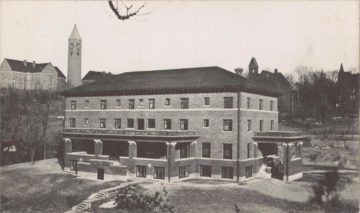 On the sunny first day of seminar, I sat at the end of a pair of picnic tables with nervous, excited 17-year-olds. Twelve high-school students had been chosen by the Telluride Association through a rigorous application process—the acceptance rate is reportedly around 3 percent—to spend six weeks together taking a college-level course, all expenses paid.
 Trying to sort out who is who, and what everybody wants, is no easy task in “Joyland,” a début feature from the Pakistani director Saim Sadiq. In Lahore, a woman named Nucchi (Sarwat Gilani), who already has three daughters, remarks that her water has broken; she might as well be announcing that dinner is served. For the birth of her fourth child, she is ferried to hospital on the back of a moped driven by Haider (Ali Junejo), whom we take to be her husband. Not so. He is, in fact, the brother of her husband, Saleem (Sameer Sohail). Haider is married to Mumtaz (Rasti Farooq); they have no offspring, to the dismay of his aged father, known as Abba (Salmaan Peerzada). All of the above inhabit one household. It’s not a peaceful place, or an especially happy one, but it’s home.
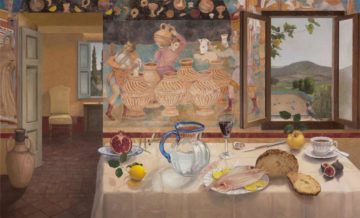 “Barbara Kassel”s evocative paintings explore the passage of time. From her loft in New York City, she paints interior and exterior views, creating a visual diary of daily life. Working with oil on panel, the smooth surfaces are meticulously rendered serene scenes. Warm reds and yellow embrace cooler blues and grays and invite the viewer into the large-scale works. Kassel describes the paintings in part biographical and instinctually narrative. Carefully exploring the world around her, she mixes observation and invention as she captures fleeting moments in time.”
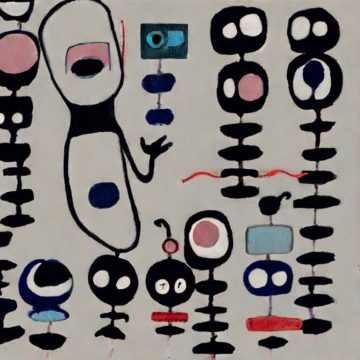 Jacob Browning and Yann Lecun in Noema:
 David Van Reybrouk in Noema:
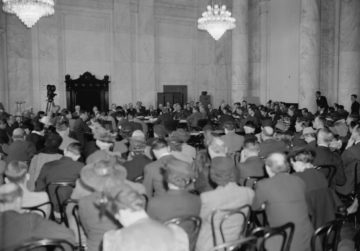 Daniel Bessner in Boston Review:
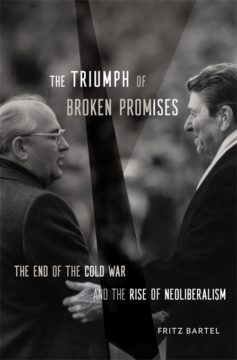 Max Krahé in Phenomenal World:
 I
I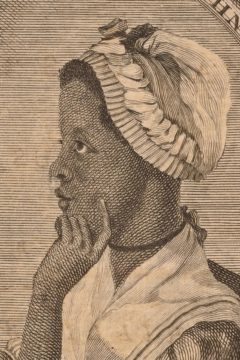 It’s a testament to Black endurance and brilliance that the little girl called Phillis Wheatley became, within 12 years of her arrival in Boston, the most significant African American poet of the 18th century. Yet, as
 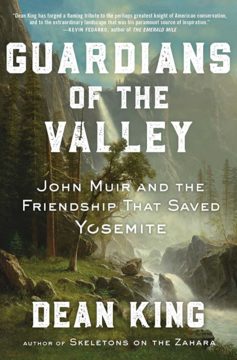 John Muir and Robert Underwood Johnson were unlikely allies in the war to preserve