
Gina Kolata in The New York Times:
 It was March 1827 and Ludwig van Beethoven was dying. As he lay in bed, wracked with abdominal pain and jaundiced, grieving friends and acquaintances came to visit. And some asked a favor: Could they clip a lock of his hair for remembrance? The parade of mourners continued after Beethoven’s death at age 56, even after doctors performed a gruesome craniotomy, looking at the folds in Beethoven’s brain and removing his ear bones in a vain attempt to understand why the revered composer lost his hearing.
Within three days of Beethoven’s death, not a single strand of hair was left on his head.
Ever since, a cottage industry has aimed to understand Beethoven’s illnesses and the cause of his death. Now, an analysis of strands of his hair has upended long held beliefs about his health. The report provides an explanation for his debilitating ailments and even his death, while also raising new questions about his genealogical origins and hinting at a dark family secret.
 FOR MANY AMERICANS,
 T
T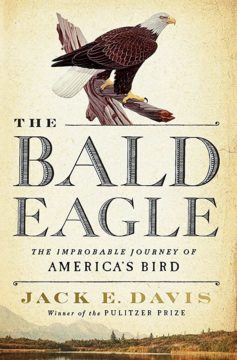 There are three main themes to this book. First, people revered eagles and used them and their images to define their group, be it native or settler. Second, people killed bald eagles by the thousands, nearly wiping out this magnificent bird, a job that DDT practically completed. The third theme is redemption and shows the efforts some people are making to rescue our emblematic bird.
 Imagine there’s a small fire in your kitchen. Your fire alarm goes off, warning everyone nearby about the danger. Someone calls 911. You try to put the fire out yourself — maybe you even have a fire extinguisher under the sink. If that doesn’t work, you know how to safely evacuate. By the time you get outside, a fire truck is already pulling up. Firefighters use the hydrant in front of your house to extinguish the flames before any of your neighbors’ homes are ever at risk of catching fire.
 Whatever progress had been made in Afghanistan after the US invaded and removed the Taliban government that had provided a safe haven to the al-Qaeda terrorists who planned and carried out the 9/11 attacks, it was deemed inadequate. Many in the Bush administration were motivated by a desire to bring democracy to the entire Middle East, and Iraq was viewed as the ideal country to set the transition in motion. Democratization there would set an example that others across the region would be unable to resist following. And Bush himself wanted to do something big and bold.
 We environmentalists spend our lives thinking about ways the world will end. There’s nowhere that I see
  Researchers have discovered an entirely new kind of taste receptor that allows fruit flies (Drosophila melanogaster) to detect alkaline substances — those that have a high pH — and avoid toxic meals and surfaces. Finding a new taste receptor in such a well-studied animal is unexpected, says Emily Liman, a neurobiologist at the University of Southern California in Los Angeles. “I found it quite surprising that there is this whole new type of taste,” says Liman. “It is really beautiful work.” The discovery, published in Nature Metabolism this week
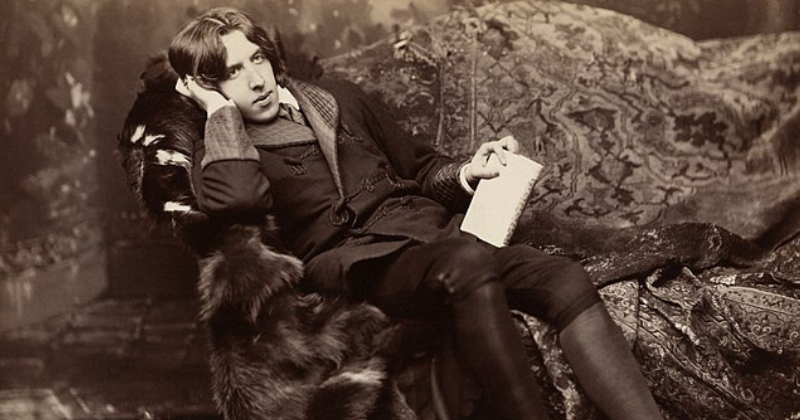 When still a boy, Forrest Reid saw Oscar Wilde in Belfast.
 Welcome to another episode of Sean Carroll’s Mindscape. Today, we’re joined by Raphaël Millière, a philosopher and cognitive scientist at Columbia University. We’ll be exploring the fascinating topic of how artificial intelligence thinks and processes information. As AI becomes increasingly prevalent in our daily lives, it’s important to understand the mechanisms behind its decision-making processes. What are the algorithms and models that underpin AI, and how do they differ from human thought processes? How do machines learn from data, and what are the limitations of this learning? These are just some of the questions we’ll be exploring in this episode. Raphaël will be sharing insights from his work in cognitive science, and discussing the latest developments in this rapidly evolving field. So join us as we dive into the mind of artificial intelligence and explore how it thinks.
 The run on Silicon Valley Bank (SVB) – on which
  Wave charts aren’t maps so much as mnemonic devices. They’re not brought on board in order to navigate; rather, the navigator makes them as a personal reference, studying them while on land and bringing that knowledge onto the sea. There were
 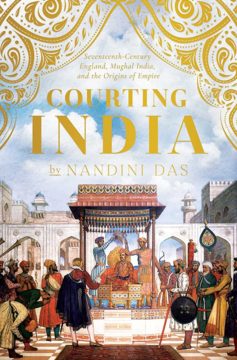 Pity Sir Thomas Roe. He was sent to India in February 1615 by James I as the first English ambassador to the fabulously glamorous Mughal court – a privilege and an extraordinary opportunity, one might think. But diplomats in the 17th century, in Europe at least, were woefully underpaid and were expected to make up any shortfall out of their own pockets in anticipation of a refund on their return. The amount reimbursed was at the whim of the monarch, who might be grateful for their years of travail but might just as easily be disappointed or no longer interested. It is a measure of their unrealistic expectations that the East India Company, formed only fifteen years before Roe set off on the hazardous six-month voyage to India and partial sponsors of his expedition, imagined that the ‘Grand Mogore’ might be persuaded to give Roe an allowance, enabling him to return their investment in him.
 A recent podcast series digs into the beginnings of conservative talk radio and tracks its rise. NPR’s Steve Inskeep talks to Katie Thornton, the host of “The Divided Dial.”