
Jennifer Szalai at the New York Times:
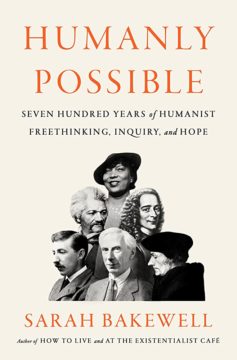 “I am human, and consider nothing human alien to me”: The famous line from the Roman playwright Terence, written more than two millenniums ago, is easy to assert but hard to live by, at least with any consistency. The attitude it suggests is adamantly open-minded and resolutely pluralist: Even the most annoying, the most confounding, the most atrocious example of anyone’s behavior is necessarily part of the human experience. There are points of connection between all of us weirdos, no matter how different we are. Michel de Montaigne liked the line so much that he had the Latin original — Homo sum, humani nihil a me alienum puto — inscribed on a ceiling joist in his library.
But as Sarah Bakewell notes in her lively new book, “Humanly Possible,” Terence wrote the line as a joke. It’s said by a busybody character after being asked why he cannot seem to keep his nose out of everybody else’s beeswax.
more here.
 Guiyang didn’t have many restaurants, per se. The metropolis was more of a city-wide night market. Even in the pre-COVID days, streets like Qingyun Road were only half-filled with cars, to leave room for tents and tables that stretched to the horizon, and for smoke and steam that rose into the clouds. Eateries didn’t burden you with 14-page menus, common at Shanghainese or Northeastern restaurants. No — a làoguō 烙锅 shop sold laoguo (think Korean BBQ with more vegetables, cooked over a clay pot dome). A sīwáwa 丝娃娃 shop sold siwawa (shreds of 20-plus varieties of fresh and pickled vegetables that you roll into a thin, rice cake-like taco). And tofu stands sold tofu. But probably not the tofu you’re thinking of.
 There’s now an
  Just before Christmas, federal health officials confirmed
 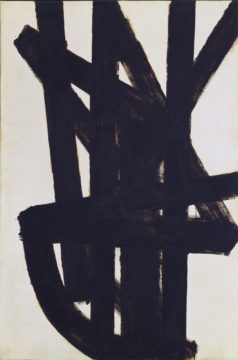 I’ve found myself thinking a lot about that epigraph in the wake of two back-to-back events this past October. One was Soulages’s death at age 102, the other a visit to the monographic room recently devoted to Pierrette Bloch (1928–2017) at the Musée d’Art Moderne de Paris (MAM). Comprising eight objects from between 1974 and 1999, all belonging to the museum’s permanent collection, the focused presentation offered a welcome opportunity to think broadly about a singularly poetic body of work exhibited regularly in Europe but rarely in the US. Particularly in the wake of Soulages’s death, however, it also invites fresh consideration of the two artists’ longtime dialogue. Introduced in 1949 by Bloch’s art professor Henri Goetz, the pair were friends for nearly seven decades, and their lives and oeuvres were closely intertwined. Early in her career, Bloch used a spare room in Soulages’s house as her studio, and each collected work by the other. Slightly older than the artists of Supports/Surfaces but avowedly attentive to their investigations, Bloch developed a similarly expanded practice of painting, moving beyond the stretched canvas support to engage a broad array of nontraditional and often notably humble materials. Her work brilliantly illuminates both the fecundity and the limits of the “materiological” Soulages brought to the fore through Segalen’s striking image of signs woven in stone.
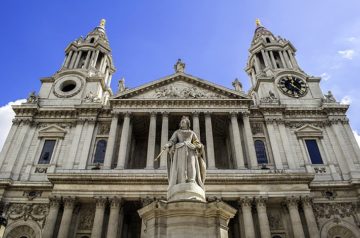 If there is one part of one building that is quintessential Christopher Wren it is not the dome of St Paul’s Cathedral, or the ceremonial river frontage of the Royal Naval Hospital at Greenwich, nor even any of the infinitely various steeples of his city churches, but the base of the Monument.
 The
The
 Around noon on March 9, I learned that the Federal Deposit Insurance Corporation (FDIC) had shut down the Silicon Valley Bank (SVB), where my company has some of its accounts. My co-founder and I were in the middle of a call with some of our advisors, all experienced hands in the tech startup world actively advising and investing in tech startups like ours. The Zoom room was empty within seconds. We all immediately knew what that meant: The cash we pay our employees and vendors was now locked up—perhaps indefinitely.
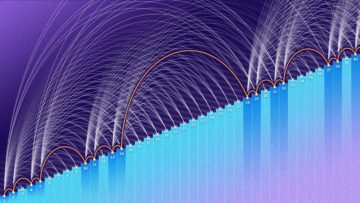 On Sunday, February 5, Olof Sisask and Thomas Bloom received an email containing a stunning breakthrough on the biggest unsolved problem in their field. Zander Kelley, a graduate student at the University of Illinois, Urbana-Champaign, had sent Sisask and Bloom
 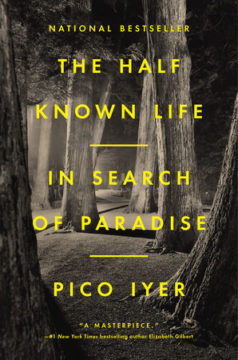 Dante Alighieri’s
 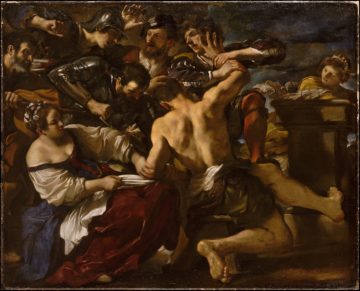 As
As 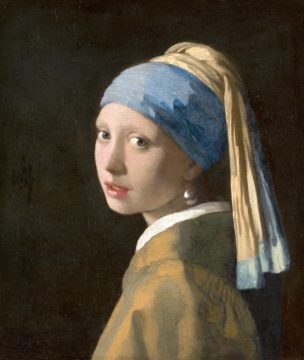 F
F Seven years ago, during the Republican Presidential primary, Donald Trump appeared onstage at Dordt University, a Christian institution in Iowa, and made a confession of faith. “I’m a true believer,” he said, and he conducted an impromptu poll. “Is everybody a true believer, in this room?” He was scarcely the first Presidential candidate to make a religious appeal, but he might have been the first one to address Christian voters so explicitly as a special interest. “You have the strongest lobby ever,” he said. “But I never hear about a ‘Christian lobby.’ ” He made his audience a promise. “If I’m there, you’re going to have plenty of power,” he said. “You’re going to have somebody representing you very, very well.”