
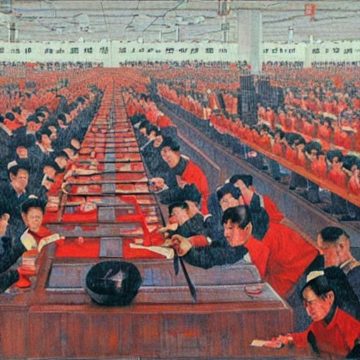
 Cedric Durand in Sidecar:
The return of industrial policy is unmissable, catalyzed by the cumulative shocks of Covid-19 and the war in Ukraine as well as longer-term structural issues: the ecological crisis, faltering productivity and alarm at the dependence of Western states on China’s productive apparatus. Together, these factors have steadily undermined governments’ confidence in the ability of private enterprise to drive economic development.
Of course, the ‘entrepreneurial state’ never disappeared, especially in the US. The deep pockets of the Defense Advanced Research Projects Agency and the National Institutes of Health have been crucial in maintaining the country’s technological advantage – funding research and product development over the past few decades. Still, it is clear that a substantial shift is taking place. As a group of OECD economists noted, ‘So-called horizontal policies, i.e. interventions available to all firms and which include business framework conditions such as taxes, product or labour market regulations, are increasingly questioned’. Meanwhile, ‘the case for governments to more actively direct the structure of the business sector is gaining traction’. Hundreds of billions of targeted funding is now flooding businesses in the military, high-tech and green sectors on both sides of the Atlantic.
This pivot is part of a broader macro-institutional reconfiguration of capitalism, in which a high-pressure post-pandemic economy has tightened labour markets while the centrality of finance continues to wane. These phenomena are highly complementary: public funding stimulates the economy and may boost job creation, while the administrative allocation of credit serves as an admission that financial markets are unable to attract the investment necessary to meet major conjunctural challenges. At a very general level, this neo-industrial turn should be welcomed, since it implies that political deliberation may play a somewhat greater role in investment decisions. More concretely, though, there is much to worry about.
More here.
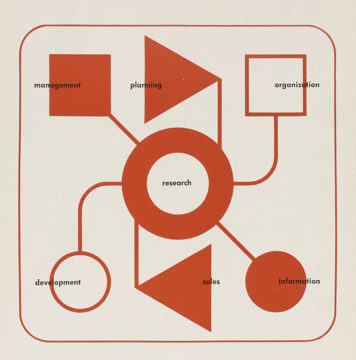 Isabel Estevez in Phenomenal World:
 What exactly separates the short story from the novel? As the contemporary Scottish writer William Boyd has observed, the issue is more complicated than it might at first appear. Novelists and short story writers, Boyd points out, rely on the same “literary tools,” including character, plot, setting, title, and dialogue, and their outputs—sentences and paragraphs—look the same on the page. The tempting answer is to fall back on the obvious difference: short stories are just shorter than novels.
 T
T The key to his reading of Orwell is what happened to him in Spain. Though married to Eileen only six months before, he was determined to fight for the Republican cause (“Good chaps, the Spaniards, can’t let them down”) and on his return became far more politically engaged: “at last [I] really believe in Socialism, which I never did before”. But he’d seen bullying and infighting too. For the rest of his life and in his two great novels, this was the war he fought, on behalf of a wholesome, English, sweetly C of E brand of socialism, as opposed to Stalinist totalitarianism.
 “August Blue” is Levy’s eighth novel, and since her 20s, she has been refining her ability to evoke feeling through writing rather than to narrate it. Her work is deeply influenced by art forms that express the embodied experience, like cinema and dance. “The body in the world,” she said. “How difficult. It is my subject.”
 In January 2023, when ChatGPT was
  A flat, rounded shell. A tail that’s folded under the body. This is what a crab looks like, and apparently what peak performance might look like — at least according to
  We synthesized the vast, contradictory scholarly literature on gender bias in academic science from 2000 to 2020. In the most prestigious journals and media outlets, which influence many people’s opinions about sexism, bias is frequently portrayed as an omnipresent factor limiting women’s progress in the tenure-track academy. Claims and counterclaims regarding the presence or absence of sexism span a range of evaluation contexts. Our approach relied on a combination of meta-analysis and analytic dissection. We evaluated the empirical evidence for gender bias in six key contexts in the tenure-track academy: (a) tenure-track hiring, (b) grant funding, (c) teaching ratings, (d) journal acceptances, (e) salaries, and (f) recommendation letters. We also explored the gender gap in a seventh area, journal productivity, because it can moderate bias in other contexts. We focused on these specific domains, in which sexism has most often been alleged to be pervasive, because they represent important types of evaluation, and the extensive research corpus within these domains provides sufficient quantitative data for comprehensive analysis. Contrary to the omnipresent claims of sexism in these domains appearing in top journals and the media, our findings show that tenure-track women are at parity with tenure-track men in three domains (grant funding, journal acceptances, and recommendation letters) and are advantaged over men in a fourth domain (hiring). For teaching ratings and salaries, we found evidence of bias against women; although gender gaps in salary were much smaller than often claimed, they were nevertheless concerning.
 Cavafy did not cut an imposing figure. His bearing—along with his poetry, his philosophy, and his historiographical perspective—might best be
 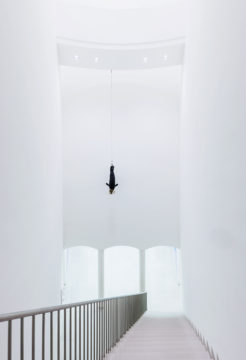 In 1988—that is, before any hallmark style threatened to dominate her practice—Trockel identified the “constants” that fueled her protean vision as “woman, inconsistency, reaction to fashionable trends.” Woman, broadly speaking, is the focus of three of the remaining four galleries on level one. Devoted mostly to the artist’s early years, the trio of dark, densely installed rooms include numerous canonical works featuring such key motifs as blown eggs, hot plates, and corporate logos. Consider Sabine, 1994, a digital print that depicts a naked brunette in sunglasses poised precariously on a small stove in a humble kitchen. Rhyming her subject’s pose with that of the Crouching Aphrodite, Trockel injects a mordant note into the misogynistic scenario. When installed at the MMK at the apex of a tall triangular gallery, Sabine literally acts out its governing thematics: constraint and confinement. The video Mr. Sun, 2000, projected on a hanging screen nearby, is more abject: As the camera crawls lasciviously over a gleaming stove, Brigitte Bardot’s voice croons, “Stay awhile, Mr. Sun.” Dominating the adjacent wall is a large knit painting, Made in Western Germany, 1987, the eponymous anglophone trademark repeated serially across its surface. Coined in 1973 to guarantee the high quality of products manufactured in the FDR (as opposed to the GDR) for an international market, the logo symbolizes the Wirtschaftswunder, the postwar economic miracle during which Trockel came of age in the Rhineland.
 Researchers have failed to find a uniform marker for aging. The aging process seems to be different for different individuals; it is varied, chaotic, and idiosyncratic. There is probably no single cause, but many causes have been proposed: collagen breakdown, UV light, oxidation, inflammation, insulin resistance, glycation, free radicals, accumulation of DNA copying errors, telomere shortening, accumulation of waste products, heterochromatin loss, and many others. I suspect that many of these factors are contributory and that they interact with each other.
 The largest ever study of primates has unveiled surprises about humanity and our closest relatives, providing insight into which genes do, and don’t, separate us from other primates. The huge international study has also yielded new data for a wide range of disciplines, including human health, conservation biology and behavioural science.
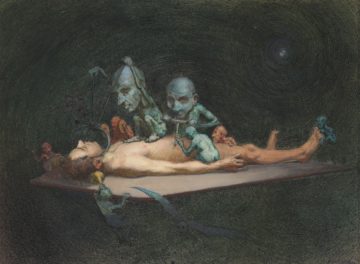 Those who sipped or sniffed ether and chloroform in the 19th century experienced a range of effects from these repurposed anaesthetics, including preternatural mental clarity, psychological hauntings, and slippages of space and time. Mike Jay explores how the powerful solvents shaped the writings of Guy de Maupassant and Jean Lorrain — psychonauts who opened the door to an invisible dimension of mind and suffered Promethean consequences.
 Is this the real life? Is this just fantasy?