
Simon Torracinta in the Boston Review:
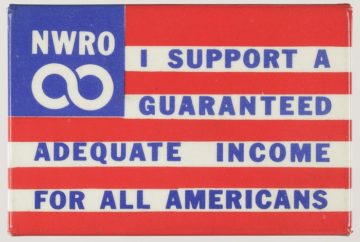 Dreams of a guaranteed income are longstanding, but they leapt back into the public imagination in the wake of the dismal recovery from the 2008 financial crash, endorsed by a diverse array of figures on both the left and right. In 2020 presidential candidate Andrew Yang briefly managed to catapult himself into the media spotlight by pitching an eye-catching “Freedom Dividend” of $1,000 a month to every U.S. citizen over the age of eighteen. Building on this momentum, the massive social and economic dislocation of the pandemic and the nearly unprecedented use of fiscal firepower seemed poised to effect a permanent transformation of the welfare system in both the United States and across much of the Global North.
Yet as soon as the drastic recovery measures began to revive the U.S. growth engine and inflation began to tick upward as snarled supply chains creaked under new waves of consumer demand, a chorus of economists and employers began to scream that the emergency measures were responsible for overheating the economy. Today inflation anxiety continues to dominate headlines, the impact payments have entirely stopped, and every pandemic-era expansion of the transfer system has been allowed to quietly expire.
More here.
 “Oscar Levant is a character who, if he did not exist, could not be imagined.” These words were used by Levant’s great friend, S. N.(“Sam”)Behrman, to describe him. No truer words were ever spoken! In his lifetime, Oscar Levant flourished as (and subsequently gave up each, one by one) gifted composer, concert pianist, radio personality, movie star, successful recording artist, best-selling author, talk-show host and quiz show panelist. Whew! It was what he described as his Noel Coward Principal he managed “to break off his jobs at a certain interval.” He appeared in thirteen movies, including “An American In Paris”, “The Band Wagon”, “Humoresque” and the George Gershwin biograpy, “Rhapsody in Blue”, in which he played “an unsympathetic part… myself.”
 “The big debate among memory theorists over the last hundred years has been about whether human and animal is relational or absolute. The relational school argues that our memory system stores information about the relations between objects and ideas, but not necessarily details about the objects themselves. This is also called the constructivist view, because it implies that, lacking sensory specifics, we construct a memory representation of reality out of these relations (with many details filled in or reconstructed on the spot). The constructivists believe that the function of memory is to ignore irrelevant details, while preserving the gist. The competing theory is called the record-keeping theory. Supporters of this view argue that memory is like a tape recorder or digital video camera, preserving all or most of our experiences accurately, and with near perfect fidelity.
 In 2014, Christine and the Queens’ French album début, “Chaleur Humaine” (“Human Warmth”), became a runaway hit; the following year, a self-titled version appeared in the U.S., with many of the lyrics reworked into English. The songs had infectious hooks and shimmering electronic instrumentation. Back then, Letissier used feminine pronouns, but he was already casting off the strictures of gender. The opening song of the début album, “iT,” was a danceable tune in which bright drops of synthesizer rained into caverns of pulsating bass. The lyrics were a priapic fantasy: “I’ll rule over all my dead impersonations / ’Cause I’ve got it / I’m a man now.” I saw Christine and the Queens perform in 2015, in New York, and recall how hard-earned those declarations seemed to be. Christine—petite, lithe, androgynous—seemed at ease in a dark suit, standing at the front of the stage or dancing in a wash of blue light. But there were moments when the line between Letissier’s different selves blurred. During one rapturous wave of applause, he teared up, then apologized for the lapse, admitting, “I wanted to be fierce.”
 While GPT-4 does have a radically different architecture from our own biological brains (like being solely feedforward and synchronous, whereas our own organic brains have a lot of feedback and asynchronous processing), AIs are neural networks inspired from biological ones. AIs have a learning rule that changes the strengths of the connections between their neurons, just like us—except their learning rule is applied from the outside by their engineers during a training phase, unlike us, who are forever learning (and forgetting). When artificial neural networks are trained, they often develop the properties we associate with real neural networks like grid-cells, shape-tuning, and visual illusions, which is why researchers in 2019 proposed a “
 The Japanese-born British novelist
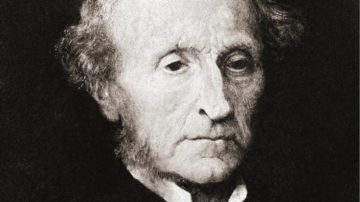 One hundred and fifty years ago this month, John Stuart Mill died in his home in Avignon. His last words were to his step-daughter, Helen Taylor: “You know that I have done my work.”
 Perhaps the most fascinating thing here is the insistence that singing the song isn’t enough to help the supplicant who is in a crisis situation. It’s also essential to understand what the lyrics really mean. The Derveni author gets most irate when describing those who turn to other musical ritualists for enlightenment, for “they go away after having performed [the rites] before they have attained knowledge, without even asking further questions.”
 Imagine you’re in a room with a hundred American young adults, bright-eyed and bushy-tailed. Over their lifetimes, about 25 of them will have a
 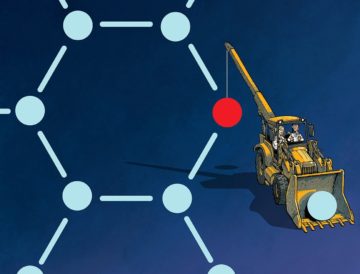 Half a decade ago, chemist Mark Levin was a postdoc looking for a visionary project that could change his field. He found inspiration in a set of published wish lists from pharmaceutical-industry scientists who were looking for ways to transform medicinal chemistry
 Pictures from Brueghel and Other Poems
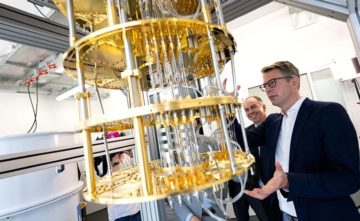 If you believe the hype, computers that exploit the strange behaviours of the atomic realm could accelerate drug discovery, crack encryption, speed up decision-making in financial transactions, improve machine learning, develop revolutionary materials and even address climate change. The surprise is that those claims are now starting to seem a lot more plausible — and perhaps even too conservative.