
Kenneth W Mack at The Guardian:
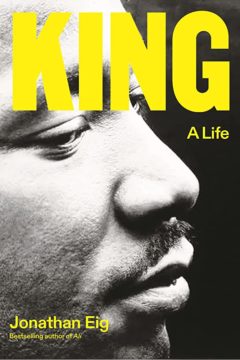 Who was the Rev Martin Luther King Jr? In America, the civil rights activist and Baptist minister is now embraced across the political spectrum even as the teaching of the history of discrimination and segregation that shaped him is being actively suppressed in many parts of the country. Beyond the US, he is widely celebrated in nations confronting difficult questions about their own racial pasts.
At the time of his assassination in 1968, however, most Americans had a negative view of him, and the National Security Agency had tapped his overseas phone calls. As late as the 1980s, President Ronald Reagan could state that it was still an open question whether he had been a communist dupe, as King’s enemies at J Edgar Hoover’s FBI had long alleged. By the end of that decade, however, with a national holiday in his honour (reluctantly assented to by Reagan) and prize-winning biographies by Taylor Branch and David Garrow in print, King’s image had undergone a remarkable transformation.
more here.
 The great French writer Colette once speculated that “certain highly complex human beings” are marked by their “mental hermaphroditism.” The fabled essayist Susan Sontag was among them. She was a woman, but she dressed in the glamorously genderless garb of an intellectual celebrity and wrote on the weighty topics usually reserved for her male peers. In her journals, she mused that “to be an intellectual is to be attached to the inherent value of plurality.”
 When
When 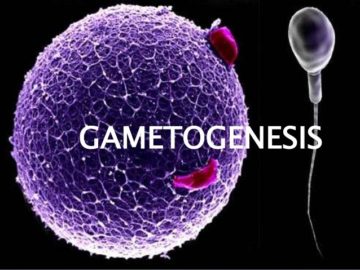 Researchers are inching closer to mass-producing eggs and sperm in the lab from ordinary human cells. The technique could provide new ways to treat infertility but also open a Pandora’s box.
 After 35 years of living in relative control of my decisions, I had decided to see what would happen if I asked AI to control my life instead. Years of suboptimal performance, both personally and professionally, and numerous failed attempts at self-improvement had convinced me there had to be a better way, and I wondered if the collective knowledge hidden inside OpenAI’s hit tech product could help me. But when I asked Sam Altman’s ChatGPT to become my all-powerful leader, it seemed reticent, at least at first.
 A new generation of drugs is revolutionizing the treatment of obesity and
  Coming up with economic policy is a difficult, unforgiving task. To make the best of it, it helps to work with an accurate model of how the economy works. If you use a misleading model and act on it, you can’t reasonably expect good outcomes: in that scenario, we end up, as JM Keynes warned in the 1930s, with “madmen in authority”, acting according to the precepts of “some defunct economist”.
 W
W I like when the refs touch each other in any way, but especially when all three of them put their arms around one another, huddling to discuss a difficult call. I like watching endless replays of fouls, trying to decide whether something was a block or a charge, or who touched the ball last. I like when the commentators disagree with the refs and when the broadcast cuts to the former ref Steve Javie in some NBA warehouse in New Jersey, standing in front of TV screens, calmly hypothesizing what the refs are discussing.
 1.
1. 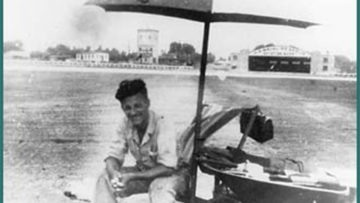 In the twenties, Archie League was spinning, diving, and doing loop-the-loops above the clouds, engine roaring, little plane shaking as he and the other barnstormers in his flying circus entertained folks across Missouri and Illinois. Necks grew stiff from watching, eyes squinted against the light, jaws dropped and air rushing in with every oooohhhh and whoa and oh my sweet Lord Jesus.
 Amid the carnage of the Second World War, which saw some 60 million killed, including the Nazis’ industrialized annihilation of six million Jews, one event stands out in American memory as the most momentous: the atomic bomb attack that leveled Hiroshima on August 6, 1945. According to the most authoritative Japanese casualty count, which is higher than the American figure, the bomb killed some 100,000 people outright and another 40,000 over the next several months; blast, flash burns, and firestorm took care of the former, and radiation sickness accounted for the latter. A second bomb that dropped just three days later on Nagasaki killed 70,000 all told but gave some people misgivings even more troubling than those produced by Hiroshima.
 While Bogdanovich was about as immersed in cinema as is possible, a key inspiration for his 1968 debut, Targets—a thriller whose terse, nightmarish qualities would not be repeated across his wide-ranging and influential filmography—came not from the movies but from real life. Charles Whitman was an altar boy, an Eagle Scout, a marine, and a mass murderer: in 1966, between the last day of July and the first day of August, the twenty-five-year-old ex–bank teller killed sixteen people—including his wife and mother—and wounded more than thirty others, shooting the majority of his victims from the observation deck of the Main Building of the University of Texas at Austin. For the mass media, which made him a household name—“The Psychotic and Society,” declared a Time cover featuring his image—he was a cleaner-cut cousin to Lee Harvey Oswald, his sights trained not on political power or celebrity but on the everyday citizens whom he resembled at a distance, and maybe under the skin as well. “I don’t really understand myself these days,” the shooter himself observed in the half-typed, half-handwritten suicide note discovered at his residence. “I am supposed to be an average reasonable and intelligent young man. However, lately (I can’t recall when it started) I have been a victim of many unusual and irrational thoughts.”