
The First Aerial Bombardment
The street. A woman zigzags the street.
A pause. By the greengrocery
she hesitates.
Must she buy bread? there is not – is there enough? – not enough
bread?
Must she buy bread now, or –
tomorrow? –
she hesitates.
Stares at. Stares at her phone. Her phone. Rings.
Mother. She speaks to mother: Mother!
without listening
she shouts.
Shouts
by the window of greengrocery; at the window of greengrocery
as if she is shouting at herself
in the window.
Slaps the phone.
Zigzags the street, shouting at
her invisible – i.e impossible –
Mother.
Tears. Tears at the impossibility
of forgiving
her mother. Forget
the bread.
Forget. The bread and each living thing on this green earth. Forgo it. Leave it. Alone.
That morning
it begins. The first aerial bombardment.
by Serhiy Zhadan,
from Post Road Magazine
translated from the Ukrainian by Ilya Kaminsky and Katie Farris
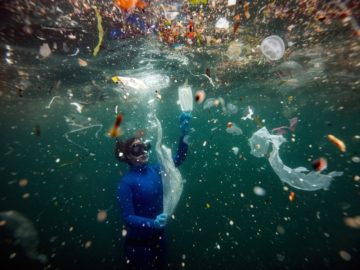 To tackle the world’s mounting plastics problem, humans may have to use every tool in the arsenal—even microscopic bacteria and fungi. High in the Swiss Alps and the Arctic, scientists have discovered microbes that can digest plastics—importantly, without the need to apply excess heat. Their findings, published this month in the journal
  In 2003, Ken Jennings was a twenty-nine-year-old software engineer, living in a suburb of Salt Lake City with his wife and young son, when his old college roommate suggested that they try out for “Jeopardy!” A year later, Jennings, a trivia enthusiast who’d grown up watching the show, made it on the air, had a seventy-four-game winning streak, and won more than $2.5 million, becoming the winningest “Jeopardy!” contestant of all time. (He still is: a year and a half ago, Amy Schneider, the second-winningest, won forty consecutive games.) After Alex Trebek, the show’s beloved host, died in 2020, the show endured an uneasy era of temporary hosts and executive blunders. But now Jennings helms the show, in rotation with Mayim Bialik—and “Jeopardy!,” that reliable source of answers-in-the-form-of-a-question comfort, once again feels like it’s in good hands. Jennings is a natural, ably enhancing the game’s inherent charms with warmth and wit, fostering an atmosphere of collegial curiosity. He even manages to make the show’s personal-anecdote segment the least awkward it’s ever been.
 Maybe one sign of being an important writer is how much attention you receive when you die. Tributes to and remembrances of Martin Amis, who died last week at 73, have been appearing all over the place, like fresh bouquets of sympathy sent to a funeral. I almost found myself lazily inserting the phrase “after a long battle with cancer” to specify the conditions of his demise, but since Amis was famously at war with cliches, this would not do. Amis refused to hide his taste, his opinions, and above all, his style under a bushel, and this is why people loved him on both sides of the Atlantic.
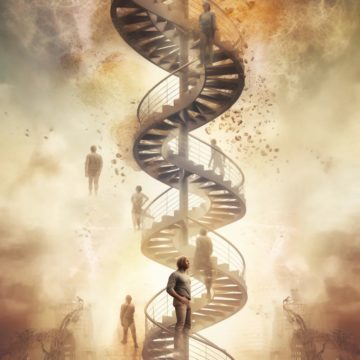 Will we ever decipher the language of molecular biology? Here, I argue that we are just a few years away from having accurate in silico models of the primary biomolecular information highway — from DNA to gene expression to proteins — that rival experimental accuracy and can be used in medicine and pharmaceutical discovery.
 At the end of the Korean war in 1953, captured American soldiers were allowed to return home. To widespread amazement, some declined the offer and followed their captors to China. A popular explanation quickly emerged. The Chinese army had undertaken an unusual project with its prisoners of war: through intense and sustained attempts at persuasion—using tactics such as sleep deprivation, solitary confinement, and exposure to propaganda—it had sought to convince them of the superiority of communism over capitalism. Amid the general paranoia of 1950s McCarthyism, the fact that such techniques had apparently achieved some success produced considerable alarm. The soldiers had been “
 When an ice cube melts and attains equilibrium with the liquid, physicists usually say the evolution of the system has ended. But it hasn’t — there is life after heat death. Weird and wonderful things continue to happen at the quantum level. “If you really look into a quantum system, the particle distribution might have equilibrated, and the energy distribution might have equilibrated, but there’s still so much more going on beyond that,” said
 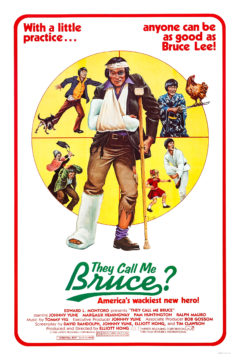 In the conventional canon of Asian American cinema, you’re unlikely to find They Call Me Bruce mentioned. This is in spite of the fact that it arrived right after Wayne Wang’s lauded debut, Chan Is Missing (1982), as arguably the second Asian American feature to ever gain theatrical distribution (and probably the first to turn a substantial profit). This makes its absence from the canon all the more curious, and both They Call Me Bruce and its primary creators are overdue a reconsideration.
 It wasn’t the singing; it was the song. When Deanie Parker hit her last high note in the studio, and the band’s final chord faded behind her, the producer gave her a long, appraising look. She’d be great onstage, with those sugarplum features and defiant eyes, and that voice could knock down walls. “You sound good,” he said. “But if we’re going to cut a record, you’ve got to have your own song. A song that you created. We can’t introduce a new artist covering somebody else’s song.” Did she have any original material? Parker stared at him blankly for a moment, then shook her head.
 Birders are a funny bunch, mostly—at this festival, anyway—white, older-aged, and of a delightfully inefficient temperament. In general, they talk and move at a relaxed pace, and are eager to dedicate long moments of their lives to matters that many people simply whisk past. On a geology tour my mom and I took on our third day in Hays, the group revolted and made the guide turn the van around just to take pictures of a flock of turkeys. Later, about a half hour was spent on a quiet debate over whether a falcon in a far-off tree was a kestrel or a much more uncommon merlin. I listened to a man trying in vain for several minutes to describe the position of the falcon to the woman next to him: “It’s in the backmost tree, up there on the white branch. There are a lot of light branches. But no! There’s only one white branch.” Over the course of the trip, time seemed to slow down to match the geologic scale suggested by the ancient mating rituals of the prairie chickens and the landscape that surrounds them: sprawling fields of grass punctuated by chalk formations left over from Kansas’s past beneath the Cretaceous-era Western Interior Seaway.
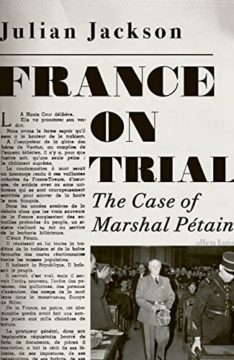 O
O The
The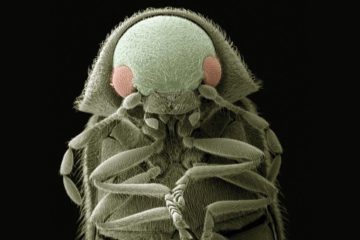 For at least the last 400 million years, insects have ruled the world. The first insect fossils are nearly twice as old as the oldest dinosaur. They were the first animals to fly, and that adaptation helped them to spread to every corner of the planet. They survived four of the five mass extinctions in Earth’s history. Then, a mere 200,000 years ago, a new species appeared in East Africa and started to spread over the surface of their planet. In a geologic blink, modern humans were everywhere, hunting and farming and changing the world to fit our needs and desires. It was inevitable that these two dominant animals would come to affect each other in profound ways, both positive and negative.
 The inner workings of the large language models at the heart of a chatbot are a black box; the