John Banville in The Guardian:
 John Updike had the mind of a middling middle-class postwar American male, and the prose style of a literary genius. Such a lord of language was he that even the notoriously grudging Vladimir Nabokov afforded him a meed of praise. A reviewer, musing on the disproportion between the style and content of Updike’s fiction, likened him to a lobster with one hugely overgrown claw. It was a comparison Updike was to remember – for all his bland urbanity, on display from start to finish in this mighty volume of his letters, he could be prickly, and did not take slights lightly.
As a novelist he aimed, as he once put it, to “give the mundane its beautiful due”. Apart from a few rare and in some cases ill-advised ventures into the exotic – the court at Elsinore, Africa, the future – his abiding subject was the quotidian life of “ordinary” Americans in the decades between the end of the second world war and the coming of a new technological age in the closing years of the 20th century.
More here.
Enjoying the content on 3QD? Help keep us going by donating now.
 When we think about advanced AI systems, we naturally draw on our experience with the only intelligent systems we’ve known: biological organisms, including humans. This shapes expectations that often remain unexamined—that genuinely intelligent systems will pursue their own goals, preserve themselves, act autonomously. We expect a “powerful AI” to act as a single, unified agent that exploits its environment. The patterns run deep: capable agents pursue goals, maintain themselves over time, compete for resources, preserve their existence. This is what intelligence looks like in our experience, because every intelligence we’ve encountered arose through biological evolution.
 Everyone has looked up at the clouds and seen faces, animals, objects. Human brains are
  A gel-based artificial tongue can determine the
  A few weeks after their arrival at the College, 15 first-year students settled into chairs for an unusual class — one with no answers.
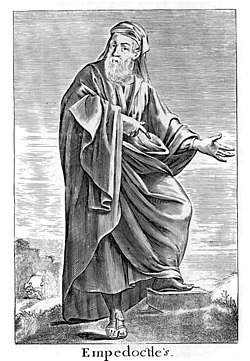 I
I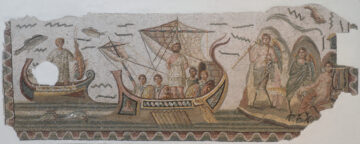 The Greek island of Syros is mentioned in The Odyssey: the titular hero’s swineherd, Eumaeus, tells us that his home island is “not so packed with people, still a good place, though, fine for sheep and cattle, rich in wine and
  As journalists comb through the
  Such moments of insight are written across history. According to the Roman architect and engineer Vitruvius, in the third century BCE the Greek mathematician Archimedes suddenly exclaimed “Eureka!” after he slid into a bathtub and saw the water level rise by an amount equal to his submerged volume (although this tale