
McNeil Taylor at Cabinet Magazine:
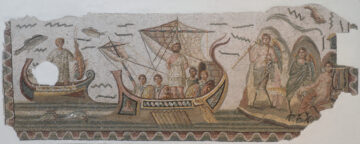 The Greek island of Syros is mentioned in The Odyssey: the titular hero’s swineherd, Eumaeus, tells us that his home island is “not so packed with people, still a good place, though, fine for sheep and cattle, rich in wine and wheat.”1 Approaching Syros’s harbor city of Ermoupolis today, however, travelers weaned on these Arcadian visions will instead be confronted by the fruits of nineteenth-century industry. When Gérard de Nerval landed in Ermoupolis in 1842, the new city, draped over two vertiginous hills, began to melt in the hallucinatory swirl of Parisian flânerie: the view suggested first a sugared loaf of bread, then a Babylonian city, and finally the floating citadel of Laputa from Gulliver’s Travels (1726).2 Surreal, exotic, futuristic, Ermoupolis was far from what he had been led to expect from the birthplace of Western civilization.
Nerval’s fanciful vision nonetheless attests to the seismic upheavals of the modern nation-state that were still tremoring in the 1840s: only twenty years earlier, a large influx of Greek Orthodox refugees from Chios, fleeing massacre by the Turks, had arrived on the island. It was one of many instances of diaspora, population exchange, and exile that would define the traumatic course of Greek history up until our present day.
more here.
Enjoying the content on 3QD? Help keep us going by donating now.