
Enjoying the content on 3QD? Help keep us going by donating now.
Category: Recommended Reading
Sunday Poem
The Problem with Gratitude
It is the mind’s youngest child,
one of the most stubborn
of human emotions. Gratitude
obeys occasionally
and often arrives late, inconspicuous
as a heartbeat or insistent as a sob.
It can turn a quick walk
into twenty minutes of unabashed staring
at the yellow leaves on a neighbor’s tree,
transform a glass of water into bliss.
Gratitude has never fired a gun
or met a dog it didn’t love.
It has a tendency to dwell
but also wanders. It gets lost.
It has a hard time knowing
when it’s being lied to, or knowing
how to be refused. Gratitude
has no patience for performance.
You want it to hold still and be seen,
it wants to fly your heart like a kite.
Sometimes it ends up at your table
even when you haven’t made space for it:
there it is, ignoring the recited prayer,
waving at you with one black olive
on the tip of each finger.
on the tip of each finger.
by Abby E, Murray
from Rattle Magazine11/30/25
Enjoying the content on 3QD? Help keep us going by donating now.
Jimmy Cliff (1944 – 2025) Reggae Great
Enjoying the content on 3QD? Help keep us going by donating now.
Friday, November 28, 2025
How the Psychological Burden of Debt Impacts Our Physical Health
Kristin Collier at Literary Hub:
 In a 2013 paper in Social Science & Medicine, researchers studied debt’s impact on general health outcomes—the first study of its kind, they noted. Earlier scholarship traced the impacts of socioeconomic status on health and the impact of debt on mental health, but before this study, no one had drawn a clear, thick arrow between debt and a body. Because of Americans’ rapid accumulation of debt since the 1980s—including medical, credit card, student loan, payday, and mortgage debt—more people are experiencing indebtedness than ever before, and it’s hurting them. It’s hurting us. The study, which focused on young adults between the ages of twenty-four and thirty-two with personal debt, found that debt is “a significant predictor of health outcomes.”
More here.
Enjoying the content on 3QD? Help keep us going by donating now.
The scientific method and the null hypothesis
Mark Louie Ramos in The Conversation:
 As a statistician involved in research for many years, I know the care that goes into designing a good study capable of coming up with meaningful results. Understanding what the results of a particular study are and are not saying can help you sift through what you see in the news or on social media.
Let me walk you through the scientific process, from investigation to publication. The research results you hear about crucially depend on the way scientists formulate the questions they’re investigating.
Researchers in all kinds of fields use the scientific method to investigate the questions they’re interested in.
First, a scientist formulates a new claim – what’s called a hypothesis. For example, is having some genetic mutations in BRCA genes related to a higher risk of breast cancer? Then they gather data relevant to the hypothesis and decide, based on the data, whether that initial claim was correct or not.
It’s intuitive to think that this decision is cleanly dichotomous – that the researcher decides the hypothesis is either true or false. But of course, just because you decide something doesn’t mean you’re right.
More here.
Enjoying the content on 3QD? Help keep us going by donating now.
What happens if you throw sand into a jet engine?
Enjoying the content on 3QD? Help keep us going by donating now.
Naomi Klein: Surrealism Against Fascism
Naomi Klein at Equator:
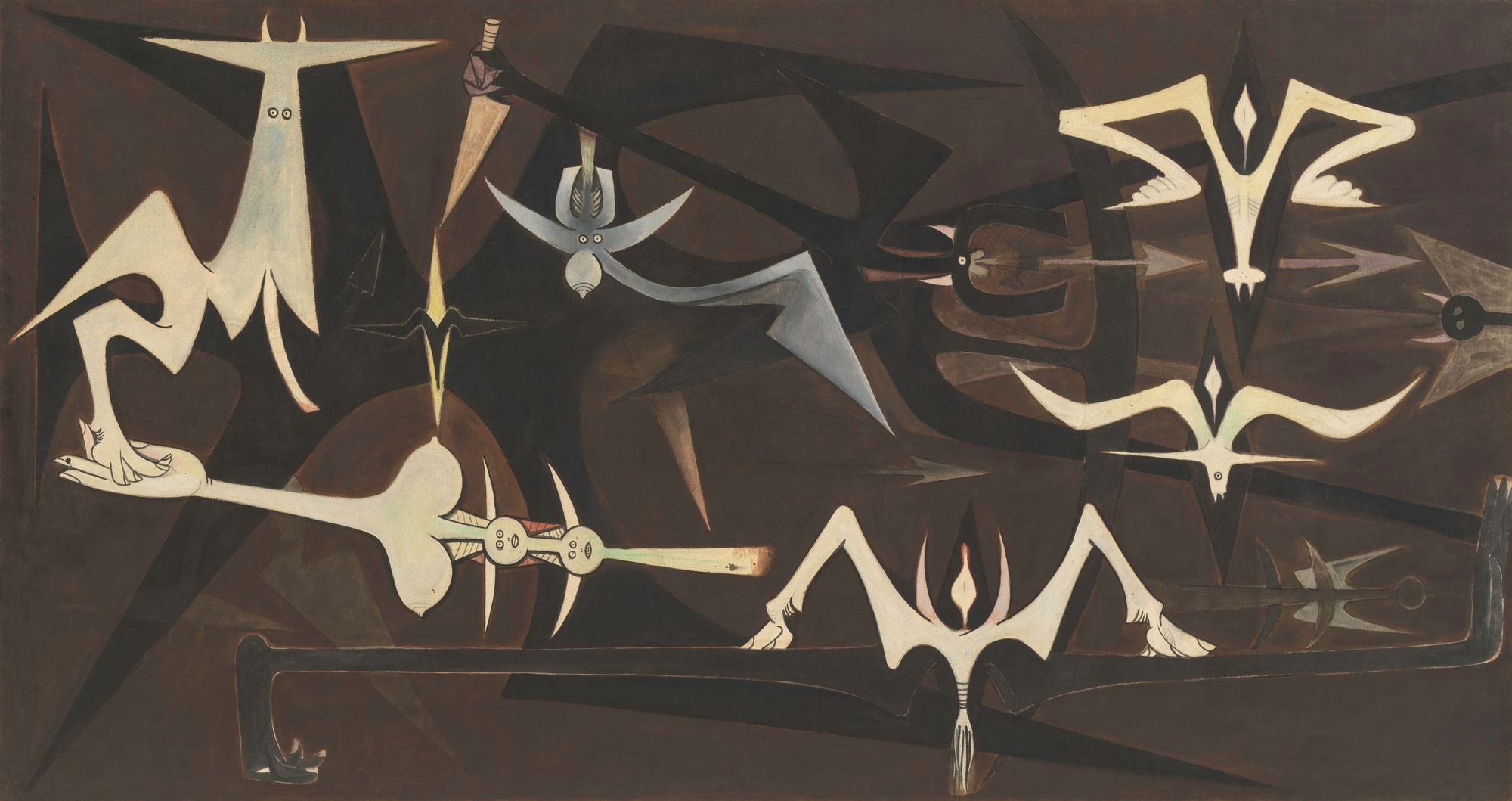 Fascism is roaring back in the twenty-first century and, in a sickening twist, it is rhetorically claiming that mass censorship, high-tech surveillance and extra-judicial detention are necessary to protect the victims of twentieth-century fascism. Until, of course, even that flimsy façade is dropped in favour of a purer white nationalism with no need for Jewish cover. That evolution is already well underway, with unreconstructed antisemites on the far right – such as Nick Fuentes, helpfully amplified by Tucker Carlson – seizing upon widespread revulsion at Israel’s carnage, and the suppression of voices opposing it, to open the floodgates of Jew hatred, updating the Protocols of the Elders of Zion for the Jeffrey Epstein era.
How did we arrive at this contorted place? What were all those museums and lesson plans and documentaries about the Holocaust for, if not to prevent a moment such as this? And what about all those books with checklists on how to spot your country sliding into fascism? Why did so many of the people who read them – and even some of the people who wrote them – falter when a genocide was unfolding on their screens, a genocide that has blown a hole in the moral universe and decimated the shaky edifice of international humanitarian law, making any further depravity now feel entirely possible?
Some of the reasons may lie in the history lessons themselves.
More here.
Enjoying the content on 3QD? Help keep us going by donating now.
Love Against Probability
Maria Popova at The Marginalian:
 You wouldn’t have bet on it, this battered rock orbiting a star from the discount bin of the universe, you wouldn’t have bet that it would bloom mitochondria and music, that it would mushroom mountains and minds, and the hummingbird wing whirring a hundred times faster than your eye can blink, and your eye that took 500 million years from trilobite to telescope, and the unhurried orange lichen growing on the black boulder two hundred times more slowly than the continental plates beneath are drifting apart, and the marbled orca carrying her dead calf the length of the continent, carrying the weight of consciousness, and consciousness, how it windows this tenement of breath and bone with wonder, how it hovers over everything, gigantic and unnecessary, like love.
It is all so improbable, this wild and wondrous world, against all we know about the universe. And yet here it is, and here we are, set on it to know that we are dying and live anyway, and love anyway. Our most beautiful, most transformative, most vivifying experiences and encounters are like that — they enter our lives through the back door of expectation, shattering the laws of probability with the golden gavel of the possible.
more here.
Enjoying the content on 3QD? Help keep us going by donating now.
Jenny Saville: The Anatomy of Painting
Jonathan Malesic at Commonweal:
 The Modern Art Museum of Fort Worth’s exhibition “Jenny Saville: The Anatomy of Painting,” on view through January 18, 2026, begins dramatically. As I ascended the stairs to the show, I saw two monumental heads rise on the wall ahead of me. One head tips back, the other forward. The portrait is of two young women, cheek to cheek. Their heads seem at first to share a body—but no, one rests her chin on the other’s hunched-up shoulder. The left head looks down through narrowed eyes. The right, almost cherubic, looks off to the side, eyes and mouth open. Their faces are marred with red spots; a piece of flesh beneath an eye appears missing, exposing a smattering of scarlet over crude primer. The painting, Hyphen (1999), is twelve feet by nine feet. I approached it and shuddered.
Widely celebrated for reinventing the reputedly dead genre of figurative painting, Saville portrays bodies and faces—nearly all of them women—on large canvases and without context. The scale of a work like Hyphen permits the image to dissolve and resolve multiple times at various distances. From far off, the two girls’ eyes and hairlines are strikingly realistic. Delicate bluish veins appear on a forehead.
more here.
Enjoying the content on 3QD? Help keep us going by donating now.
Friday Poem
“It’s not what you look at that matters, it’s what you see”
— Henry David Thoreau
I am grateful for what I am and have.
My thanksgiving is perpetual.
It is surprising how contented
one can be with nothing definite –
only a sense of existence.
Well, anything for variety.
I am ready to try this for the next
ten thousand years, and exhaust it.
How sweet to think of!
my extremities well charred,
and my intellectual part too,
so that there is no danger
of worm or rot for a
long while.
My breath is sweet to me.
O how I laugh when I think
of my vague indefinite riches.
No run on my bank can drain it,
for my wealth is not possession
but enjoyment.
by Henry David Thoreau
Enjoying the content on 3QD? Help keep us going by donating now.
This Is A Special Time To Be Alive
Enjoying the content on 3QD? Help keep us going by donating now.
NASA astronauts’ return is near. Their long, unlikely trip puts focus on resilience
Jacob Posner in The Christian Science Monitor:
 In a YouTube video posted by NASA, kids sit cross-legged in neat rows in a gymnasium at Sunita L. Williams Elementary School in Needham, Massachusetts. You can see them wave their little hands at the camera, which beams the image roughly 250 miles above Earth to the International Space Station. They were talking in December with none other than Sunita Williams, the school’s namesake and an astronaut living on the space station. She should have been home already. A series of technical failures extended an eight-day mission to nine months, leading some news organizations and politicians to play up tension and place blame.
More here.
Enjoying the content on 3QD? Help keep us going by donating now.
Every Generation Gets the Shakespeare It Deserves
Drew Lichtenberg in The New York Times:
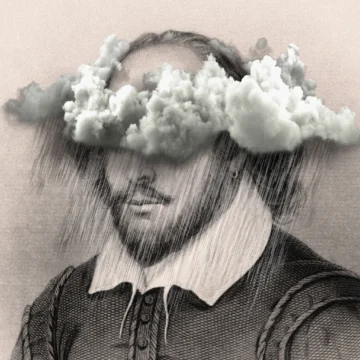 The new film “Hamnet” features two bright young actors, Paul Mescal and Jessie Buckley, playing Shakespeare and his wife, Agnes (née Anne) Hathaway. “Hamnet” arrives already widely lauded — it won the audience award at the Toronto International Film Festival and has been sending millennial cinephiles into critical paroxysms. “Not to be hyperbolic but this movie contains the actual meaning of life,” wrote one such reviewer on Letterboxd. The film, based on Maggie O’Farrell’s best-selling novel, recasts Shakespeare’s life in the most youthful and desirable terms possible, positioning itself as a generational gateway for a reanimated obsession with the Bard.
More here.
Enjoying the content on 3QD? Help keep us going by donating now.
Thursday, November 27, 2025
Nothing Better Than a Whole Lot of Books: In Praise of Bibliomania
Ed Simon in Literary Hub:
 Bibliomania, the only hobby which is also a mental health affliction. The person with piles of titles on their nightstand, in their closet, in the trunk of their car. Books in front of books on their bookshelf. “With thought, patience, and discrimination, book passion becomes the signature of a person’s character,” writes Nicholas Basbanes in A Gentle Madness: Bibliophiles, Bibliomanes, and the Eternal Passion for Books. “When out of control and indulged to excess, it lets loose a fury of bizarre behavior.” The sort of figure mocked in the engraving “The Bibliomaniac” from Sebastian Brandt’s 1497 satirical allegory The Ship of Fools, a work that Erasmus knew well, where he may have recognized himself in the woodcut. I certainly do, seeing a reflection of my own bookish pursuits from half-a-millennia ago in Brandt’s ridiculous figure in monastic robes and scholarly cap and eyeglasses, sitting behind a desk and shelf piled with books, the figure fanning them as if he’s their servant rather than they his possessions.
More here.
Enjoying the content on 3QD? Help keep us going by donating now.
The Human-AI Alignment Problem
Arianna Huffington in Time Magazine:
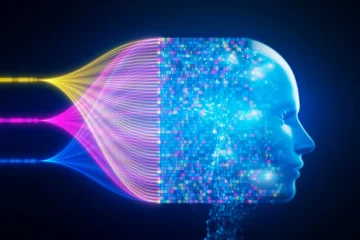 There was a revealing moment recently when Sam Altman appeared on Tucker Carlson’s podcast. Carlson pressed Altman on the moral foundations of ChatGPT. He made the case that the technology has a kind of baseline religious or spiritual component to it, since we assume it’s more powerful than humans and we look to it for guidance. Altman replied that to him there’s nothing spiritual about it. “So if it’s nothing more than a machine and just the product of its inputs,” says Carlson. “Then the two obvious questions are: what are the inputs? What’s the moral framework that’s been put into the technology?”
Altman then refers to the “model spec,” the set of instructions an AI model is given that will govern its behavior. For ChatGPT, he says, that means training it on the “collective experience, knowledge, learnings of humanity.” But, he adds, “then we do have to align it to behave one way or another.”
And that, of course, leads us to the famous alignment problem—the idea that to guard against the existential risk of AI taking over, we need to align AI with human values.
More here.
Enjoying the content on 3QD? Help keep us going by donating now.
On the Majesty of Alan Moore
Alexander Sorondo at The Metropolitan Review:
 Alan Moore is 72 years old now. Since the 1980s, he’s been celebrated as the greatest writer in comics history. But he’s done with all that. Full-time novelist now. Finally. Spends his days at home just writing, reading, and smoking “frightening,” “staggering,” “saturating” amounts of weed.
“I use it to work,” as he told Alex Musson. “Always have done.”
Except these days he does it without the weekly deadlines, the phone always ringing, questions and chitchat with illustrators, coauthors, publishers, press — none of it.
Life of a novelist now. Solitude.
And he’s embarked on something new: a five-novel series called The Long London. It might not seem like a huge venture, given that Book One, The Great When (2024), reads as a fairly straightforward fantasy story, just about 300 pages, self-contained, quick-moving, irreverent.
But it marks a big change for Moore.
There’s no illustrator for this series. No coauthor. No photos to pair with the text.
More here.
Enjoying the content on 3QD? Help keep us going by donating now.
Google predicts a thousandfold increase in its compute capacity over the next five years
Benj Edwards at Ars Technica:
 While AI bubble talk fills the air these days, with fears of overinvestment that could pop at any time, something of a contradiction is brewing on the ground: Companies like Google and OpenAI can barely build infrastructure fast enough to fill their AI needs.
During an all-hands meeting earlier this month, Google’s AI infrastructure head Amin Vahdat told employees that the company must double its serving capacity every six months to meet demand for artificial intelligence services, reports CNBC. The comments show a rare look at what Google executives are telling its own employees internally. Vahdat, a vice president at Google Cloud, presented slides to its employees showing the company needs to scale “the next 1000x in 4-5 years.”
While a thousandfold increase in compute capacity sounds ambitious by itself, Vahdat noted some key constraints: Google needs to be able to deliver this increase in capability, compute, and storage networking “for essentially the same cost and increasingly, the same power, the same energy level,” he told employees during the meeting.
More here.
Enjoying the content on 3QD? Help keep us going by donating now.
David A. Bell: The Uses and Abuses of Enlightenment
Enjoying the content on 3QD? Help keep us going by donating now.
Ilya Sutskever: We’re moving from the age of scaling to the age of research
Enjoying the content on 3QD? Help keep us going by donating now.
The Invention Of The Modern Self
David A. Bell at The Nation:
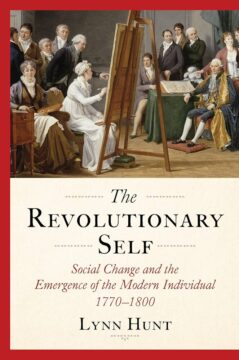 In that classic of Western cinema, Monty Python’s Life of Brian, the title character addresses a crowd in Jerusalem that has mistaken him for Jesus Christ. “You’ve got it all wrong,” he pleads. “You don’t need to follow me. You don’t need to follow anybody. You’ve got to think for yourselves. You’re all individuals!” The crowd chants back, in unison, “Yes, we’re all individuals!” “You’re all different!” Brian protests. “Yes, we’re all different!” the crowd responds (though one lone voice insists, “I’m not”).
The scene illustrates as well as anything the problem of trying to write a history of that endlessly fascinating but endlessly slippery subject—the “self.” The self can be defined as the way people experience and understand their own individuality. The difficulty stems from the fact that the very language people use to describe and express their individuality is, like all language, something they take from and share with others. Many great historians have taken as a theme the birth of modern Western individualism, associating it with many different eras—notably, the Renaissance, the Enlightenment, and the eras of Romanticism and high Modernism. Yet in each case, the terms in which individuals expressed their supposedly ineffable, unique identities have tended to sound remarkably conventional and similar, thereby undermining the historians’ case.
more here.
Enjoying the content on 3QD? Help keep us going by donating now.