when Americans think about war, they think about men with guns, and soldiers in uniforms
when I think about war, I think about packing suitcases
I think about food shortages, I think about the economic collapse
I think about my grandmother, the one we had to leave behind
the one whose mother moved her from town to town, until they didn’t see a war anymore
the one who was left an orphan, in the middle of Siberia, with her 13-year-old sister to take care of her
when I think about war, I think about the cold walls of apartment buildings, I think about no heat in the house, I think about hotel rooms
I think about having to learn a new language in order to survive
when I think about war, I think about being a child, and standing on the coast of an ocean
where the wind blows just enough to make one paranoid, just enough to feel like war is right around the corner, right around and behind you, touching you
by Titiana Dolgushina
from Rattle Magazine, 3//6/2022

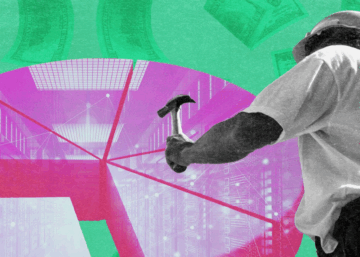 The most salient issue of American politics revealed in the recent elections is “affordability” for all those earners not in the top 10%. It is an especially acute concern among young adults facing economic precarity and the lost expectation of upward mobility as technological innovation disrupts labor markets.
 I guess it makes sense that for a lot of people, the potential negative externalities — deepfakes, the
  Worldwide fossil fuel emissions are set to rise 1.1 per cent in 2025, reaching another record high as humanity burns hydrocarbons at ever greater rates, according to the annual Global Carbon Budget report.
 The Polish poet Czesław Miłosz (1911–2004) had a complicated Second World War. He was in Warsaw when the Germans invaded, fleeing then to Ukraine. But then, discovering that his wife had been unable to escape Poland, he tried to return to her by way of Romania, then Ukraine again—the Germans were coming from one direction, the Russians from another—then Lithuania. By the summer of 1940, he was back in Warsaw. There, he participated in various underground activities, including the sheltering and transportation of Jews. In 1944, he was captured and briefly held in an internment camp. As the Red Army moved closer to Warsaw and the Nazis burned the city in anticipatory vengeance, Miłosz and his wife, with little more than the clothes on their backs, made their way to a village near Kraków, finding a brief respite from history, though not from poverty. Then:
 T
T In May 1911, a few months before Gustav von Aschenbach first became a figment of his pen, Thomas Mann was staying with his wife and brother Heinrich on the wooded island of Brioni on the Istrian peninsula, holiday haunt of the Habsburg monarchy. Moving the holiday across to the other side of the Adriatic was not yet in prospect, but a disrespectful countess was disturbing dinner with her late arrivals and early departures. The irritable Manns had to stand up to defer to her grandeur and when enough was enough they took the ferry to Venice instead.
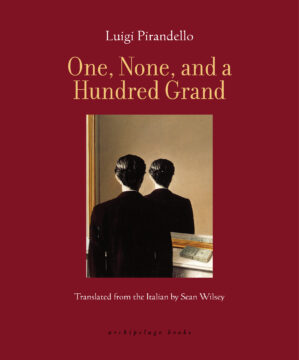 At the height of his prominence, Luigi Pirandello was the principal darling of Italian drama. His plays were performed throughout Europe and the United States; Mussolini threw 700,000 lire at him when he decided to found an arts theater in Rome; and he won the Nobel Prize in Literature in 1934, praised for his “bold and ingenious revival of dramatic and scenic art.” His acclaim was widespread: Jean-Paul Sartre hailed him as the most timely modern dramatist of the 20th century. And when Samuel Beckett’s Waiting for Godot premiered in 1953 in Paris, the writer Jean Anouilh estimated that the evening at the Babylone Theater was “as important as the first Pirandello produced by [George] Pitoëf in Paris in 1923.” Jorge Luis Borges felt a great kinship with him; Thomas Bernhard namechecked him. How, then, did Pirandello end up a half-forgotten castaway of European letters by the 1980s? The answer, in part, appears straightforward: Pirandello was a fascist.
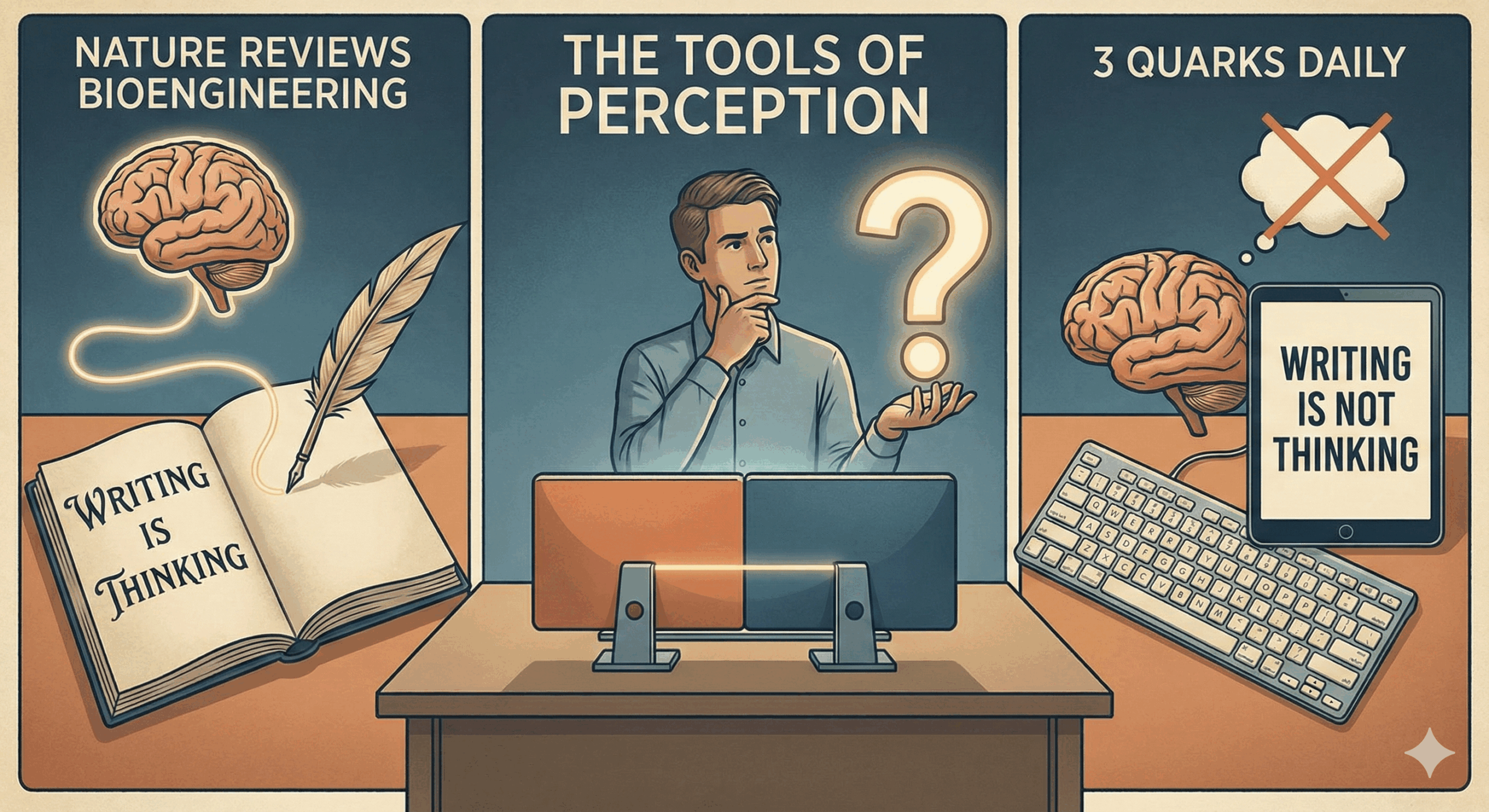 My science feeds have delivered two pieces this morning that arrive in productive tension. A June editorial in Nature Reviews Bioengineering declares that “Writing is Thinking,” calling for continued recognition of human-generated scientific writing in the age of large language models. A September essay in 3 Quarks Daily fires back with the counterpoint: “
 Large language models can be unreliable and say dumb things, but then, so can humans. Their strengths and weaknesses are certainly different from ours. But we are
 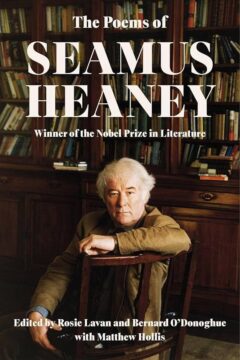 “DEAR JEEM,” the poet Seamus Heaney wrote to his friend, the poet and novelist Seamus Deane, in 1966, as both writers’ careers were finding their runway, “Here are the proofs [of your poems …] have you anything else to bung in here?” That summer, Heaney was editing a chapbook of Deane’s poems for the Belfast Festival. The two writers had met in grammar school at ages 11 and 10, respectively, and remained close friends throughout their lives—Heaney going on to become a globally acclaimed poet, translator, and Nobel laureate, while Deane’s career as a scholar, critic, and editor helped to spearhead Irish studies as a disciplinary field.
 INTERVIEWER
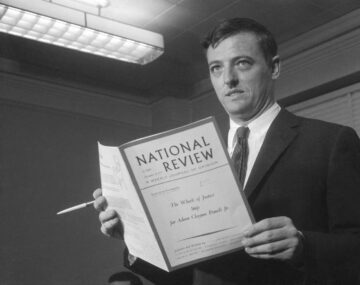 Giving students an occasion to discover the divergence between the depth of the conservative intellectual tradition and the shallowness of the contemporary online right is one of the major attractions of teaching conservatism for one of our session leaders, Emory’s Frank Lechner. Lechner