she invented countries on a map she had drawn herself

Logan-articleInline

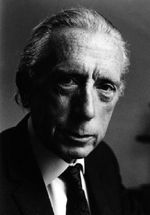
Bishop’s lightness of bearing cannot disguise a darkness of being. Gaiety barely disguises the resistant sadness — there is a peculiar infantilism in Bishop, and I fear that is what we love. Yet her warmth and reticence divide her from the confessional poets whose blared secrets she so disliked. She was a displaced person, physically and emotionally; her poems reveal that terrible rootlessness, even when rooted in Nova Scotia, or Florida, or Brazil (she joked that she moved “coastwise”). Even her first book was discreetly fashioned like an itinerary, from childhood in Nova Scotia through New York, Paris and Key West. Bishop worried that she had “wasted half one’s talent through timidity” and feared that her poems were “precious”; yet her luxuriant vision is tempered and restrained by the anxieties beneath. Her weaker ­poems ramble prosaically, offering only a scatty attention to the world; and perhaps one day readers will find her portraits of Brazilians affectionate but condescending — drawn to the quaint and naïve, she was all too privileged an outsider. This poet of travel and dream, of lost childhood, of angular moral vision (and a gloomy soul) lived in a 20th century still at times lost in the 19th — indeed, the untouched jungle of the Brazilian poems sometimes harks back to the Americas newly discovered.

more from William Logan at the New York Times here.
life…

Chiasson_1-031011_jpg_470x432_q85

Keith Richards ended up calling his memoir Life, not, as had been planned, My Life, the more conventional choice. Almost any memoir ever written could be called My Life. It’s what Bill Clinton called his own memoir. For Clinton it was a defensive, even a defiant, title, but then, memoirs are defensive by nature. To exist, they must justify their existence. Uniqueness—the “my” in “my life”—is an important condition: without it none but the first-ever memoir would have to exist. And the suspicion of insufficient uniqueness is one great nullifier of memoir: this is the problem when memoir subgenres (abuse memoirs, addiction memoirs, conversion memoirs, travel memoirs) promise to convey shock or pathos or virtue, but get their ingredients from a cake mix. The recent crop of purloined, plagiarized, and manufactured memoirs—James Frey’s A Million Little Pieces, for example—unsettled readers not because some sacred line dividing fact and fiction had been crossed, but instead, I think, because they suggested we might actually be running out of interesting lives. Aspiring memoirists may just have to start writing fiction: though there the competition to make something new and good is, if anything, even more keen. The temptation for most memoirists is to beef up, at times even to make up, life; for Richards, who has lived one of the most eventful and excessive lives ever, the point is to tamp it down. His is an odd book for many reasons, among them its refusal to impute any meaning to the structure of experience, beyond its basic contingency. The book tells no “story,” presents no overwrought “themes,” proposes no shape to life beyond the amorphous ooze of passing time. Thus the hilariously nonchalant title, which, shorn of the expected first-person possessive, would suggest that Richards’s life is more or less the one we all experience.

more from Dan Chiasson at the NYRB here.

molotov cocktail

Molotov-bio

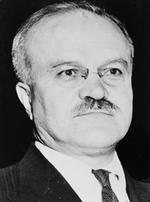
To say that Rachel Polonsky is a lifelong Russophile probably still understates the level of her engagement with the country that has so captured her imagination, heart and soul. This British journalist has written about its culture and experienced its realities, first when it was synonymous with the Soviet behemoth and then in the two decades of its more recent transformation. But exactly what has it become in that extraordinary metamorphosis? Foreign observers and analysts of Russia have come away perplexed by its unique nature and the difficulty of governing it. For Polonsky, who moves to Moscow, Russia is one giant echo chamber of historical and cultural resonances, every corner filled with the ghosts of past glories and terrors. Having thought, studied and written about great literary figures including Tolstoy, Dostoevsky and Chekhov, she is so steeped in their essence that they serve as guides and even more as templates for her as she breathes in the atmosphere of Russia today. But the important dissident writers of the Soviet era — Mandelstam, Pasternak and Akhmatova — are also very much with Polonsky. So when fate places her in an apartment block once reserved for the Communist elite, with access to no less a treasure trove than the actual library of Stalin’s henchman Vyacheslav Molotov, it is a gift from the gods.

more from Martin Rubin at the LA Times here.

A Surgical Assistant with Hands Blessed by God: Vivien Thomas

This article is posted in honor of Black History Month:

From ScienceHeroes:

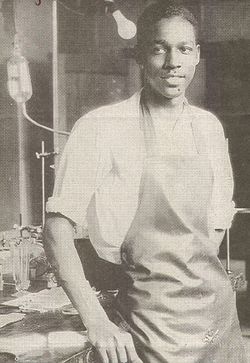
Thomas_vivien_prob_pd The bank crash of 1930 wiped out a young man's entire savings, destroying his dream of going to medical school. But, this didn't stop him from going on to revolutionize the medical profession. That man was Vivien Thomas, an aspiring physician. His lack of funds forced him to drop out of college and, with work hard to come by amidst the Great Depression, he took a job sweeping floors at Vanderbilt University. There, Dr. Alfred Blalock took notice of this African American janitor and realized he had great potential to be so much more. Blalock hired Thomas as his surgical assistant. This began a decades-long association, during which the pair became a creative and formidable force in the new “golden age” of heart surgery.

Thomas was a quick study, with particularly skilful hands. He worked diligently and learned to perform surgical operations, chemical reaction procedures and data analysis with precision. His quiet dedication to Blalock and the experiments was invaluable. When Blalock moved to Johns Hopkins in 1941, he asked Thomas to accompany him. Thomas joined Blalock's surgical team and helped to develop the “Blue Baby” operation, also known as the Blalock-Taussig shunt. Blue Baby (Tetralogy of Fallot) is a congenital defect involving multiple abnormalities of the heart. The condition causes blood to be diverted past the lungs, resulting in a lack of vital oxygen being transported throughout the body. It's this oxygen deprivation that causes the infant's bluish color (cyanosis) and gives the syndrome its name. Before Thomas and Blalock developed the Blue Baby operation, 25 percent of babies born with this condition died before their first birthday-by the age of ten, 70 percent would die. The procedure to correct Blue Baby was painstakingly worked out by Thomas over a two-year period. Ultimately, he joined an artery leaving the heart to an artery leading back to the lungs. This gave the blood a second opportunity to absorb the critical oxygen and transport it throughout the body. Delicate instruments were needed to perform the corrective heart surgery on their tiny newborn patients. Since no such instruments then existed, Thomas designed and built them himself.

More here. (Note: Thanks to Ms. Vasiliki Korikis who sent me this beautiful story)

Wise Guy

From New York Times:

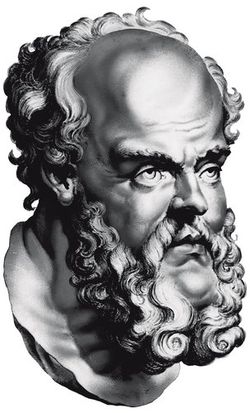
Socretes The problem with writing a biography of Socrates, as Bettany Hughes merrily admits, is that he’s a “doughnut subject”: a rich and tasty topic with a big hole right in the middle where the main character should be. Despite his fame and his insistence on an examined life, Socrates never wrote anything, and our knowledge of him comes mainly from three contemporaries — his devoted pupils Plato and Xenophon, and the parodist Aristophanes — each of whom had his own agenda. He produced no great answers, only great questions, and the most enduring image we have of his life is his leaving of it, as the title of this book suggests.

How do we examine the life of the man who told us that the unexamined life was not worth living? Hughes, a British television host and popular historian known for her book on Helen of Troy, does it by concentrating on the shape of the doughnut around the hole. She outlines Socrates mainly by describing the sights, sounds, mores and facts that surrounded him. For the most part, Hughes is successful, and even when not, she’s fascinating. What we get in “The Hemlock Cup” is many books interlaced: a biography of Socrates; a gritty description of daily life in Athens; a vivid history of the Peloponnesian War and its aftereffects; and — as an unexpected delight — a guide to museums, archaeological digs and repositories of ancient artifacts, as Hughes takes us by the hand while ferreting out her evidence. At one point we travel with her to the rear of the Ashmolean Museum in Oxford, England, to study a scrap of papyrus — Fragment 4807 — in the Sackler Library. It contains some lines, apparently by Sophocles, casting light on what life may have been like during the Peloponnesian War.

More here.

Saturday Poem

The Onion

the onion, now that's something else
its innards don't exist
nothing but pure onionhood
fills this devout onionist
oniony on the inside
onionesque it appears
it follows its own daimonion
without our human tears

our skin is just a coverup
for the land where none dare to go
an internal inferno
the anathema of anatomy
in an onion there's only onion
from its top to it's toe
onionymous monomania
unanimous omninudity

at peace, at peace
internally at rest
inside it, there's a smaller one
of undiminished worth
the second holds a third one
the third contains a fourth
a centripetal fugue
polypony compressed

nature's rotundest tummy
its greatest success story
the onion drapes itself in it's
own aureoles of glory
we hold veins, nerves, and fat
secretions' secret sections
not for us such idiotic
onionoid perfections

by Wistawa Szymborska
from Wistawa Szymborska New and Selected Poems
publisher: Harcourt, Inc. 1998
translation Stanislaw Baranczak and Clare Cavanagh

Read more »

We can run the entire world on wind, water and solar power by 2050

James Hrynyshyn in Class M:

Wind_power Sure wind power contributes only fraction of what coal does to the U.S. electrical grid, but it turns out it's already competitive with natural gas in some markets. Yes solar photovoltaics are expensive, but costs are falling fast (as opposed to nuclear power) and it's only a matter of five or 10 years at current rates before even PV arrays make economic sense for select consumers.

Finally, we're getting some honest assessments. First up is a pair of papers in the journal Energy Policy by Stanford's Mark Z. Jacobson and UC Davis' Mark A. Delucchi collected under the common title of “Providing all global energy with wind, water, and solar power.” Part 1 deals with the physical issues and Part 2 the economics. The conclusion of their exhaustive research is that is it entirely possible to run the entire world on wind, water (hydro-electricity) and solar power (both PV and concentrated thermal) by 2050. And they aren't restricting themselves to the electrical grid. This includes replacing all fossil fuels with batteries and fuel cells:

Such a WWS infrastructure reduces world power demand by 30% and requires only 0.41% and 0.59% more of the world's land for footprint and spacing, respectively. We suggest producing all new energy with WWS by 2030 and replacing the pre-existing energy by 2050. Barriers to the plan are primarily social and political, not technological or economic. The energy cost in a WWS world should be similar to that today.

How will we build it? Well, the numbers at first look daunting.

We estimate that ~3,800,000 5-MW wind turbines, ~49,000 300-MW concentrated solar plants, ~40,000 300-MW solar PV power plants, ~1.7 billion 3-kW rooftop PV systems, ~5350 100 MW geothermal power plants, ~270 new 1300-MW hydroelectric power plants, ~720,000 0.75-MW wave devices, and ~490,000 1-MW tidal turbines can power a 2030 WWS world that uses electricity and electrolytic hydrogen for all purposes.

But given how rapidly a modern industrial nation can build things like tanks and airplanes — as the American experience during the Second World War proves — the author's argument that we DO have the technology is pretty convincing.

More here.

Arab Uprisings: What the February 20 Protests Tell Us About Morocco

Laila Lalami in The Nation:

ScreenHunter_05 Feb. 19 09.46 When King Mohammed rose to the throne in July 1999, he had relatively little to do in order to fill a huge reservoir of goodwill. His father, King Hassan, had left the nation with an appalling human rights record, which included extralegal detentions, torture and censorship; a high level of corruption in virtually all state institutions; a literacy rate that hovered below 50 percent, one of the lowest in the Arab world; a territorial conflict with the Polisario Front; and tense relations with Algeria. Upon the death of the monarch who had ruled Morocco for thirty-eight years, most commentators used some form of the expression “end of an era.”

In his first official speech as head of state, King Mohammed outlined his plans for the country: constitutional monarchy, multiparty system, economic liberalism, regionalism and decentralization, building the rule of law, safeguarding human rights and individual and collective liberties, and security and stability for all. He defined his role as one of arbiter—one who does not side with any parties—as well as architect—giving general orientations and advice. He renewed his father’s commitment to alternance, a system that had allowed leftist parties, after nearly thirty years in the opposition, to finally hold cabinet positions and influence policy. The speech gave a lot of Moroccans great hope that their country would emulate Spain, their neighbor across the Mediterranean, and transition toward a democracy.

More here.

Friday, February 18, 2011

Without Mubarak, U.S. Struggles to Shield Israel from Diplomatic Pressure

Tony Karon in Time:

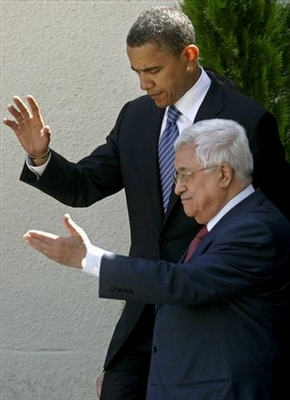
Obamaabbas A few weeks ago, the U.S. had a reliable ally in Cairo when it came to strong-arming President Mahmoud Abbas to jump through diplomatic hoops against his better judgement. Time and again it had been Mubarak that provided the pressure and then, ostensibly, the political cover — as well as the mandate he was unable to get from his own people — for Abbas to participate in various rounds of photo-opportunity diplomacy with the Israelis in order to help the Obama Administration sustain the impression that it was making progress toward a two-state solution to the Middle East's most enduring crisis. But Hosni Mubarak's era ended decisively a week ago when he was turfed out of office by a citizenry no longer willing to tolerate a leader more attentive to the geopolitical demands of his foreign patrons than to the needs of his own people. And the new demand for sovereignty, accountability and dignity firing up the Arab world bodes ill for Washington's ability to corral Arab backing for its approach to the Israeli-Palestinian conflict.

More here.

the welsh chekhov

21_1-td

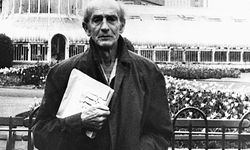
When I was young my father owned a factory in Tonypandy, a town in the Rhondda Valley of South Wales. He always disparaged the character of the Welsh, for whom I therefore conceived an affection that has remained with me ever since. You may be said truly to like a people when you are aware of their imperfections and are fond of them still. If one can be a patriot of a country not one’s own, I am a Welsh patriot. My memories of Tonypandy are hazy, for I was younger than ten when my father took me there. In those days, coal mining, not the administration of unemployment and its attendant social problems, was the Rhondda Valley’s major industry. Our civilization at the time was founded, as George Orwell once remarked, on coal, without which we would have lived in unlit and unheated houses. The miners were like Atlases; upon their shoulders a whole world rested. My visual recollection of Tonypandy is monochromatic—of everything begrimed with coal dust; of the slate roofs of tiny terraced houses dull in the perpetual, dirty rain; of black slag heaps lowering over the town. Whether this is a true memory or a reconstruction based on what I subsequently learned, I could not swear in a court of law. Half a century later, while scouring the secondhand bookshops during a sojourn in Wales, I discovered a writer who came from Tonypandy: Rhys Davies, who published 20 novels and about 160 short stories before he died in 1978. Some critics of his day esteemed him highly, calling him the Welsh Chekhov.

more from Theodore Dalrymple at City Journal here.

The Words That Maketh Murder

Pjharvey110221_250

It seems rare that an album would inspire the listener to spend time, during the less compelling tracks, idly Googling contextual information about World War I trench warfare and the 1915 Gallipoli campaign, in which thousands upon thousands of men died over a months-long, epically failed invasion of a few square miles of Ottoman peninsula. Rare outside of heavy-metal albums, anyway. But here you have it: Polly Jean Harvey’s latest LP does precisely that, and I fully intend to bore someone, sometime, with every last grim thing I just learned about death, dysentery, great black clouds of flies that never let you sleep, and soldiers breaking their teeth on old biscuits. Try and track down how such an album came to be, and it begins to look like Harvey—an alternately primal and poetic British songwriter—might have spent a few months thinking about the same things as Britain’s actual poet laureate, Carol Ann Duffy. In the spring of 2009, Duffy gave the public a poem called “Last Post,” commemorating the deaths of the nation’s last few surviving World War I veterans, which borrows a few well-known lines from the soldier-poet Wilfred Owen. Around the same time, on the back half of an album she’d made with longtime collaborator John Parish, Harvey was singing about being a soldier, then echoing a line of World War II poetry from W. H. Auden. (“We must love one another or die,” he wrote—though she sings, ominously, “or accept the consequences.”) Duffy went on to ask her peers for more poetry about modern war, in Iraq and Afghanistan. Harvey went on to wonder why, if there could be more than a century’s worth of “war poets,” there mightn’t be a war songwriter.

more from Nitsuh Abebe at New York Magazine here.

The Kinsey Collection: WHERE ART AND HISTORY INTERSECT

This article is posted in honor of Black History Month:

From NMAAHC:

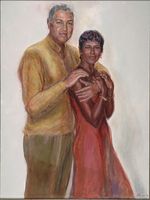
Portrait-by-Artis-Lane_medium Throughout their over 40-year marriage, collectors Bernard and Shirley Kinsey have celebrated their heritage by seeking unusual souvenirs. From an early version of the Emancipation Proclamation to correspondence between Malcolm X and Alex Haley, the couple has amassed a trove of rare artifacts and artwork that spans four centuries and embodies the hardships and triumphs of the African American experience. Originally housed in a wine cellar in the Kinseys' Los Angeles home, items from their private collection form The Kinsey Collection — a new exhibition organized by the National Museum of African American History and Culture.

Drinkingfountainsign_medium During the period of legal segregation (roughly the mid-1890s to the 1960s) signs like this were common in public spaces throughout the South. The signs were meant to demean compliant black citizens and to threaten the rebellious. Inferior facilities for African Americans, such as restrooms and restaurants, were a daily humiliation and a constant reminder of inequality.

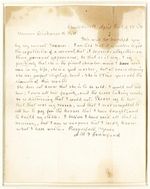
Fate-In-Her-Hands_web2_medium A Slave Carrying Her Fate in Her Hands, 1854
A.M.F. Crawford
Ink on paper, 19 ¾ X 12 ½ inches

When 17-year-old Frances carried this letter from her owner, she was unaware that it describes her valuable skills — “she is the finest chamber-maid [sic] I have ever seen in my life” — and offers her for sale. Although Crawford's letter acknowledges the inevitable heart-wrenching separation of Frances from her family, the slaveholder's only concern is for a profitable sale, without a “distressing leave-taking.” As indicated, the proceeds will pay for a new stable.

More here. (Note: Do take a moment to read this chilling letter by clicking on it. Maybe I am so upset because I have a 17 year old daughter…)

Reading is overrated

From The Guardian:

FR-Leavis-007 Take this, for example. Maxim Gorky once claimed that “everything which is good in me should be credited to books”. You find this quoted a lot, as if it carried some generalisable weight. Yet I don't believe it can be true, quite, even of Maxim Gorky, who led an intermittently miserable life. It's a blind and callous thing to say. What about the influences of his family (particularly his grandmother), or his many friends? Nothing good whatsoever emanated from them? If I were his father I'd give him such a slap. You good-for-nothing thankless Gorky you, you book-ridden ingrate, you louse… But, of course, one recognises this sort of overstatement. You have to feel passionately about a subject to talk this foolishly about it. An astonishing number of “lovers” of books and of reading frequently say similarly questionable things, at least if you quote them out of context – which is what people tend to do. I'm doing it too.

Let's take the following, by way of almost random example, from Charles Kingsley: “Except a living man, there is nothing more wonderful than a book.” Gosh. Any living man? Any book? Nothing else can compete? Flowers? Sunsets? Palladian villas? Pastrami sandwiches with extra pickles? Rubbish. One remembers Norman Mailer's definition of a “conservative” as one who, given a choice between saving the life of a man and that of a tree, will ask to view the tree and to meet the man before making his decision. You have to look at what is in front of your nose, after all. It's not too much to ask.

More here.

Friday Poem

Cairo

You burst into a
million seeds,
poured over the hot
stove of rancour,
Cairo.

When the walls no longer
withstood your curses,
you awakened the streets
with your boots,
Cairo.

Your cries brought the
sky down at Tahrir Square,
the Pharaoh shook
in his dreams,
Cairo.

With you the square
was a fortress of the heart,
engraved in
rebellion’s calligraphy,
Cairo.

When bulls of the regime
let loose their armoury,
you defended your future
with stones,
Cairo.

Your battered men did not
flee the field of honour,
they stood up to
your name,
Cairo.

by Manash Bhattacharjee
from The London Magazine
Feb-March, 2011

God and Gossip

Damon Linker in The New Republic:

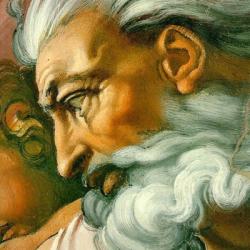
Michelangelo-god Who will save science from the scientists? I often ponder that question when I peruse the writings of evolutionary psychologists—and did so once again as I read Jesse Bering’s new book, which is at once marvelously informative and endlessly infuriating.

Bering wants to spread the word that belief in a personal God—along with concomitant ideas about the existence of purpose, providence, an afterlife, and a cosmic support for justice—is an “adaptive illusion.” His originality lies not in his confident insistence that such beliefs are groundless—a view that has been defended over and over again in recent years in a series of bestselling books—but rather in the first half of his claim; he contends that theological beliefs serve a crucial evolutionary function. The bulk of his book is devoted to establishing this point, drawing on a wide range of findings in the cognitive sciences to back it up.

Bering, who serves as the director of the Institute of Cognition and Culture at the Queen’s University in Belfast, does an excellent job of elucidating these findings. (He is the author or co-author of several of the studies he cites.) As he patiently and absorbingly explains, experiment after experiment has shown that human beings are cognitively predisposed, often from early childhood, to detect signs of order, purpose, and justice in the world. We find it nearly impossible to conceive of our own annihilation, which easily leads to thoughts about the immortality of the soul.

More here.

Brain Imaging: A Beautiful Mind

W11_Portraits_of_the_mind_p172_a_h

James Panero in Proto:

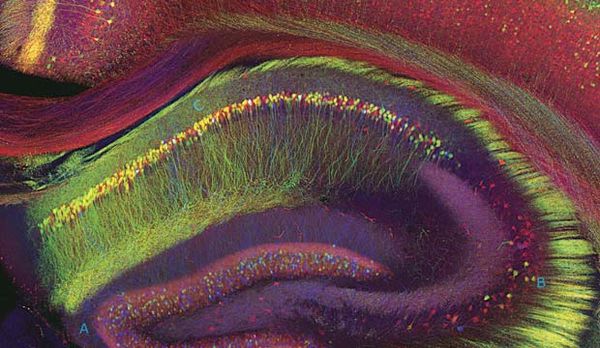
It was the hippocampus as no one had ever seen it, illuminated in radiant hues. The image is called, aptly, a Brainbow, the colors serving a scientific purpose by highlighting specific neural structures. Yet their choice also reflects an artistic bent; scientists display the brain not the way it is (an undifferentiated gray) but the way we want to see it, “painted” with bursts of fluorescent color.

This image, created in 2005, is one of many that Carl Schoon­over, a doctoral candidate in neurobiology and behavior at Columbia University, has collected in his recent Portraits of the Mind: Visualizing the Brain From Antiquity to the 21st Century (Abrams). As science has probed the brain’s structure and function, scientists have had to rely on art to translate their discoveries to visual form.

Leonardo da Vinci created a notable example around 1500, borrowing the techniques of statue casting to inject wax into the ventricles of a freshly killed ox. After the wax cooled, he carved the brain away to create an impression of the cavity, then sketched this casting of the void, rendering it from multiple angles.

The arrival of powerful optics during the mid-nineteenth century enabled scientists to penetrate the brain’s microscopic dimensions. Soon another Italian, Camillo Golgi, inaugurated modern neuroscience by successfully staining individual neurons. In his 1875 drawing of a dog’s olfactory bulb, Golgi records his observations while also somewhat imagining the process of smell, with bulbs in the shape of root vegetables penetrating a layer of neural connections, depicted in fanciful wavy lines.

More here.

Ken Jennings on what it’s like to play against Watson

Ken Jennings in Slate:

ScreenHunter_04 Feb. 18 11.01 Indeed, playing against Watson turned out to be a lot like any other Jeopardy! game, though out of the corner of my eye I could see that the middle player had a plasma screen for a face. Watson has lots in common with a top-ranked human Jeopardy! player: It's very smart, very fast, speaks in an uneven monotone, and has never known the touch of a woman. But unlike us, Watson cannot be intimidated. It never gets cocky or discouraged. It plays its game coldly, implacably, always offering a perfectly timed buzz when it's confident about an answer. Jeopardy! devotees know that buzzer skill is crucial—games between humans are more often won by the fastest thumb than the fastest brain. This advantage is only magnified when one of the “thumbs” is an electromagnetic solenoid trigged by a microsecond-precise jolt of current. I knew it would take some lucky breaks to keep up with the computer, since it couldn't be beaten on speed.

More here.

Thursday, February 17, 2011

Birtherism: Shibboleth or True-Belief?

There's an interesting exchange between John Quiggin over at Crooked Timber and Jonathan Chait at the TNR. Quiggin:

Agnotology is not, primarily, the study of ignorance in the ordinary sense of the term. So, for example, someone who shares the beliefs of their community, unaware that those beliefs might be subject to challenge, might be ignorant as a result of their cultural situation, but they are not subject to culturally-induced ignorance in the agnotological sense.

But this kind of ignorance is not at issue in the case of birtherism. Even in communities where birtherism is universal (or at least where any dissent is kept quiet), it must be obvious that not everyone in the US thinks that the elected president was born oautside the US and therefore ineligible for office.

Rather, birtherism is a shibboleth, that is, an affirmation that marks the speaker as a member of their community or tribe. (The original shibboleth was a password chosen by the Gileadites because their Ephraimite enemies could not say “Sh”.) Asserting a belief that would be too absurd to countenance for anyone outside a given tribal/ideological group makes for a good political shibboleth.

Chait:

I do agree with Quiggin that some conservatives who espouse the belief that Obama is a Muslim or a non-citizen don't quite literally believe this. They believe it and don't believe it at the same time — they believe it is the kind of thing Obama would do, whether or not he's actually done it. Quiggin argues that some form of this belief/non-belief can be found in partisans of both parties, and I agree.

But I do think the concept of agnotology applies here. Quiggin's argument hinges on the fact that conservatives understand that some people do not believe President Obama was born outside the United States (or is a Muslim, or…) But what those conservatives believe is that they enjoy access to truth that is denied Americans who are brainwashed by the mainstream media. The believe that Fox News is not just a network that counteracts the biased liberal media, or even a network that reports the stories that the liberal media ignore, but the vehicle for Truth…