Uganda Walks to Work

Robert P. Baird in n + 1:

ScreenHunter_05 May. 10 13.33 On the day of the royal wedding in Britain, my wife emailed from the other side of Kampala. “At least if I’m stuck at the hospital, I get to stream the royal wedding! Totally surreal to watch this with periodic bullets and tear-gas canisters in the background.” Needless to say, this was not the kind of thing you want to hear from your spouse: it’s always a shock to discover you’re sleeping with a royalist.

The bullets and tear gas were worrying as well. They were the most visible manifestation of the Ugandan government’s crackdown on a series of “walk to work” protests that have taken place twice a week for three weeks now. The demonstrations began as a complaint against a government quick to spend millions on Russian fighter jets and presidential inaugurations but seemingly unconcerned with a 30 percent annual increase in food prices and a headline inflation rate of 14 percent. Demonstrators have joined the millions of Ugandans for whom walking to work is a matter of economic necessity, abstaining from cars, shared taxis, and the motorcycle taxis known as boda-bodas.

The pattern of protest and crackdown settled into a rhythm early on. On Monday and Thursday mornings, Ugandans—opposition politicians, students, and regular citizens—would walk from their homes, and the police—regular, plainclothes, and military—would do their best to stop them.

More here.

The future of old

From The Boston Globe:

Thefutureofold2__1304707488_3139-1 When these experts look ahead, they see a population of people who are less vulnerable to isolation, less likely to be bored, and more adept at using technologies to stay healthy and compensate for various ways in which life has become more difficult. They also see a population less inclined to leave the workforce — or less able to leave it — for a life of pure leisure: “Retirement” in today’s sense is likely to shrivel and be pushed later into life. We’re looking at people living 30 to 40 years longer than they did 100 years ago,” said Joseph Coughlin, director of the MIT AgeLab. “More of your adult life will be lived after the age of 50 than before age 50. The question is, what’re you going to do with it?”

There are still unknowns, such as how and whether America will keep funding the health care system the old now count on, or whether the prevalence of dementia will continue to grow or be vanquished by medicine. And skeptics warn against fantasies of Peter Pan-style agelessness: There is no escaping that age changes how you move and how you think. But among the most resonant — and least obvious — points that aging experts make is that old age, though a constant throughout human history, does not refer to some static set of habits, joys, and frustrations. Rather, it is an evolving condition that is continuously defined, and redefined, with every generation that experiences it.

More here.

Life and the Cosmos, Word by Painstaking Word

From The New York Times:

Hawkingillo-sfSpan Like Einstein, he is as famous for his story as for his science. At the age of 21, the British physicist Stephen Hawking was found to have amyotrophic lateral sclerosis, Lou Gehrig’s disease. While A.L.S. is usually fatal within five years, Dr. Hawking lived on and flourished, producing some of the most important cosmological research of his time.

In the 1960s, with Sir Roger Penrose, he used mathematics to explicate the properties of black holes. In 1973, he applied Einstein’s general theory of relativity to the principles of quantum mechanics. And he showed that black holes were not completely black but could leak radiation and eventually explode and disappear, a finding that is still reverberating through physics and cosmology. Dr. Hawking, in 1988, tried to explain what he knew about the boundaries of the universe to the lay public in “A Brief History of Time: From Big Bang to Black Holes.” The book sold more than 10 million copies and was on best-seller lists for more than two years. Today, at 69, Dr. Hawking is one of the longest-living survivors of A.L.S., and perhaps the most inspirational. Mostly paralyzed, he can speak only through a computerized voice simulator.

More here.

Tuesday Poem

Possibilities

I prefer movies.
I prefer cats.
I prefer the oaks along the river.
I prefer Dickens to Dostoyevsky.
I prefer myself liking people
to myself loving mankind.
I prefer keeping a needle and thread on hand, just in case.
I prefer the color green.
I prefer not to maintain
that reason is to blame for everything.
I prefer exceptions.
I prefer to leave early.
I prefer talking to doctors about something else.
I prefer the old fine-lined illustrations.
I prefer the absurdity of writing poems
to the absurdity of not writing poems.
I prefer, where love's concerned, nonspecific anniversaries
that can be celebrated every day.
I prefer moralists
who promise me nothing.
I prefer cunning kindness to the over-trustful kind.
I prefer the earth in civvies.
I prefer conquered to conquering countries.
I prefer having some reservations.
I prefer the hell of chaos to the hell of order.
I prefer Grimms' fairy tales to the newspapers' front pages.
I prefer leaves without flowers to flowers without leaves.
I prefer dogs with uncropped tails.
I prefer light eyes, since mine are dark.
I prefer desk drawers.
I prefer many things that I haven't mentioned here
to many things I've also left unsaid.
I prefer zeroes on the loose
to those lined up behind a cipher.
I prefer the time of insects to the time of stars.
I prefer to knock on wood.
I prefer not to ask how much longer and when.
I prefer keeping in mind even the possibility
that existence has its own reason for being.

by Wislawa Szymborska
from Nothing Twice
translation by S. Baranczak & C. Cavanagh

Monday, May 9, 2011

perceptions

Soft-rockers-Sheila Kennedy
Sheila Kennedy. Soft Rocker. 2011

” … a set of solar-powered lounge chairs called SOFT Rockers. These curved, solar-panel-covered seats rotate on an axis to keep them facing the sun, generating additional energy from the rocking motion created when people climb inside. All that harvested electricity can be used to recharge gadgets plugged into the three USB ports and to illuminate a light strip on the inside of the loop.”

During MIT's 150th anniversary celebrations, new art and design projects are scattered over the campus. May 7-8th were devoted to FAST – Festival of Arts Science and Technology.

More here, here, and here.

Sunday, May 8, 2011

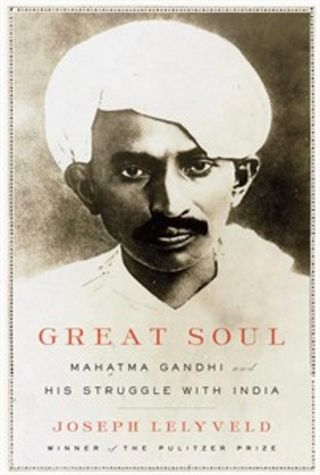
The Enigma of Mahatma Gandhi

9a9723334c51907c86aa7db19698.jpeg Sugata Bose in Harvard Magazine:

Gandhi led mass agitations against the British raj in roughly decennial cycles. Lelyveld mentions the civil disobedience movement launched in 1930 with the salt satyagraha (protesting the government’s tax on salt) as its centerpiece, but his narrative thread for the Depression decade is supplied by the debates on the caste issue between Gandhi and B.R. Ambedkar, a member of and spokesman for the “Depressed Classes.” Ambedkar, who stood for the destruction of the caste system, found Gandhi’s attitude toward the “untouchables”—Harijans, or children of God, as he dubbed them—a trifle patronizing. Lelyveld skillfully unravels the story of Gandhi’s fast in 1932 against separate electorates for the “Depressed Classes,” his anti-untouchability campaign of 1933, and his stunning characterization of the Bihar earthquake of 1934 as divine chastisement for the sin of untouchability. The unreason inherent in that statement elicited a rebuke from none other than Rabindranath Tagore, the poet who had granted Gandhi the “Great Soul” epithet.

Lelyveld’s analysis of Gandhi on caste and of the vexed Gandhi-Ambedkar relationship is brilliant. But his lack of interest in covering what he describes as “the political ins and outs of the movement” entails a loss and a missed opportunity to explore Gandhi’s ties with younger radicals like Jawaharlal Nehru and Subhas Chandra Bose. Gandhi was, after all, primarily the leader of India’s anti-colonial movement and had vigorous debates with these compatriots on the social and economic reconstruction of free India.

Lelyveld is right on the mark in suggesting that Gandhi was “never more elusive or complex” than in the final decade of his life, as he sought to balance his values with “the strategic needs of his movement.” The decision to call upon the British to “quit India” in August 1942 reveals, in Lelyveld’s words, “a flash of the fully possessed ‘do or die’ Gandhi, the fervent commander.” “Your president,” Gandhi had said to Louis Fischer, a young American journalist and future biographer, in June 1942, “talks about the Four Freedoms. Do they include the freedom to be free?”

Targeted Killing

Quads0305_JeremyWaldron Jeremy Waldron in the LRB blog:

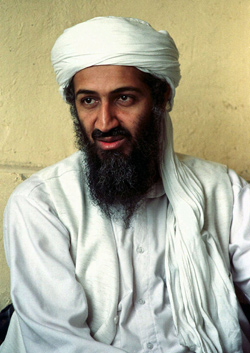
The killing of Osama bin Laden is an instance of a much more general policy pursued by the United States and its allies – the targeted killing of named individuals in the war against terrorism and against various insurgencies in Iraq and Afghanistan. In the midst of American celebration of the fact that al-Qaida has lost its charismatic leader, it is worth getting clear about targeted killing in general, i.e. about the legality and the desirability of a policy of this kind. Targeted killings are of two kinds. The first involves killing people who are actually engaged in carrying out terrorist acts – planting a bomb or preparing someone for a suicide bombing. The second involves the elimination of high-profile individuals whose names appear on a special list of active commanders and participants in terrorism or insurgency. These killings are part of a strategy of disruption and decapitation directed against terrorist organisations.

Killings of either kind can be problematic from a legal point of view (the more so if they involve the violation of another country’s sovereignty). But they may be lawful depending on the circumstances. What is certainly forbidden is targeted killing for the sake of justice or vengeance, both of which have been cited by American authorities as justifications in this case. Calling the killing of Osama bin Laden ‘justice’ summons up very primitive notions of retribution, utterly dislocated from the rule-of-law processes that the civilised world prides itself on. If justice in the strict sense had really been in question, an attempt would have to have been made to capture the man alive. Despite some initial equivocation, it is plain that no such attempt was contemplated.

I think the only possible justification for the shooting of bin Laden was as a legitimate act of war.

On Bin Laden’s Lingering Face

ID_IC_MEIS_BINLA_AP_001 Morgan Meis being characteristically wise, over at The Smart Set:

The most surprising thing about the death of Osama bin Laden was his funeral. Islamic law declares that a person must be buried within 24 hours of death. “We are ensuring that it is handled in accordance with Islamic practice and tradition,” Time reported a U.S. official as saying, “This is something that we take very seriously. And so therefore, this is being handled in an appropriate manner.”

Bin Laden was buried at sea, presumably so that there will be no burial site, no country that owns him, no place on Earth could be associated with him ever after. The sea gets him, being the only place capacious enough to take on the burden. There is dignity in having done it this way. Not dignity for him, but dignity for us. It is understandable that people want to celebrate the death of a man who scared us, who was the author of a traumatizing act of violence, who plotted the deaths of thousands and dreamed of the deaths of thousands upon thousands more. But I am not sure that celebrating death ever does anything very good for the one who celebrates.

I shuddered for the souls of the men at Saddam Hussein's execution. The footage is, now, widely available on the Internet. It was captured surreptitiously on a cell phone video camera. Saddam is brought into a dingy room in what looks like a basement. He is bustled toward a noose and begins praying. Some of the people standing below begin to shout. They are calling out, “Muqtada,” in reference to Muqtada al-Sadr, the Shia religious and political leader. Saddam says the name Muqtada back to them and then asks, “Do you call this courage?” Another person yells at Saddam to go to hell. He replies, “the hell that is Iraq?” Then he goes back to praying. All of a sudden, the trap door beneath Saddam opens and he plummets. He is gone. It is impossible to watch that footage without feeling that Saddam stole his dignity back in those final moments. The people in the room gave Saddam the opportunity to do it. They gave him a moment to be the honorable one in death. It lessened those men, those witnesses. They became small in the face of the ultimate thing, the death of a human being.

The last few days have seen a lot of talk about whether or not it is appropriate to celebrate the killing of Osama bin Laden. I would phrase the question in a different way. What does it do to one human being to celebrate the killing of another human being, whatever the circumstances? What happens inside you, how does it make you feel? Is that something you want to feel? Is it a way you want to be?

Darwin meets the citizen scientists

Carl Zimmer in his excellent blog, The Loom:

ScreenHunter_04 May. 08 17.25 Charles Darwin was the original crowd-sourced scientist. He may have reputation as a recluse who hid away on his country estate, but he actually turned Down House into the headquarters for a massive letter-writing campaign that lasted for decades. In her magisterial biography of Darwin, Janet Browne observes that he sometimes wrote over 1500 letters in a single year. Darwin was gathering biological intelligence, amassing the data he would eventually marshall in his arguments for evolution. In the letters he wrote to naturalists around the world, Darwin asked for details about all manner of natural history, from the color of horses in Jamaica to the blush that shame brought to people’s cheeks.

Given the skill with which Darwin used the nineteenth-century postal system, I always wonder what he would have done with the Internet. A new paper offers a clue: he might have enlisted thousands of citizen scientists to observe evolutionary change happening across an entire continent.

Darwin used his Victorian crowd-sourcing to collect evidence that was consistent with his evolutionary theory; he didn’t expect that he could actually document evolutionary change happening in his own lifetime. Ironically, he probably could have. Gregor Mendel worked out the basic rules of genetics around the time Darwin published The Origin of Species. At the time, pollution from England’s coal was turning trees dark, giving an evolutionary edge to dark moths over light ones. A naturalist even wrote directly to Darwin in 1878 to raise the possibility that natural selection was driving the shift in moth color. But it wasn’t until 14 years after Darwin’s death that a naturalist explicity put this idea into print.

More here.

Child victim of Nazi medical experiments recounts horrors

Alvin Powell in the Harvard Gazette:

ScreenHunter_03 May. 08 16.54 The table slab was cold and hard beneath 6-year-old Irene Hizme as doctors and nurses took measurements and blood samples. She didn’t know what was happening to her, and by the time it was all over, she wouldn’t care. She was found lying nearly comatose on the ground by a woman who brought her home to begin her recovery.

Though it’s routine for children to be examined by physicians, that was hardly the case here. Her doctor was Josef Mengele, the infamous Nazi who conducted cruel experiments on inmates at the Auschwitz concentration camp during World War II.

Hizme, who survived both her imprisonment and Mengele’s experiments, told her story to a rapt audience at Harvard Medical School’s Joseph Martin Conference Center in the New Research Building on April 14. Hizme was participating in a program to kick off the opening of an exhibit at Harvard Medical School’s Countway Library of Medicine, “Deadly Medicine: Creating the Master Race.”

The exhibit, created by the U.S. Holocaust Memorial Museum in collaboration with a long list of institutional sponsors, addresses physicians’ roles in the evolution of what became the Holocaust through the early decades of the 1900s to the horror of its full execution during World War II.

More here.

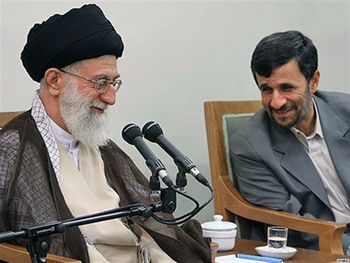
Supreme Leader Ali Khamene’i vs. President Mahmoud Ahmadinejad

Farhang Jahanpour writes in a guest column for Informed Comment:

AHMADINEJAD%20KHAMENEI The root of the current problem between Khamenei and Ahmadinejad lies in a struggle for power between the two. The open disagreement started over Ahmadinejad’s appointment of his close friend and his son’s father-in-law Esfandiar Rahim Masha’i to the post of first vice-president shortly after the start of his second presidential term.

During his time as the head of the Tourism Organization during Ahmadinejad’s first term as president, Masha’i had become the object of a great deal of controversy. He had been present at a cultural ceremony in Turkey in December 2005 at which women had performed a traditional dance, and he was strongly criticised for that. In 2008, Masha’i hosted a ceremony in Tehran in which several women played tambourines while another carried the Koran to a podium to recite verses from the Muslim holy book. Hard-liners viewed the festive mood as disrespectful to the Koran.

Masha’i faced even harsher criticism following his remarks about the Israeli people. Speaking at a conference on tourism in Tehran, he said: “No nation in the world is our enemy. Today, Iran is friends with the people of America and Israel and this is an honour.” His remarks created an outcry among conservatives who criticised such an unprecedented stance towards Israel. Masha’i rejected all criticism and said: “I am proud of what I said and I am not going to correct myself… I would like to announce for the thousandth time, and stronger than before, that we are friends with all peoples of the world, even the people of America and Israel.”

More here.

How to Beat High Airfares

Statistics wunderkind Nate Silver in the New York Times:

ScreenHunter_02 May. 08 16.35 It’s called “hidden-city ticketing,” but before I explain how to execute the maneuver, you’re going to need some background. Passengers flying to or from airports that are dominated by a single carrier — like Memphis, Newark or Dallas/Fort Worth — pay fares 20 or 30 percent higher than at non-hub airports. The prices are even more inflated when you’re flying from a smaller city with a limited number of flights. A nonstop one-way ticket from Des Moines to Dallas/Fort Worth is $375 on American Airlines, for example — more than the $335 Delta will charge you to fly from Miami to Anchorage.

But what happens when you’re interested in flying American from Des Moines to Los Angeles, which hosts a more competitive airport? That flight is only about half the price ($186), despite its being more than double the distance. Now, here’s the trick: American flights from Des Moines to L.A. have a layover in Dallas. If you want to travel to Dallas, the best way to get a reasonable fare is to book the flight to Los Angeles instead, and simply get off the plane at Dallas.

More here.

Sunday Poem

My Daughter's Body

If you saw her, you would think she was beautiful.
Strangers stop me on the street to say it.

If they talk to her they see that this beauty
Means nothing. Their sight shifts to pigeons

On the sidewalk. Their eye contact becomes
As poor as hers. They slip away slowly,

With varying degrees of grace. I never know
How much to say to explain the heartbreak.

Sometimes, I tell them. More often,
I remain silent. As her smile sears me, I hold

Her hand all the way home from the swings.
The florist hands her a dying rose and she holds it

Gently without ripping the petals like she does
To the tulips that stare at us with their insipid faces,

Pretending that they can hold my sorrow
In their outstretched cups because I knew them

Before I knew grief. They do not understand that
They are ruined for me now. I planted five hundred

Bulbs as she grew inside of me, her brain already
Formed by strands of our damaged DNA

Or something else the doctors don’t understand.
After her bath, she curls up on me for lullabies—

The only time during the day that her small body is still.
As I sing, I breathe in her shampooed hair and think

Of the skeletons in the Musée de Préhistoire
In Les Eyzies. The bones of the mother and baby

Lie in a glass case in the same position we are
In now. They were buried in that unusual pose,

Child curled up in the crook of the mother’s arm.
The archaeologists are puzzled by the position.

It doesn’t surprise me at all. It would be so easy
To die this way—both of us taking our last breaths

With nursery rhymes on our open lips
And the promise of peaceful sleep.

by Jennifer Franklin
from The Boston Review
Jan/Feb 2011


Mohamed ElBaradei, the Inspector

From The New York Times:

Elbaradei The Nobel laureate Mohamed ElBaradei has stated his intention to “nominate myself” to be president of Egypt, but this memoir will not improve his election prospects. In personal terms, it’s hard to imagine anything less thrilling to Egypt’s street revolutionaries than ElBaradei’s accounts of his meals (“The food was very basic, with few choices: noodles, meat and kimchi; no fruit or salad”) and accommodations (“a worn, drab-colored suite consisting of a bedroom and a salon”) in places like North Korea. Nor will his fellow Egyptians be much intrigued by the details of his battles against nuclear proliferators. At the moment, the protestors have other priorities. On the other hand, foreign policy leaders and wonks everywhere will find plenty in this memoir to stir debates about the most vital task for global survival — the need to stop the spread of nuclear weapons, especially to rogue states and terrorists.

That quest is ElBaradei’s story. For decades he was an intimate participant in dramatic nuclear proliferation confrontations that dominated headlines. He served as a senior official at the International Atomic Energy Agency, the United Nations nuclear watchdog and inspection arm, for 13 years (1984-97) before rising to its director-generalship in 1997. He resigned in 2009 after completing his third term and announced his interest in running against President Hosni Mubarak in the election scheduled for this year.

More here.

“Rejoice Not…”

Uri Avnery in Gush Shalom:

“REJOICE NOT when thine enemy falleth, and let not thine heart be glad when he stumbleth, / Lest the Lord see [it], and it displease him, and he turn away his wrath from him.”.

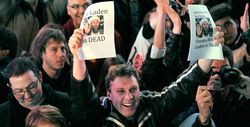
Osama-death-celebrations1 This is one of the most beautiful passages in the Bible (Proverbs 24:17-18), and indeed in the Hebrew language. It is beautiful in other languages , too, though no translation comes close to the beauty of the original. Of course, it is natural to be glad when one’s enemy is defeated, and the thirst for revenge is a human trait. But gloating – schadenfreude – is something different altogether. An ugly thing. Ancient Hebrew legend has it that God got very angry when the Children of Israel rejoiced as their Egyptian pursuers drowned in the Red Sea. “My creatures are drowning in the sea,” God admonished them, “And you are singing?” These thoughts crossed my mind when I saw the TV shots of jubilant crowds of young Americans shouting and dancing in the street. Natural, but unseemly. The contorted faces and the aggressive body language were no different from those of crowds in Sudan or Somalia. The ugly sides of human nature seem to be the same everywhere.

THE REJOICING may be premature. Most probably, al-Qaeda did not die with Osama bin-Laden. The effect may be entirely different. In 1942 the British killed Abraham Stern, whom they called a terrorist. Stern, whose nom de guerre was Ya’ir, was hiding in a cupboard in an apartment in Tel Aviv. In his case too, it was the movements of his courier that gave him away. After making sure that he was the right man, the British police officer in command shot him dead. That was not the end of his group – rather, a new beginning. It became the bane of British rule in Palestine. Known as the “Stern Gang” (its real name was “Fighters for the Freedom of Israel”), it carried out the most daring attacks on British installations and played a significant role in persuading the colonial power to leave the country. Hamas did not die when the Israeli air force killed Sheikh Ahmad Yassin, the paralyzed founder, ideologue and symbol of Hamas. As a martyr he was far more effective than as a living leader. His martyrdom attracted many new fighters to the cause. Killing a person does not kill an idea. The Christians even took the cross as their symbol.

More here. (Thanks to Professor C.M. Naim.)

Saturday, May 7, 2011

Of Parties in General

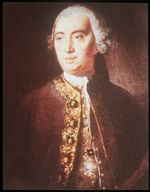
HumeDan Sperber has proposed to the readers of his blog that they (we) celebrate Hume’s birthday by posting sections from Hume that are of most relevance for culture and cognition. In these charged political times, I’m choosing one from Essays, Moral and Political (Vol. 1, 1741).

Of Parties in General

Real factions may be divided into those from interest, from principle, and from affection. Of all factions, the first are the most reasonable, and the most excusable. Where two orders of men, such as the nobles and people, have a distinct authority in a government, not very accurately balanced and modelled, they naturally follow a distinct interest; nor can we reasonably expect a different conduct, considering that degree of selfishness implanted in human nature. It requires great skill in a legislator to prevent such parties; and many philosophers are of opinion, that this secret, like the grand elixir, or perpetual motion, may amuse men in theory, but can never possibly be reduced to practice.[8] In despotic governments, indeed, factions often do not appear; but they are not the less real; or rather, they are more real and more pernicious, upon that very account. The distinct orders of men, nobles and people, soldiers and merchants, have all a distinct interest; but the more powerful oppresses the weaker with impunity, and without resistance; which begets a seeming tranquillity in such governments.

Read more »

fukuyama on hayek

FUKUYAMA-articleInline

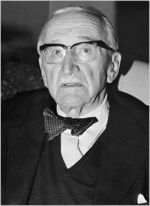
The publication of the definitive edition of Friedrich A. Hayek’s “Constitution of Liberty” coincides with the unexpected best-seller status of his earlier book “The Road to Serfdom” as a result of its promotion by the conservative talk-show host Glenn Beck. In an age when many on the right are worried that the Obama administration’s reform of health care is leading us toward socialism, Hayek’s warnings from the mid-20th century about society’s slide toward despotism, and his principled defense of a minimal state, have found strong political resonance. The new edition of “The Constitution of Liberty,” which was first published in 1960, differs from the original primarily insofar as the extensive endnotes in the original edition have now been placed at the bottom of the page and heavily annotated by the editor, Ronald Hamowy. The notes, often more extensive than the text itself, make clear the extraordinary breadth and depth of Hayek’s erudition, and his ability to wander far beyond economics into history, philosophy, biology and other fields. Unlike Beck, Hayek was a very serious thinker, and it would be too bad if the current association between the two led us to dismiss his thought.

more from Francis Fukuyama at the NYT here.