Is Growth Incomplete without Social Progress?

Ms1171_thumb3Ejaz Ghani in Project Syndicate:

The geography of poverty and social deprivation has changed dramatically over the last two decades. More than 70% of the world’s poor now live in middle-income countries. This pattern, likely to continue into the next decade, raises important questions. Have poverty reduction and human development kept up with income growth? Is growth incomplete without social progress and gender-inclusiveness?

Consider South Asia, where the poverty rate fell from 60% in 1981 to 40% in 2005 – not fast enough, given population growth, to reduce the total number of poor people. In fact, the number of poor people (defined as those living on less than $1.25 per capita per day at 2005 purchasing power parity) in South Asia increased from 549 million in 1981 to 595 million in 2005, and from 420 million to 455 million in India, where almost three-quarters of the region’s poor reside.

In other words, while South Asia’s economies have not underperformed on poverty reduction, merely matching global trends may not be enough for the region with the world’s largest concentration of poor people.

India has experienced slower income growth than has China, which partly explains its higher poverty rate. But a country’s poverty rate also depends on the degree of income inequality – a reduction in which makes growth more pro-poor – and inequality in China has, in fact, increased more rapidly than in India. So a rising tide really can lift all boats, with growth trumping inequality when it comes to poverty reduction.

Paul Russell on David Hume’s Treatise

Over at Philosophy Bites:

To celebrate David Hume's 300th Birthday we are releasing this bonus episode of the Philosophy Bites podcast. On the standard reading of Hume's Treatise, this important book reveals its author both as a sceptic and as someone wanting to contribute positive ideas about human nature. These two aspects of the book seem to be in tension. Paul Russell suggests a way of solving the riddle of the Treatise

Listen to Paul Russell on David Hume's Treatise

Are Talking Heads Blowing Hot Air?

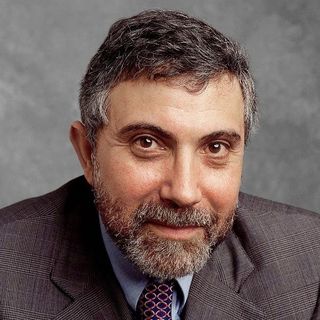
Paul_krugmanAn analysis of the accuracy of forecasts in the political media” by Holly Donaldson, Russ Doubelday, Scott Hefferman, Evan Klondar, and Kate Tummarello (via Krugman):

Abstract We evaluated the predictions of politicians, journalists, and pundits (collectively, “prognosticators”) over a 16-month period surrounding the 2008 United States federal elections. We sought to test the accuracy of these predictions and understand what makes individuals unusually good or bad at prognostication. We evaluated a random sample of Meet the Press, This Week, and Face the Nation transcripts and printed columns from the most prominent American prognosticators. Ultimately, we determined that some prognosticators are significantly better than others, and there are characteristics that significantly impact a prognosticator’s predictive power.

After finding which characteristics make an accurate prognosticator, we ranked prognosticators based on outcomes. We found that a number of individuals in our sample, including Paul Krugman, Maureen Dowd, Ed Rendell, Chuck Schumer, Nancy Pelosi, and Kathleen Parker were better than a coin flip (sometimes, substantially so.) A number of prognosticators were frequently inaccurate, including Cal Thomas, Lindsey Graham, and Carl Levin. Our paper explores the reasons for these differences and attempts to evaluate the purpose of prognosticators in the media in light of their varying degrees of accuracy.

From the conclusion:

Overall, our results indicate that most prognosticators are not very accurate predictors, but only two are worse than a coin flip (with statistical significance). Few offer reliably accurate predictions, but even fewer are wrong more than half of the time – most barely hover above the dreaded “ugly line.” This should be startling, considering the number of Americans who rely on these prognosticators for their supposedly superior knowledge of the political environment.

Given this sad reality, who should you listen to? Good predictors tend to be liberal and are not lawyers. More rigorous study can confirm our findings, especially the question of whether partisanship has an impact on an individual’s ability to make accurate predictions.

Bin Laden’s Dead, Let’s Party

MarcotteAmanda Marcotte makes an argument for not scolding the celebrations, in Slate's Double X:

understand the urge to silence and shame people for being ecstatic that we finally got Bin Laden. The fear that jubilation could turn into nationalism and then to bloodlust has real world evidence to back it up. But I would argue that liberals do ourselves no favors by shushing and shaming people's joy. There's another option that is both more humanistic and more productive in the long run: grappling with this celebratory mood and channeling it toward policy goals such as shutting down Gitmo and getting out of Afghanistan.

One reason the war on terror has dragged on and on with no end in sight is that Americans have been deprived of a victory, and politicians both Republican and Democrat are afraid of being seen as losers who backed out of a fight without obtaining that victory. Well, now we have it. And if you doubt that, we have the crowds of celebrants in the street to back it up. That is, after all, what victory looks like in the American imagination. We think of the end of WWII and we don't think about the bomb or Hitler in a bunker. We immediately think of a sailor kissing a strange woman on the street. We think of joy. Joy provides emotional closure, which we never got after 9/11 and the distraction in Iraq. Maybe this joy at Osama Bin Laden's death can provide that for us. And maybe then we can finally have politicians say that we won, and so we can finally shut down the illegal prisons, the ongoing war, and maybe even the ridiculous security theater at airports. But if we scold and silence the joy away, we'll never get a chance to find out.

Tuesday Poem

Alabanza: In Praise of Local 100

(for the 43 members of Hotel Employees and Restaurant Employees
Local 100 working at the Window on the World restaurant,
who lost their lives in the attack on the World Trade Center)

Alabanza.Praise the cook with a shaven head
and a tattoo on his shoulder that said Oye,
a blue-eyed Puerto Rican with people from Fajardo,
the harbor of pirates centuries ago.
Praise the lighthouse in Fajardo, candle
glimmering white to worship the dark saint of the sea.
Alabanza. Praise the cook’s yellow Pirates cap
worn in the name of Roberto Clemente, his plane
that flamed into the ocean loaded with cans for Nicaragua,
for all the mouths chewing the ash of earthquakes.
Alabanza. Praise the kitchen radio, dial clicked
even before the dial on the oven so that music and Spanish
rose before bread. Praise the bread. Alabanza.

Read more »

Pakistan: A Hard Country

Pankaj Mishra in Guardian:

A-Pakistani-displaced-wom-005 Pakistan, Anatol Lieven writes in his new book, is “divided, disorganised, economically backward, corrupt, violent, unjust, often savagely oppressive towards the poor and women, and home to extremely dangerous forms of extremism and terrorism”. It is easy to conclude, as many have, from this roll call of infirmities that Pakistan is basically Afghanistan or Somalia with nuclear weapons. Or is this a dangerously false perception, a product of wholly defective assumptions?

Certainly, an unblinkered vision of South Asia would feature a country whose fanatically ideological government in 1998 conducted nuclear tests, threatened its neighbour with all-out war and, four years later, presided over the massacre of 2,000 members of a religious minority. Long embattled against secessionist insurgencies on its western and eastern borders, the “flailing” state of this country now struggles to contain a militant movement in its heartland. It is also where thousands of women are killed every year for failing to bring sufficient dowry and nearly 200,000 farmers have committed suicide in the previous decade. Needless to say, the country described above is not Pakistan but India, which, long feared to be near collapse, has revamped its old western image through what the American writer David Rieff calls the most “successful national re-branding” and “cleverest PR campaign” by a political and business establishment since “Cool Britannia” in the 1990s. Pakistan, on the other hand, seems to have lost all control over its international narrative.

More here.

Tugging at Threads to Unspool Stories of Torture

From The New York Times:

Torture2-popup AMMAN, Jordan — The first time the Iraqi Army arrested him, he said, soldiers burst into his shop in Baghdad, dragged him out in handcuffs and a blindfold, and took him to a filthy, overcrowded prison. Beatings, rape, hunger and disease were rampant, and he expected at any moment to be killed. He was held for four months, until December 2008.

During an interview here, the shopkeeper, 35, a balding, stocky man wearing a T-shirt and slacks, was calm and soft-spoken at first, but grew increasingly loud and agitated as he told his story. He described enduring episodes of torture, threats by captors to go to his house and rape his wife, and daily horrors like the suicide of a young prisoner who electrocuted himself with wires from a hot plate after being raped by soldiers. He spoke through an interpreter, and asked to be identified by only his first initial, M., because his relatives were still in Iraq and he feared for their safety. After speaking for an hour, he shook his head and said softly: “What happened is not like what I just said. What happened was much worse.”

More here.

Monday, May 2, 2011

Sunday, May 1, 2011

In Memoriam: the X-Phi Debate

Death2001 Tamler Sommers in The Philosopher's Magazine:

About a year ago I was asked to write an accessible magazine article about experimental philosophy. The piece, as I conceived it, would begin along these (somewhat histrionic) lines:

The controversial new movement called experimental philosophy – “X-phi” as it has come to be known – has generated both excitement and hostility in the philosophical community. Questions abound: Is experimental philosophy the wave of the future or just a passing fad? Can probing for the intuitions of the “folk” tell us anything about philosophical truth? Are philosophers qualified to conduct empirical studies, or should this be left to the psychologists?

And so forth. But I couldn’t do it. I could not get myself to write an essay about the general debate over experimental philosophy. At the time, I had no idea why it was so difficult, but I think I do now. Debates are interesting when there is more than one reasonable position to hold. A debate about whether a particular instance of hate speech should be protected by federal law might be interesting. A debate about the value of freedom of expression laws in general is not. On the question of the general value or viability of experimental philosophy, there is only one reasonable position. This makes it an exceptionally boring debate, and who wants to write about that?

That said, many smart people perceive the disagreement on this issue to be legitimate. Experimental philosophy has received a great deal of attention in scholarly journals and the popular media. Often the topic of these articles is precisely what I claim is a non-issue – the value of experimental philosophy as a movement. And here I am writing about this same topic yet again. But I am not going to provide another argument for an obvious position. Instead, I’m writing this as an obituary – an obituary for the so-called controversy about experimental philosophy, and an attempt to diagnose how it lived as long as it did.

Actually, I might be a little late to the game. The recent installment on experimental philosophy in the New York Times blog forum “Room for Debate” (August 19, 2010) was if not an obituary then a strong signal that the issue was on life support. The blog featured perspectives from six philosophers, both “for” and “against” the new movement. The only problem was that they all seemed to agree about the subject under discussion. The unanimous verdict was that experimental philosophy, as a matter of principle, could offer important insight on deep philosophical problems. Room for debate? There didn’t seem to be any.

Prose, Thinly Disguised as an IKEA Superstore

Czyz_npm_meatballs Vincent Czyz in Boston Review:

Every Sunday morning I spend a few hours with the colossal edition of the New York Times and its tendency to sum up because I don’t want to see the week coming; I’d rather watch it going. One Sunday I came across an article in the metro section that I found somewhat alarming: a cluster of businesses and residences in New Rochelle, New York, is going to be demolished to make way for an IKEA superstore. The city is claiming the land under eminent domain—the government’s right to take private land for public use. Although IKEA is neither a dam nor a highway nor a park, New Rochelle is labeling the area one of “urban blight,” which does in fact allow the city to invoke eminent domain. More likely, however, the municipality is already daydreaming over various ways to spend the $2.5 million in annual sales-tax revenue the IKEA is expected to generate.

Not surprisingly, the business owners, employees, homeowners and tenants about to be dispossessed have no desire to see a store the size of an army base built over the remains of their houses and workplaces. Understandably, they neither consider the neighborhood “urban blight” nor are they particularly interested in seeing the homes of their neighbors decked out with Swedish, assemble-it-yourself furniture.

Without ever having seen New Rochelle, knowing nothing about its furniture needs or what its political leaders had based their decision on (other than tax revenue), I sided with the soon-to-be displaced. Primarily, of course, it was simple identification: I wouldn’t want my house plowed under to make room for a furniture franchise. Secondarily, however, I thought that in this particular situation the poetry lost wouldn’t be worth the prose gained. This may seem an odd way of framing the situation, but the erosion of the poetic is one of the ramifications of the franchise, whether it’s a furniture outlet or a fast food chain.

There’s no animosity, of course, between prose and poetry. Like space and time, they’re different aspects of the same continuum. The conflict arises among readers who prefer one, often at the expense of the other. And, as in this instance, the text isn’t always composed of words. With the IKEA all but inevitable, with the runaway success of franchises in general, it seemed to me one more sign that we live in an age that is increasingly poetry-averse.

How To Respect Sex Workers

Speradeconomyissuecover300x200$pread Magazine is closing. $pread:

a quarterly magazine by and for sex workers and those who support their rights. We are current and former strippers, escorts, pro-dommes, phone sex and fetish workers, and porn stars of all genders. The magazine has a focus on personal experiences and political insights, and contains practical information like news, features, health columns, and resources related to the sex industry. $pread builds community in the sex trade by featuring the honest and diverse perspectives of those who know it best: the women and men, including transgender persons, who work within this sensationalized, highly stereotyped industry.

Over at Ms. Magazine's blog, Monica Shores from $pread:

Most women have strong feelings about the sex industry, be they for or against. (And many, of course, remain undecided.) When dealing with such an emotionally volatile topic, it’s easy to inadvertently silence or even insult sex workers themselves. (As a participant in sex worker activism for the past four years, I’ve seen that in action and on the page.) There’s a way to debate commercial sex while respecting the industry’s laborers. Here are some suggestions:

1) Don’t diminish or mock sex workers’ agency. When discussing a person coerced or forced into sex work, a sensitive recognition of the violation they’ve suffered is definitely in order. However, it’s important to let individuals themselves make this distinction, rather than automatically assigning them a label that indicates lack of agency. For instance, referring to all sex workers as “prostituted” or “used” can be violating in and of itself if the person identifies their work as a free choice.

Similarly, language implying that sex workers are defiled or disgusting will quickly alienate them—for instance, calling porn an “institution that systematically uses the bodies of subordinate groups as sheer sexual objects at best, and open toilets at worst,” as this Ms. blog comment does. Even abused workers don’t want the public analogizing them to waste receptacles.

There’s a way to recognize the indignities wrought upon another human being without furthering those indignities.

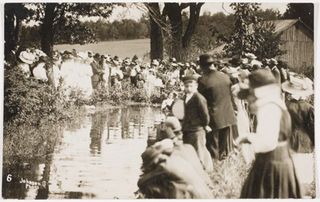
Photography in Turn-of-the-Century River Baptisms

ID_PI_GOLBE_BAPTI_AP_003Stefany Anne Golberg in The Smart Set:

The public nature of the river baptism is what sets it apart from so many other religious rituals (especially in America, a country of believers with, paradoxically, few shared rituals). A river baptism doesn’t have to be in a river; it can be in a creek, the sea, an old bathtub in the yard. One “Take Me to the Water” photograph shows a 1920 baptism being performed in a square, above-ground, wooden swimming pool that is part stage and stands in the middle of a barren Kansas prairie.

The river baptism doesn’t need a river but it does need an audience. Baptism itself doesn’t make you a believer, nor does it make you holy. It is a public testimony of faith, a covenantal act. The ritual of immersion baptism mirrors the death, burial, and resurrection of Christ by giving the initiate a spiritual death, burial/resurrection, and renewal. These three stages follow what anthropologist Arnold Van Gennep, in The Rites of Passage, classified as “separation,” “transition,” and “incorporation.” In the first stage, separation, the initiate is singled out from the community and led into the river. In the second stage, transition, the initiate is “buried” in the river along with her old life, and then “resurrected” as she is pulled from the watery grave. Finally, the initiate is brought officially into the community of worshippers, incorporated into her new life. Even though the baptism is performed individually, the ritual is one of communal bonding. With each baptism, the group of faithful also is reborn, refreshed.

The river baptism’s audience isn’t just made up of believers. Because they are meant to take place in ordinary, open settings, the rituals would often be joined by the curious, passersby, or, as we now know, a photographer. As the photos at ICP show, the witnesses to the baptisms are as much a part of the story as those being baptized.

Best Wishes, Donald

Mark Singer in The New Yorker:

Donald A deputy mayor of New York City once sagely observed, “I wouldn’t believe Donald Trump if his tongue were notarized.” A simple enough rule to live by, which raises the question of whether Trump “believes” his own non-stop prevarications. Leaving aside the tempting armchair theories about where Trump belongs on the spectrum of acute narcissistic personality disorder, I’m convinced that he’s convinced that everything he says and does is ultimately good for business. A large proportion of the tenants in Trump properties are foreigners who regard them as worthy flight-capital investments. A reassuring segment of the American electorate recognizes Trump’s execrable birtherism, aspersions upon President Obama’s academic credentials, and the slur that he needs to get “off his basketball court” for exactly what they are. Abroad, however, I doubt that a large audience is playing close enough attention.

Probably the funniest thing I ever heard Trump say was when, one day in his office, he handed me an unaudited financial statement (the provisional numbers added up to a net worth of a few billion) and declared, “I’ve never shown this to a reporter before.” If, at some point in the near future, Trump makes public an up-to-date “audited” financial statement, my guess is that a very large percentage will be assigned to the value of his name alone and a far less impressive amount to his tangible holdings. Until a couple of days ago, I was in accord with those who maintained that Trump would never formally announce his Presidential candidacy because he couldn’t walk away from whatever his fellow cynics at NBC Universal would pay him for another season of “Celebrity Apprentice.” Now I’m not so sure. Clearly, he needs the money—he always needs the money. One potential pitfall for Trump is that his compulsive ugliness is self-propagating. As Hertzberg and David Remnick observe, whatever laughter Trump evokes is rooted in dread and disgust, which the demeaning spectacle of President Obama releasing the long form of his birth certificate deepened into revulsion. Can he and will he get even uglier? Count on it. As of yet, there are no indications that the suits at NBC will muster the scruples to deprive him of his lucrative franchise. Unless, that is, Trump winds up doing a Full Frontal Charlie Sheen. Not an outcome we should necessarily hope for, but at the rate he’s going he just might.

More here.

My big fat humanist wedding

From New Humanist:

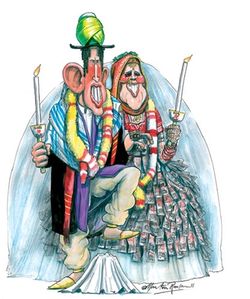
NewHumanistWillnKate If you’re anything like me, you’re not particularly interested in the royal wedding. Perhaps you have republican leanings, or you can’t bear the mawkishness of it all, or you disapprove of the terrible waste of money. Nevertheless, it cannot be denied that this cloud has a silver lining – it has presented the nation with a golden opportunity to have some fun. Let’s face it, an opportunity to have a prank in the glare of the world’s media doesn’t come along very often. And the nation’s satirists and lampooners have been rising to the occasion with gusto. But no spoof piqued global interest quite as much as the Jewish Chronicle’s deadpan story which ran on the festival of Purim (where Jews get drunk to commemorate the execution of a malevolent Persian minister, four hundred years before Christ). Kate and Wills, the Chronicle reported, are planning to acknowledge “the multi-cultural nature of modern British society” in their nuptials. While the ceremony will be “completely Anglican in nature,” the happy couple will smear “mehendi” paste on each other in accordance with Muslim tradition, then, following Hindu custom, offer each other a “morsel of food”. Finally, the Chronicle quipped, the prince will “smash a glass with his foot” in a nod to the Jewish tradition.

The response to this nugget of foolishness was extraordinary. News outlets all around the world took it seriously, including Israel’s leading broadsheet, Ha’aretz (who, red-faced, have since removed the report from their website). Meanwhile, the Twitterverse took the ball and ran with it. Wiccans demanded a human sacrifice in Trafalgar Square; Jedis suggested that Charles lop off Wills’ hand with a light sabre; and Pastafarians – devotees of Dawkins’s Flying Spaghetti Monster – began lobbying for a “traditional” pasta-based feast.

More here.

Sunday Poem

Scarecrow
'
The rice field birds are too clever for scarecrows,
They know what they love, milk in the grain.
When it happens, there will be no time to look for anyone.
Husband, children, nine brothers and sisters.
You will drop your sugarcane-stick-beating of plastic bucket,
Stop shouting at birds and run.
They will load you in trucks and herd you for a hundred miles.
Old men will teach you trade with soldiers at checkpoints.
You will give them your spoon, blanket and beans,
They’ll let you keep your life. And if you jump off the truck,
The army jeep trailing it will run you over.
Later, they will accuse you of giving up your land.
Later, you will stand in distribution lines and won’t receive enough to eat.
Your mother will weave you new underwear from flour sacks.
And they’ll give you plastic tents, cooking pots,
Vaccine cards, white pills, and wool blankets.
And you will keep your cool.
Standing with eyes shut tight like you’ve got soap in them.
Arms stretched wide like you’re catching rain.
;
;
by Fady Joudah
from The Earth in the Attic
Copyright © 2008, Yale University Press.

Behind the scenes at the start of Microsoft

From The Economist:

20110430_bkp002 Asked to pen an endorsement for Paul Allen’s new autobiography, Bono, a well-known musician, declares that the co-founder of Microsoft’s “…intellect and generosity of spirit are there on every page”. He is only half right. “Idea Man” does provide plenty of insights into the ways in which Mr Allen has helped revolutionise everything from software to space travel. But its pages are also permeated by a bitterness towards Bill Gates, the man with whom he created a company that transformed the world of technology. Indeed, there are enough sour grapes in these pages to fill an entire vineyard.

The irony is that the primary focus of Mr Allen’s resentment—his co-founder’s intense competitiveness—is also one of the things that propelled Microsoft to greatness. That trait, and the tension that it provoked between the two men, is evident from the time they meet at school. Mr Allen describes how Mr Gates became apoplectic when a practical joke he played on Mr Allen backfired. In another vignette, he portrays his pal sweeping the pieces off a chessboard in fury when he lost yet another game to Mr Allen.

More here.

Once upon a life: Mohsin Hamid

Mohsin Hamid in The Observer:

ScreenHunter_11 May. 01 10.28 In December 1980, at the age of nine, I moved back to Pakistan for the first time.

We touched down at Lahore, in those less security-conscious days when it was still a place where families strolled to the tarmac to greet deplaning passengers. Ronald Reagan had just beaten Jimmy Carter in the election for president of the United States, the Soviet Union was about to mark the first anniversary of its invasion of Afghanistan, racoon-eyed General Zia-ul-Haq was ensconced in Islamabad as Pakistan's dictator, and I'd lost my Urdu.

It's a funny thing to lose your first language. I was an early talker, chirping along in full sentences and paragraphs well before I turned two, and I have a scar to prove it. In the summer of 1973, ZA Bhutto was campaigning to become prime minister of Pakistan, and I picked up the habit of climbing on to the dining table and holding forth in the manner of the speeches I'd heard him make on PTV: “When I become prime minister…”

One day someone tried to get hold of me and lower me to the ground. I made a run for it, dashed into thin air, fell, split open my head and wound up with blood in my eye and stitches across my brow. (ZA Bhutto's fate would, sadly, be similar.)

More here.

Saturday, April 30, 2011

Trolley Problems

Terrence Tomkow in his own blog:

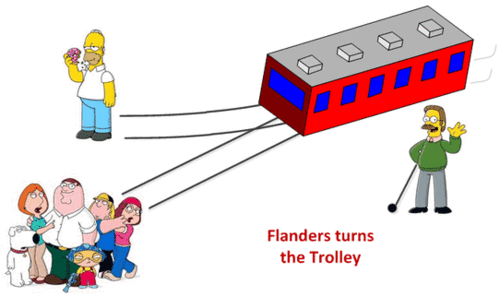
A runaway trolley is coming down the track. It is headed towards five people who cannot get out of its way. A Passerby realizes that he can save the five by throwing a switch and diverting the trolley down a siding, but he also realizes that if he does so, the trolley will kill a Lone Man standing on the siding.

ScreenHunter_09 May. 01 10.06

Should you divert the trolley? Lots of folks say, “Yes!” Whether or not they are right is an interesting problem but it is not what philosophers call “The Trolley Problem“. That problem involves a different case:

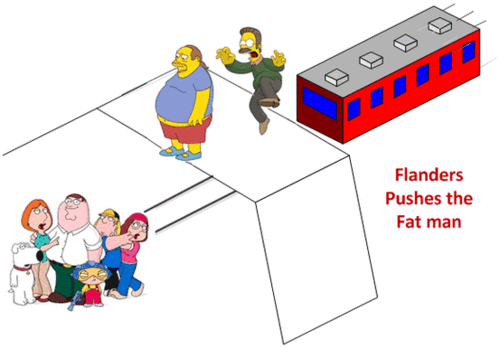
A runaway trolley is coming down the track. It is headed towards five people who cannot get out of its way. A passerby realizes that if he pushes a nearby fat man onto the tracks his bulk will stop the trolley before it hits the five, though the fat man himself will be killed.

ScreenHunter_10 May. 01 10.08

Most people, including those who think it is okay to turn in TROLLEY, think that it is not okay to push the FAT MAN. “The Trolley Problem” is how to reconcile these two answers. In both cases it seems you can do something that will save five people but only by killing one. How can anyone think it okay to turn in TROLLEY but wrong to push the FAT MAN? What difference is there between the two stories that can possibly make a moral difference?

In the almost forty years since Judith Jarvis Thomson first posed the problem in this form there have many attempts to solve it but none is generally accepted as successful. Indeed a general consensus seems to have developed that the “folk intuitions” (as philosophers call them) about the difference between these cases are simply irrational.

More here.

union

Foner-articleInline

Among the enduring mysteries of the American Civil War is why millions of Northerners were willing to fight to preserve the nation’s unity. It is not difficult to understand why the Southern states seceded in 1860 and 1861. As the Confederacy’s founders explained ad infinitum, they feared that Abraham Lincoln’s election as president placed the future of slavery in jeopardy. But why did so few Northerners echo the refrain of Horace Greeley, the editor of The New York Tribune: “Erring sisters, go in peace”? The latest effort to explain this deep commitment to the nation’s survival comes from Gary W. Gallagher, the author of several highly regarded works on Civil War military history. In “The Union War,” Gallagher offers not so much a history of wartime patriotism as a series of meditations on the meaning of the Union to Northerners, the role of slavery in the conflict and how historians have interpreted (and in his view misinterpreted) these matters. The Civil War, Gallagher announces at the outset, was “a war for Union that also killed slavery.” Emancipation was an outcome (an “astounding” outcome, Lincoln remarked in his second Inaugural Address) but, Gallagher insists, it always “took a back seat” to the paramount goal of saving the Union. Most Northerners, he says, remained indifferent to the plight of the slaves. They embraced emancipation only when they concluded it had become necessary to win the war. They fought because they regarded the United States as a unique experiment in democracy that guaranteed political liberty and economic opportunity in a world overrun by tyranny. Saving the Union, in the words of Secretary of State William H. Seward, meant “the saving of popular government for the world.”

more from Eric Foner at the NYT here.