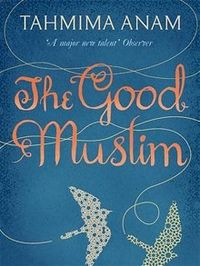
The Good Muslim

From The Telegraph:

Muslim-cover_1882637f This novel is the second part of a projected trilogy that began with Anam’s acclaimed first novel, The Golden Age, but can also be appreciated without the earlier work, once you familiarise yourself with some basic facts about Bangladesh’s war of independence. Anam’s incorporation of the back stories of a widow named Rehana Haque and her two adult children, a daughter Maya and a son Sohail, is not only light-handed, but also gives these main characters incredible solidity. The book hinges on two homecomings to Dhaka: Sohail’s return from nine months of fighting in 1972, and Maya’s 1984 return from seven years as a “crusading” doctor in a northern village. There are brilliant mirror-scenes, such as each sibling's awkward attendance at suburban parties where they feel alienated by everyone else’s frivolity.

The two time strands on which the book balances create the suspense of discovering how they will converge. There are some half-hearted attempts to shift the narrative perspective between brother and sister, but this novel is really Maya’s story – only in the prologue and denouement do we enter Sohail’s consciousness. Despite its title, the themes are less about faith or morality than the personality traits common to radicals and idealists. It is about the differences between citizens and rebels, and those contradictory elements within us all.

More here.

Friday, May 13, 2011

Does Lack of Income Take Away the Brain’s Horses?

Daniel Lende over at Neuroanthroplogy [h/t: Linta Varghese]:

I don’t mean the pretty horses people ride, but the hippocampus (or sea horse) circuits in your brain, which are crucial to memory. New research in PLoS One, Association between Income and the Hippocampus, demonstrates a link between lower socioeconomic status and lower hippocampal grey matter density.

In Wednesday’s round-up I linked to Philip Cohen’s post, Income gradient for children’s mental health. Here’s the opening graph so you can get a sense of the gravity of the situation. The percentage of children with serious mental or behavioral difficulties is shown as a percentage on the left. The drop-off as income rises is dramatic.

In 2008 we documented that poverty poisons the brain:

As the article explained, neuroscientists have found that “many children growing up in very poor families with low social status experience unhealthy levels of stress hormones, which impair their neural development.” The effect is to impair language development and memory — and hence the ability to escape poverty — for the rest of the child’s life. So now we have another, even more compelling reason to be ashamed about America’s record of failing to fight poverty.

And then in 2009, we focused on how it’s really the social side of things doing the poisoning:

Empirical research on the connection between poverty and intellectual development can cut both ways—leading some to write off poverty as biological destiny, and others to look deeper into missed opportunities to lift youth over economic barriers…

While I advocate for the role that brain processes can play in social theory, the sword cuts both ways. Referencing the brain as central mediator of poverty hides the truth, and distorts our understanding. To take a more extreme example to illustrate the same point, it’s like saying that slavery is both harmful to people and morally wrong because it impacts brains.

This new research brings us back to a focus on the brain. The article, whose lead author Jamie Hanson is a graduate student in psychology at Wisconsin-Madison, brings a broader focus than just stress, through cortisol, acting as poison to the developing brain.

The 2011 Edge Question: What Scientific Concept Would Improve Everybody’s Cognitive Toolkit?

DKEdge ask 159 thinkers for their answers. Daniel Kahneman:

Focusing Illusion

Daniel Kahneman

Eugene Higgins Professor of Psychology…

“Nothing In Life Is As Important As You Think It Is, While You Are Thinking About It”

Education is an important determinant of income — one of the most important — but it is less important than most people think. If everyone had the same education, the inequality of income would be reduced by less than 10%. When you focus on education you neglect the myriad other factors that determine income. The differences of income among people who have the same education are huge.

Income is an important determinant of people's satisfaction with their lives, but it is far less important than most people think. If everyone had the same income, the differences among people in life satisfaction would be reduced by less than 5%.

Income is even less important as a determinant of emotional happiness. Winning the lottery is a happy event, but the elation does not last. On average, individuals with high income are in a better mood than people with lower income, but the difference is about 1/3 as large as most people expect. When you think of rich and poor people, your thoughts are inevitably focused on circumstances in which their income is important. But happiness depends on other factors more than it depends on income.

Paraplegics are often unhappy, but they are not unhappy all the time because they spend most of the time experiencing and thinking about other things than their disability. When we think of what it is like to be a paraplegic, or blind, or a lottery winner, or a resident of California we focus on the distinctive aspects of each of these conditions. The mismatch in the allocation of attention between thinking about a life condition and actually living it is the cause of the focusing illusion.

Should Political Scientists Care More About Politics?

Archon Fung in the Boston Review:

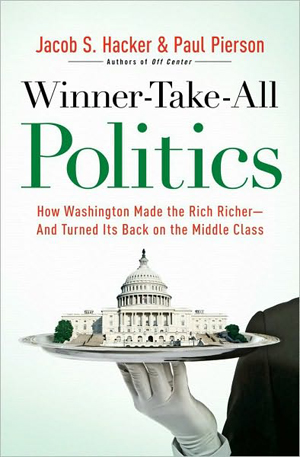
Fung_36_3_book Winner-Take-All Politics is an important book that comes at a crucial moment in the political history of the United States. Other than the usual outrage at our incumbent politicians, there has been a deafening silence in our broader political discourse, and even in professional scholarship, about the political causes of the financial crisis, the hegemony of business interests, and growing inequality. Hacker and Pierson have begun to fill that silence.

Winner-Take-All Politics is concerned first and foremost with economic inequality in America. The book cites a mountain of data to show how the very highest tiers in the nation’s income distribution—not just the top 10 percent, but the top 1 percent and the top 0.1 percent—have become much wealthier while income growth has stagnated at the middle and bottom. In 1974 the top 0.1 percent of American families earned 2.7 percent of all income in the country. By 2007, Hacker and Pierson write, “the top 0.1 percent have seen their slice of the pie grow . . . to 12.3 percent of income—a more than fourfold increase” (emphasis in original).

But why, other than in service of envy, should we care how much more the rich rake in? One reason is welfare—greater redistribution would help those who are less well off. A second reason is democracy. In pondering the question of how much equality democracy requires, Rousseau answered, “no one should be so poor as to have to sell himself, nor so rich that he can buy another.” From this vantage, the danger of inequality is not immiseration (though there is plenty of that), but domination.

More here.

two for one

ID_PI_GOLBE_CHANG_AP_001

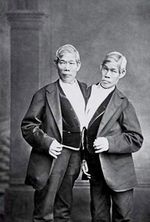
We take it for granted, then, that Siamese twins would separate if they could choose, especially now that 21st-century medical advances make it possible. In a 2000 BBC documentary, South African surgeon Heinz Röde — a leading specialist in the division of conjoined twins — summed up their condition as such: “My own philosophy,” he said, “ is that twins are born to be separated.” Which is to say, he believes people are born to be separate. In separating conjoined twins, we feel that we are saying to them, “You have a right to be alone, to be individuals alone, in your own body alone, determining your own destiny, alone.” Isn’t this the very definition of a free self, the knowledge that you can always extract yourself from another? Yet, if you ask conjoined twins, most seem quite comfortable with their shared bond. “We’d never agree to an operation,” Dasha Krivoshlyapova told the BBC. “We just don’t need it.” “Even when we were little we didn’t want one,” said Masha Krivoshlyapova. “We are a little collective.” This last sentiment is simultaneously adorable and horrifying. For what would it mean to turn our lives into a “little collective,” to permanently, inextricably attach our fate to another’s and always experience our lives in terms of another? Would it not make us unsure where our own “self” began and ended, unsure that we were the tellers of our own jokes, the designers of our own hopes, the caretakers of our own needs? How could we accept thinking of “me” as “us,” accept being unfree? In other words, what we see, and fear, in Chang and Eng is love.

more from Stefany Anne Golberg at The Smart Set here.

terror in misurata

20110512_misrata_w

It is 2 May, my twelfth full day in Misurata, and I’ll start with a man I met at a private clinic that had been turned into the city’s main trauma hos­pital. The uprising against Muammar Gaddafi was two months old. Loyalist forces surrounded Misurata and controlled parts of the city centre, but the thowar – or revolutionaries – were putting up fierce resistance despite being outgunned. The battle crackled and boomed day and night. Dr Tahar Alkesa, a surgeon, was sitting on the curb outside one of the white tents erected in front of the clinic to serve as a makeshift emergency ward. He is 31 years old and undoubtedly handsome, but the hours and stress had marked and changed him. He was sallow and unshaven, with dark rings under his puffy eyes. The evening light was soft and fading fast as we chatted. He rubbed his arms for warmth. I had seen Alkesa at work earlier in the day, when fresh casualties were arriving at the hospital every few minutes. An ambulance or pick-up truck would screech to a halt outside the tent, amid cries of “Allahu akbar”. If the victim was a thowar, he usually had a bullet wound, having been picked off by a sniper.

more from Xan Rice at The New Statesman here.

The Struggle For Middle East Democracy

Shadi Hamid in The Cairo Review:

It always seemed as if Arab countries were ‘on the brink.’ It turns out that they were. And those who assured us that Arab autocracies would last for decades, if not longer, were wrong. In the wake of the Tunisian and Egyptian revolutions, academics, analysts and certainly Western policymakers must reassess their understanding of a region entering its democratic moment.

What has happened since January disproves longstanding assumptions about how democracies can—and should—emerge in the Arab world. Even the neo-conservatives, who seemed passionately attached to the notion of democratic revolution, told us this would be a generational struggle. Arabs were asked to be patient, and to wait. In order to move toward democracy, they would first have to build a secular middle class, reach a certain level of economic growth, and, somehow, foster a democratic culture. It was never quite explained how a democratic culture could emerge under dictatorship.

In the early 1990s, the United States began emphasizing civil society development in the Middle East. After the attacks of September 11, 2001, the George W. Bush administration significantly increased American assistance to the region. By fiscal year 2009, the level of annual U.S. democracy aid in the Middle East was more than the total amount spent between 1991 to 2001.

But while it was categorized as democracy aid, it wasn’t necessarily meant to promote democracy. Democracy entails ‘alternation of power,’ but most NGOs that received Western assistance avoided anything that could be construed as supporting a change in regime.

The reason was simple. The U.S. and other Western powers supported ‘reform,’ but they were not interested in overturning an order which had given them pliant, if illegitimate, Arab regimes.

More here.

Gandhi, bin Laden and the Global Chessboard

Anjum Altaf in The South Asian Idea:

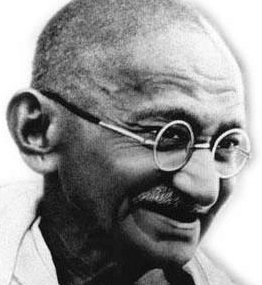
ScreenHunter_01 May. 13 13.11 The thought of any connection between Osama bin Laden and Gandhi would not have occurred to me were it not for a remark in the much talked about biography of the latter by Joseph Lelyveld. At one point in the book, am I told, Lelyveld writes that “it would be simply wrong, not to say grotesque, to set up Gandhi as any kind of precursor to bin Laden.” The remark piqued my curiosity especially given the fact that it was written before the recent discovery and elimination of Osama. Clearly, Lelyveld was not cashing in on a coincidence. So what was it that provoked the comparison even if it were to be dismissed?

Let me state my conclusion at the outset: the personalities bear no comparison but the contextual similarities highlight major political issues that bear exploration and attention.

The word ‘precursor’ suggests clearly that it is the contextual similarity that prompts Lelyveld’s remark. To spell it out: the existence of a foreign oppressor; the emerging resistance to the oppression; the impotence of lawful resistance; the transition to mass agitation; its reliance on the wellsprings of religious humiliation; the ensuing conflict; and the resulting blowback.

More here.

Friday Poem

Syrinx
.
Like the foghorn that’s all lung,
the wind chime that’s all percussion,
like the wind itself, that’s merely air
in a terrible fret, without so much
as a finger to articulate
what ails it, the aeolian
syrinx, that reed
in the throat of a bird,
when it comes to the shaping of
what we call consonants, is
too imprecise for consensus
about what it even seems to
be saying: is it o-ka-lee
or con-ka-ree, is it really jug jug,
is it cuckoo for that matter?—
much less whether a bird’s call
means anything in
particular, or at all.

Syntax comes last, there can be
no doubt of it: came last,
can be thought of (is
thought of by some) as a
higher form of expression:
is, in extremity, first to
be jettisoned: as the diva
onstage, all soaring
pectoral breathwork,
takes off, pure vowel
breaking free of the dry,
the merely fricative
husk of the particular, rises
past saving anything, any
more than the wind in
the trees, waves breaking,
or Homer’s gibbering
Thespesiae iachē:

those last-chance vestiges
above the threshold, the all-
but dispossessed of breath.
.
by Amy Clampitt
from The Collected Poems of Amy Clampitt
Alfred A. Knopf, 1997

The Birth of the Mouse

From The Independent:

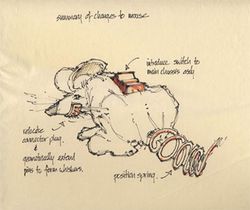
Mouse This week in the magazine, Malcolm Gladwell writes about the creation of the computer mouse. As the creation story goes, Steve Jobs got the idea for the modern mouse after visiting Xerox PARC in 1979. Within a few days, he met with Dean Hovey, who was one of the founders of the industrial-design firm that would become known as IDEO. Hovey described the meeting to Gladwell from his old office in downtown Palo Alto, which he was borrowing from the current tenant “just for the fun of telling the story of the Apple mouse in the place where it was invented.” Gladwell writes:

He had brought a big plastic bag full of the artifacts of that moment: diagrams scribbled on lined paper, dozens of differently sized plastic mouse shells, a spool of guitar wire, a tiny set of wheels from a toy train set, and the metal lid from a jar of Ralph’s preserves. He turned the lid over. It was filled with a waxlike substance, the middle of which had a round indentation, in the shape of a small ball. “It’s epoxy casting resin,” he said. “You pour it, and then I put Vaseline on a smooth steel ball, and set it in the resin, and it hardens around it.” He tucked the steel ball underneath the lid and rolled it around the tabletop. “It’s a kind of mouse.”

Hovey has shared some of his photographs and sketches from the days of development, presented here with excerpts from Gladwell’s piece.

More here.

The Origins of Political Order

From Guardian:

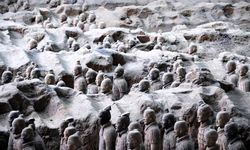
Terracotta-army-007 Francis Fukuyama will always be best known for one cosmic soundbite – “The End of History“. This has given him an undeserved reputation as a political optimist, the man who believes that everything will turn out all right for democracy if we just let history run its course. In fact, Fukuyama is a much gloomier thinker than you might guess, always on the lookout for what can go wrong. The End of History, which was published in 1992, is a pretty depressing book (much more depressing than the original 1989 article on which it is based). It is overshadowed by the influence of one of Fukuyama's mentors, the conservative Chicago philosopher Allan Bloom. Bloom thought that American society was drowning in a sea of intellectual relativism and pop cultural pap, and Fukuyama worried that the post-1989 triumph of democracy threatened more of the same. With no big ideological battles to fight any more, politics would just become one mindless thing after another.

More here.

Thursday, May 12, 2011

Blind Fish Lose Need to Sleep

Aatish Bhatia in his excellent new blog, Empirical Zeal:

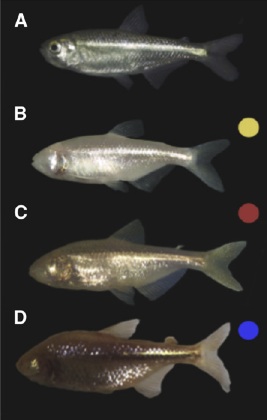
Cavefish A world without light is quite an alien place. There are many examples of fish that live in completely dark caves. Remarkably, if you compare these fish to their relatives that live in rivers or in the ocean, you find that the cavefish often undergo a similar set of changes. Their eyes do not fully develop, rendering them essentially blind. They lose pigmentation in their skin, and their jaws and teeth tend to develop in particular ways. This is an example of what is known as convergent evolution, where different organisms faced with similar ecological challenges also stumble upon similar evolutionary solutions.

The changes mentioned above are all about appearance, but what about changes in behavior? In particular, when animals sleep, they generally line up with the day and night cycle. In the absence of any daylight, how do their sleep patterns evolve?

A recent paper by Erik Duboué and colleagues addressed this question by comparing 4 groups of fish of the same species Astyanax mexicanus. Three of the populations (the Pachón, Tinaja, and Molino) were blind cavefish that inhabited different dark caves, whereas the fourth was a surface-dwelling fish.

More here.

The Killing of Osama bin Laden

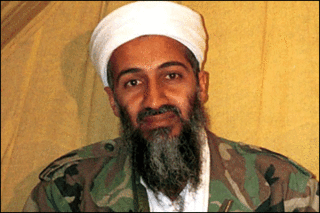
BinladenxlargeA symposium over at Dissent:

Dissent writers to offer reflections on the killing of Osama bin Laden—on how it was carried out, its potential impact on government policies, and its meaning to and reception by the public. Their responses, beginning with Dissent co-editor Michael Walzer’s, are below.

Michael Walzer – “Killing Osama”
Lindsay Beyerstein – “The War Paradigm”
Feisal G. Mohamed – “The Theater of Counter-Terrorism”
Fred Smoler – “The Particular Case of Osama bin Laden”
Bhaskar Sunkara – “Pakistan at War with Itself”

Walzer:

It was, as everyone said, a famous (symbolic) victory. What was wrong, then, with the celebrations in front of the White House? There is an old Jewish commentary on the book of Exodus, which says that when Pharaoh’s army drowned in the sea, the angels in heaven began to celebrate, and God rebuked them: how can you rejoice when my creatures are drowning? There must be a secular equivalent to that story. It would say that we should celebrate the ending of wars but not the killing of our enemies. And the war against Islamist terrorism isn’t over.

But are we actually at war? There are many people on the left who reject the very idea. Osama bin Laden was not an enemy to be killed, they argue, but a criminal to be brought to justice. From the beginning, that has been the critical debate: was the 9/11 attack an act of war or a crime? The two positions are generally held with great certainty; each one excludes the other. But the truth is that each one is right, some of the time, in some places.

Theory vs. Literature

20060923_kumarAmitava Kumar over at Bookslut:

On the website of the University of Chicago Writing Program, there is a link that you can use to generate a random academic sentence. When I last clicked on it, this is what I got: “The idea of the proper-name effect allegorizes the de-eroticization of normative value(s).” The site also says that if you are “the do-it-yourself type,” you may write your own sentence. You are to choose one word from each of the four drop-lists, and then all you need to do is click on “Write It!” If the result doesn’t please, click on “Edit it!” (If you start enjoying what you’re doing, there’s also a third button that is called “Reset.”)

I will now list some of the words and formulaic phrases in each drop list. One: “the public sphere,” “the gendered body,” “power/knowledge,” “agency”; Two: “discourse,” “politics,” “legitimation,” “construction”; Three: “post-capitalist hegemony,” “the gaze,” “pop culture,” “civil society”; and Four: “epistemology,” “emergence,” “logic,” and “culture.” Simply by choosing a word or phrase from each category, it is easy to write sentences like the following: “The emergence of civil society may be parsed as the legitimation of the public sphere.” This was among the more intelligible results I got. When I clicked on the cheerful and encouraging “Edit It!” link, I got the following, rather perfect, result: The legitimation of civil society may be parsed as the emergence of the public sphere.

All this is funny, at least for a short while. When an academic friend of mine posted the above-mentioned link on her Facebook page, another friend asked in the comments section whether she could use the sentence generator to complete her dissertation. That joke was a wonderfully precise one. More than anyone else, it is the academic initiate, the graduate student or, in some cases, the young scholar seeking tenure, who must reveal his or her proficiency in the use of the sacred tongue. Style is assumed to be a feature only of senior living, a part of what you do later in your career, when you have acquired the necessary academic credentials. And till you have amassed the capital of years of professional membership, the luxury of innovation or originality is frowned upon as irresponsible and excessive. Recitation by rote is encouraged. It is to assure all, or at least some of us, that we belong to a community, or at least a tribe with shared rituals and a common language. In a rather obvious way, then, the academy is the original random sentence generator.

war, what is it good for…

634817-light-brigade

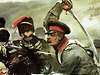
‘THE war,” wrote one of its fiercest opponents, “was founded in delusion and error, and we richly deserve to reap nothing but mortification and disappointment in return for all the blood and treasure we have spent.” Robert Manne on the 2003 invasion of Iraq? A German revisionist historian on World War I? No: these words were written during the Crimean War of 1853-56, by an English diarist named Charles Greville. Let it be recalled that England and its allies “won” this territorial dispute with Russia fought in and around the Black Sea. It claimed the lives of 525,000 soldiers. Greville’s words are quoted by Australian philosopher-historian Ian Bickerton in The Illusion of Victory. Bickerton’s thesis in this book is that “the costs of war are rarely, if ever, worthwhile”. That “if ever” is important: Bickerton rejects the notion that war is sometimes a necessary evil. All war is “a betrayal of human purpose and a total failure of imagination”. His argument is essentially utilitarian, based on a retrospective cost-benefit analysis of major European-based wars in the past 200 years.

more from Roy Williams at The Australian here.

ICC Sheriff Too Quick on the Draw

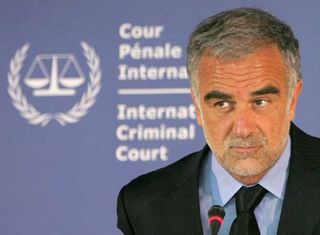
Luis-moreno-ocampo Leslie Vinjamuri and Jack Snyder over at Duck of Minerva:

Last Wednesday’s announcement that the International Criminal Court will seek arrest warrants against three senior officials in Libya will come as no surprise to Security Council members who gave the ICC authority to investigate. They may soon find themselves regretting this decision.

The responsibility to protect and the duty to prosecute both have strong coalitions backing them, but these two norms do not always go well together. The duty to prosecute removes an indispensable strategy for inducing the peaceful exit of perpetrators. Unless NATO is prepared to put boots on the ground, its ability to negotiate a palatable exit for Qaddafi and his key supporters could become essential to bringing an end to this intervention.

Libyan rebel leaders demand that Qaddafi step down, but they refuse to negotiate a settlement with him. Leaders in Britain, France, and the United States have embraced this rebel demand, blurring the line between the goal of protecting civilians and regime change. So far, though, they have been prudent. The mandate of protecting civilians has not been used to justify an expanded mission with on the ground operations to ensure a swift change of regime.

Without an international decision to invade or arm the rebels, it is hard to imagine how this conflict will end. The ICC’s announcement that arrest warrants are forthcoming will only make this worse. Qaddafi or his core supporters will be unlikely to abdicate power without guarantees against prosecution. The international coalition that backed UN Security Council Resolutions 1970 and 1973 may have boxed itself into a corner.

Debating Krugman, International Political Economy and Electoral Politics

There's an interesting debate between Kindred Winecoff over at International Political Economy at the University of North Carolina and Henry Farrell at Crooked Timber. Winecoff:

Paul Krugman thinks that democratic politics does not exist:

Well, what I’ve been hearing with growing frequency from members of the policy elite — self-appointed wise men, officials, and pundits in good standing — is the claim that it’s mostly the public’s fault. The idea is that we got into this mess because voters wanted something for nothing, and weak-minded politicians catered to the electorate’s foolishness.

So this seems like a good time to point out that this blame-the-public view isn’t just self-serving, it’s dead wrong.

The fact is that what we’re experiencing right now is a top-down disaster. The policies that got us into this mess weren’t responses to public demand. They were, with few exceptions, policies championed by small groups of influential people — in many cases, the same people now lecturing the rest of us on the need to get serious. And by trying to shift the blame to the general populace, elites are ducking some much-needed reflection on their own catastrophic mistakes.

If Greenspan's “with notably rare exceptions” deserves internet infamy, and it does, then surely Krugman's less notable exceptions should too. As Drezner notes, Krugman's examples — the Bush tax cuts and the Iraq war, mainly — were supported by majorities of the population. Bush campaigned on a platform of tax cuts too, so it's not as if he tricked the public once elected.

Henry Farrell responds over at Crooked Timber:

I like much of Winecoff’s blogging on IPE, but the relevant political science here seems to me to support Krugman far more than it does Winecoff. International political economy scholarship (the field that Winecoff specializes in) tends to have an extremely stripped down, and bluntly unrealistic account of how policy is made. Typically, modelers in this field either assume that the “median voter” plays an important role in determining national preferences, or that various stylized economic interests (which they try to capture using Stolper-Samuelson, Ricardo-Viner and other approaches borrowed from economic theory) determine policy, perhaps as filtered through a very simple representation of legislative-executive relations.

However, actual work on how policy gets made suggests that this doesn’t work. On many important policy issues, the public has no preferences whatsoever. On others, it has preferences that largely maps onto partisan identifications rather than actual interests, and that reflect claims made by political elites (e.g. global warming). On others yet, the public has a set of contradictory preferences that politicians can pick and choose from. In some broad sense, public opinion does provide a brake on elite policy making – but the boundaries are both relatively loose and weakly defined. Policy elites can get away with a hell of a lot if they want to.

More from Winecoff here.

moonlight

P1000836

‘Moonlight’, says James Attlee in his opening chapter, ‘is a subject almost universally regarded as off-limits to contemporary writers, too kitsch, debased and sentimental to be worthy of serious consideration. This alone would make it a subject worth exploring.’ Particularly so because it had occurred to him that we have paid for the boon of electricity by an almost complete loss of darkness and the moon’s lovely alleviation of it – certainly so in towns, under their rusty, pinkish glow of diffused electric light. So he sets out to rediscover and explore the night, and leads us with him in a way so far from being kitsch and sentimental that we become hungry for more. There can’t be many people who have never caught their breath at the sight of a full moon in a clear sky, but the sensations it inspires are inward; the kind of thing usually felt to be material for poets, painters or musicians, rather than for general consideration. Attlee has found a way of engaging with them which brings them out on to the open stage provided by prose without loss of mystery or charm. It is this achievement which is difficult to pin down.

more from Diana Athill at Literary Review here.

Livy: history as the unexpectedly strange

TLS_Mary_736853a

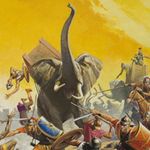
The British Fabian Society takes its name from the Roman soldier and politician Quintus Fabius Maximus Verrucosus. He may seem an unlikely patron for a society of intellectual socialists. Born into one of the most aristocratic families of ancient Rome, Fabius is not known for his sympathy for the poor. It was his tactics in the war against Hannibal that inspired the society’s founders in the 1880s. During that war Rome was brought to the brink of disaster thanks to a series of rash and inexperienced generals who insisted on engaging the Carthaginians head on, with terrible consequences. The Battle of Cannae in 216 BC was the worst: our best estimates suggest that some 50,000 Roman soldiers were killed (making it, as Robert Garland puts in his brisk new biography, Hannibal, a bloodbath on the scale of Gettysburg or the first day of the Somme). When Fabius held command, he took a different course. Instead of meeting Hannibal in pitched battle, he played a clever waiting game, harrying the enemy in guerrilla warfare, and scorching the earth of Italy (burning the crops, the homes and the hideouts); the strategy was to wear Hannibal down and deprive him of food for his vast army. Hence his later nickname “Cunctator”, the “Delayer”.

more from Mary Beard at the TLS here.