When Will Scientists Grow Meat in a Petri Dish?

Inside-the-meat-lab_1 Jeffrey Bartholet in Scientific American:

It is not unusual for visionaries to be impassioned, if not fanatical­, and Willem van Eelen is no exception. At 87, van Eelen can look back on an extraordinary life. He was born in Indonesia when it was under Dutch control, the son of a doctor who ran a leper colony. As a teenager, he fought the Japanese in World War II and spent several years in prisoner-of-war camps. The Japanese guards used prisoners as slave labor and starved them. “If one of the stray dogs was stupid enough to go over the wire, the prisoners would jump on it, tear it apart and eat it raw,” van Eelen recalls. “If you looked at my stomach then, you saw my spine. I was already dead.” The experience triggered a lifelong obsession with food, nutrition and the science of survival.

One obsession led to another. After the Allies liberated Indonesia, van Eelen studied medicine at the University of Amsterdam. A professor showed the students how he had been able to get a piece of muscle tissue to grow in the laboratory. This demonstration inspired van Eelen to consider the possibility of growing edible meat without having to raise or slaughter animals. Imagine, he thought, protein-rich food that could be grown like crops, no matter what the climate or other environmental conditions, without killing any living creatures.

If anything, the idea is more potent now. The world population was just more than two billion in 1940, and global warming was not a concern. Today the planet is home to three times as many people. According to a 2006 report by the Food and Agriculture Organization, the livestock business accounts for about 18 percent of all anthropogenic greenhouse gas emissions—an even larger contribution than the global transportation sector. The organization expects worldwide meat consumption to nearly double between 2002 and 2050.

Sex, Hope, and Rock and Roll: Michael Bérubé on Ellen Willis

Michael Bérubé over at Crooked Timber:

Somewhere between the end of my spring semester at Penn State on April 29 and the beginning of my month-long guest-teaching gig at Cornell College in Mt. Vernon, Iowa (founded over a decade before that Johnny-come-lately Cornell in upstate New York) on May 2, I found some time to speak at this totally awesome conference on the work of Ellen Willis. Just glad to be on the bill, you know. Anyway, here’s a slightly expanded version of what I said that morning. Why slightly expanded? Because I’m including 15 percent more of Ellen Willis’s prose, which makes my remarks 15 percent better. That is why.

Ellen Willis took freedom seriously: “I believe that the struggle for freedom, pleasure, transcendence, is not just an individual matter. The social system that organizes our lives, and as far as possible channels our desire, is antagonistic to that struggle; to change this requires collective effort” (No More Nice Girls 266). And she was deadly serious about pleasure, too: “does it sound like a dirty word to you? No wonder, given how relentlessly it’s been attacked not only by puritanical conservatives but by liberals who uncritically accept the Reaganite equation of pleasure with greed and callousness…. Yet life without pleasure—without spontaneity and playfulness, sexuality and sensuality, esthetic experience, surprise, excitement, ecstasy—is a kind of death” (NMNG 272). It’s probably too much (or too cliché?) to say that her life was saved by rock and roll, but I do think she found in the music the rhythm of a social revolution she could dance to—and I think her willingness to think about freedom and pleasure rigorously served her well throughout her intellectual career.

That’s easy enough to see when you look at her writings on the drug wars of the 1980s, which Willis was right to see not just as an extension of state power and the carceral society in which we are all required to piss on demand, not only as a war on some classes of people who use drugs, but also as a frontal assault on the very idea that an illegal drug could have a beneficial effect on one’s being in the world. (By the mid-80s it was damn near impossible to say such a thing in public, so, of course, she went ahead and said it, more than once.) And it’s easy to see in Willis’s scathing critiques of antiporn feminism and so-called pro-life leftism, as well. But I see it suffusing every aspect of her work at every stage of her career, even in her writings on race, on The Satanic Verses, on “class first” leftism, and on the world after 9/11. It wasn’t just that she had one of the most accurate bullshit detectors known to modern science…

Tuesday Poem

The Explosion

On the day of the explosion
Shadows pointed towards the pithead:
In the sun the slagheap slept.

Down the lane came men in pitboots
Coughing oath-edged talk and pipe-smoke
Shouldering off the freshened silence.

One chased after rabbits; lost them;
Came back with a nest of lark's eggs;
Showed them; lodged them in the grasses.

So they passed in beards and moleskins
Fathers brothers nicknames laughter
Through the tall gates standing open.

At noon there came a tremor; cows
Stopped chewing for a second; sun
Scarfed as in a heat-haze dimmed.

The dead go on before us they
Are sitting in God's house in comfort
We shall see them face to face–

plian as lettering in the chapels
It was said and for a second
Wives saw men of the explosion

Larger than in life they managed–
Gold as on a coin or walking
Somehow from the sun towards them

One showing the eggs unbroken.

by Philip Larkin
from High Windows,1974

A New Gauge to See What’s Beyond Happiness

John Tierney in The New York Times:

Happy Martin Seligman now thinks so, which may seem like an odd position for the founder of the positive psychology movement. As president of the American Pyschological Association in the late 1990s, he criticized his colleagues for focusing relentlessly on mental illness and other problems. He prodded them to study life’s joys, and wrote a best seller in 2002 titled “Authentic Happiness.” But now he regrets that title. As the investigation of happiness proceeded, Dr. Seligman began seeing certain limitations of the concept. Why did couples go on having children even though the data clearly showed that parents are less happy than childless couples? Why did billionaires desperately seek more money even when there was nothing they wanted to do with it? And why did some people keep joylessly playing bridge? Dr. Seligman, an avid player himself, kept noticing them at tournaments. They never smiled, not even when they won. They didn’t play to make money or make friends. They didn’t savor that feeling of total engagement in a task that psychologists call flow. They didn’t take aesthetic satisfaction in playing a hand cleverly and “winning pretty.” They were quite willing to win ugly, sometimes even when that meant cheating.

“They wanted to win for its own sake, even if it brought no positive emotion,” says Dr. Seligman, a professor of psychology at the University of Pennsylvania. “They were like hedge fund managers who just want to accumulate money and toys for their own sake. Watching them play, seeing them cheat, it kept hitting me that accomplishment is a human desiderata in itself.” This feeling of accomplishment contributes to what the ancient Greeks called eudaimonia, which roughly translates to “well-being” or “flourishing,” a concept that Dr. Seligman has borrowed for the title of his new book, “Flourish.” He has also created his own acronym, Perma, for what he defines as the five crucial elements of well-being, each pursued for its own sake: positive emotion, engagement (the feeling of being lost in a task), relationships, meaning and accomplishment.

More here.

The larger truth in Three Cups of Tea

Bapsi Sidhwa in Houston Chronicle:

Greg I met Greg Mortenson, author of Three Cups of Tea, for the second time in October 2010 at a fundraiser in Dallas. As a recipient of an award, I sat at his table and found him to be courteous, disarmingly shy and self-effacing. He was the last to make a presentation, and as he spoke, I was alarmed by the way he intermittently fought for breath and paused between sentences. It was obvious he was exhausted and ill. I am shocked that he continued his grueling speaking schedule for almost six months after that — visiting schools and addressing fundraisers on a daily basis. I know now that he has a hole in his heart and is due for surgery. The way in which a 60 Minutes reporter interrupted Mortenson at an event for children in Atlanta and ambushed him with questions about allegations that he had falsified parts of his book was not only a bullying tactic, but also dangerous in view of his health.

“If you're looking for truth, read fiction; if you're in the mood for fiction read autobiography.” I have heard something to this effect repeated so often that it has become a truism – and, paradoxically, the axiom is often dismissed as a witticism. But there is more accuracy in these words than first meets the eye. As a writer, I know there are many ways of arriving at a truth, and fiction, with its accruements of imagination, intuition and arsenal of complex trajectories, can help a writer to express her or his thoughts as exactly and completely as is possible and in doing so arrive at the truth. Hard autobiography and biography, with their insistence on fact, appear to demand only one-dimensional slivers of truth, and whenever I've attempted autobiography I've sat frozen before my computer – wall-eyed with writer's block.

More here.

Monday, May 16, 2011

Sunday, May 15, 2011

One Professor’s Attempt to Explain Every Joke Ever

Ff_humorcode5_f Joel Warner in Wired:

[Peter] McGraw didn’t set out to become a humorologist. His background is in marketing and consumer decisionmaking, especially the way moral transgressions and breaches of decorum affect the perceived value of things. For instance, he studied a Florida megachurch that tarnished its reputation when it tried to reward attendees with glitzy prizes. The church’s promise to raffle off a Hummer H2 to some lucky congregant was met with controversy in the community—what the hell did that have to do with eternal salvation? But when McGraw related the anecdote at presentations, it prompted laughter—a holy Hummer!—rather than repulsion. This confused him.

“It had never crossed my mind that moral violations could be amusing,” McGraw says. He became increasingly preoccupied with the conundrum he saw at the heart of humor: Why do people laugh at horrible things like stereotypes, embarrassment, and pain? Basically, why is Sarah Silverman funny?

Philosophers had pondered this sort of question for millennia, long before anyone thought to examine it in a lab. Plato, Aristotle, and Thomas Hobbes posited the superiority theory of humor, which states that we find the misfortune of others amusing. Sigmund Freud espoused the relief theory, which states that comedy is a way for people to release suppressed thoughts and emotions safely. Incongruity theory, associated with Immanuel Kant, suggests that jokes happen when people notice the disconnect between their expectations and the actual payoff.

But McGraw didn’t find any of these explanations satisfactory. “You need to add conditions to explain particular incidents of humor, and even then they still struggle,” he says. Freud is great for jokes about bodily functions. Incongruity explains Monty Python. Hobbes nails Henny Youngman. But no single theory explains all types of comedy. They also short-circuit when it comes to describing why some things aren’t funny. McGraw points out that killing a loved one in a fit of rage would be incongruous, it would assert superiority, and it would release pent-up tension, but it would hardly be hilarious.

These glaringly incomplete descriptions of humor offended McGraw’s need for order. His duty was clear. “A single theory provides a set of guiding principals that make the world a more organized place,” he says.

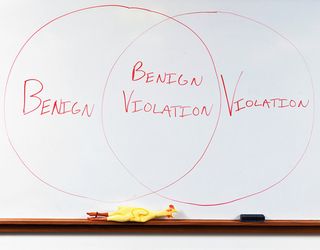
McGraw and Caleb Warren, a doctoral student, presented their elegantly simple formulation in the August 2010 issue of the journal Psychological Science. Their paper, “Benign Violations: Making Immoral Behavior Funny,” cited scores of philosophers, psychologists, and neuroscientists (as well as Mel Brooks and Carol Burnett). The theory they lay out: “Laughter and amusement result from violations that are simultaneously seen as benign.”

An Open Letter to Mexico’s Politicians and Criminals

Emiliano_Zapata_en_la_ciudad_de_Cuernavaca Javier Sicilia in Naked Punch:

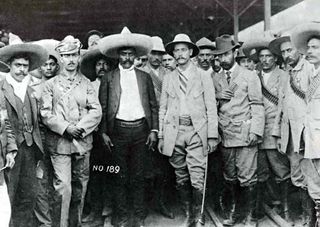
The brutal assassination of my son, Juan Francisco, of Julio César Romero Jaime, of Luis Antonio Romero Jaime, and of Gabriel Anejo Escalera, is added to so many other boys and girls who have been assassinated just the same throughout the country, not only because of the war unleashed by the government of Calderón against organized crime, but also the rotting of the heart that has been wrought by the poorly labeled political class and the criminal class, which has broken its own codes of honor.

I do not wish, in this letter, to speak with you about the virtues of my son, which were immense, nor of those of the other boys that I saw flourish at his side, studying, playing, loving, growing, to serve, like so many other boys, this country that you all have shamed. Speaking of that doesn’t serve for anything more than to move what already moves the heart of the citizenry to indignation. Neither do I wish to talk about the pain of my family and the families of each one of the boys who were destroyed. There are not words for this pain. Only poetry can come close to it, and you do not know about poetry. What I do wish to say to you today from these mutilated lives, from the pain that has not name because it is fruit of something that does not belong in nature – the death of a child is always unnatural and that’s why it has no name: I don’t know if it is orphan or widow, but it is simply and painfully nothing – from these, I repeat, mutilated lives, from this suffering, from the indignation that these deaths have provoked, it is simply that we have had it up to here.

We have had it up to here with you, politicians – and when I say politicians I do not refer to any in particular, but, rather, a good part of you, including those who make up the political parties – because in your fight for power you have shamed the fabric of the nation. Because in middle of this badly proposed, badly made, badly led war, of this war that has put the country in a state of emergency, you have been incapable – due to your cruelties, your fights, your miserable screaming, your struggle for power – of creating the consensus that the nation needs to find the unity without which this country will not be able to escape. We have had it up to here because the corruption of the judicial institutions generates the complicity with crime and the impunity to commit it, because in the middle of that corruption that demonstrates the failure of the State, each citizen of this country has been reduced to what the philosopher Giorgio Agamben called, using a Greek word, “zoe”: an unprotected life, the life of an animal, of a being that can be violated, kidnapped, molested and assassinated with impunity. We have had it up to here because you only have imagination for violence, for weapons, for insults and, with that, a profound scorn for education, culture, and opportunities for honorable work, which is what good nations do. We have had it up to here because your short imagination is permitting that our kids, our children, are not only assassinated, but, later, criminalized, made falsely guilty to satisfy that imagination. We have had it up to here because others of our children, due to the absence of a good government plan, do not have opportunities to educate themselves, to find dignified work and spit out onto the sidelines become possible recruits for organized crime and violence. We have had it up to here because the citizenry has lost confidence in its governors, its police, its Army, and is afraid and in pain. We have had it up to here because the only thing that matters to you, beyond an impotent power that only serves to administrate disgrace, is money, the fomentation of rivalry, of your damn “competition,” and of unmeasured consumption which are other names of the violence.


Countervailing Powers: On John Kenneth Galbraith

JohnKennethGalbraithOWI Kim Phillips-Fein in The Nation:

In a 1930 essay titled “Economic Possibilities for our Grandchildren,” John Maynard Keynes ridiculed economists for having a high opinion of themselves and their work. As the Great Depression engulfed the world, Keynes looked back at historic rates of economic growth, arguing that the real problem people would face in the future was not poverty but the moral quandary of how to live in a society of such abundance and wealth that work would cease to be necessary. The “economic problem,” as he put it, was technical, unimportant in the larger scheme of things. “If economists,” he wrote, “could manage to get themselves thought of as humble, competent people, on a level with dentists, that would be splendid!” John Kenneth Galbraith—the Harvard-based economist whose books shaped the public conversation on economic matters for a generation in mid-twentieth-century America—would have agreed.

Today, given the rise of mathematical methods and computer modeling, economics is if anything even more labyrinthine, esoteric and inaccessible to the layman than it was in the days of Keynes and Galbraith. It is also more intellectually and politically ascendant than it was in the 1930s. Its methods now dominate much of the social sciences, having made inroads in law and political science. Its central theme of the superiority of free markets is the gospel of political life. This makes the publication of the Library of America edition of four of Galbraith’s best-known books—American Capitalism; The Great Crash, 1929; The Affluent Society and The New Industrial State—a cause for celebration. (The volume is edited by Galbraith’s son James, also an economist.) Galbraith delighted in puncturing the self-importance of his profession. He was a satirist of economics almost as much as a practitioner of it. He took generally accepted ideas about the economy and turned them upside down. Instead of atomistic individuals and firms, he saw behemoth corporations; instead of the free market, a quasi-planned economy. Other economists believed that consumers were rational, calculating actors, whose demands and tastes were deserving of the utmost deference. Galbraith saw people who were easily manipulated by savvy corporations and slick advertising campaigns, who had no real idea of what they wanted, or why. In many ways, our economic world is quite different from the one Galbraith described at mid-century. But at a time when free-market orthodoxy seems more baroque, smug and dominant than ever, despite the recession caused by the collapse of the real estate bubble, his gleeful skewering of the “conventional wisdom” (a phrase he famously coined) remains a welcome corrective.

Twilight for Qaddafi?

Qaddafi_6 Stephen M. Walt in Foreign Policy:

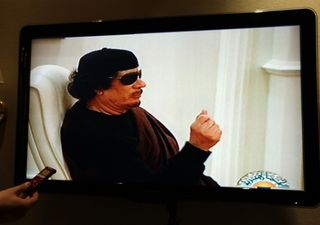
With the U.S. and NATO's thumb firmly on the scale, the balance of power in Libya seems to be shifting steadily toward the rebel forces. That's bad news for the Qaddafi family, though their lack of attractive alternatives to fighting on makes it unlikely that they will simply surrender. This outcome is also not that surprising, as the Libyan military was never a first-class fighting force and it was not going to have real trouble standing up to the rebel forces once they started getting lots of outside help. The danger, however, is that the rebel forces will not be able to consolidate control over the entire country without a lot more fighting, including the sort of nasty urban warfare that can get lots of civilians killed.

As with the invasion of Iraq, in short, the issue wasn't whether the West could eventually accomplish “regime change” if it tried. Rather, the key questions revolved around whether it was in our overall interest to do so and whether the benefits would be worth the costs. In the Iraqi case, it is obvious to anyone who isn't a diehard neocon or committed Bush loyalist that the (dubious) benefits of that invasion weren't worth the enormous price tag. There were no WMD and no links between Saddam and al Qaeda, and the war has cost over a trillion dollars (possibly a lot more). Tens of thousands of people died (including some 4500 Americans), and millions of refugees had to flee their homes. And for what? Mostly, a significant improvement in Iran's influence and strategic position.

In the Libyan case, same basic question. Hardly anyone thinks the Qaddafi family deserves to run Libya, and few if any will mourn their departure. But assuming the rebels win, will the benefits of regime change be worth the costs?

Parenting guru Bryan Caplan prescribes less fuss – and more fun

From Guardian:

Children-playing-while-fa-007 Amid the blizzard of books telling parents how to best raise their children, a new volume has shocked many middle-class families in the US. Its advice? Relax. Do less parenting. Let them eat pizza and watch more TV. Dr Bryan Caplan, an academic and economist from George Mason University in Virginia, believes parents are working far too hard at bringing up their children. In his book, Selfish Reasons to Have More Kids: Why Being a Great Parent is Less Work and More Fun than You Think, he recommends mothers and fathers take more of a backseat role and, crucially, abandon the hothousing. “What I'm trying to say is, if you are a person who likes the idea of kids, being a great parent is less work and more fun that you think. Right now, parents are 'overcharging' themselves for each kid,” said Caplan, who is a father of three – eight-year-old twins and a one-year-old.

He added: “Parents can sharply improve their lives without hurting their kids. Nature, not nurture, explains most family resemblance, so parents can safely cut themselves a lot of additional slack.” Caplan's style of “serenity parenting” comes in stark contrast to other models advocated, most prominently this year by Amy Chua, a Yale professor whose bestselling book Battle Hymn of the Tiger Mother extolled the virtues of tough love and hard work. Caplan believes, however, that “investment parenting” – piano and violin lessons, organised sports and educational games – doesn't have the slightest effect when the children move into adulthood. He suggests letting children drop sports and other activities unless they really love doing them.

More here.

Humans wired for grammar at birth

From MSNBC:

Noam “Blueberry!” I tell my 15-month-old son as I hand him one, hoping that he makes the connection between the piece of fruit and its name as I daydream about the glorious day when he says, “Please, Dad, can I have another blueberry?” For now, he points at the bowl full of tasty morsels and babbles something incomprehensible. His pediatrician, family and friends all assure me that he's on the right track. Before I know it, he'll be rattling off the request for another blueberry and much, much more.

This pointing and babbling is all a part of the language learning process, they say, even though the process itself remains largely a mystery. One prominent, though controversial, hypothesis is that some knowledge of grammar is hardwired into our brains. “There's some knowledge that the learner has that actually makes this process easier,” Jennifer Culbertson, a postdoctoral fellow at the University of Rochester, explained to me today. This hypothesis was originally proposed 50 years ago by philosopher and linguist Noam Chomsky at the Massachusetts Institute of Technology. Culbertson recently confirmed it with an experiment featuring a virtual green blob for a teacher named Glermi who speaks a nonsensical language called Verblog.

More here.

Saturday, May 14, 2011

a book to make one feel deeply and painfully, and also to think hard

Hitchens-COVER-sfSpan

Woodrow Wilson’s fatuous claim about the European war of 1914-18 — sarcastically annexed by Adam Hochschild for the title of this moving and important book — was an object of satire and contempt even as it was being uttered. “A peace to end peace,” commented Sir Alfred Milner, that powerhouse of the British war cabinet, as he surveyed the terms of the Versailles treaty that supposedly brought the combat to a close. Increasingly, modern historians have come to regard that bleak November “armistice” as a mere truce in a long, terrible conflict that almost sent civilization into total eclipse and that did not really terminate until the peaceful and democratic reunification of Germany after November 1989. Even that might be an optimistic reading: the post-1918 frontiers of the former Ottoman Empire (one of the four great thrones that did not outlast the “First” World War) are still a suppurating source of violence and embitterment. In his previous works, on subjects as diverse as the Belgian Congo and the victims of Stalinism, Hochschild has distinguished himself as a historian “from below,” as it were, or from the viewpoint of the victims. He stays loyal to this method in “To End All Wars,” concentrating on the appalling losses suffered by the rank and file and the extraordinary courage of those who decided that the war was not a just one. Since many of the latter were of the upper classes, some of them with close relatives in power, he is enabled to shift between the upstairs-downstairs settings of post-Edwardian England, as its denizens began in their different ways to realize that the world they had cherished was passing forever.

more from Christopher Hitchens at the NY Times here.

Liberalism: A Counter-History

4bc54c9e-7d18-11e0-a7c7-00144feabdc0

Liberal has been a dirty word in US politics for some time. President Barack Obama can supply convincing answers to the two preposterous charges about his identity that he has faced recently. One, that he is not really an American, was dismissed by producing his birth certificate. The other, that he is a socialist, is more difficult. It could be exploded by declaring that he is self-evidently liberal in his political convictions. But we can be fairly confident that he will not be using the L-word, even though it claims a political pedigree stretching back to the founding fathers. George Washington himself, that unillusioned soldier and great patriot, extolled “the benefits of a wise and liberal Government” and advocated “a liberal system of policy”. There was not only political principle but political expediency in proclaiming oneself motivated by liberal ideas in that era. The fact that the American Revolution was made in terms of this political prospectus helps explain its ultimate success. There were simply too many Britons who felt that the colonists actually had the better of the argument – they were the better liberals. For British Whigs, too, looked back reverently on canons of government that extolled liberty in thought, speech, religion, government and trade alike. It was part of the heritage of the Glorious Revolution of 1688. Indeed, for some more incendiary spirits on both sides of the Atlantic, the Good Old Cause of republican virtue was at stake. Little wonder, then, that the history of liberalism has often taken this Anglo-American tradition as its great exemplar.

more from Peter Clarke at the FT here.

monsters, etc.

French_Monster3

Scan through digital images from the Aberdeen Bestiary and you’ll find a marvelous stew of myth and reality. Alongside familiar animals — leopards, panthers, hyenas — this glorious 12th century illuminated manuscript includes some strange ones: A satyr, for instance, with a humanoid shape and a thoughtful expression on its face, and a dazzling phoenix, resting in a goblet as flames encircle the cup’s rim. Bestiaries were attempts in the Middle Ages to catalog the world’s living things, whether they had been truly observed or rumored to exist. And it’s no wonder that modern writers have been inspired by the idea of a fanciful menagerie to create whimsical bestiaries of their own — Borges did it, and so have the VanderMeers, Ann and Jeff, to give just two examples. Several new books made me think of these golden, beastly books of yore, for the subjects of “Tracking the Chupacabra,” “Monsters of the Gévaudan,” and “Kraken” seem like nothing less than fugitives from a bestiary — creatures that have slipped from its pages and fled to the jungles of South America, the woods of France and the depths of the sea.

more from Nick Owchar at the LA Times here.

As time goes by, it gets tougher to ‘just remember this’

From PhysOrg:

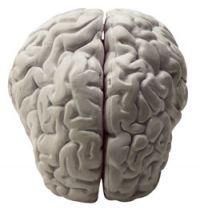
Brain It's something we just accept: the fact that the older we get, the more difficulty we seem to have remembering things. We can leave our cars in the same parking lot each morning, but unless we park in the same space each and every day, it's a challenge eight hours later to recall whether we left the SUV in the second or fifth row. Or, we can be introduced to new colleagues at a meeting and will have forgotten their names before the handshake is over. We shrug and nervously reassure ourselves that our brains' “hard drives” are just too full to handle the barrage of new information that comes in daily.

According to a Johns Hopkins neuroscientist, however, the real trouble is that our aging brains are unable to process this information as “new” because the brain pathways leading to the hippocampus — the area of the brain that stores memories — become degraded over time. As a result, our brains cannot accurately “file” new information (like where we left the car that particular morning), and confusion results.

More here.