Unexceptionalism: A Primer

E. L. Doctorow in the New York Times:
0429-doctorow-popupTo achieve unexceptionalism, the political ideal that would render the United States indistinguishable from the impoverished, traditionally undemocratic, brutal or catatonic countries of the world, do the following:

PHASE ONE

If you’re a justice of the Supreme Court, ignore the first sacrament of a democracy and suspend the counting of ballots in a presidential election. Appoint the candidate of your choice as president.

If you’re the newly anointed president, react to a terrorist attack by invading a nonterrorist country. Despite the loss or disablement of untold numbers of lives, manage your war so that its results will be indeterminate.

Using the state of war as justification, order secret surveillance of American citizens, data mine their phone calls and e-mail, make business, medical and public library records available to government agencies, perform illegal warrantless searches of homes and offices.

Take to torturing terrorism suspects, here or abroad, in violation of the Eighth Amendment of the Constitution, which prohibits the infliction of cruel and unusual punishment. Unilaterally abrogate the Convention Against Torture as well as the Geneva Conventions regarding the treatment of prisoners of war.

More here.

coming apart

RomneyDaytona

American conservatives have rarely dwelt on the idea of class. It comes up only twice in Patrick Allitt’s The Conservatives (2009), for example. Conservatives held that slavery could eliminate the possibility of class conflict by “linking masters and slaves together in extended families”; later on, they thought that fascism might get us “complete centralization and rational economic planning… without the communist resort to class warfare.” If, for the Left, class-consciousness was central to the battle for the various rights and privileges that we take for granted today, the Right thought that class consciousness disrupted an otherwise peaceful society (if it thought about it at all). So you know something odd is going on when the popular public policy book of the moment is by a conservative and concerns the emergence of class conflict. Charles Murray’s Coming Apart: The State of White America 1960-2010 builds on his previous bestseller, The Bell Curve (1994). That book caused a stir because it claimed that black people were, on average, less intelligent than white people. Murray used IQ tests as evidence, leading even conservatives like Brigette Berger to accuse him and his co-author of “methodological fetishism.” A less well-known argument of Bell Curve is that a permanent white underclass would develop just like the urban black underclass. Coming Apart, among other things, shows that Murray was right about that.

more from Justin Evans at The Point here.

love in the gulag

13058807

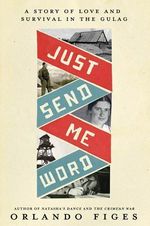
It’s an instructive story – a reminder, among other things, of how the camp system eased from the late Forties – but above all it is a human one. Lev’s first letter to Svetlana’s family from Pechora – he dared not approach her directly for fear she would want no more to do with him – is heartbreaking in its need and delicacy. Hers in reply is blazingly brave and true. Neither is a great writer, Svetlana in particular tending towards what Figes admits is the ‘somewhat dry and spare’ language of the Soviet technical intelligentsia (her loneliness is that of a nucleus shorn of its electrons, and weeping means ‘losing a lot of H₂O’). But on both sides love shines through – in mutual reassurance and determined optimism, in the complicated, coded planning for their all-too-brief meetings, and in jokey chat about everyday life. From Svetlana, we hear of food shortages – ‘we don’t see any meat, but there are such things as vegetarians, and it’s said they often live to be a hundred’ – and her burgeoning career researching synthetic rubber. Lev speaks of breakdowns at the wood-combine, fellow prisoners in and out of the camp infirmary, and the otherworldly beauty of the far northern skies. She spares him her pain at her childlessness; he spares her his fear that some bureaucratic turn of the wheel will put him on a convoy to one of the ‘special regime’ logging camps upriver, from which no letters can be sent and few prisoners return.

more from Anna Reid at Literary Review here.

Colossal in Scale, Appalling in Complexity

Article_szerlip

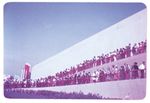
A maverick theater and industrial designer, Norman Bel Geddes is best remembered for creating the undisputed hit of the 1939 New York World’s Fair. Mounted in the midst of the Great Depression, the Fair focused on America’s promise of a utopian tomorrow. Geddes’s Futurama, a piece of “immersion theater,” took six hundred visitors at a time on a swooping, simulated airplane ride across America circa 1960. Few people in 1939 had ever ridden in a plane. Looking down, they saw everything from experimental farms and “floating” airports to seven-lane highways, multi-decked bridges, and radio-controlled traffic moving beneath suspended pedestrian walkways—all radical concepts at the time. More than twenty-four million people waited for up to five hours, in rain and hot sun, to experience it. Today, Futurama is considered the most iconic Fair exhibit of all time. Sponsored by General Motors to the tune of seven million dollars, the equivalent of ninety-one million dollars today, it was the largest animated model ever built: 35,738 square feet. It required the labor of some three thousand carpenters, electricians, draftsmen, and model-makers, and the manufacture of five-hundred thousand miniature buildings varying in scale, two million handmade miniature trees (eighteen different species, with imported moss for foliage), and fifty thousand futuristic silver automobiles—ten thousand of them designed to move.

more from B. Alexandra Szerlip at The Believer here.

How Science Became Interested in Everything

From The Telegraph:

It is only in recent years that science has become, in publishing terms, popular and attractive. But long before Richard Dawkins or Stephen Jay Gould, Primo Levi had sought to make science accessible to the layperson in his 1975 literary-scientific commentary, The Periodic Table. A lapidary integration of chemistry and autobiography, the book continued a tradition of writing from Galileo to Darwin which vanished in the 20th century following academic specialisation. Philip Ball, like Levi, displays a polymath’s enthusiasm for knowledge of all kinds, and writes of science with humility and intelligent generosity.

Ball’s new book, a readable survey of the role of curiosity in science, is a good example of what the French call haute vulgarisation – high-class popularisation. In pages of limpid prose, Ball brings difficult ideas down a level. Until the early 17th century, when pretty well anything of human concern was fit for study, curiosity was seen as dangerous and condemned as such. The view has never quite gone away. Even Karl Marx was shocked by Darwin’s materialist view of nature as bleak survivalism in On the Origin of Species (the book was a “bitter satire”, Marx reckoned, on human progress). Beneath Darwin’s bleak vision, however, was a childlike sense of wonder at the mysteries of the natural world and a delight in extracting order out of chaos. In Ball’s opinion, Darwin personifies “the modern struggle with curiosity”. The Bible had warned against curious-minded individuals like Darwin conducting investigations where they should not. (“For in much wisdom is much grief”: Ecclesiastes.) Even today, upholders of Biblical morality condemn Darwin as godless: man is not a lonely mutation grubbing with the brutes – he stands at the very pinnacle of God’s creation. In tasting of the fruit of knowledge, Darwin had sinned against the divine order of things.

More here.

One Drug to Shrink All Tumors

From Science:

CancerA single drug can shrink or cure human breast, ovary, colon, bladder, brain, liver, and prostate tumors that have been transplanted into mice, researchers have found. The treatment, an antibody that blocks a “do not eat” signal normally displayed on tumor cells, coaxes the immune system to destroy the cancer cells.

A decade ago, biologist Irving Weissman of the Stanford University School of Medicine in Palo Alto, California, discovered that leukemia cells produce higher levels of a protein called CD47 than do healthy cells. CD47, he and other scientists found, is also displayed on healthy blood cells; it's a marker that blocks the immune system from destroying them as they circulate. Cancers take advantage of this flag to trick the immune system into ignoring them. In the past few years, Weissman's lab showed that blocking CD47 with an antibody cured some cases of lymphomas and leukemias in mice by stimulating the immune system to recognize the cancer cells as invaders. Now, he and colleagues have shown that the CD47-blocking antibody may have a far wider impact than just blood cancers. “What we've shown is that CD47 isn't just important on leukemias and lymphomas,” says Weissman. “It's on every single human primary tumor that we tested.” Moreover, Weissman's lab found that cancer cells always had higher levels of CD47 than did healthy cells. How much CD47 a tumor made could predict the survival odds of a patient.

More here.

Wednesday Poem

Anne

By day there’s not a peep
from Anne who lives
in widowhood overhead
– except when she dozes off
over her diary
drops it on the floor

Otherwise not a peep

It’s another matter at night
then there’s all hell of a hubbub
Anne’s friends pound up the stairs
hollering their hellos
and crack open a feast
Some with a bottle of buttermilk
others nursing eggs

Towards dawn the neighbours are fed up
of fiddles and folksongs
The guests depart in haste
melting into the walls

When the police force the door
Anne sits at the kitchen table
writing

by Gerður Kristný
from Höggstaður
publisher: Mál og menning, Reykjavik, 2007
© Translation: 2008, Victoria Cribb

In original Icelandic after the jump

Read more »

Tuesday, May 1, 2012

3 Quarks Daily is looking for a summer intern

UPDATE: The application deadline has passed and we are no longer accepting any.

UPDATE: At my friend (and former 3QD columnist) Kris Kotarski's suggestion, we have decided to add a $500 honararium to the internship.

Hello,

We have decided to offer an unpaid summer internship for six weeks starting on June 18th and ending on July 27th of this year. You will work with me on all aspects of running the site and can expect to spend between ten and twenty hours per week on this work. It does not matter where you are physically located as long as you have a reliable broadband internet connection. Here's some of what you will be doing:

  • Doing one of the daily posts Tuesday through Sunday of each week
  • Writing one Monday column for 3QD, if you wish to do so
  • Dealing with reader submissions, questions, technical problems, etc.
  • Working with me and others on a major overhaul of the site's design and functionality
  • Scheduling the Monday columns and working with our writers
  • Working with advertizers
  • Working on our next philosophy prize
  • Coming up with new ideas to improve the user-experience of our readers
  • Assisting me in whatever else comes up, as things always do

The ideal candidate will have:

  • At least one year of college education
  • At least a fundamental knowledge of HTML
  • Facility with using computers and the internet
  • Ability to write clearly and organize material
  • Availability to speak with me by Skype each weekday between 9 am and 1 pm, EDT (we can be flexible about the timing)

The intern will gain valuable experience in everything that goes into running a weekly online magazine and one of the largest intellectual filter blogs in the world. If you would like to apply, please send a cover letter, a resume, and one letter of recommendation to me before May 19th. (The letter of recommendation should be emailed to me directly by whoever writes it.) My email address is on our “About Us” page. We will make a decision and announce it here on May 28th.

I look forward to hearing from you.

Best wishes,

Abbas

Occupy Activists Resurrect May Day for Americans

Peter Dreier in The Nation:

ScreenHunter_02 May. 01 19.46Unlike the rest of the world’s democracies, the United States doesn’t use the metric system, doesn’t require employers to provide workers with paid vacations, hasn’t abolished the death penalty, and doesn’t celebrate May Day as an official national holiday.

Outside the US, May 1 is international workers’ day, observed with speeches, rallies, and demonstrations. Ironically, this celebration of working-class solidarity originated in the US labor movement in the United States and soon spread around the world, but it never earned official recognition in this country. Since 2006, however, American unions and immigrant rights activists have resurrected May 1 as a day of protest. And this year, in the wake of Occupy Wall Street and the rebirth of a national movement for social justice, a wide spectrum of activist groups will be out in the streets to give voice to the growing crusade for democracy and equality.

The original May Day was born of the movement for an eight-hour workday. After the Civil War, unregulated capitalism ran rampant in America. It was the Gilded Age, a time of merger mania, increasing concentration of wealth, and growing political influence by corporate power brokers known as Robber Barons. New technologies made possible new industries, which generated great riches for the fortunate few, but at the expense of workers, many of them immigrants, who worked long hours, under dangerous conditions, for little pay.

More here.

Why Are Physicists Hating On Philosophy (and Philosophers)?

Adam Frank photoAdam Frank in NPR's Cosmos and Culture blog, 13.7 [h/t: Jennifer Ouellette]:

Krauss is not alone in his blindly dismissive attitude concerning philosophy. There is also the case of Leonard Susskind.

Susskind is an accomplished theorist who has proposed changing the very nature of cosmological science in light of recent developments in String Theory. In his book The Cosmic Landscape, Susskind argued that physics must give up the ideal of predicting the nature of the one Universe we observe because String Theory can't make these kinds of predictions. It's a huge claim that draws upon a contentious idea known as the “anthropic principle.” Ironically Susskind does not exert much effort dealing with the deep and deeply philosophical objections to this perspective. Waving his hands, Susskind poo-poo's philosophy's perspective on his radical idea saying “Frankly, I would have preferred to avoid the Philosophical discourse the Anthropic Principle excites”. Yea, obviously.

Susskind and Krauss think they are channelling the great Richard Feynman in their dismissive attitudes toward philosophy. Richard Feynman was famously scornful of the philosophy of science. He thought it was immune to finding relevant results or making real progress. But the problem is that we aren't living in Richard Feynman's age of physics anymore. Something strange happened on the way to the modern intersection of cosmology and foundational physics. Some measure of philosophical sophistication seems helpful, if nothing else, in confronting this new landscape.

New World Trade Center Tower Will Reclaim the Manhattan Sky

30tower1-popup

David W. Dunlap in the New York Times:

If the winds are forgiving enough over Lower Manhattan — up where workers can see the whole outline of the island’s tip — a steel column will be hoisted into place Monday afternoon atop the exoskeleton of 1 World Trade Center and New York will have a new tallest building.

More important, downtown will have reclaimed its pole star.

Poking into the sky, the first column of the 100th floor of 1 World Trade Center will bring the tower to a height of 1,271 feet, making it 21 feet higher than the Empire State Building.

After several notorious false starts, a skyscraper has finally taken form at ground zero. At first, its twin cranes could be detected creeping over the jumbled tops of nearby towers. Then, at the rate of a new floor every week, it began reshaping the Manhattan skyline as seen from New Jersey. By late last fall, it could be spotted from the control tower at La Guardia Airport, eight and a half miles away.

A tower has again become an inescapable presence at the southern end of Manhattan.

More here.

A Separation directed by Asghar Farhadi

Alan A. Stone in the Boston Review:

ScreenHunter_01 May. 01 17.36While the Iran-Israel conflict threatened to explode into yet another war in the Middle East, filmmakers from both countries were honored together at an event before this year’s Oscars. Each country had a nominee for best foreign film—Footnote, from Israel, and A Separation, the winner, from Iran. The films and their makers had much in common, and the Israelis reported warm exchanges; they had been invited to Tehran and the Iranians to Tel Aviv. It will be a political miracle if that cultural exchange happens, but Iranian writer-director Asghar Farhadi has already achieved a miracle of modern cinema with A Separation.

This unpretentious, low-budget film, which Farhadi says he made for an Iranian audience, has touched the hearts and minds of global viewers. Critics, festival audiences, and cineastes everywhere are united in their praise. In Europe and Asia it was acclaimed best picture of the year. Woody Allen agrees. Totally without glitz and sizzle, A Separation is the thing itself—an art form that speaks to all humanity.

Farhadi’s overseas triumphs may bring his downfall in Iran. The film has fueled the wrath of domestic critics who see him pandering to Western bias. His colleague Jafar Panahi is under house arrest and barred from filmmaking. The theocrats were unhappy about Farhadi’s Oscar acceptance speech, in which he offered his “award to the people of my country, the people who respect all cultures and civilizations and despise hostility and resentment.”

More here.

Flannery O’Connor and the Habit of Art

From The Paris Review:

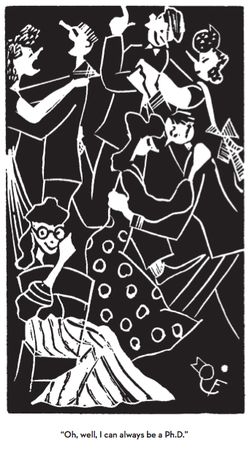
Oh-Well-I-can-always-be-a-PhD“For the writer of fiction,” Flannery O’Connor once said, “everything has its testing point in the eye, and the eye is an organ that eventually involves the whole personality, and as much of the world as can be got into it.” This way of seeing she described as part of the “habit of art,” a concept borrowed from the French Catholic philosopher Jacques Maritain. She used the expression to explain the way of seeing that the artist must cultivate, one that does not separate meaning from experience. The visual arts became one of her favorite touchstones for explaining this process. Many disciplines could help your writing, she said, but especially drawing: “Anything that helps you to see. Anything that makes you look.” Why was this emphasis on seeing and vision so important to her in explaining how fiction works? Because she came to writing from a background in the visual arts, where everything the artist communicates is apprehended, first, by the eye.

…Beginning at about age five, O’Connor drew and made cartoons, created small books, and wrote stories and comical sketches, often accompanied by her own illustrations. Although her interest in writing was equally evident, by the time she reached high school her abilities as a cartoonist had moved to the forefront. After her first cartoon was published in the fall of 1940, her work appeared in nearly every issue of her high-school and college newspapers, as well as yearbooks—roughly a hundred between 1940 and 1945—and most of these were produced from linoleum block cuts. When she graduated from the Georgia State College for Women in Milledgeville in 1945, she was a celebrated local cartoonist preparing for a career in journalism that would, she hoped, combine work as a professional writer and cartoonist.

More here.

Assumptions and Attitudes Don’t Survive Cancer

Abigail Zuger M.D. in The New York Times:

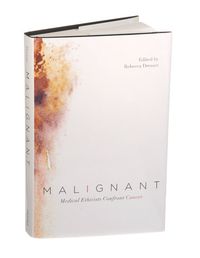
BookDoctors who become ill have written about the emotional whiplash of the experience so often that the “had I but known” theme has grown a little old. Two new books bring some welcome variation: Many other professionals spend their workdays focused on the body, and even those who don’t actually perform hands-on care may find precious assumptions demolished by serious illness. Ethicists are medicine’s theoreticians; some are primarily scholars, while others head right onto hospital wards as a combination of critic, coach and umpire. They come to know the terminology of illness and the perils of treatment very well, and because insoluble clinical problems are their daily fodder, they have rehearsed the standard “if this ever happens to me” scenario as often as anyone. Still, nothing prepares anyone for the horizontal experience, as seven medical ethicists discovered when they or a spouse received a diagnosis of cancer. They were so collectively shaken that they formed a discussion group, and then, like good academics, turned the proceedings into a book.

Rebecca Dresser, editor of “Malignant,” is a professor of law and medical ethics at Washington University in St. Louis and a survivor of oral cancer. As an ethicist, she has a firm professional commitment to patient autonomy, the doctrine of “it’s your body and you alone decide what happens to it”. As a patient, she got herself into serious trouble wielding that autonomy: Unable to eat or drink, she firmly refused a feeding tube until she almost starved to death. Finally, her caretakers strong-armed her into changing her mind, and she eventually made a full and grateful recovery.

As director of the bioethics program at the University of Wisconsin, Dr. Norman Fost regularly deplores our national pastime of wasteful and unnecessary medical testing. Yet as a patient, he writes, he has personally benefited enormously from just such testing, with not one, not two but three separate serious illnesses diagnosed with entirely unwarranted tests, leaving him with a bad case of what he calls “hypocrite’s guilt.”

More here.

From Faust to Frankenstein

194_feature_williams1

Should people be paid for donating blood? In the United States, there is a mixed economy of free donation and the sale of blood through commercial blood banks. Predictably, most of the blood that is dealt with on a commercial basis comes from the very poor, including the homeless and the unemployed. The system entails a large-scale redistribution of blood from the poor to the rich. This is only one of the examples cited by Michael Sandel, the political philosopher and former Reith Lecturer, in his survey of the rapidly growing commercialisation of social transactions, but it is symbolically a pretty powerful one. We hear of international markets in organs for transplant and are, on the whole, queasy about it; but here is a routine instance of life, quite literally, being transferred from the poor to the rich on a recognised legal basis. The force of Sandel’s book is in his insistence that we think hard about why exactly we might see this as wrong; we are urged to move beyond the “yuck factor” and to consider whether there is anything that is intrinsically not capable of being treated as a commodity, and if so why. The examples related show that in practice there is virtually nothing that has not somewhere or other (usually but not exclusively in the USA) been packaged as a commodity and subjected to “market” principles.

more from Rowan Williams at Prospect Magazine here.

on the believer

201216critics-opener

Recently I read, or partially read, thereby proving the point of this book, The Shallows by Nicholas Carr (British subtitle: How the Internet is Changing the Way We Think, Read and Remember). Carr tells the story of a friend who can’t read blog posts that exceed three paragraphs before he starts skimming. So there’s our new boundary, I guess – not page real estate, but people’s evolved (and shortened) attention spans. It suggests an interesting new way to approach structure; and, ironically, it tosses us back into the conundrum of the newspaper review squib, the limits of which initiated the creation of the Believer in the first place. No matter how well (or not well) something might be written, the new challenge is this: how much time a reader will read any text before his or her brain flips to another text. If, as Carr argues, our brains have reconfigured themselves to comply with this attention-hopping model, shouldn’t we want, in part, to appeal to those brains? In which case how can we justify continuing to produce a print magazine?

more from Heidi Julavits at The New Statesman here.

What happens to poetry when everybody is a poet?

Perloff_37.3_books

The national (or even transnational) demand for a certain kind of prize-winning, “well-crafted” poem—a poem that the New Yorker would see fit to print and that would help its author get one of the “good jobs” advertised by the Association of Writers & Writing Programs—has produced an extraordinary uniformity. Whatever the poet’s ostensible subject—and here identity politics has produced a degree of variation, so that we have Latina poetry, Asian American poetry, queer poetry, the poetry of the disabled, and so on—the poems you will read in American Poetry Review or similar publications will, with rare exceptions, exhibit the following characteristics: 1) irregular lines of free verse, with little or no emphasis on the construction of the line itself or on what the Russian Formalists called “the word as such”; 2) prose syntax with lots of prepositional and parenthetical phrases, laced with graphic imagery or even extravagant metaphor (the sign of “poeticity”); 3) the expression of a profound thought or small epiphany, usually based on a particular memory, designating the lyric speaker as a particularly sensitive person who really feels the pain, whether of our imperialist wars in the Middle East or of late capitalism or of some personal tragedy such as the death of a loved one.

more from Marjorie Perloff at Boston Review here.

Monday, April 30, 2012

Perceptions

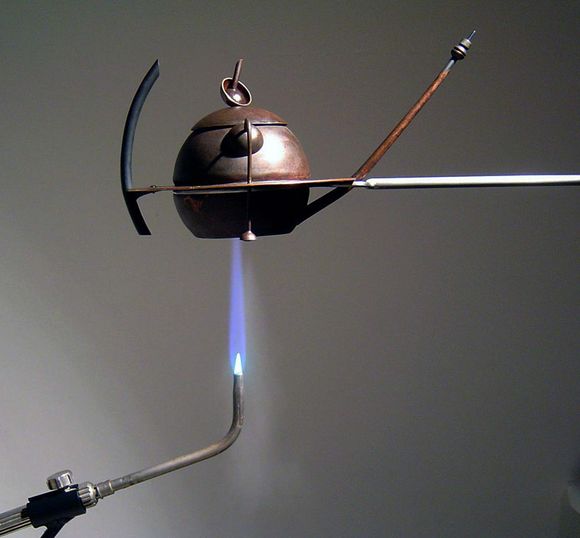
Self-regulating kettle
Peter Evonuk. Self-regulating Tea Kettle. 2004.

Steel, copper, walnut, tin.

“…boiled water is a benchmark of human achievement. Vessels utilized for this sanitizing state change have been available since before recorded history, yet with the exception of changing materials and aesthetic preference, very little has been done to improve the kettle. An early innovation, the “lid”, was developed to expedite the process to a certain degree and keep crap out of your water. More recently the steam whistle was invented and today, informs us of active boiling wile releasing pressurized steam. The Self-Regulating Tea Kettle is designed to offer a significant contribution to the evolution of this venerable instrument …”

More here and in Spanish here.