How Humans Became Moral Beings

From Smithsonian:

Why do people show kindness to others, even those outside their families, when they do not stand to benefit from it? Being generous without that generosity being reciprocated does not advance the basic evolutionary drive to survive and reproduce. Christopher Boehm, an evolutionary anthropologist, is the director of the Jane Goodall Research Center at the University of Southern California. For 40 years, he has observed primates and studied different human cultures to understand social and moral behavior. In his new book, Moral Origins, Boehm speculates that human morality emerged along with big game hunting. When hunter-gatherers formed groups, he explains, survival essentially boiled down to one key tenet—cooperate, or die.

First of all, how do you define altruism?

Basically, altruism involves generosity outside of the family, meaning generosity toward non-kinsmen.

Why is altruism so difficult to explain in evolutionary terms?

A typical hunter-gatherer band of the type that was universal in the world 15,000 years ago has a few brothers or sisters, but almost everyone else is unrelated. The fact that they do so much sharing is a paradox genetically. Here are all these unrelated people who are sharing without being bean counters. You would expect those who are best at cheating, and taking but not giving, to be coming out ahead. Their genes should be on the rise while altruistic genes would be going away. But, in fact, we are evolved to share quite widely in bands.

More here.
Wednesday Poem

IF THE FALLING OF A HOOF
If the falling of a hoof
Ever rings the temple bells,
If a lonely man's final scream
Before he hangs himself
And the nightingale's perfect lyric
Of happiness
All become an equal cause to dance,
Then the Sun has at last parted
Its curtain before you –
God has stopped playing child's games
With your mind
And dragged you backstage by
The hair,
Shown to you the only possible
Reason
For this bizarre and spectacular
Existence.
Go running through the streets
Creating divine chaos,
Make everyone and yourself ecstatically mad
For the Friend's beautiful open arms.
Go running through this world
Giving love, giving love,
If the falling of a hoof upon this earth
Ever rings the
Temple
Bell.
.
by Hafiz
from The Gift
Versions by Daniel Ladinsky

burning LA

1335804805

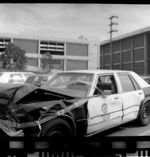
TWENTY YEARS AFTER THE SO-CALLED RODNEY KING RIOT, we can do little more than commemorate the deliberate reign of ignorance that has deflected every attempt to understand the deep causes of the complex events that unfolded in the last week of April 1992. Everyone, of course, will agree that the acquittal of King’s assailants was the proximate cause or signal for the volcanic social eruption that followed. But beyond that fact who can say with confidence what happened or why? We don’t know, for example, even to the nearest thousand, how many people were actually arrested. The Sheriff’s Department never managed to reconcile wild discrepancies in the number of those reported booked in the week following April 29. At one point the official figure was around 18,000, but the Sheriff Sherman Block’s jailers could only produce records for about 12,000. The ACLU, the only organization to undertake any serious investigation of the riot week, was able to analyze about half of the arrest reports. Statistics confounded stereotypes: only 38 percent of the arrestees, for example, were African Americans. Moreover about 70 percent of the arrests took place outside of historical South Central Los Angeles.

more from Mike Davis at the LA Review of Books here.

the earth’s axis start to tilt

1_listing

Standing outside Qatar’s Museum of Islamic Art, in Doha, watching the sun rise over the Persian Gulf, you’re reminded of Mies van der Rohe’s dictum: ‘less is more’. Van der Rohe was a hero of the man who made this building, and I.M. Pei’s new museum sums up that minimalist rule of thumb. Doha’s modern skyline is a panorama of skyscrapers, but they all look trite and transient beside this discreet masterpiece. Pei’s Museum of Islamic Art is only a few years old, but it feels as if it’s stood here for a century. It’s part of the landscape, the way great architecture ought to be. Sometimes, a single building can sum up an entire époque. Qatar is now, per capita, the richest country in the world (displacing Luxemburg) and its Museum of Islamic Art encapsulates its cultural ambitions. In this sleek new citadel on Doha’s waterfront, you can feel the earth’s axis start to tilt, as the balance of power shifts from West to East. Most architects dream in vain of creating one such iconic building. For I.M. Pei it’s become a habit. He did it in Paris. He did it in Berlin. And now he’s done it here.

more from William Cook at The Spectator here.

Leaving Wall Street

Image

When you are wealthy and successful, you have a choice. You can believe your success stems from luck and privilege, or you can believe it stems from hard work. Very few people like to view their success as a matter of luck. And so, perhaps understandably, most people on Wall Street believe they have earned their jobs, and the money that follows. While there are many on Wall Street who come from wealthy backgrounds, there are also many people from very humble backgrounds. In my experience, it is often those who do not come from privilege who are the system’s fiercest defenders. When I was a summer intern, we met with various executives who’d tell us about their careers and pitch us on the firm. The aim was to sell the firm to everyone, even though only a few of us would ultimately be offered full-time positions at the firm. It had an element of redundancy to it, since we were clearly already interested in the firm, or we wouldn’t be there at all. The effect of these talks, then, was to make a competitive situation even more competitive. Welcome to Wall Street.

more from Alexis Goldstein at n+1 here.

Tuesday, May 8, 2012

Robot-human marriage is in our future

Daniel H. Wilson in Slate:

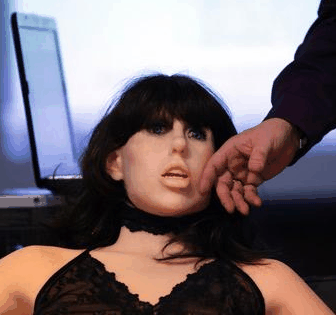
ScreenHunter_21 May. 08 15.45It’s hard to think of a more attention-grabbing title than “Robots, Men, and Sex Tourism”—especially in the academic world.

Written by researchers from New Zealand’s University of Wellington and published recently in the journal Futures, the paper predicts that in the decades to come, humans will patronize robot-staffed brothels, freeing them from the guilt associated with visiting a flesh-and-blood prostitute. Perhaps predictably, it sparked a lively conversation about whether the sex industry could be automated—and not a little squeamishness about the whole idea of robot-human relations.

That at least some of us will be having sexual intercourse with robots in the future should be obvious by now. Somebody out there will make love to just about any consumer good that enters the home (and if that’s not the first rule of product design, it should be).

But will our robot-human relations be relegated to the bedroom, or will love enter the equation, too? Is our society headed in a direction that will support this transition? Looking at current trends, I’d say that the answer is a resounding yes.

More here.

America’s idiot rich

Alex Pareene in Salon:

ScreenHunter_20 May. 08 15.37Some unknown but alarming number of ultra-rich Americans are now basically totally delusional and completely divorced from reality. This is now an inescapable fact, confirmed by multiple media accounts of billionaire thought and an entire special issue of the New York Times Magazine.

Here’s a brief list of insane things that are apparently common knowledge among the billionaire class:

  • That President Obama and the Democratic Party have treated wealthy finance industry titans maliciously and unfairly.
  • That the fact that they are perversely wealthy and growing richer during a period of mass unemployment and staggering debt is a sign that the economy is functioning correctly.
  • That poor people, and not the finance industry, are responsible for the financial crisis and subsequent recession.
  • That the ultra-wealthy are wealthy because they are smarter and work harder than everybody else, and that they are resented for their success.
  • That the ultra-wealthy in general, and finance industry executives in particular, are the victims of widespread prejudice akin to that faced by ethnic minorities.

There can be no reasoning with people this irrational. Any attempt to do so will fail, as Barack Obama, whose main goal is to maintain, not upend, the system that made these people so disgustingly wealthy, is learning. It’s growing harder and harder to pretend that the fantastically wealthy have a sophisticated understanding of politics — or math, or economics, or cause-and-effect.

More here.

The Gruesome History of Eating Corpses as Medicine

Maria Dolan in Smithsonian Magazine:

ScreenHunter_19 May. 08 15.10

The last line of a 17th century poem by John Donne prompted Louise Noble’s quest. “Women,” the line read, are not only “Sweetness and wit,” but “mummy, possessed.”

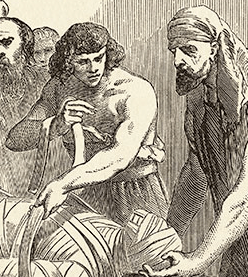
Sweetness and wit, sure. But mummy? In her search for an explanation, Noble, a lecturer of English at the University of New England in Australia, made a surprising discovery: That word recurs throughout the literature of early modern Europe, from Donne’s “Love’s Alchemy” to Shakespeare’s “Othello” and Edmund Spenser’s “The Faerie Queene,” because mummies and other preserved and fresh human remains were a common ingredient in the medicine of that time. In short: Not long ago, Europeans were cannibals.

Noble’s new book, Medicinal Cannibalism in Early Modern English Literature and Culture, and another by Richard Sugg of England’s University of Durham, Mummies, Cannibals and Vampires: The History of Corpse Medicine from the Renaissance to the Victorians, reveal that for several hundred years, peaking in the 16th and 17th centuries, many Europeans, including royalty, priests and scientists, routinely ingested remedies containing human bones, blood and fat as medicine for everything from headaches to epilepsy.

More here.

The art of staying sane

From The Independent:

PerrySandisonPhilippa Perry lives in a tall old townhouse in a leafy square near London's King's Cross, with her husband Grayson, their daughter Flo, Grayson's teddy bear, Alan Measles, and a large and terrifying Maine Coon cat called Baddie. Like the rest of the house, the sitting room is filled with art: Grayson's glazed ceramic pots line the shelves, one commemorating the couple's wedding in 1992; propped against the sofa is a series of small canvases, on which Philippa has copied the dot paintings of Yayoi Kusama in felt-tip; and on the wall is a vast portrait of Grayson in a wedding dress. He's a Turner Prize-winning artist and Britain's best-known transvestite. She's a psychotherapist. Obvious first question: is Grayson as intriguing a psychological case study as people might assume? “He's my husband!” Perry responds. “I've been with him since 1987. He's like one of my limbs! I can't see him like other people see him. He's my friend, my lover, my confidante. I'm so used to him.” But there was a time, wasn't there, when psychotherapists might have tried to “fix” cross-dressers? “People tried to fix homosexuality as well. But I hope we've moved on from that. Honouring an individual's subjective experience is basic psychotherapy.”

Basic psychotherapy is the subject of Perry's new book, How to Stay Sane, part of a series of six small self-help paperbacks published by The School of Life, Alain de Botton's idea-sowing social enterprise. As someone who'd instinctively resist therapy and ridicule self-help, I found the book genuinely interesting, and potentially helpful. Perry breaks her discipline down into four essential areas: “self-observation”, “relating to others”, “stress” and “personal narrative”. After explaining the significance of each, she suggests useful exercises. Self-observation, for example, can be improved by keeping a diary, or even a daily breathing exercise.

More here.

chromosomal abnormalities are associated with aging and cancer

From PhysOrg:

ChromoTwo new studies have found that large structural abnormalities in chromosomes, some of which have been associated with increased risk of cancer, can be detected in a small fraction of people without a prior history of cancer. The studies found that these alterations in chromosomes appear to increase with age, particularly after the age of 50, and may be associated with an increased risk for cancer. These studies were conducted by two consortia, one led by scientists at the National Cancer Institute (NCI), and one by Gene Environment Association Studies (GENEVA) which is sponsored by the National Human Genome Research Institute (NHGRI). NCI and NHGRI are both parts of the National Institutes of Health. The results of the studies were published online May 6, 2012, in Nature Genetics. Mosaicism, the type of structural abnormality in chromosomes that is described in these studies, results from a DNA alteration that is present in some of the body's cells but not in others. A person with mosaicism has a mixture of normal and mutated cells.

“These two studies provide large population-based evidence that genetic mosaicism increases with age and could be a risk factor for cancer. This last point raises an important issue with respect to the stability of a person's genome and suggests that detection of genetic mosaicism could be an early marker for detecting cancer, or perhaps other chronic diseases,” said Stephen Chanock, M.D., co-author and chief, Laboratory of Translational Genomics, Division of Cancer Epidemiology and Genetics, NCI. Scientists began observing an unexpected frequency of structural abnormalities in chromosomes during quality control checks of data from genome-wide association studies (GWAS) conducted in the GENEVA consortium and similar programs at NCI. These studies involve comparing hundreds of thousands of common differences across individual patients’ DNA to see if any of those variants are associated with a known trait, such as cancer. At first, these abnormalities were thought to be errors or outcomes of laboratory procedures. But they were found consistently at a low frequency, so the scientists wondered with what frequency these structural abnormalities occurred in the general population.

More here.

Tuesday Poem

Lament for Makers

Not bird not badger not beaver not bee

Many creatures must
make, but only one must seek

within itself what to make

My father’s ring was a B with a dart
through it, in diamonds against polished black stone.

I have it. What parents leave you
is their lives.

Until my mother died she struggled to make
a house that she did not loathe; paintings; poems; me.

Many creatures must

make, but only one must seek
within itself what to make

Not bird not badger not beaver not bee

Teach me, masters who by making were
remade, your art.

.

by Charles Bidart
from Star Dust
publisher: Farrar, Straus and Giroux, 2005

closing out the Bolaño decade

570_Bolano1

Next year marks the tenth anniversary of the death of Roberto Bolaño, the prolific genre-bender whose narratives and exile from Chile began seriously enchanting the literary world in 2005, the year The New Yorker began publishing his short stories. Altogether, nine stories have appeared in the magazine, including January’s “Labyrinth,” which accompanied a curious photograph. But I’ll get to that in a moment. First, a bit about Bolaño’s following, which may be credited in part to his early exit from said world at the age of 50, by way of liver failure. For the uninitiated, “Gomez Palacio,” his posthumous New Yorker debut about a tormented writer interviewing for a teaching post in a remote Mexican town, tends to work a kind of magic. A ragged copy of the issue in which “Gomez Palacio” appeared caught critic Francine Prose in a waiting room: “I was glad the doctor was running late,” she wrote later in reviewing Last Evenings on Earth, “so I could read the story twice, and still have a few minutes left over to consider the fact that I had just encountered something extraordinarily beautiful and (at least to me) entirely new.”

more from R.B. Moreno at The Millions here.

debating occupy

Banksy boston1

On September 24, 2011, Michael Kazin published an important essay in the New York Times, “Whatever Happened to the American Left?” In it he examined the “populist left’s” historic role in shaping politics and policy discussions in the United States, especially in moments of past capitalist crisis and the relative failure of this Left to gain influence in the current crisis. A week before this essay was published, unremarked by almost everyone in America, several hundred protesters, inspired by developments in Tahrir Square in Cairo, had gathered in lower Manhattan to protest economic inequality and the decline of democracy in America. By the middle of October, Occupy Wall Street had riveted the attention of the nation. Until winter weather and municipal police forces shut down Occupy Wall Street in Zuccotti Park and scores of other encampments that had sprung up around the country, the Occupy movements created a space for left politics that had not existed for a very long time. IN LIGHT of these unexpected developments, it seemed appropriate to ask Kazin to revisit his New York Times essay and the pessimistic reading of post-1960s left politics it presented. In “The Fall and Rise of the U.S. Populist Left,” an updated and revised version of the New York Times piece, Kazin discerns possibility in the Occupy movements, while expressing skepticism about their desire to be “leaderless” and warning how hard it will be to escape America’s history of “failed ideas and strategies on the left.”

more from Dissent here.

prince of parataxis

Cover00

Parataxis is Édouard Levé’s best friend. Parataxis—also John Ashbery’s best friend—concerns the placement, side by side, of two sentences whose meanings don’t transparently connect. Parataxis, however, as concept, has leached its glories onto the landscape at large; any reader of contemporary culture is contaminated by paratactic energies, a stylistic phenomenon that Levé defends in his penultimate book, a work of unrepentantly naked yet stylistically errant autobiography, Autoportrait. He writes: “Raymond Poulidor is one of the least sexy names I know. I like salad mainly for the crunch and the vinaigrette.” Levé is a French writer and photographer whose work had overtones of the Conceptual (for one project, he photographed American towns that “share a name with a city in another country: Berlin, Florence, Oxford, Canton, Jericho, Stockholm, Rio, Delhi, Amsterdam, Paris, Rome, Mexico, Syracuse, Lima, Versailles, Calcutta, Baghdad”). He is most famous now for having committed suicide in 2007 a few days after giving his publisher a slim novel called Suicide, written entirely in the second person, and addressed to a “you” who has already slain himself: “To portray your life in order would be absurd: I remember you at random.”

more from Wayne Koestenbaum at Bookforum here.

Monday, May 7, 2012

Sunday, May 6, 2012

Deus in Machina: poetic technique in Derek Walcott’s Omeros

Andrew Singer in Open Letters Monthly:

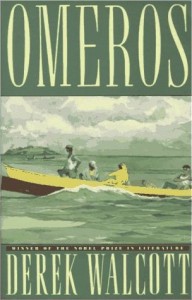
Omeros-192x300Much has been written about Derek Walcott’s epic book-length poem, Omeros, since its publication in 1990 — deservedly so — but little has been attempted of direct poetic analysis. Poetry, especially formal verse, spans a territory that borders music on one side and meaning on the other. A masterful poet unfolding verse is keenly attuned to both, exploring and playing on their interrelation in continually surprising ways. Recognizing this interplay between sound and sense is one of the great refined pleasures of reading an accomplished poem. Suffusing every part of Omeros, regardless of action or complexity, philosophical meaning or depth of thought, is its music. To get at this most directly, let us examine a section where nothing special happens, where no particularly overarching complexity of meaning will distract.

Omeros is presented in seven Books, totaling 64 chapters, of three sections each. All but Chapter XXXIII, section 3, are written in hexameters, echoing Homer’s Odyssey, albeit playing with the meter freely. The lines are further grouped in triplet stanzas, acknowledging Dante, albeit without adhering to Dante’s rhyme scheme. Omeros is fully rhymed, although, like the meter, its rhyme scheme is fluid and proceeds from the music, with deeply refined effect. Every line in Omeros has a rhyme somewhere nearby.

More here.

What Money Can’t Buy: Michael Sandel on a society where everything could be up for sale

Tana Wojczuk in Guernica:

ScreenHunter_17 May. 07 09.00Author Michael Sandel’s new book What Money Can’t Buy is troubling in the best sense of the word—it “troubles” the complacency with which Americans have received the rapid encroachment of the market into private life. Economics has expanded in the post-freakonomics world and in a global market, according to Sandel, and that expansion has resulted in an historically intrusive use of market forces into “non-market spheres” like education.

In his book, Sandel explains in both intellectual and historic terms how expansionist ideas of the role of economics coincided with the Reaganite elevation of lassiez-faire economics into something like a religion. Sandel frames the issues he finds problematic and shows how “intrinsic values” such as the love of learning for its own sake, can be threatened when market forces are applied—for example, bribing students to do better in school or public schools seeking out corporate sponsors due to budget cuts.

The framework Sandel provides will ideally challenge readers to see the world differently, like the moment in the cult classic They Live (see Jonathan Lethem’s book-length criticism of the film) where the hero puts on a pair of bodacious ray-ban sunglasses and suddenly sees billboards advertising sunny vacations in fact read “OBEY.” What Money Can’t Buy identifies a few of the many areas where market encroachment is problematic (paying to kill an endangered rhino, paying for the right to pollute, branded education) and equips readers with the questions that, Sandel hopes, will begin a public debate about what money should or shouldn’t buy.

More here.

How to End This Depression

Paul Krugman in the New York Review of Books:

ScreenHunter_16 May. 07 08.55The depression we’re in is essentially gratuitous: we don’t need to be suffering so much pain and destroying so many lives. We could end it both more easily and more quickly than anyone imagines—anyone, that is, except those who have actually studied the economics of depressed economies and the historical evidence on how policies work in such economies.

The truth is that recovery would be almost ridiculously easy to achieve: all we need is to reverse the austerity policies of the past couple of years and temporarily boost spending. Never mind all the talk of how we have a long-run problem that can’t have a short-run solution—this may sound sophisticated, but it isn’t. With a boost in spending, we could be back to more or less full employment faster than anyone imagines.

But don’t we have to worry about long-run budget deficits? Keynes wrote that “the boom, not the slump, is the time for austerity.” Now, as I argue in my forthcoming book*—and show later in the data discussed in this article—is the time for the government to spend more until the private sector is ready to carry the economy forward again. At that point, the US would be in a far better position to deal with deficits, entitlements, and the costs of financing them.

More here.

Synesthesia May Explain Healers’ Claims of Seeing People’s ‘Aura’

From Science Daily:

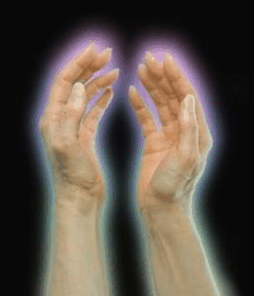
ScreenHunter_15 May. 07 08.51Researchers in Spain have found that at least some of the individuals claiming to see the so-called aura of people actually have the neuropsychological phenomenon known as “synesthesia” (specifically, “emotional synesthesia”). This might be a scientific explanation of their alleged ability.

In synesthetes, the brain regions responsible for the processing of each type of sensory stimuli are intensely interconnected. Synesthetes can see or taste a sound, feel a taste, or associate people or letters with a particular color.

The study was conducted by the University of Granada Department of Experimental Psychology Óscar Iborra, Luis Pastor and Emilio Gómez Milán, and has been published in the journal Consciousness and Cognition. This is the first time that a scientific explanation has been provided for the esoteric phenomenon of the aura, a supposed energy field of luminous radiation surrounding a person as a halo, which is imperceptible to most human beings.

More here.