The Retired Terrorist: Osama bin Laden in Abbottabad

Rafia Zakaria in Guernica:

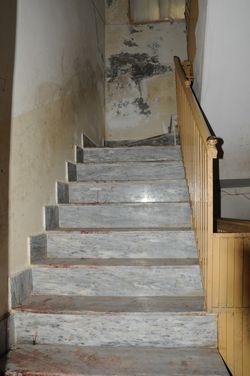
Osama-house-1-credit-shaukat-qadirOn pleasant afternoons, when he was not feeling ill, when the tumult of 23 children didn’t weigh too heavily on his nerves, when the onerous demands of being equally loving to three wives and five daughters didn’t wear him down, Osama bin Laden took a walk. He began at the door that led from his bedroom, then went through a veranda shielded by the now-infamous seven-foot walls. From here he followed a path at the back of the house; the path was flanked on either side by tall trees grown just to shield him. Above his head was the clear Abbottabad sky, over the horizon, the faint outlines of the mountains in the distance. Around the walls and the trees, beyond the gates, was a country whose language he did not speak, and whose government and military his organization, Al-Qaeda, had declared infidel for their crackdowns on Islamic militants.

As Osama walked the tree-lined path, he may have rolled between his fingers the wooden spheres of prayer beads that had accompanied him from the palaces of his childhood to the craggy caves and safe houses of Waziristan, a few hundred miles to the west. At the end of Osama’s walking path would have been a small, sparse building known as the hujra. In Pashtun towns, such buildings are placed front and center of every settlement; they are the beating heart of the tiniest collection of homesteads. The hujra is and has always been a place for men: where important matters can be discussed away from women, their plaintive cries and petty wants.

More here.

radical subtraction

26_imanissa_01

Since 2010, the artist Iman Issa has been working on a series of proposals for alternatives to public monuments she has known since childhood. Each piece, which Issa describes as a display, pairs a collection of objects with a vinyl wall text. All of the installations forge a relationship between those forms and phrases, but none of them spell out exactly what their affiliation may be. The texts allude to monuments that have for one reason or another failed, but the objects remain something of a mystery, drawing on memory and experience to counter the populism and political expediency of the commemorative statues they seek to replace. Issa, who is thirty-two, has been composing such precise and elusive works for a decade. Arranged in series, they create artful chains of association among objects, images, videos, texts, and sounds. There is a certain austerity to her style — a pared-down, oldschool elegance — which sets her apart from the exuberance of youth. Her installations are orderly, her materials relatively plain. Yet this tendency to streamline only adds to the fullness of Issa’s forms — the intense color of a photographic still life, the warm grain of a wooden sculpture, the soft glow of spherical lights. With an extreme economy of visual and spatial phrasing, Issa produces a wealth of possible meanings that always seem just out of reach, on the verge of articulation.

more from Kaelen Wilson-Goldie at Bidoun here.

a study in hate

Wills_1-052412_jpg_470x320_q85

Robert Caro’s epic biography of Lyndon Johnson—this is the fourth volume of a planned five—was originally conceived and has been largely executed as a study of power. But this volume has been overtaken by a more pressing theme. It is a study in hate. The book’s impressive architectonics come from the way everything is structured around two poles or pillars—Lyndon Johnson and Robert Kennedy, radiating reciprocal hostilities at every step of the story. Caro calls it “perhaps the greatest blood feud of American politics in the twentieth century.” With some reservations about the word “blood,” one has to concede that Caro makes good his claim for this dynamic in the tale he has to tell. There are many dramatic events, throughout the volume, that illustrate Caro’s theme. I begin with one that could seem insignificant to those not knowing the background on both sides, because it shows that even the slightest brush between these two triggered rancorous inner explosions. Johnson, newly sworn in as president, had just come back to Washington on Air Force One from the terrible death of John Kennedy in Dallas. Robert Kennedy sped up the steps to the plane and rushed fiercely down the length of the cabin through everyone standing in his way (including the new president) to reach Jacqueline Kennedy.

more from Garry Wills at the NYRB here.

What would Jaurès do?

Jean_Jaures_264921k

Why do French socialists, in this spring of elections and uncertainty, remain fascinated by Jaurès? His hold over the left-wing imagination is not easy to fathom. In the first place, left-wing memories of Jaurès are surprisingly partial; the Left almost seems more concerned with protecting the Jaurès trademark than studying him in detail. Nicolas Sarkozy cheerfully played on this during the 2007 presidential campaign, invoking Jaurès and a later socialist leader, Léon Blum, frequently in speeches. Today, left-wing leaders are trying to make sure their hero is more firmly anchored within their own political rhetoric. There is something of a Jaurès publishing industry developing around this. Short pamphlets containing extracts of Jaurès’s better-known articles and speeches appear regularly, and one has even been specifically addressed to the 2012 presidential candidates (their responses can be read at www.jaurescandidat2012.com). François Hollande, the Socialist candidate for the presidency, has himself felt moved to write a detailed letter covering a number of the big “Jaurès themes”: peace and Europe; tolerance and anti-racism; a justice system that moves away from violence; the ever controversial French theme of laïcité (secularism); social reform and education. The engagement with Jaurès is seen now as an essential reference if the Left is to avoid the humiliating situation of having its weightiest intellectual references deployed against it.

more from Julian Wright at the TLS here.

The Neuroscience of Prayer: It’s a Brain Puzzle

From The European:

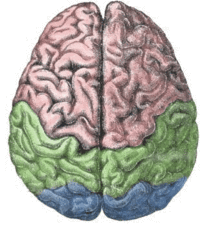
Beten_d_rerIn a recent study our team used functional magnetic resonance imaging (fMRI) to investigate how the brain responded to praying in Christian believers. Surprisingly, considering God’s postulated invisibility, omnipresence, omnipotence, and omniscience, we found that conversing with God was not associated with regions that process abstract concepts. Rather, we found a marked pattern of activity in four regions that typically activate when humans relate to other humans. Neurologically, this finding suggests that strong believers process God as a concrete person – in spite of the theologically complex and highly abstract nature of the Christian God. Interestingly, we did not find this pattern in believers who did not use praying regularly. Perhaps the religious brain can learn to treat gods as real persons through regular practice and strong beliefs.

Importantly and somewhat contrary to the widespread assumption that communicating with God constitutes a unique experience reserved for believers, our findings suggest that praying to God is comparable to ‘normal’ interpersonal interaction, at least in terms of brain function. Praying, it seems, is subserved by the basic processing of our biologically evolved dispositions like other complex cultural phenomena, in this case the evolved human capacity for social cognition. One might ask if these findings, then, are evidence that God is just an illusion, an imagined friend that always listens in times of distress? Or may they in fact be proof that God affects us even at the level of brain function? Atheists and believers alike take considerable interest in this kind of research. Fortunately, as a scientist my interest lies solely in the physical world and speculations about the spiritual dimension lie well beyond scientific scrutiny.

More here.

Blonde hair evolved more than once

From Nature:

BlondDoes evolution have a soft spot for blondes? About 5–10% of people from Melanesia, a group of islands northeast of Australia, have naturally blonde hair — the highest prevalence outside Europe. Yet people from the region have the darkest skin pigmentation outside Africa.

Now, a study of people from the Solomon Islands in Melanesia shows that they evolved the striking blonde trait independently of people in Europe. This refutes the possibility that blonde hair was introduced by colonial Europeans, says Carlos Bustamante, a geneticist at Stanford University School of Medicine in Stanford, California, and a senior co-author on the study, which is published today in Science1. “Blonde hair has clearly evolved twice,” he says. To investigate the genetic basis underlying the trait, Bustamante and his colleagues compared the genomes of 43 blonde and 42 dark-haired Solomon Islanders, and revealed that the islanders' blonde hair was strongly associated with a single mutation in the TYRP1 gene. That gene encodes an enzyme that influences pigmentation in mice and humans. Several genes are known to contribute to blonde hair coloration in Europeans, but TYRP1 is not involved.

More here.

Thursday, May 3, 2012

Luxury vs Function in Perfumery

Victoria Frolova in Bois de Jasmin:

Vf-2s-207x300Although the word “perfume” is likely to conjure up a vision of luxurious glass bottles, the reality is that most of us come across perfumes in much more prosaic ways–whenever we do our laundry, wash dishes or brush our teeth. Functional perfumery, as this branch of fragrance is called, is a vibrant field that affects our daily lives much more than designer brand fragrances. It is often at the forefront of development in fragrance chemistry, exploring ideas that eventually make an impact on fine fragrance. Companies like Tide, Colgate, P&G, and Unilever devote much effort to the research and development of detergents, fabric softeners, soaps, beauty care products and other daily necessities. In developing countries, functional scents are the only commercial perfumes people are likely to encounter in their day-to-day lives. Therefore, while functional perfumery does not have the glamour of its fine perfumery counterpart, it is an important aspect of our fragrance experience.

For a perfumer, functional perfumery is a challenging area: the tricky product bases, raw material restrictions, intricate IFRA policies, and complex client demands. Add an extremely tight budget and you have an area of perfumery in which it takes a lot of effort to make a winning scent. It is common for fine fragrance perfumers to start out working in functional fragrances and today all perfumery school curricula include functional perfumery as a mandatory subject. Learning to work with functional fragrance restrictions can give an edge to a perfumer. If one is able to make a memorable, strong and diffusive fragrance on a pitifully small budget, then fine fragrance, with its more flexible parameters, can be an exciting transition.

More here. [Thanks to Alia Raza.]

Byzantium and Islam: Age of Transition (7th–9th Century)

An exhibition at the Metropolitan Museum of Art, New York City.

Peter Brown in the New York Review of Books:

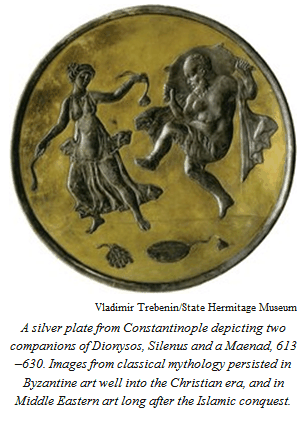
ScreenHunter_07 May. 03 22.23In the century between 630 and 730 a considerable portion of the Old World took on its modern face. Through a series of astonishing campaigns, Arab Muslim armies created a single empire that, for a time, would reach from southern Spain to northern India and the western borders of China. From the “big bang” of these conquests a new galaxy emerged. From then onward, a closely interconnected chain of Muslim regions (one part of which, from modern Morocco to the borders of Iran, came to speak Arabic) stretched across Africa and Eurasia, joining the Atlantic to western China. A new civilization came into being, one that has lasted, with many permutations, into our own days. In the words of Finbarr Flood, a major contributor to the catalog of the Metropolitan Museum’s somewhat modestly titled exhibition “Byzantium and Islam: Age of Transition (7th–9th Century),” the foundation of the Arab empire was “one of the most remarkable achievements in human history.”

The exhibition takes us to the heart of this great detonation. It embraces the last century of the pre-Islamic Middle East and the first two centuries of Islam. To our surprise, we do not find ourselves in a world swept by a mighty wind. Instead, we enter a series of quiet rooms where time seems to stand still. Like a perfect late fall day, only the occasional rustle of a falling leaf startles us into realizing that the seasons are about to change. The few clear signs that Islam had, indeed, become politically dominant in the Middle East by the end of the seventh century strike us with almost ominous intensity. For there are so few of them.

More here.

BILL MURRAY: “I’M NOT ONE OF THOSE GUYS”

From The Talks:

Mr. Murray, you don’t have an agent or a manager and people say you don’t even own a cell phone. What does it take for a filmmaker who has a perfect role in mind for you to bring you on to a project?

ScreenHunter_06 May. 03 22.17The key really would be to have a good script. It’s not that hard. If you have a good script that’s what gets you involved. People say they can’t find me. Well, if you can write a good script, that’s a lot harder than finding someone. It’s much harder to write a good screenplay than to find someone, so you can find someone. I don’t worry about it; it’s not my problem. My problem is having a little peace and quiet. So they need to find me, that’s really their issue. I am not taking ads out or anything, standing on the street corner.

Was there a point in your career where you realized, now I can play “hard to get”?

I don’t really think it changed a whole lot. It’s just sort of a cumulative thing that happens where you get more and more attention and much of it is pleasant, but a lot of it doesn’t really serve you or help you getting anything done, it just takes up a lot of your time. So it’s pleasant enough but it means I don’t get anything else done.

Can you give me an example?

It’s like if I were in the fan mail business – I don’t answer fan mail. I don’t have time for that. It’s like there are hundreds of thousands of people that think they’re going to become millionaires getting autographs from movie actors. I don’t have time for those idiots. I got stuff to do. Spelling my name? I did that a long time ago. When I run into someone on the street that’s one thing, but answering mail for a living? Ay-ay-ay-ay-ay… I like a job where you sleep late, get kind of goofy and have some fun.

More here.

The Massive Palestinian Hunger Strike

Richard Falk in Citizen Pilgrimage:

Falk_081911Can anyone doubt that if there were more than 1300 hunger strikers in any country in the world other than Palestine, the media in the West would be obsessed with the story? It would be featured day after day, and reported on from all angles, including the severe medical risks associated with such a lengthy refusal to take food. At this time two Palestinians who were the first to start this current wave of resistance, Thaer Halaheh and Bilal Diab, entering their 64th day without food, are reported by the prisoner protection association, Addameer, and the NGO, Physician for Human Rights-Israel, to be in critical condition with their lives hanging in the balance. Despite this dramatic state of affairs there is scant attention in Europe, and literally none in North America.

In contrast, consider the attention that the Western media has devoted to a lone blind Chinese human rights lawyer, Chen Guangcheng, who managed to escape from house arrest in Beijing a few days ago and find a safe haven at the U.S. Embassy. This is an important international incident, to be sure, but is it truly so much more significant than the Palestinian story as to explain the total neglect of the extraordinary exploits of these thousands of Palestinians who are sacrificing their bodies, quite possibly their lives, to nonviolently protest severe mistreatment in the Israeli prison system.? Except among their countrymen, and to some extent the region, these many thousand Palestinian prisoners have been languishing within an opaque black box ever ever since 1967, are denied protection, exist without rights, and cope as best they can without even the acknowledgement of their plight.

More here.

The Irrationality of Irrationality: The Paradox of Popular Psychology

Samuel McNerney in Scientific American:

ScreenHunter_05 May. 03 17.06In 1996, Lyle Brenner, Derek Koehler and Amos Tversky conducted a study involving students from San Jose State University and Stanford University. The researchers were interested in how people jump to conclusions based on limited information. Previous work by Tversky, Daniel Kahneman and other psychologists found that people are “radically insensitive to both the quantity and quality of information that gives rise to impressions and intuitions,” so the researchers knew, of course, that we humans don’t do a particularly good job of weighing the pros and cons. But to what degree? Just how bad are we at assessing all the facts?

To find out, Brenner and his team exposed the students to legal scenarios. In one, a plaintiff named Mr. Thompson visits a drug store for a routine union visit. The store manager informs him that according to the union contract with the drug store, plaintiffs cannot speak with the union employees on the floor. After a brief deliberation, the manager calls the police and Mr. Thompson is handcuffed for trespassing. Later the charges were dropped, but Mr. Thompson is suing the store for false arrest.

All participants got this background information. Then, they heard from one of the two sides’ lawyers; the lawyer for the union organizer framed the arrest as an attempt to intimidate, while the lawyer for the store argued that the conversation that took place in the store was disruptive. Another group of participants – essentially a mock jury – heard both sides.

The key part of the experiment was that the participants were fully aware of the setup; they knew that they were only hearing one side or the entire story. But this didn’t stop the subjects who heard one-sided evidence from being more confident and biased with their judgments than those who saw both sides. That is, even when people had all the underlying facts, they jumped to conclusions after hearing only one side of the story.

More here.

Young Obama in Love: A Girlfriend’s Secret Diary

David Maraniss in Vanity Fair:

ScreenHunter_04 May. 03 16.33If Barack and Genevieve were in social occasions as a couple, it was almost always with the Pakistanis. Hasan Chandoo had moved back from London and taken a place in a converted warehouse on the waterfront below Brooklyn Heights. Wahid Hamid, starting a rise up the corporate ladder that would take him to the top of PepsiCo, lived on Long Island with his wife. Sohale Siddiqi was part of the crowd, along with Beenu Mahmood. It was a movable feast, and invariably a matter of bounty and excess, friends losing themselves in food and conversation. Barack for the most part declined alcohol and drugs. “He was quite abstemious,” Genevieve said. She enjoyed the warmth of the gatherings, but was usually ready to go home before him. He was pushing away from the Pakistanis, too, politely, for a different reason, she thought. He wanted something more.

Beenu Mahmood saw a shift in Obama that corresponded to Genevieve’s perceptions. He could see Obama slowly but carefully distancing himself as a necessary step in establishing his political identity as an American. For years when Barack was around them, he seemed to share their attitudes as sophisticated outsiders who looked at politics from an international perspective. He was one of them, in that sense. But to get to where he wanted to go he had to change.

Mahmood remembered that “for a period of two or three months” Obama “carried and at every opportunity read and reread a fraying copy of Ralph Ellison’s Invisible Man. It was a period during which Barack was struggling deeply within himself to attain his own racial identity, and Invisible Man became a prism for his self-reflection.” There was a riff in that book that Mahmood thought struck close to the bone with Obama.

More here.

What is College For? An Interview with The New Yorker’s Louis Menand

Matt Bieber in The Wheat and Chaff:

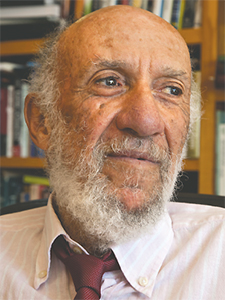
ScreenHunter_03 May. 03 16.26Louis Menand is a Pulitzer Prize-winning professor of English at Harvard and a staff writer for the New Yorker. His most recent book, The Marketplace of Ideas: Reform and Resistance in the American University, traces the rise of the modern university system and asks hard questions about whether higher education’s historical goals and structures are well-suited for today’s world.

In a June, 2011 New Yorker article, Menand expanded on Marketplace, laying out three theories that seek to answer the question: What is college for?

Theory 1 sees the university as a quality filter – a means of sorting young people according to their intelligence and capabilities and providing signals to society about the roles for which they might be well-suited.

Theory 2 is the classic liberal arts vision of the university – in Menand’s words, an opportunity to teach “the knowledge and skills important for life as an informed citizen, or as a reflective and culturally literate human being.”

Theory 3 is a more brass-tacks view: it sees the university as designed for professional or vocational preparation.

In this interview, Menand and I dig into Theory 2. What does an education designed to create “informed citizens” or “reflective and culturally literate human beings” actually look like? What books and pedagogical techniques might it include? How much will it seek to answer the ‘big questions’, and to what extent will it be content with simply asking them?

More here.

Interpreting Shari’a

From Guernica:

KadriMuslims agree that Shari’a is God’s law. But the mysticism surrounding Prophet Muhammed’s nearly 1,400-year-old words has solidified to a point where finding a consensus on the particulars of Shari’a is difficult. The debate has now saturated modern politics and pop-culture around the globe. London-born Sadakat Kadri, human rights Lawyer, travel writer, and journalist, took on this collective confusion in his new book Heaven on Earth: A Journey Through Shari’a Law from the Deserts of Ancient Arabia to the Streets of the Modern Muslin World. As he traveled through South Asia and the Middle East to conduct research, Kadri began untangling the edicts of Shari’a and its interpretations, which could allow for a sex change but not apostasy. His finished product, full of travel experiences, written through the lens of his knowledge of the law and his connection to the subject matter, “provides a compelling overview of the historical events that shaped Islamic law,” wrote Ian Critchley, in the Sunday Times, and delivers “an admirably even-handed account of [Islamic law’s] often fraught position today.” At Asia House this February, Kadri sat with Mishal Husain to discuss Heaven on Earth, the history of Islamic law, and Islam’s interaction with the religious present—both Muslim and non-Muslim. Kadri earned a Master’s from Harvard Law and spent time in Prague during the 1989 Velvet Revolution. He has written a travel guide to Prague as well as the book The Trial: A History from Socrates to O.J. Simpson (2005), after his experience moving to New York City just before 9/11. He currently writes a column for the New Statesman. Mishal Husain was born in England and grew up in both the Middle East and the UK. She received a law degree from Cambridge and works as a BBC international news presenter on Impact Asia, BBC World News, as well as other programs.

The following is an edited transcript of a conversation between Mishal Husain and Sadakat Kadri, published here courtesy of Asia House London.

More here.

The Shangri-La of Health Food

From Smithsonian:

ApricotIn 1933, James Hilton, a British novelist who read about travels in Yunnan Province in National Geographic magazine, wrote a novel called Lost Horizon, which describes a mythical kingdom set far, far away from the rest of time: Shangri-La. Three years later, Frank Capra turned Hilton’s paperback best-seller into a film. The place entered our lexicon as an earthly retreat from the worries of modern civilization.

The fictional Shangri-La appears to be an amalgam of Yunnan Province and Tibet. But the people of the Hunza Valley in Pakistan became, in the American mind, the closest thing to the real-life incarnations of the people of Shangri-La. The Hunzakut people reportedly lived to be 100 and had a practically illness-free existence in an inaccessible mountain valley. Paeans to healthy Hunza proliferated. President Eisenhower’s cardiologist reported that Hunza men could eat 3,000 apricots in one sitting. In 1960, the Journal of the American Medical Association published an editorial extolling the virtues of the Hunza diet as a harbinger of hope for human longevity and modern medicine.

More here.

Wednesday, May 2, 2012

Big Maconomics: How McDonald’s Explains the World

The Big Mac isn't just a greasy hallmark of modern technological wizardry. It's also a tool for economists to measure the wealth of nations.

Derek Thompson in The Atlantic:

Screen Shot 2012-04-30 at 11.43.08 PMFor thousands of years, families devoted the majority of their lives to food. Their waking hours were spent growing and harvesting crops, and most of their income from growing and harvesting went right back into eating. Deep into the late pre-industrial era, unskilled laborers worked grueling hours in fields to earn an income that could often barely feed their family. As Gregory Clark explained in his book A Farewell to Alms, up until the 1700s, the English diet consisted, monotonously, of mostly bread and beer, won only after hours that would make a modern i-banker blush. Food output per person was so meager that “British farm laborers by 1863 had just reached the median consumption of [primitive] forager and subsistence societies.”
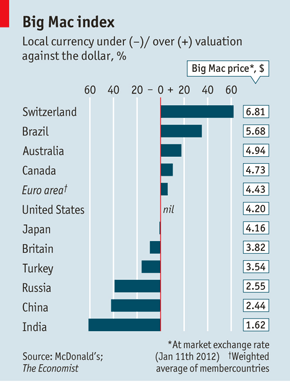
20120114_INC380Today, food is faster. The Big Mac takes very little work for any one person. It is a product of as much automated manufacturing as human labor. Even U.S. food-prep workers, by some measures the poorest-paid major occupation in America, earn enough to buy more than two Big Macs — that's 1,000+ calories — in just an hour of their work.

McDonald's is a restaurant, but it functions much like a factory. Labor is supported by a deep well of technological innovation, such as vacuum packing, exceptional preservatives, deep freezing, vibrant artificial flavors, and high-speed microwaves. Workers assemble specific parts at great speed to deliver dependable and replicable products. “[McDonald's doesn't] put something on the menu until it can be produced at the speed of McDonald's,” CEO James Skinner said in 2010, sounding not unlike Henry Ford from a century earlier.

In addition to being a technological marvel, the Big Mac moonlights as an economic tool. Every year the Economist calculates a Big Mac Index for the purpose of (being cheeky and) testing what currencies are overvalued compared to the U.S. The results are often illuminating.

More here.

An Optical Illusion that Explains the Origins of Imaginary Monsters

Esther Inglis-Arkell in io9:

It seems that the brain, in specific situations, literally gets bored and starts scaring you. The easiest way to prove this is to perform the simple experiment of looking steadily into a mirror, for a few minutes at a time. Soon, you're very likely to see a monster. That monster is a combination of your face and your brain. Does that make it better or worse?

There are a lot of creepy situations that start happening when you look in the mirror. Low light and a fearful mood certainly help, but the primary reason why people have so many mirror related freak-outs, and why it's become such a big game at slumber parties, is straight biology. The brain doesn't have the energy or the processing power to notice everything all the time.
Sitting at your computer now, you're probably unaware of the feel of the seat under you, your clothes against your skin, and any lingering smells you might have noticed (no judgement) when you walked into the room. OriginalYour mind mostly tunes them out. But the sense that most of us rely on almost all the time, sight, has also been narrowed down. You are probably unaware of anything outside of the range of the computer screen, and you probably haven't noticed minor changes to that. That is why most updates on computers come with a sound or a blinking light.

The brain, when faced with a lot of stimulation, only some of which is considered relevant, will tune out the non-relevant parts, filling in what it can from the general area. It's a little like how the blind spot works, except this is a dynamic process. The brain will zoom in on a desired area, and the rest of the space will fade away. This is called the Troxler Effect, or Troxler Fading. It was discovered way back in 1804 by Ignaz Troxler, a physician and philosopher. Take a look at the circle to the left. Focus on the red dot at the middle. After less than thirty seconds, the circle should just fade away.

More here.