
Category: Recommended Reading
Ray Bradbury dies at 91
Gerald Jonas in the New York Times:
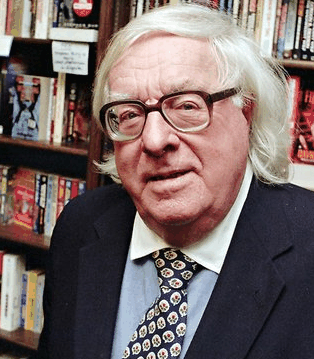
His death was confirmed by his agent, Michael Congdon.
By many estimations Mr. Bradbury was the writer most responsible for bringing modern science fiction into the literary mainstream. His name would appear near the top of any list of major science fiction writers of the 20th century, beside those of Isaac Asimov, Arthur C. Clarke, Robert A. Heinlein and the Polish author Stanislaw Lem. His books are still being taught in schools, where many a reader has been introduced to them half a century after they first appeared. Many readers have said Mr. Bradbury’s stories fired their own imaginations.
More than eight million copies of his books have been sold in 36 languages. They include the short-story collections “The Martian Chronicles,” “The Illustrated Man” and “The Golden Apples of the Sun,” and the novels “Fahrenheit 451” and “Something Wicked This Way Comes.”
Though none of his works won a Pulitzer Prize, Mr. Bradbury received a Pulitzer citation in 2007 “for his distinguished, prolific and deeply influential career as an unmatched author of science fiction and fantasy.”
More here.
Wednesday, June 6, 2012
How Science Constructs Contraceptive Users and Women’s Bodies
Emily Willingham in American Scientist:
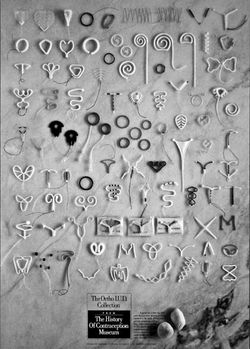
Social context, Takeshita says, not only influences the design of IUDs themselves and how they are marketed and used, but also shapes the conduct of scientific work about them. She begins with the assumption that any such technology will involve “webs of state and nonstate investments” in the bodies, health, sexuality and reproduction of women. The medical researchers who have developed IUDs, along with the organizations that back them, she argues, grasp these varying interests and have made and marketed IUDs based on prevailing social climate, ultimately centering on the white, middle-class Western woman as a target user.
The IUD—whose mechanism of contraception was long unclear but which appears to work primarily by disrupting processes necessary for successful fertilization or by blocking attachment of fertilized eggs to the uterine wall—is thus also a political device, or, as Takeshita writes, a “politically versatile technology.”
More here.
Why Google Isn’t Making Us Stupid…or Smart

Last year The Economist published a special report not on the global financial crisis or the polarization of the American electorate, but on the era of big data. Article after article cited one big number after another to bolster the claim that we live in an age of information superabundance. The data are impressive: 300 billion emails, 200 million tweets, and 2.5 billion text messages course through our digital networks every day, and, if these numbers were not staggering enough, scientists are reportedly awash in even more information. This past January astronomers surveying the sky with the Sloan telescope in New Mexico released over 49.5 terabytes of information—a mass of images and measurements—in one data drop. The Large Hadron Collider at CERN (the European Organization for Nuclear Research), however, produces almost that much information per second. Last year alone, the world’s information base is estimated to have doubled every eleven hours. Just a decade ago, computer professionals spoke of kilobytes and megabytes. Today they talk of the terabyte, the petabyte, the exabyte, the zettabyte, and now the yottabyte, each a thousand times bigger than the last. Some see this as information abundance, others as information overload. The advent of digital information and with it the era of big data allows geneticists to decode the human genome, humanists to search entire bodies of literature, and businesses to spot economic trends. But it is also creating for many the sense that we are being overwhelmed by information. How are we to manage it all?
more from Chad Wellmon at The Hedgehog Review here.
The Letters of Ernest Hemingway
Andrew O'Hagan in the London Review of Books:
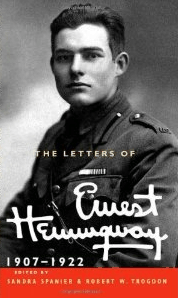
You can have fun with this. In A Farewell to Arms, there are forty occasions when someone has a drink. It begins in Gorizia, where our hero, Frederic Henry (he’d better have his name; we’re going to be with him for a while), sits watching the snow falling while he drinks a bottle of Asti with a friend. Later, over too much wine and Strega, he explains to a priest his regret at not having gone to Abruzzi. The first time he is at the villa housing the British Hospital he is upstairs drinking two glasses of grappa with Rinaldi. He later tells a group of people about a drinking competition – on this occasion, red wine – he got into with a salesman from Marseille. At the dressing station, he sits with one of the medical captains. ‘He offered me a glass of cognac.’ A page after that, stuck in the dugout with a basin of macaroni, he is drinking from a canteen of wine. He has a swallow just as the mortar that will injure him lands in the dugout. ‘Bring him a glass of brandy,’ says the doctor who first treats him. (Rinaldi brings him a bottle of cognac that afternoon.) And when the priest comes to visit him he brings not any old bottle. ‘This is a bottle of vermouth,’ he says. ‘You like vermouth?’
More here.
the heroic vision
IN HIS 2003 book, Human Accomplishment: Pursuit of Excellence in the Arts and Sciences, 800 BC to 1950, Charles Murray argued that the great artistic and scientific accomplishments were overwhelmingly European. ”What the human species is today,” he wrote, “it owes in astonishing degree to what was accomplished in just half a dozen centuries by the peoples of one small portion of the northwestern Eurasian land mass.” This claim, which goes against the modern grain of the world history community – indeed, against fashionable belief; The New York Times unsurprisingly called it “more bluster than rigor” and “unconvincing” 1 – was nonetheless the first attempt to quantify “as facts” the creative genius of individuals in terms of cultural origin and geographic distribution. Murray did this by calculating the amount of space allocated to these individuals in reference works, encyclopedias, and dictionaries. Based on this metric, he concluded that “whether measured in people or events, 97 percent of accomplishment in the sciences occurred in Europe and North America” from 800 BC to 1950. Murray’s inventories of the arts also confirmed the overpowering role of Europe, particularly after 1400.
more from Ricardo Duchesne at The Fortnightly Review here.
Boom and bust in twenty-first-century lit

IN THE FALL OF 2013 OR 2014, if not before, we’ll probably be reading a novel about Occupy Wall Street. What would such a book look like, and what would it tell us about money? You can bet the narrator will be omniscient and the telling panoramic. If half the action takes place in and around Zuccotti Park—where the hardened core of the cast squats, drumming, deliberating, echoing announcements—the rest will be scattered about the newsrooms, boardrooms, barrooms, and bedrooms of Manhattan, with excursions to Williamsburg or Long Island City or Hoboken, maybe even Staten Island, convenient by ferry, and surely suburbs to the north such as Greenwich, cradle of the 1 percent. But beyond journalistic attention to the protests’ throbbing center and the fissures extending up the avenues, how to dramatize it all? A class-clashing love triangle would do it. A twenty-eight-year-old woman drifts down to the park. She’s radicalized in mind—what’s just about a system that’s saddled a hardworking designer like her with constant revolving credit-card debt and a mountain of student loans?—and in heart by an anarchist she meets at a people’s assembly.
more from Christian Lorentzen at Bookforum here.
Facebook will ‘disappear by 2020’: analyst
From the Sydney Morning Herald:
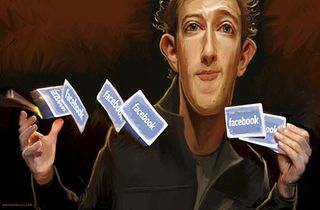
“In five to eight years they are going to disappear in the way that Yahoo has disappeared,” Ironfire Capital founder Eric Jackson told the CNBC show Squawk on the Street.
“Yahoo is still making money, it's still profitable, still has 13,000 employees working for it, but it's 10 per cent of the value that it was at the height of 2000,” Jackson added. “For all intents and purposes, it's disappeared.”
So how exactly does Jackson see Facebook's power eroding by decade's end? He says it will be the continued emergence of the mobile web — and Facebook's struggle to adapt to that paradigm shift.
More here.
Artist Turns Dead Cat Into Remote Controlled Helicopter
Some of you may remember that I have been obsessed with cats and radio-controlled helicopters for some time. Now, someone has combined those two things in a way that even I could not have imagined before I saw it, thanks (I think) to my friend James McVinnie. Plus, through pure synchronicity, this post seems to somehow connect (maybe in a terrible way) with the one before it (the poem).
This is from Taxi:
Some people choose to bury or cremate their pets, or maybe even stuff them—but not Dutch Bart Jansen, who turned his dead feline into a remote controlled helicopter, called the ‘Orvillecopter’.
Named after his cat ‘Orville’, that was killed by a car—Jansen used its outstretched body as the frame for the Ovillecopter—attaching rotors to each of the cat’s paws and a power source under its belly—creating the first ever remote-controlled ‘cat-copter’.
According to Jansen, he said that Orville has achieved the “greatest goal a cat could ever reach”—flying with the birds.
Innovative or morbid? You be the judge!
More here.
Wednesday Poem
Cat
What are you doing there, cat?
What ambiguity have you come to look at?
Master of yourself, cautious, you wend
your way, testy and always in disguise,
hiding what, in fact, you haven’t got and I must lend
to you, oh cat, nightmare slow and quick,
soft, puffy fur, ice cold eyes.
Of what obscure force are you the dwelling place?
What crime have you witnessed and in what spot?
What god gave you your sudden claw
that signs in red this hand, that face?
Oh cat, accomplice to a fearful law
still without words, without a plot,
who are we, your owners or your slaves?
by Alexandre O’Neill
from Poesias Completas
publisher: Assírio & Alvim, Lisbon, 2000
translation: 1998, Alexis Levitin
Original Portuguese after the jump
How the Chicken Conquered the World
From Smithsonian:
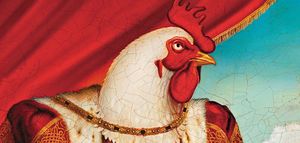
Chicken is the ubiquitous food of our era, crossing multiple cultural boundaries with ease. With its mild taste and uniform texture, chicken presents an intriguingly blank canvas for the flavor palette of almost any cuisine. A generation of Britons is coming of age in the belief that chicken tikka masala is the national dish, and the same thing is happening in China with Kentucky Fried Chicken. Long after the time when most families had a few hens running around the yard that could be grabbed and turned into dinner, chicken remains a nostalgic, evocative dish for most Americans. When author Jack Canfield was looking for a metaphor for psychological comfort, he didn’t call it “Clam Chowder for the Soul.”
How did the chicken achieve such cultural and culinary dominance?
More here.
Tuesday, June 5, 2012
Joumana Haddad: ‘Arab women have been brainwashed’
From The Independent:
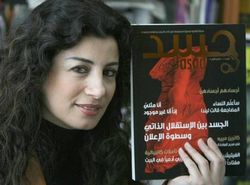
Haddad's polemic is the credo behind Superman is an Arab: On God, Marriage, Macho Men and Other Disastrous Inventions, the soon-to-be-published sequel to I Killed Scheherazade: Confessions of an Angry Arab Woman (2008) in which she tackled Arab machismo, which she says makes men think they are as invincible as superheroes, and is responsible for many of the evils perpetrated in the region. And, if it unleashes another avalanche of opprobrium, Beirut-born Haddad is bracing herself; she has already spent most of her 41 years swimming against the tide.
More here.
The Trouble With ‘Doctor Knows Best’
Peter Bach in The New York Times:

More here.
Tuesday Poem
Hope
Hope, ya ould mutt, I hear yer in bits.
I heard somebody stomped on yer throat an all ya can do now is grunt.
I heard six drunk jocks set ya on fire while ya were goofin.
Ya ould trout! Ya look like ya were washed up in an oilspill.
There’s only a seepin raw hole in yer face
instead uv a nose since yer septum fell out. Yer still snortin though.
Yuv more tracks than the DART. Yuv every disease known tuh rats.
Ya got herpes, shingles an worms. Ya got flyswarms, maggots an lice. Cockroaches
crawlin all over ya groupthink Tiocfaidh ár lá.
St Vincin De Paul wud rejeck ya. Yud have Augustine out on the lock.
St Francis’d turn away yodellin.
This time it ain’t jus a scare ya might really be dyin.
Even the French seem tuh have banned ya, blottin yer puss with the law.
Yemen is bleedin from multiple wounds tuh revive ya.
Mosly, here in zombied Ireland, I can’t even see ya, yer such a famished fuckin wraith.
Ya flicker in an out uv the view, accept no particular shape, like steam from a pipe or a
backalley splodge that can’t be washed off.
I know ya wanna give up. I know yer only hope may be tuh dissolve, become a puddle or a
rock, sit it out for a new geological era.
I know yuv ten millin ex-loves tuh attend tuh in wrecks uv the deep, coffin-ships an u-
boats an steamships o seaweed an flutin bones for ya.
I know yuv a hundurd millin virgin spouses pushin up slums an high-tech factories from
underneath the battlefields.
Tis tuh the dead we can never repay yud mos jusly return, who rose an were crushed for
yer dreamin, the manygod that manytimes gave ya generation. But I ain’t ready tuh let ya
go jus yet.
So get up. Get up. I said GET THE FUCK UP! And c’mere and give us a hug and give us a peck
on the cheek and give us a drag on yer spliff.
I know how beat up an used up an ugly ya are and yer only visible when I ain’t right-
minded.
But tis senses that matter, tis vision an touch.
I cudden do either if I cudden with you.
I cudden love nothin if I cudden love you.
who was edmund burke?
Everyone claims Edmund Burke as his patron saint, political forefather, lodestar and compass point, ancestral bulwark against the tide of whatever seething modern ill he despises. The right wing trumpets Burke, who excoriated the murderous rebellion in France; the left wing salutes Burke, who excoriated his imperial colleagues for their overweening and rapacious greed in India and America; Christians celebrate Burke, who considered religion a crucial and indispensable pillar of civic life; the Irish savor a native son who became, as Hazlitt noted, “the chief boast and ornament of the English House of Commons”; the English honor the writer and orator of “transcendant greatness,” as Coleridge wrote, with his usual casual attention to spelling. But Edmund Burke the actual man is faded away—the man his wife called Ned, fond of vulgar puns and lewd jokes, an ample man, thin as a lad and then never again; the chatterbox “never unwilling to begin to talk, nor in haste to leave off,” as Samuel Johnson said (probably with a tinge of self-recognition); the man whose first schooling was in a ruined castle in rural Cork, because Catholics were forbidden education under imperial law; the man who lost one son early and the other too soon; the man who would launch into such furious and vituperative speech in Parliament that his friends would have to haul him down into his seat by his coattails; the man “quick to offend [but] ready to atone,” in his own words; the man whose one refuge from politics and creditors, friends and enemies, passions and plots, was a tiny “root-house,” as he called it, a mile from his heavily mortgaged estate house through the Buckinghamshire woods—a “tea-house,” as a young friend described the place, set amid “roots of trees, moss, and so forth, with a … little kitchen behind and an ice-house under it.”
more from Brian Doyle at The American Scholar here.
Wes Anderson’s self-satisfied island

Moonrise Kingdom is set on an island, but its director Wes Anderson has always seemed like someone who insisted on a small off-shore existence. This is not uncommon in American movies, or necessarily forbidding: Josef von Sternberg lived on a glowing island where the light and its shadows fell on the face of a woman, ideally Marlene Dietrich, because Sternberg had loved her and been humiliated by her. Howard Hawks preferred to find an enclosed cockpit of intense talk and action—the airfield in Only Angels Have Wings or the court newsroom in His Girl Friday. The cattle drive in Red River seems set against epic American landscapes, with changing light and weather, but it’s really a camp that could wander on forever. Woody Allen haunts the streets and interiors of what looks like Manhattan, but he clutches his overcoat island of solipsism. In the same way, Wes Anderson has always been drawn to isolated worlds inhabited by adults who are lost children. In Moonrise Kingdom, in and off the shore of a fabled New England, there are storms coming.
more from David Thomson at TNR here.
the harm in free speech

Jeremy Waldron’s new book, “The Harm in Hate Speech,” might well be called “The Harm in Free Speech”; for Waldron, a professor of law and political theory at New York University and Oxford, argues that the expansive First Amendment we now possess allows the flourishing of harms a well-ordered society ought not permit. Waldron is especially concerned with the harm done by hate speech to the dignity of those who are its object. He is careful to distinguish “dignity harms” from the hurt feelings one might experience in the face of speech that offends. Offense can be given by almost any speech act — in particular circumstances one might offend by saying “hello” — and Waldron agrees with those who say that regulating offensive speech is a bad and unworkable idea. But harms to dignity, he contends, involve more than the giving of offense. They involve undermining a public good, which he identifies as the “implicit assurance” extended to every citizen that while his beliefs and allegiance may be criticized and rejected by some of his fellow citizens, he will nevertheless be viewed, even by his polemical opponents, as someone who has an equal right to membership in the society. It is the assurance — not given explicitly at the beginning of each day but built into the community’s mode of self-presentation — that he belongs, that he is the undoubted bearer of a dignity he doesn’t have to struggle for.
more from Stanley Fish at The Opinionater here.
fred and adele
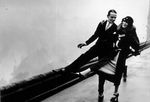
“They are a sort of champagne cup of motion, those Astaires. They live, laugh and leap in a world that is all bubbles.” So wrote the New York Sun in 1927, reviewing Funny Face, a hit stage musical starring Fred Astaire and his sister, Adele. Fred continues to be acclaimed as one of the greatest dancers who ever lived, especially for his magnificent 1930s screen partnership with Ginger Rogers, but throughout the 1920s Fred and his elder sister, Adele, were the toast of the transatlantic musical stage. Indeed, during the Astaires’ almost three decades of theatrical collaboration, it was Adele who was routinely viewed as the bigger star and the greater talent. It is hard to believe that Kathleen Riley’s The Astaires is the first full-length study of the celebrated partnership that so defined 20th-century musical comedy. As Riley argues, the pairing of Astaire and Rogers was only made possible by Fred’s prior, and formative, collaboration with Adele.
more from Kathleen Riley at The New Statesman here.
e.o. wilson’s faith
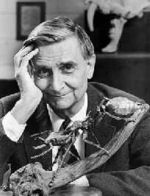
The irony of the latest wave of evolutionist fervour is that there can no longer be any doubt that evolution is a value-free process. We know a great deal more than was known a century ago: while there remain questions about the mechanism of natural selection, Darwin’s true achievement – to expel purpose and design from nature – is more secure that it has ever been. A process of drift governed by chance and necessity, natural selection contains nothing that can satisfy the hunger for meaning. Yet once again, evolution has become a secular religion. ‘By any conceivable standard,’ Wilson intones, ‘humanity is far and away life’s greatest achievement. We are the mind of the biosphere, the solar system, and – who can say? – perhaps the galaxy.’ It is a declaration reminiscent of Teilhard de Chardin’s proclamation of the Omega Point, the end-state of maximum complexity and consciousness to which the Jesuit thinker believed the cosmos was evolving. However, unlike Wilson, the Harvard founder of sociobiology, the renegade man of the cloth understood that he was promoting not science but a heterodox brand of mysticism. When people look to religion for the meaning of life, they eventually find mystery. When they look to science for meaning they end up in mere incoherence. Memes – the conceptual units that in some popular accounts drive what is described as cultural evolution – are no more actually existing things than was phlogiston. But there are surely tropes that recurrently distort thinking, and the notion that evolution can be our guide in ethics and politics is one of them.
more from John Gray at Literary Review here.
pamuk’s museum

Ten years later, Pamuk came up with an insane plan: to write a novel in the form of a museum catalogue, while simultaneously building the museum to which it referred. The plot of the novel would be fairly straightforward: over many years, an unhappy lover contrives to steal a large number of objects belonging to his unattainable beloved, after whose untimely death he proceeds to buy her family’s house and turn it into a museum. You might think that Pamuk’s first step, as a writer, would have been to start writing. In fact, his first step was to contact a real-estate agent. He needed to buy a house for his future heroine, Füsun. During the 1990s, Pamuk visited hundreds of properties, trying to imagine Füsun and her parents living in them. It was beyond his means to purchase a whole building in Nişantaşi, the posh neighbourhood inhabited by Kemal, the hero of the novel. He could afford a single floor in a stone building in the old Ottoman commercial centre of Galata, but then the remodelling would be difficult. The beautiful rundown wooden houses near the old city walls were the right price, but those were in religious neighbourhoods, and this was a novel about the secular middle classes. In 1998, Pamuk finally bought a three-storey wooden house in Çukurcuma. Füsun, the petulant beauty, was thus neither a Nişantaşi socialite nor the scion of Galata bankers, but an aspiring actress living with her seamstress mother and schoolteacher father. The heroine’s socioeconomic position and much of her character were determined by real estate.
more from Elif Batuman at the LRB here.