The genome that keeps on giving

From Smithsonian:

Genome-sequencing-2Only one thing we can say with certainty: As much as we now know about the human genome, we still have a lot to learn about how we’ll use that knowledge.

Code read

Here’s more of the latest news about genetic research:

Video bonus: Richard Resnick is CEO of a company called GenomeQuest so he definitely has a point of view about how big a role genome sequencing will play in our lives. But he does make a good case in this TED talk.

More here.

Smells Like Old Spirit

From Science:

OldOlder folks give off a characteristic scent that's independent of race, creed, or diet. The Japanese even have a name for it: kareishu. Most people say they find the smell disagreeable, typically describing it as “stinky-sweet.” But in a new study, participants in a “blind sniff test” found the body odor of older people less intense and more pleasant than that of the young or middle-aged. Sensory neuroscientist Johan Lundström has been familiar with old-person scent since his childhood in Sweden, where he sometimes accompanied his mother to her job at a nursing home. Decades later, as the head of his own lab at the Monell Chemical Senses Center in Philadelphia, Pennsylvania, he gave a talk at another nursing home. “The same smell hit me again,” he says. Lundström wondered if there really are specific age-related odors that the human sense of smell can detect. Although research shows that animals can distinguish the ages of other animals based on their odor, no comparable studies had been done in humans.

So Lundström and colleagues recruited 20 men and 21 women between the ages of 20 and 30 to be sniffers. All were healthy nonsmokers who didn't take drugs or medications. Meanwhile, a group of “donors” who were young (20 to 30 years old), middle age (45 to 55 years old), and old (75 to 95 years old) went to bed for five consecutive nights wearing T-shirts with absorbent pads sewn into the armpits. To make sure they gave off only their natural scent, the donors washed their hair and bodies with odorless shampoos and soap before going to bed each night. They also refrained from smoking, drinking alcohol, or eating spicy food. The volunteers sniffed the pads worn by the variously aged donors and grouped the smells by age. They classified the smells of the older donors with 12% greater accuracy than would be expected by chance, compared with 8% better than chance for the younger and middle-aged donors, the researchers report online today in PLoS ONE. According to Lundström, the real surprise came when the sniffers were asked to rate the smells by intensity and unpleasantness. Even though the volunteers compared the smell of old people to stale water or old basements, when they encountered the smell amid those of the other age groups, they consistently rated the old person odor as the least intense and least unpleasant of the three.

More here.

Thursday Poem

A Swan from Prague

I was making my way in halfsteps across a bridge
In that city of bridges, and met coming my way,

Looking head-on like a fat white ham with wings,
A swan in flight, waist high, at the bridge crest.

I was inching along as the swan with its yard-long neck
Towed its floating midriff in air speeding past.

Lost, it wanted back to the city’s river,
A river with two names in opposing tongues.

I looked ahead and saw some police laughing
At the wings going mad and the paddle-feet tucked.

I could not remember not being in pain,
Not being a man with bone spurs gouging his hip.

In that city of memorials, among memorials
Of immolation and metamorphosis,

I thought about this place in history—
I’d seen the altered road signs from ’68,

I’d seen the thugs in videos of ’89—
And knew for this span of time there was no place.

The police saw me leaning and halting
And turned to watch the swan, as I did,

All of us grateful to be distracted.
And I was sure that they, the laughing police,

Imagined that whatever my trouble was—drunkenness,
Disability—it would take care of itself,

And that the bird would come to rest again
On the river, the river of clashing names.

I told my wife this story, and as a memento
She gave me a solid bubble of Czech crystal,

A lovely blue-headed swan which rides
Now on a shifting river of paper.
.

by Mark Jarman
from Blackbird, Fall 2011, Vol. 10 No. 2
.

no frumpy old bird woman

Vivian_Maier_Self_Portrait_ftr

Imagine being the kind of person who finds everything provocative. All you have to do is set out on a walk through city streets, a Rolleiflex hanging from a strap around your neck, and your heart starts pounding in anticipation. In a world that never fails to startle, it is up to you to find the perfect angle of vision and make use of the available light to illuminate thrilling juxtapositions. You have the power to create extraordinary images out of ordinary scenes, such as two women crossing the street, minks hanging listlessly down the backs of their matching black jackets; or a white man dropping a coin in a black man’s cup while a white dog on a leash looks away, as if in embarrassment; or a stout old woman braced in protest, gripping the hands of a policeman; or three women waiting at a bus stop, lips set in grim response to the affront represented by your camera, their expressions saying “go away” despite the sign behind them announcing, “Welcome to Chicago.” Welcome to this crowded stage of a city, where everyone is an actor—the poor, the rich, the policemen and street vendors, the nuns and nannies. Even a leaf, a balloon, a puddle, the corpse of a cat or horse can play a starring role. And you are there, too, as involved in the action of this vibrant theater as anyone else, caught in passing at just the right time, your self-portraits turned to vaporous mirages in store windows, outlined in the silhouettes of shadows and reflected in mirrors that you find in unexpected places.

more from Joanna Scott at The Nation here.

The House That Doe Built

Glenna_lib_250_031

A concrete mansion sits empty on the edge of Zwedru, the capital of Liberia’s Grand Gedeh county. Its tall balustrades are unpainted; its window frames lack glass. Liberia is strewn with buildings abandoned in the course of its wars, but this one was never finished. The mansion was scheduled for completion in the summer of ’91, after it was commissioned by Samuel Doe, the young army sergeant from Grand Gedeh who wrested power from William Tolbert in the 1980 coup. For his thirty-ninth birthday, President Doe planned a party at his new home–dinner in the blue room followed by dancing around the pool, lined with a mosaic of the Liberian flag. Four months before the celebrations, Doe was captured and hacked to death–ear by ear, limb by limb–in a grisly show of violence orchestrated by the former rebel chief Prince Johnson, a presidential candidate in October’s presidential race, and a former ally of the ex-President Charles Taylor, convicted on 11 counts of war crimes at The Hague last month.

more from Kate Grace Thomas at Guernica here.

New Spanish Finance Horrors

Spanish_flag-jpg-2-1

Spain is an unhappy federal structure held together by subsidies and crooked accounting. The drive of Catalans and Basques and others for independence has been checked by a system in which the regions of the country have gained more and more fiscal and policy autonomy. That worked pretty well when Spain was booming, the markets were as bubbly as a glass of champagne, money was cheap and credit was good. But now the music has stopped. Spain’s new European paymasters want the country to march in lockstep. They want the central government to sign austerity agreements that will bind the Catalans, the Basques, the Galicians and everybody else. Essentially, they are demanding that Spain recentralize, and that the national government set out tight national budgets that tell the ‘autonomous’ provinces what they can and can’t do. This may not work at all, and it cannot work for long. Spain is a democracy. People vote. Sometimes they vote for regional parties, sometimes they vote for the big national ones. If the central government is imposing tough fiscal limits on the provinces, it’s likely that over time — and not much of it — support will shift away from the national parties to the provincial ones. The Catalans will be sure that they are getting cheated by the poorer provinces; others will also believe that they aren’t getting their ‘fair share’.

more from Walter Russell Mead at The American Interest here.

Wednesday, May 30, 2012

Guilty, but Not Responsible?

Dr-William-Petit-Jr-New-H-007Rosalind English in The Guardian:

The US neuroscientist Sam Harris claims in a new book that free will is such a misleading illusion that we need to rethink our criminal justice system on the basis of discoveries coming from the neurological wards and MRI scans of the human brain in action.

The physiologist Benjamin Libet famously demonstrated in the 1980s that activity in the brain's motor regions can be detected some 300 milliseconds before a person feels that he has decided to move. Subjects were hooked up to an EEG machine and were asked to move their left or right hand at a time of their choosing. They watched a specially designed clock to notice what time it was when they were finally committed to moving their left or right hand. Libet measured the electrical potentials of their brains and discovered that nearly half a second before they were aware of what they were going to do, he was aware of their intentions. Libet's findings have been borne out more recently in direct recordings of the cortex from neurological patients. With contemporary brain scanning technology, other scientists in 2008 were able to predict with 60% accuracy whether subjects would press a button with their left or right hand up to 10 seconds before the subject became aware of having made that choice (long before the preparatory motor activity detected by Libet).

Clearly, findings of this kind are difficult to reconcile with the sense that one is the conscious source of one's actions. The discovery that humans possess a determined will has profound implications for moral responsibility. Indeed, Harris is even critical of the idea that free will is “intuitive”: he says careful introspection can cast doubt on free will. In an earlier book on morality, Harris argues

Thoughts simply arise in the brain. What else could they do? The truth about us is even stranger than we may suppose: The illusion of free will is itself an illusion (The Moral Landscape)

But a belief in free will forms the foundation and underpinning of our enduring commitment to retributive justice. The US supreme court has called free will a “universal and persistent” foundation for our entire system of law.

Climate Armageddon: How the World’s Weather Could Quickly Run Amok

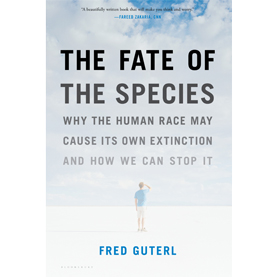
Fred Guterl in Scientific American:

How-worlds-weather-could-quickly-run-amok_1The true gloomsters are scientists who look at climate through the lens of “dynamical systems,” a mathematics that describes things that tend to change suddenly and are difficult to predict. It is the mathematics of the tipping point—the moment at which a “system” that has been changing slowly and predictably will suddenly “flip.” The colloquial example is the straw that breaks that camel's back. Or you can also think of it as a ship that is stable until it tips too far in one direction and then capsizes. In this view, Earth's climate is, or could soon be, ready to capsize, causing sudden, perhaps catastrophic, changes. And once it capsizes, it could be next to impossible to right it again.

The idea that climate behaves like a dynamical system addresses some of the key shortcomings of the conventional view of climate change—the view that looks at the planet as a whole, in terms of averages. A dynamical systems approach, by contrast, consider climate as a sum of many different parts, each with its own properties, all of them interdependent in ways that are hard to predict.

More here.

Daniel Kahneman: Thinking That We Know

Andrew C. Revkin in the New York Times:

The National Academy of Sciences did a great service to science early this week by holding a conference on “The Science of Science Communication.” A centerpiece of the two-day meeting was a lecture titled “Thinking That We Know,” delivered by Daniel Kahneman, the extraordinary behavioral scientist who was awarded a Nobel Prize in economics despite never having taken an economics class.

The talk is extraordinary for the clarity (and humor) with which he repeatedly illustrates the powerful ways in which the mind filters and shapes what we call information. He discusses how this relates to the challenge of communicating science in a way that might stick.

Please carve out the time to watch his slide-free, but image-rich, talk. It’s a shorthand route to some of the insights described in Kahneman’s remarkable book, “Thinking, Fast and Slow” (I’m a third of the way through).

Here’s the video of the talk (which is “below the fold” because it’s set up to play automatically):

Read more »

The descent of Edward Wilson

Richard Dawkins in Prospect Magazine:

EdWhen he received the manuscript of The Origin of Species, John Murray, the publisher, sent it to a referee who suggested that Darwin should jettison all that evolution stuff and concentrate on pigeons. It’s funny in the same way as the spoof review of Lady Chatterley’s Lover, which praised its interesting “passages on pheasant raising, the apprehending of poachers, ways of controlling vermin, and other chores and duties of the professional gamekeeper” but added: “Unfortunately one is obliged to wade through many pages of extraneous material in order to discover and savour these sidelights on the management of a Midland shooting estate, and in this reviewer’s opinion this book can not take the place of JR Miller’s Practical Gamekeeping.”

I am not being funny when I say of Edward Wilson’s latest book that there are interesting and informative chapters on human evolution, and on the ways of social insects (which he knows better than any man alive), and it was a good idea to write a book comparing these two pinnacles of social evolution, but unfortunately one is obliged to wade through many pages of erroneous and downright perverse misunderstandings of evolutionary theory. In particular, Wilson now rejects “kin selection” (I shall explain this below) and replaces it with a revival of “group selection”—the poorly defined and incoherent view that evolution is driven by the differential survival of whole groups of organisms.

More here.

Wednesday Poem

Tattoo

My body is a palimpsest
under your hands,
a papyrus scroll
unfurled beneath you,
waiting for your mark.
I clean my skin,
scrape it back to
a pale parchment,
so that your touch
can sink as deep
as the tattooist’s ink,
and leave its tracery
over the erased lines
of other men.

You are all that’s
written on my body

by Nuala Ní Chonchúir
from Tattoo : Tatú
Publisher: Arlen House, Galway, 2007

In the original after the jump

Read more »

Teenager reportedly finds solution to 350 year old math and physics problem

From PhysOrg:

TeenagerrepoIn Isaac Newton's Principia Mathematica published in 1687, the man many consider the most brilliant mathematician of all time used a mathematical formula to describe the path taken by an object when it is thrown through the air from one point to the next, i.e. an arc based on several factors such as the angle it is thrown at, velocity, etc. At the time, Newton explained that to get it completely right though, air resistance would need to be taken into account, though he could not figure out himself how to factor that in. Now, it appears a 16 year old immigrant to Germany has done just that, and to top off his work, he’s also apparently come up with an equation that describes the motion of an object when it strikes an immobile surface such as a wall, and bounces back.

Shouryya Ray, a modest student who just four years ago was living in Calcuta, has been on an accelerated learning course and is taking his Abitur exams two years early. His math equations won him first place in a state science competition and second place in the national Math and IT section at finals. He’s told the press that figuring out how to come up with his formulas was more due to school-boy naivety than genius, which the German press has been suggesting. Ray moved with his family to Germany when his father landed a job as a research assistant at the Technical University of Freiburg. He has apparently shown great aptitude for math from an early age, learning calculus from his dad when he was still just six years old. He’s told the press that he got the idea of trying to develop the two formulas after visiting Dresden University on a field trip where he was told that no one had been able to come up with equations to describe the two dynamics theories.

More here.

Himmler’s brain is called Heydrich

Heydrich_043012_620px

If HHhH nonetheless doesn’t feel like a postmodern novel, it is because Binet does not revel in the freedom and indeterminacy of fiction. On the contrary, because he is writing about real historical events, whose gravity he himself feels very deeply, Binet is always trying to close the gap between invention and truth. This is clear from the very first sentence of the book: “Gabcik—that’s his name—really did exist.” Jozef Gabcik and Jan Kubis, we learn soon enough, were the secret agents parachuted into Czechoslovakia by the British to carry out the assassination of Heydrich. The whole motive for writing HHhH, Binet explains, is to honor these men, their courage and sacrifice: “So, Gabcik existed. … His story is as true as it is extraordinary. He and his comrades are, in my eyes, the authors of one of the greatest acts of resistance in human history, and without doubt the greatest of the Second World War. For a long time I have wanted to pay tribute to him.” The inspiration of HHhH is not ironic, then, but deeply earnest. And in this context, the novelist’s power to shape and invent feels less like a privilege than a curse. For every time Binet makes something up, it is a reminder that he doesn’t know all the facts. “My story has as many holes in it as a novel,” he writes, “but in an ordinary novel, it is the novelist who decides where these holes should occur.”

more from Adam Kirsch at Tablet here.

norman manea and “the terror which rules our moral situation”

24norman-manea_foto_Polirom_38dc27a163

For most of the writers we love and admire, it is possible to say something comprehensive. One reader says of Saul Bellow that “throughout his life” he searched “for some ultimate and invisible spiritual reality,” and we think, yes, that is true, that is one good way of conferring upon a life like Bellow’s a sort of splendid coherence. Or we agree that the Austrian writer Thomas Bernhard sought, in everything he wrote, to “be misunderstood,” reviled, alienated, the better to exempt himself from the judgment he directed at a world he considered stupid and meaningless. But what comprehensive statement will we dare to make about Norman Manea? For one thing, we who know his writing only in English translation, and thus have not read many of the titles included in the collected Romanian edition of his work, are somewhat reluctant to sum him up as if we were fully equipped to do so. And yet we have more than enough to proceed, to begin at least. Consulting what is already out there we find, inevitably, that the established line on this writer is at once useful and misleading. Ought we to think of him as a writer defined by the exercise of “conscience”? That is one of those misleading suggestions you can read even on the dust jackets of his books. Is he, in the end, one of the many gifted contributors to what is called “the literature of totalitarianism”? Or is he, as has been said, one of “the great poets of catastrophe” and thus fit to stand alongside predecessors like Kafka or Bruno Schulz, or even Paul Celan?

more from Robert Boyers at Threepenny Review here.

cowtown

Calgaryreconsidered01

Calgary looks ever forward and often moves as fast as a prairie storm; its official motto, adopted in 1884, is a single propulsive word: “Onward.” It can seem, at a glance, like a place with no past at all. By world standards, and even by Canadian ones, this isn’t much of an overstatement. To say that it is a young city is accurate demographically — its median age, 35.8, is the lowest in Canada, and its population has grown faster than any other in the country since 2001, as legions of young job seekers poured in by the tens of thousands from Regina and Mississauga and St. John’s — but it is equally true on a historical scale. In 1882, the year Sir John A. Macdonald founded the Albany Club in Toronto, Calgary was a collection of tents and shacks in the shadow of a North West Mounted Police outpost, still waiting on the arrival of the Canadian Pacific Railway. Montreal built its first skyscraper, the New York Life Building, fifteen years before Calgary got its first telephone. At the end of World War I, Winnipeg was a booming industrial city of 165,000; Calgary would not reach that benchmark until ten years after World War II ended.

more from Chris Turner at The Walrus here.

Sean Carroll to Judge 4th Annual 3QD Science Prize

UPDATE 6/25/12: The winners have been announced here.

UPDATE 6/18/12: The finalists have been announced here.

UPDATE 6/17/12: The semifinalists have been announced here.

UPDATE 6/11/12: Voting round is now open. Click here to see full list of nominees and vote.

Dear Readers, Writers, Bloggers,
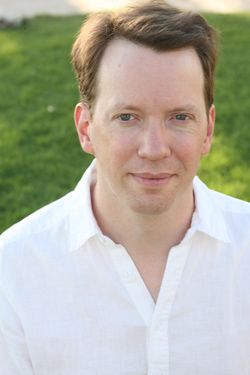
SeanWe are very honored and pleased to announce that Sean M. Carroll has agreed to be the final judge for our 4th annual prize for the best blog and online writing in the category of science. (Details of the previous science prizes can be seen by clicking on the names of their respective judges here: Steven Pinker, Richard Dawkins, and Lisa Randall).

I have to admit that I was especially and extraordinarily pleased when Sean agreed to judge this prize for a number of reasons:

  1. Sean is a practicing scientist at the forefront of his field, which is physics.
  2. Sean is also one of the foremost science communicators of our time (I extremely highly recommend his last book From Eternity to Here) and he was one of the early science bloggers with Preposterous Universe and has continued with the ever excellent Cosmic Variance.
  3. Sean was an early supporter of 3QD and drove much traffic to us in our early days when we were basically unknown. Thanks again, Sean! 🙂
  4. I am honored and happy to count Sean and his very distinguished (and former 3QD columnist) science-writer wife, Jennifer Oullette, as friends.
  5. Sean is a past winner of a 3QD prize himself.

Sean, as many of you may already know, is a physicist at the California Institute of Technology. He received his Ph.D. in 1993 from Harvard University. His research focuses on theoretical physics and cosmology, especially the origin and constituents of the universe, and he has contributed to models of interactions between dark matter, dark energy, and ordinary matter; alternative theories of gravity; and violations of fundamental symmetries. Sean is the author of “From Eternity to Here: The Quest for the Ultimate Theory of Time,” “Spacetime and Geometry: An Introduction to General Relativity,” and the upcoming “The Particle at the End of the Universe.” He blogs at Cosmic Variance, hosted by Discover magazine, and has been featured on television shows such as The Colbert Report and Through the Wormhole with Morgan Freeman. You may follow him on Twitter here.

As usual, this is the way it will work: the nominating period is now open, and will end at 11:59 pm EST on June 9, 2012. There will then be a round of voting by our readers which will narrow down the entries to the top twenty semi-finalists. After this, we will take these top twenty voted-for nominees, and the four main editors of 3 Quarks Daily (Abbas Raza, Robin Varghese, Morgan Meis, and Azra Raza) will select six finalists from these, plus they may also add up to three wildcard entries of their own choosing. The three winners will be chosen from these by Sean Carroll.

The first place award, called the “Top Quark,” will include a cash prize of one thousand dollars; the second place prize, the “Strange Quark,” will include a cash prize of three hundred dollars; and the third place winner will get the honor of winning the “Charm Quark,” along with a two hundred dollar prize.

(Welcome to those coming here for the first time. Learn more about who we are and what we do here, and do check out the full site here. Bookmark us and come back regularly, or sign up for the RSS feed.)

Details:

PrizeScienceAnnounceSeanThe winners of this prize will be announced on June 25, 2012. Here's the schedule:

May 30, 2012:

  • The nominations are opened. Please nominate your favorite blog entry by placing the URL for the blog post (the permalink) in the comments section of this post. You may also add a brief comment describing the entry and saying why you think it should win. (Do NOT nominate a whole blog, just one individual blog post.)
  • Blog posts longer than 4,000 words are strongly discouraged, but we might make an exception if there is something truly extraordinary.
  • Each person can only nominate one blog post.
  • Entries must be in English.
  • The editors of 3QD reserve the right to reject entries that we feel are not appropriate.
  • The blog entry may not be more than a year old. In other words, it must have been written after May 29, 2011.
  • You may also nominate your own entry from your own or a group blog (and we encourage you to).
  • Guest columnists at 3 Quarks Daily are also eligible to be nominated, and may also nominate themselves if they wish.
  • Nominations are limited to the first 200 entries.
  • Prize money must be claimed within a month of the announcement of winners.

June 9, 2012

  • The nominating process will end at 11:59 PM (NYC time) of this date.
  • The public voting will be opened soon afterwards.

June 16, 2012

  • Public voting ends at 11:59 PM (NYC time).

June 25, 2012

  • The winners are announced.

One Final and Important Request

If you have a blog or website, please help us spread the word about our prizes by linking to this post. Otherwise, post a link on your Facebook profile, Tweet it, or just email your friends and tell them about it! I really look forward to reading some very good material, and think this should be a lot of fun for all of us.

Best of luck and thanks for your attention!

Yours,

Abbas

Tuesday, May 29, 2012

A Bookforum Conversation with Tom Bissell

Book3With Morten Høi Jensen in Bookforum:

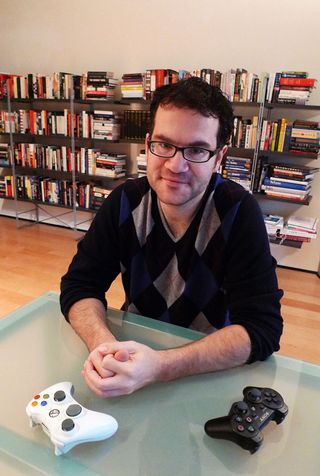
We’re fortunate to live in a time where a handful of enormously gifted writers are revitalizing the essay form. One example is Tom Bissell, whose new collection, Magic Hours: Essays on Creators and Creation, adds up to a kind of narrative of contemporary culture, weighing in on video games, underground literary movements, bad movies and the fates of great writers. Before his recent reading with his friend and fellow writer Gideon Lewis-Kraus at KGB Bar in New York, I spent an hour with Tom Bissell at his cousin’s apartment in Manhattan, where he and his girlfriend were staying while they were in town. Looking out on an unseasonably hot midtown afternoon, we drank scotch and chatted about the publishing industry, the resurgence of the essay form, and our mutual love for the Australian writer Clive James.

Bookforum: Do you miss New York?

Tom Bissell: Desperately. When I’ve lived in Portland and California and I wake up, Pacific Time just seems like the wrong time to me. Events in America happen on Eastern Standard Time, and knowing when you wake up at 9 in the morning—or, if you’re a writer, 9:30—that it’s already after lunch in the heartbeat of America—it’s just something I’ve never gotten used to.

BF: How long did you live in New York?

Tom Bissell: I lived here from 1997 to 2006.

BF: I enjoyed reading in Magic Hours about your experience here as an editorial assistant. You called it a “thankless but intensely interesting job.” I was wondering if it influenced your early work as a journalist in any way.

TB: I think what it did for me was make me much less hostile to the editorial apparatus once I became a writer. I’ve always been way more willing to empathize with editors than my other writer friends who didn’t have that experience. Without the editorial experience, I would have never have had so many myths about book publishing shattered before I even wrote a word. And I think the most insidious myth among writers is that publishers just get books lined up before them, pick the ones they want to sell, and then push them out the door. Now, in some sense of course they do that, but the really important thing that writers seem to forget is that just because publishers pick books that they want expend resources on doesn’t guarantee that the books will succeed. Good publishers are the ones who, when something’s not working, are capable of redirecting their focus onto the stuff that is working, and choose to support the stuff they maybe initially thought didn’t have a good shot. Bad publishers are the ones who just double down on a bad choice and throw good money out the window. I’ve been lucky enough to work with good, smart publishers, and though I don’t claim to know how exactly publishing works, I do often get the heebie jeebies when I hear my writer friends talk about book publishers in a needlessly hostile tone.

BF: That was the strength of your essay about the Underground Literary Alliance. You took them to task for that hostility—and not just them, because I think that hostility is actually quite common—and for not understanding that the majority of the people who work in the publishing industry hold literature just as sacred as they do. But that doesn’t automatically give them the resources or the privilege to publish everything.

TB: Right. And the other thing is that the publishing industry is much smaller than it was in, say, 1999, when I was a young editor, so I think the representative spectrum of taste is much smaller. It’s just so much harder to be a young writer right now, especially if you’re a fiction writer. I wouldn’t wish being a fiction writer right now on my worst enemy. I wouldn’t wish that on Osama Bin Laden’s children.

Tuesday Poem

More Than Enough
.
The first lily of June opens its red mouth.
All over the sand road where we walk
multiflora rose climbs trees cascading
white or pink blossoms, simple, intense
the scene drifting like colored mist.

The arrowhead is spreading its creamy
clumps of flower and the blackberries
are blooming in the thickets. Season of
joy for the bee. The green will never
again be so green, so purely and lushly

new, grass lifting its wheaty seedheads
into the wind. Rich fresh wine
of June, we stagger into you smeared
with pollen, overcome as the turtle
laying her eggs in roadside sand.

by Marge Piercy
from Colors Passing Through Us
publisher Knopf, 2003